
Europe
More exploring in Berlin
It would seem that we are becoming quite used to a sleep-in because this morning, once again, we were pretty tardy getting down to breakfast.
Having left ourselves only about 45 minutes to have breakfast (before the very efficient German staff start packing up right on the dot of 10:30am) we had to be a bit more tactical about what we were going to eat. And to be honest, we were like moths to the flame at breakfast yesterday morning so some level of restraint had to be applied today!
After breakfast we headed upstairs to our room to plan the rest of the day. Nine days into this trip we are, as expected, sick of seeing the same choice of clothes in our suitcases each day. We did rummage around a bit more today to see what we could find. Really, we’ve brought quite a bit of clothing with us but a lot of that is for the colder climates we’ll be heading to later this week as we set off for Russia and, after that, Finland. But today we were only considering Berlin weather and it wasn’t looking great: a very temperate daytime high of 9C but with rain throughout the day. In fact, the forecast suggests that it is going to rain for the rest of our time here in Berlin so we’re just going to have to work with that.
It was certainly way colder than the forecast 9C when we exited the hotel at around midday. We walked through the Brandenburg Gate to catch the bus to our first stop of the day, Potsdamer Platz.
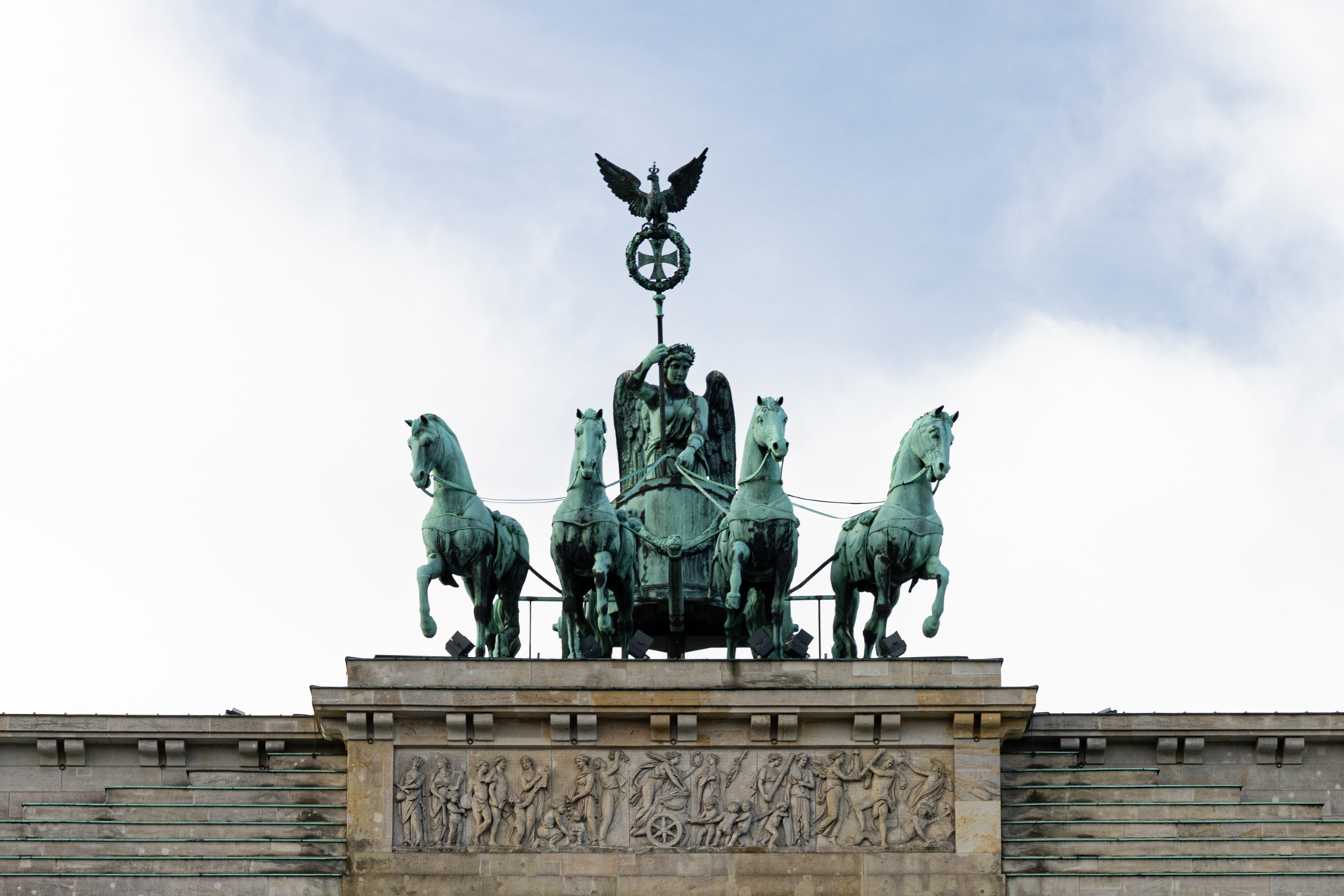
We passed by some lovely buildings while riding on the bus but the heavy bombing of Berlin during WWII destroyed huge swathes of the city so many of the buildings were partially or completely destroyed. Berlin was the most heavily bombed city of the war, sustaining massive damage from the 67,000 tons of bombs dropped on it by the Allies. We were told that there was 750 million tons of rubble in the city at the end of the war, which is incredible.
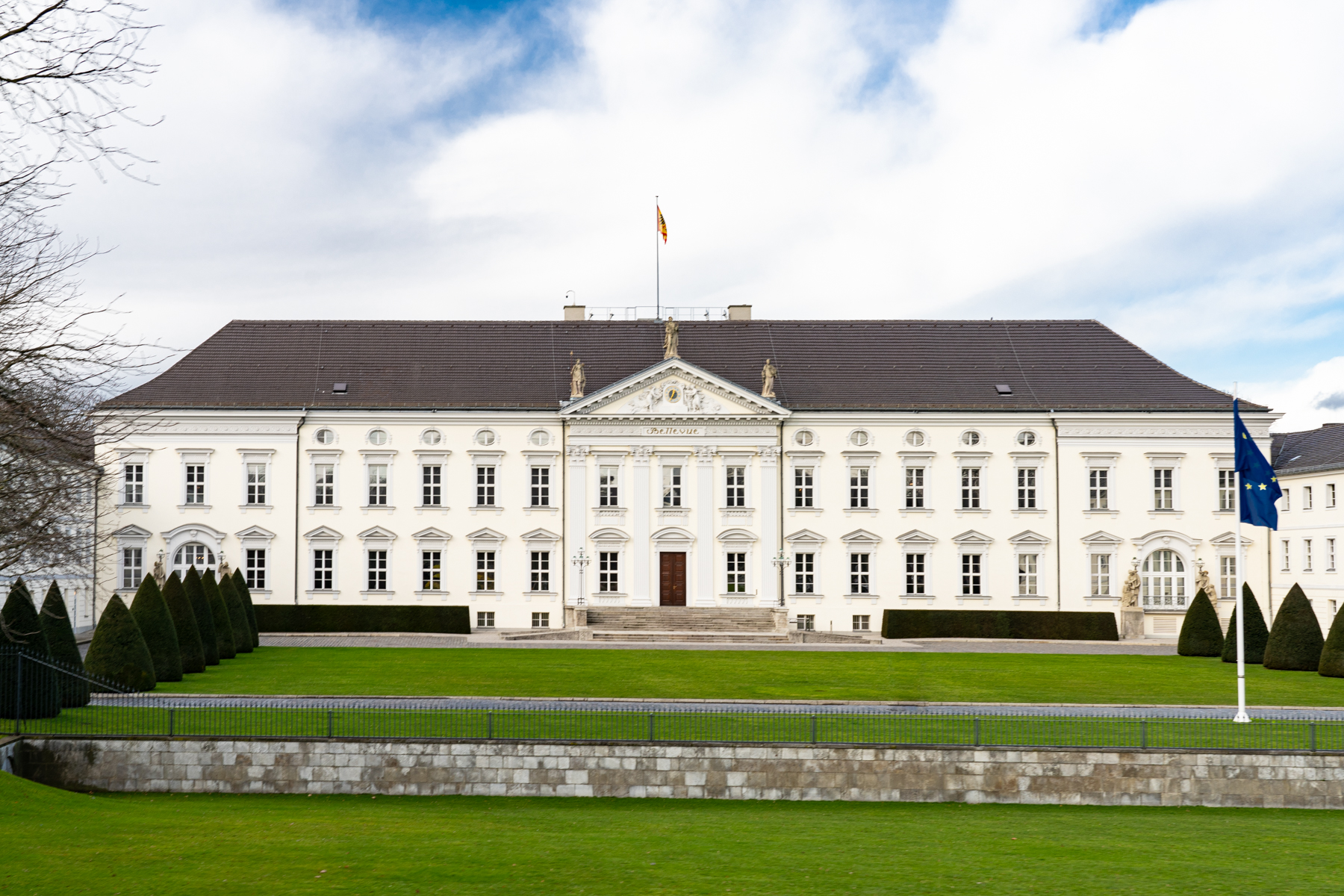
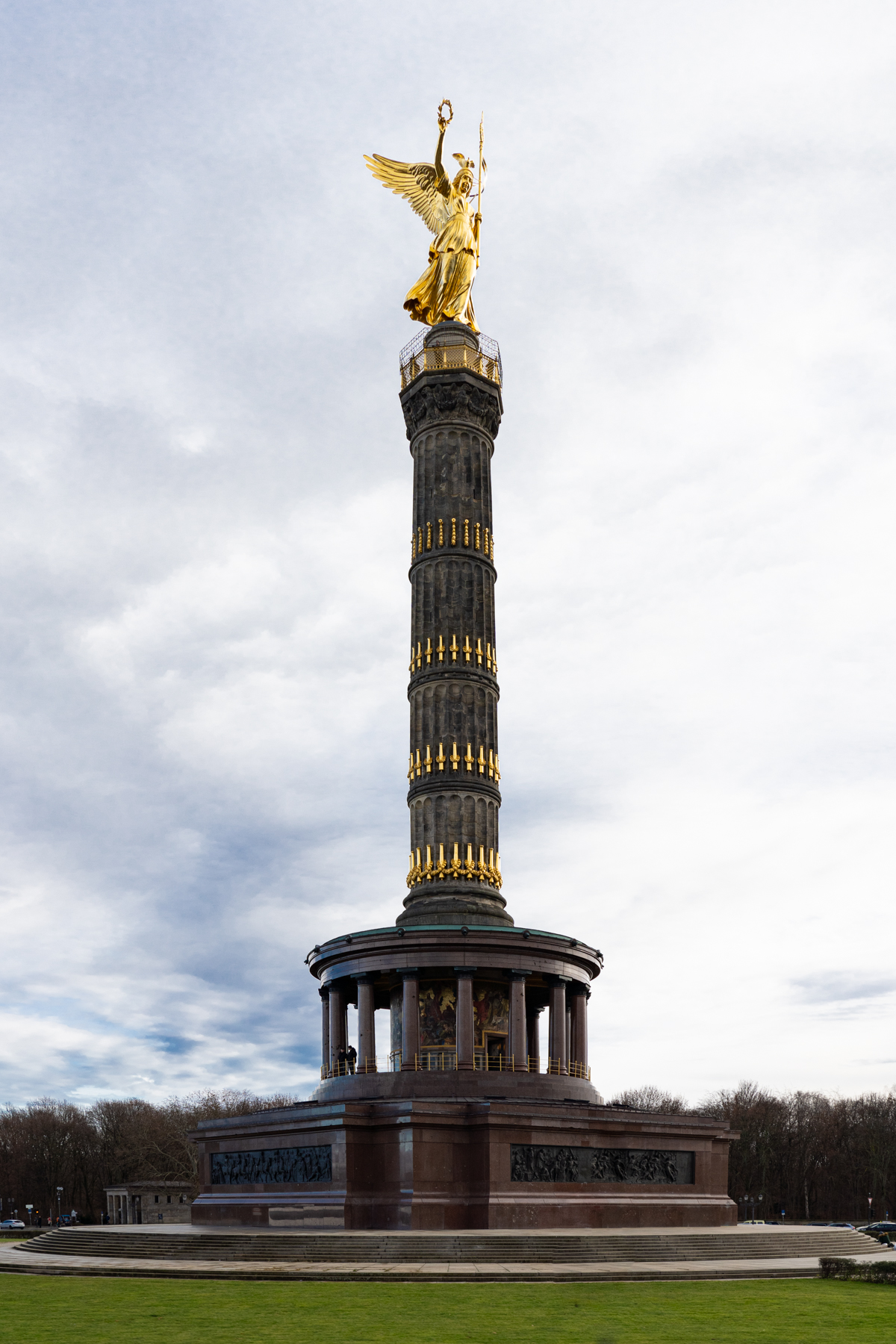
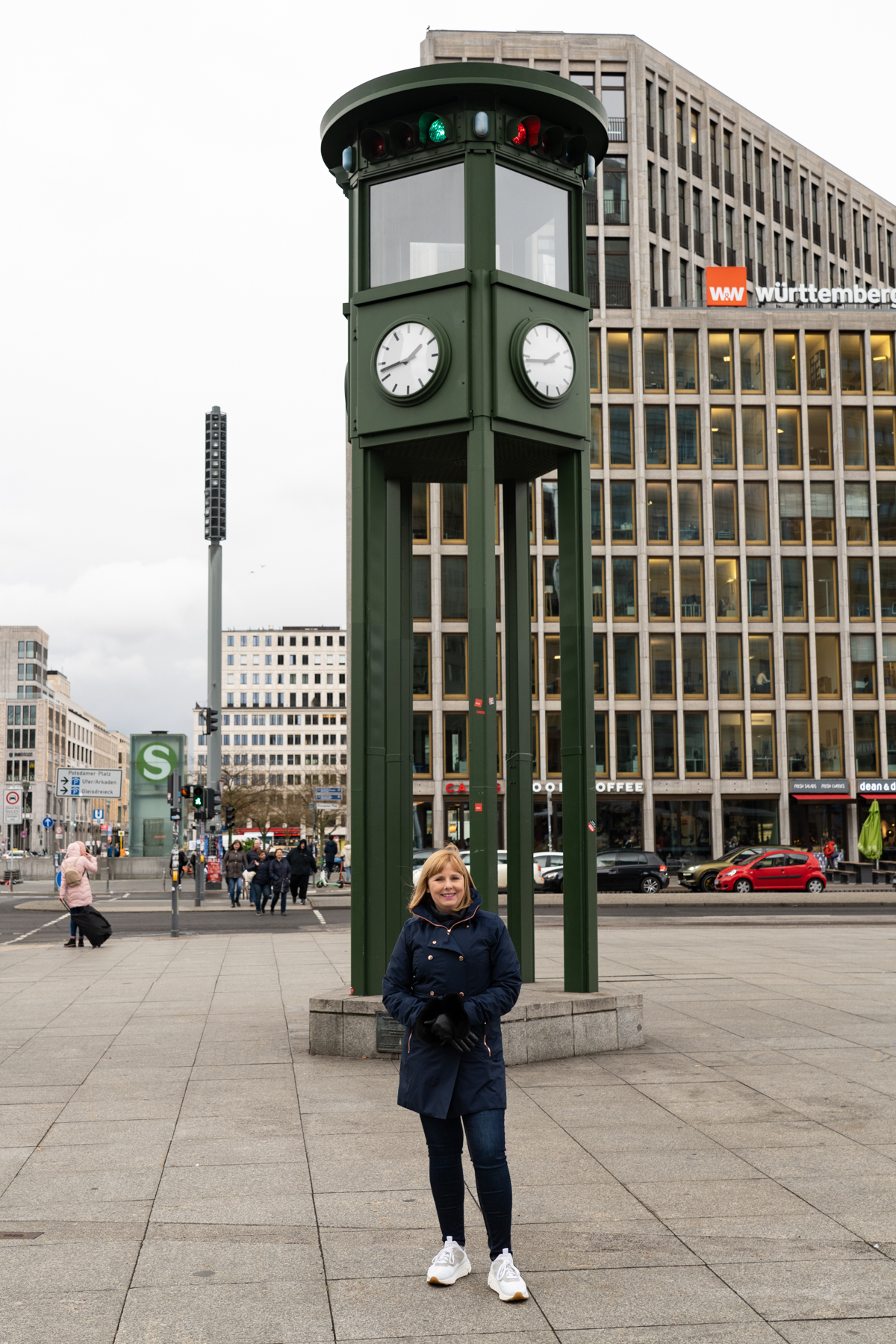
We hopped off the bus at Potsdamer Platz to look at the first traffic light installed in Europe. The traffic light was installed in 1924 to deal with the extraordinary amount of traffic passing through the platz. We took a few photos in front of the 8.5m-high traffic light tower and then set off on foot to our next stop, the Topographie des Terrors.
The Topographie des Terrors is a history museum located on Niederkirchnerstraße on the site of buildings that, during the Nazi regime from 1933 to 1945, housed the SS Reich Main Security Office, the headquarters of the Sicherheitspolizei, SD, Einsatzgruppen, and Gestapo. The buildings that housed the Gestapo and SS headquarters were mostly destroyed by Allied bombing during early 1945 and what survived was demolished after the war, although some of the building footings have now been excavated. The street on which the museum sits was on the boundary between the Soviet and American zones, and the Berlin Wall ran along the south side of this street. The wall on this street was not demolished and it remains the longest part of the external wall still in existence. (The Berlin Wall on the East German side was not just one wall; it was a composite of walls, paths, and obstacles. But on the Western side, it just appeared as one wall since only the external wall was visible.)
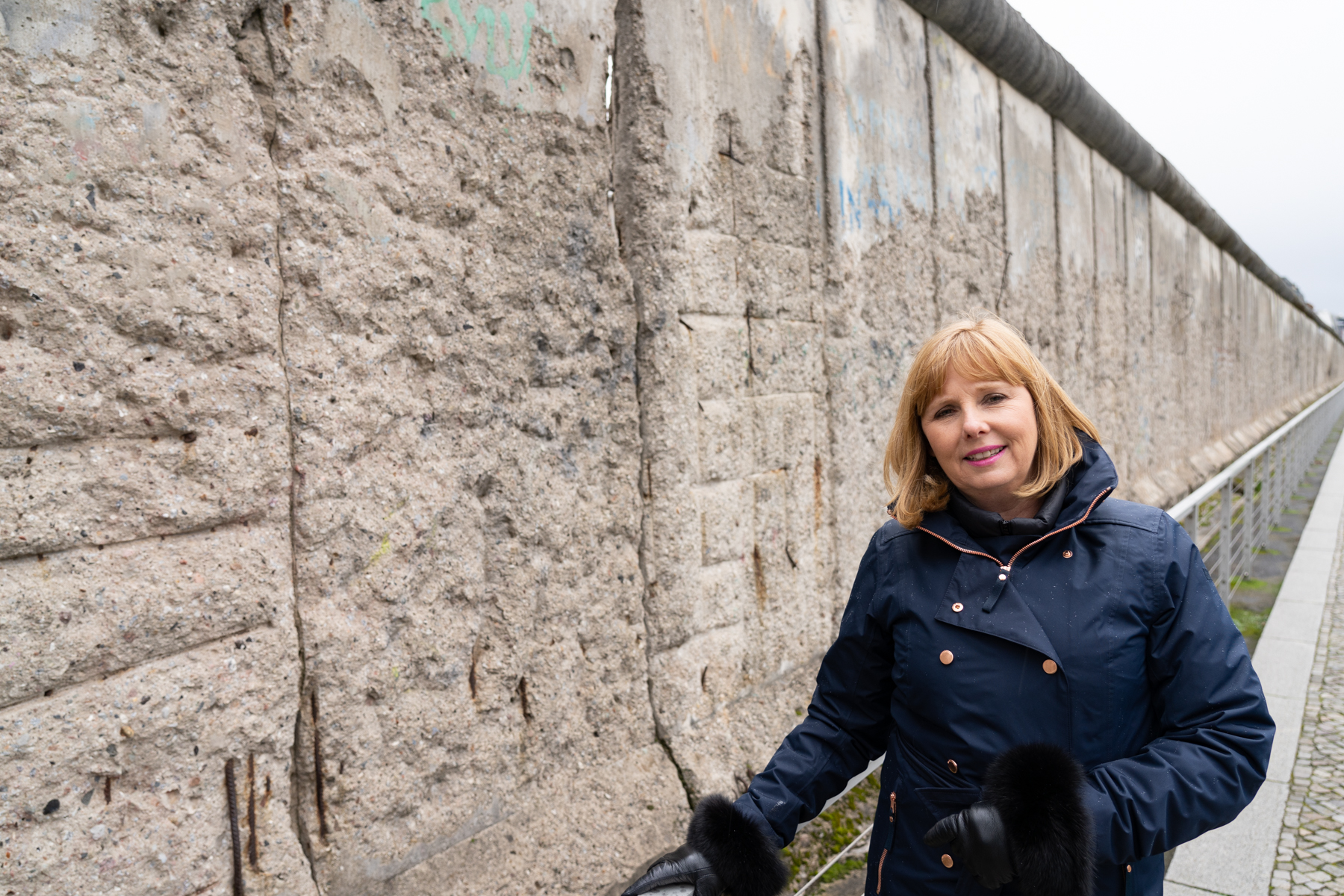
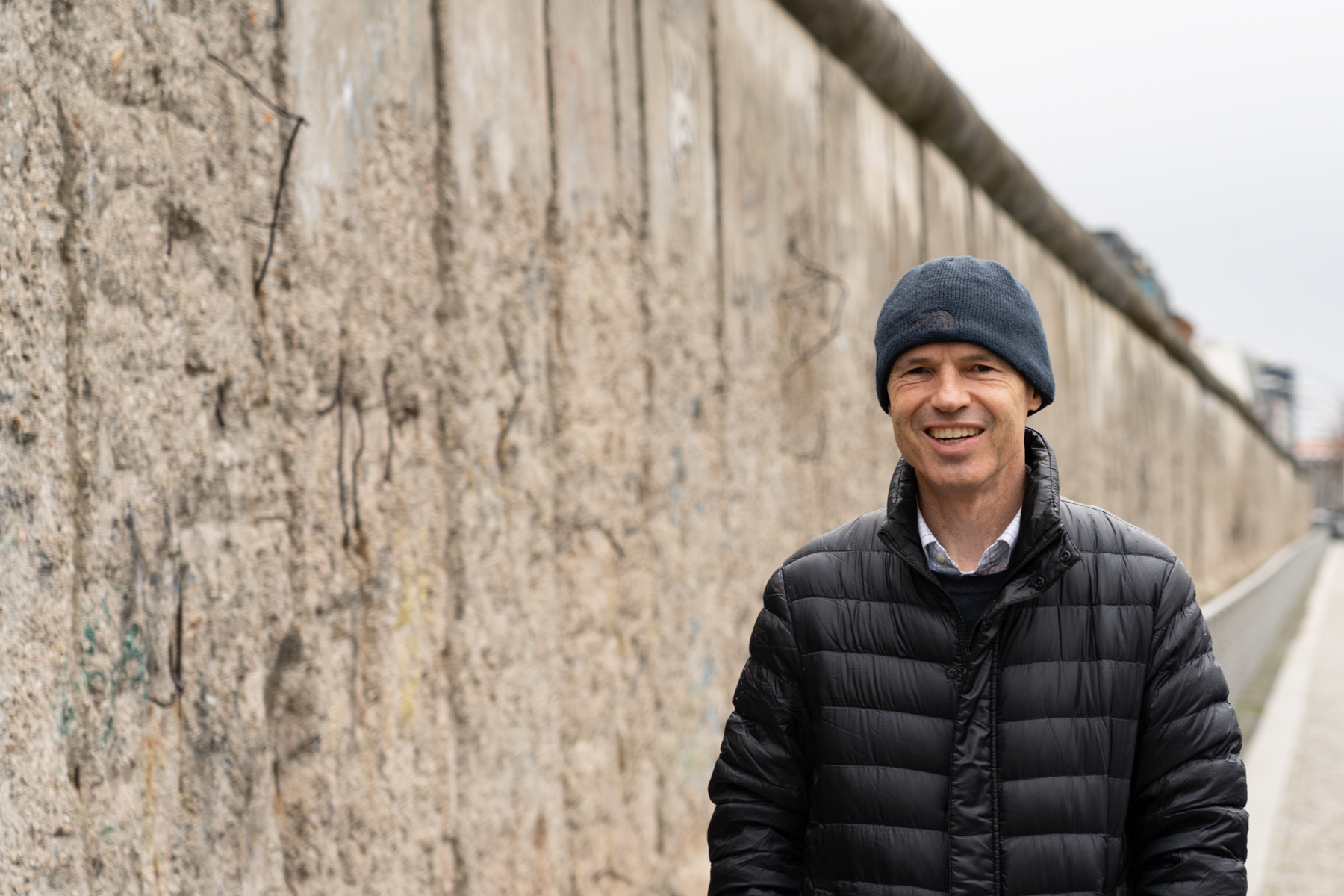
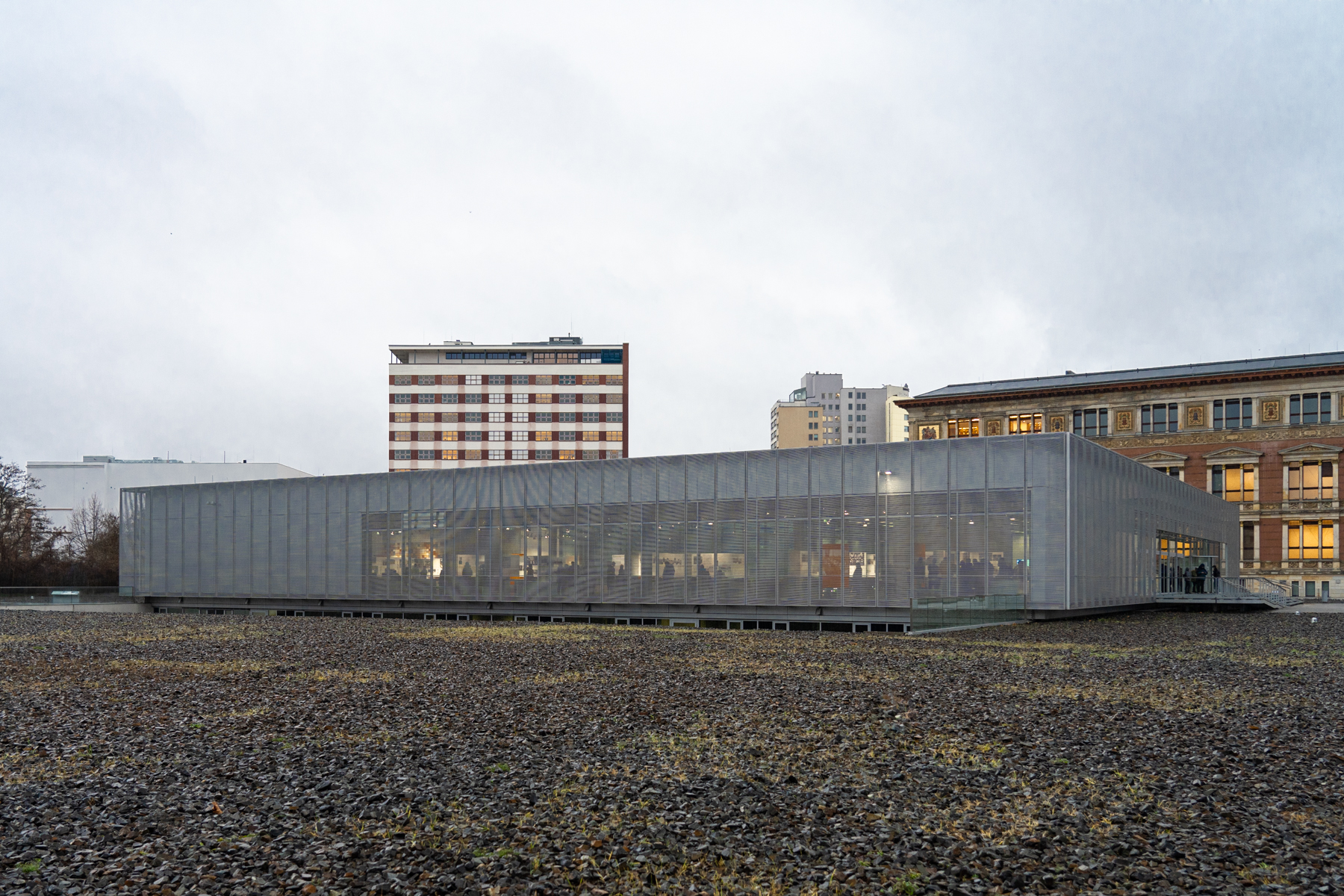
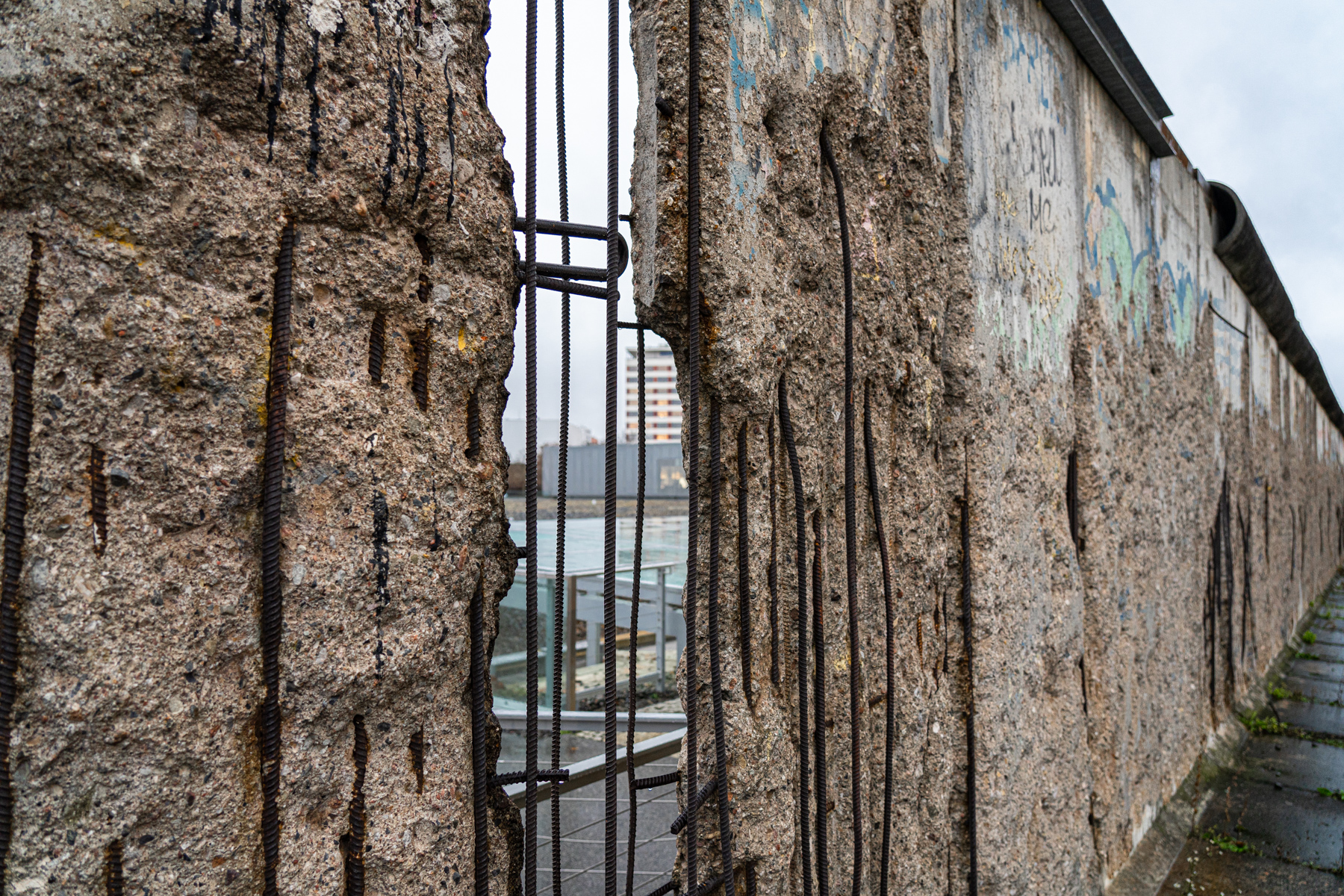
We spent a couple of hours at the Topographie des Terrors. It was very moving but also depressing. We had discussed this morning whether we wanted to visit this museum, anticipating that it would be a very sombre experience. But the museum exists to educate people about what happened in the past and we felt that we wanted to understand more about what went on, rather than just turn a blind eye. It is hard to comprehend the inhumanity that is laid out in the museum. There is no doubt that the rise of Hitler and the National Socialist German Workers’ Party (the Nazi Party) was one of the darkest periods in human history. The Topographie des Terrors museum reminds visitors, in stark detail, of the perils of ideological fanaticism, especially when combined with the unchecked authority of a psychopath. We found the museum to be a very confronting experience but we were glad that we went.
When we came out of the museum we discovered that the rain had set in. Our plan was to visit the Helmut Newton Foundation to see the exhibition of Helmut Newton’s photography. We tried to hail a taxi but they were few and far between in the rain so we ended up just stopping for an ice-cream (not that it was ice-cream weather!) in the nearby Mall of Berlin. Rather than try again to get a taxi, we decided to try out the U-Bahn, the Berlin train system. We managed to work out how to buy a ticket and hopped on the U2 line, headed for Zoologischer Garten Station (which was only a few stops away). We exited the train station only about 100 metres from the beautiful building that houses the Helmut Newton Foundation, which was very handy.
The decision to see Helmut Newton’s photos was a topical one (after the visit to the Topographie des Terrors museum) because Helmut Newton (born Helmut Neustädter) was a German of Jewish descent. He was born in Berlin in 1920 and fled persecution in Germany in 1938. He arrived in Australia and was sent (by train under armed guard) to an intern camp at Tatura in rural Victoria. He was released in 1942 and, after a stint picking fruit, enlisted with the Australian Army. After the end of the war, he became a British subject. In 1946 he changed his surname to Newton (presumably because having a German name at the time was not well received). He married an Australian woman named June Browne and he taught her how to take photographs. She had a successful photographic career in her own right, under the pseudonym “Alice Springs”. Helmut Newton went on to become one of the great fashion photographers, with an iconic (and often provocative) style. We very much enjoyed the exhibition of his (and June’s) work. The Helmut Newton Foundation also promotes the work of other photographers and the upstairs galleries were hosting a number of other displays. We were less keen on most of the other work we saw but, overall, the visit was certainly well worth it.
When we exited the Helmut Newton Foundation, the rain had eased a little but by now it was dark and pretty dreary. We hopped back on the U-Bahn and headed for Mohrensstraße Station, which is right next to the Mall Of Berlin. We went inside the mall and, being creatures of habit, decided to have dinner at the same Thai restaurant we ate at last night!
After dinner we walked back to the hotel, not quite managing to avoid the onset of quite heavy rain. We went up to our room and hung up our wet coats. We are trying for an early night tonight to shift our body clock in readiness for some early mornings and a three-hour time zone change at the end of this week (when we go to Russia).