
Europe
Iceland road trip
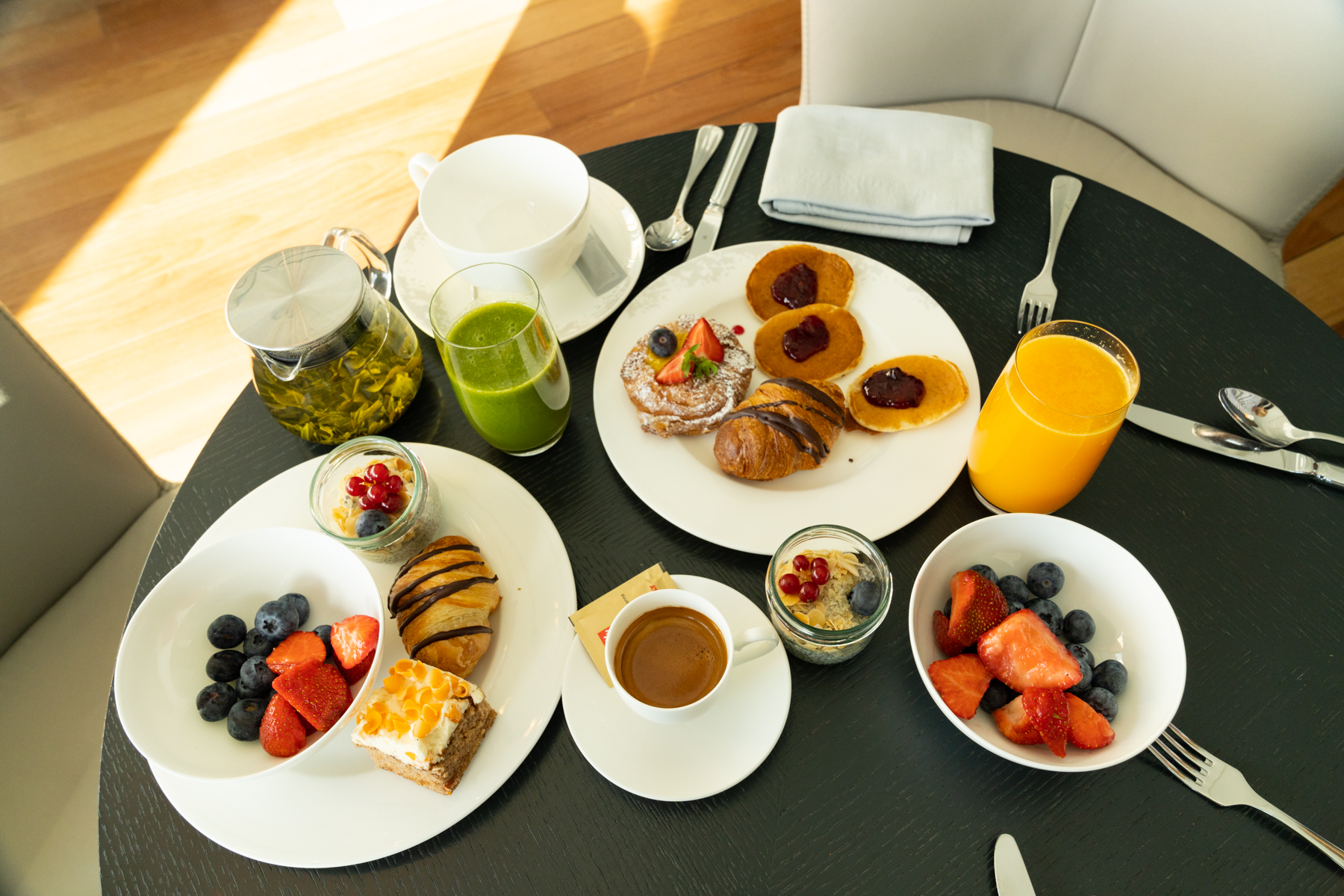
This morning we planned to be up early since we had a big drive ahead of us today. But we didn’t get to breakfast until about 10:00 am, so the idea of an early departure went out the window pretty quickly. We had a nice breakfast, which had to sustain us until dinner time because we knew we’d be driving all day.
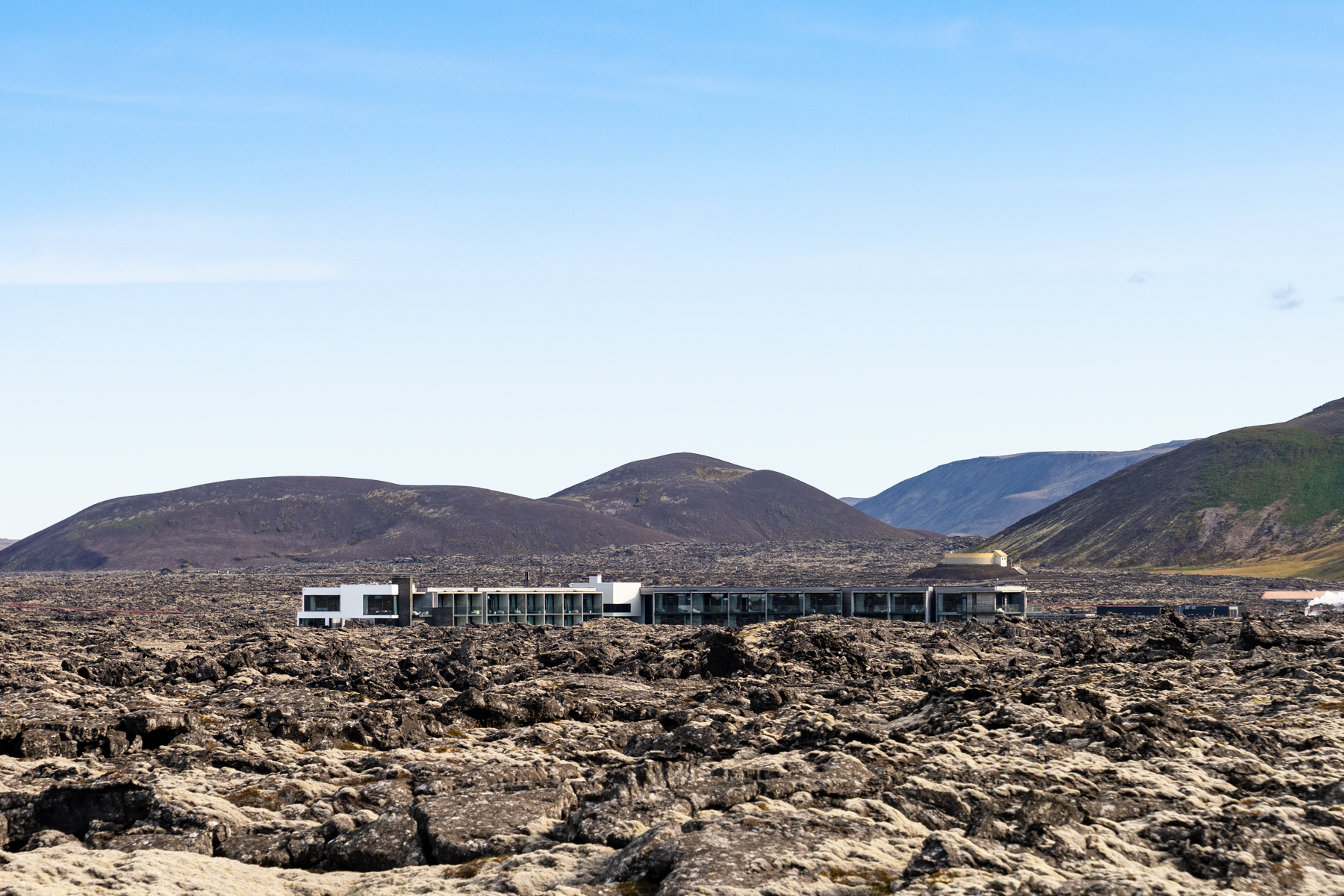
On the way back from breakfast, we asked the hotel staff to bring the car around since we were planning to leave shortly. They were happy to oblige and said they’d put it right out the front of the hotel and turn it on to get the heaters going for us so it would be nice and warm inside when we set off. We went back to the room to get organised but we ended up spending nearly an hour re-packing our suitcases, at which point we remembered that the car was sitting out the front of the hotel with the engine running! We quickly headed out to the car and set off just before midday. As we drove off we had quite a nice view of the hotel.
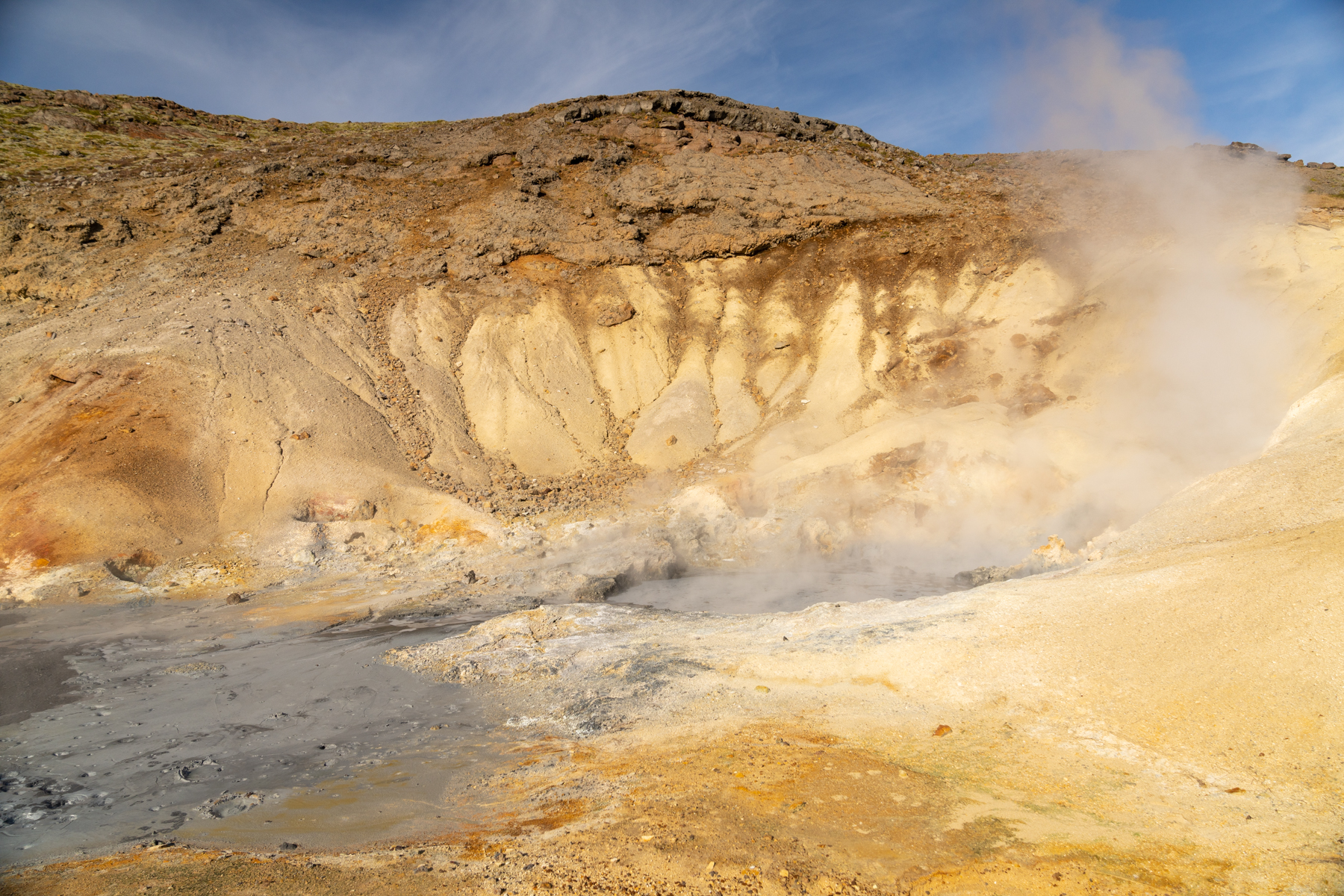
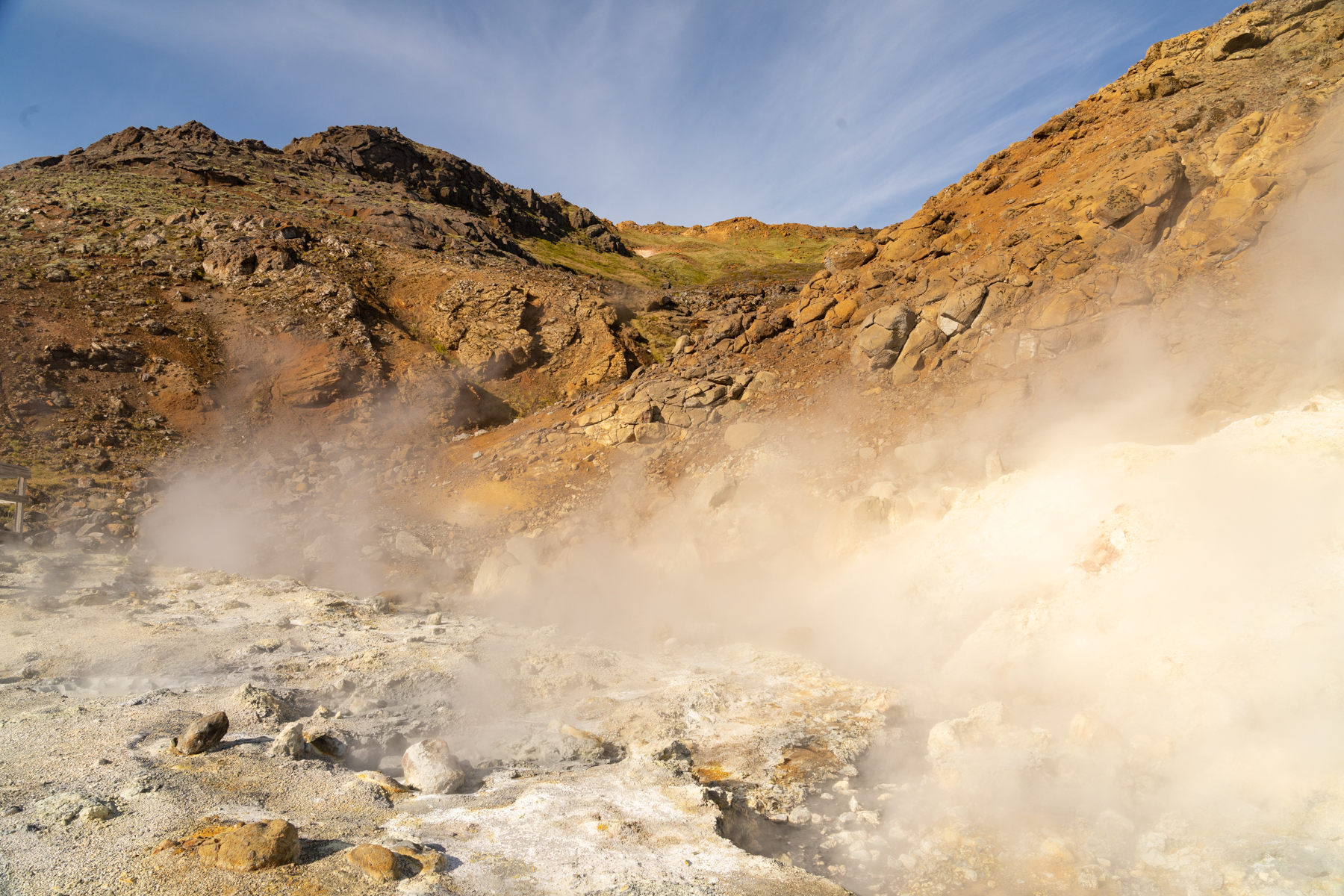
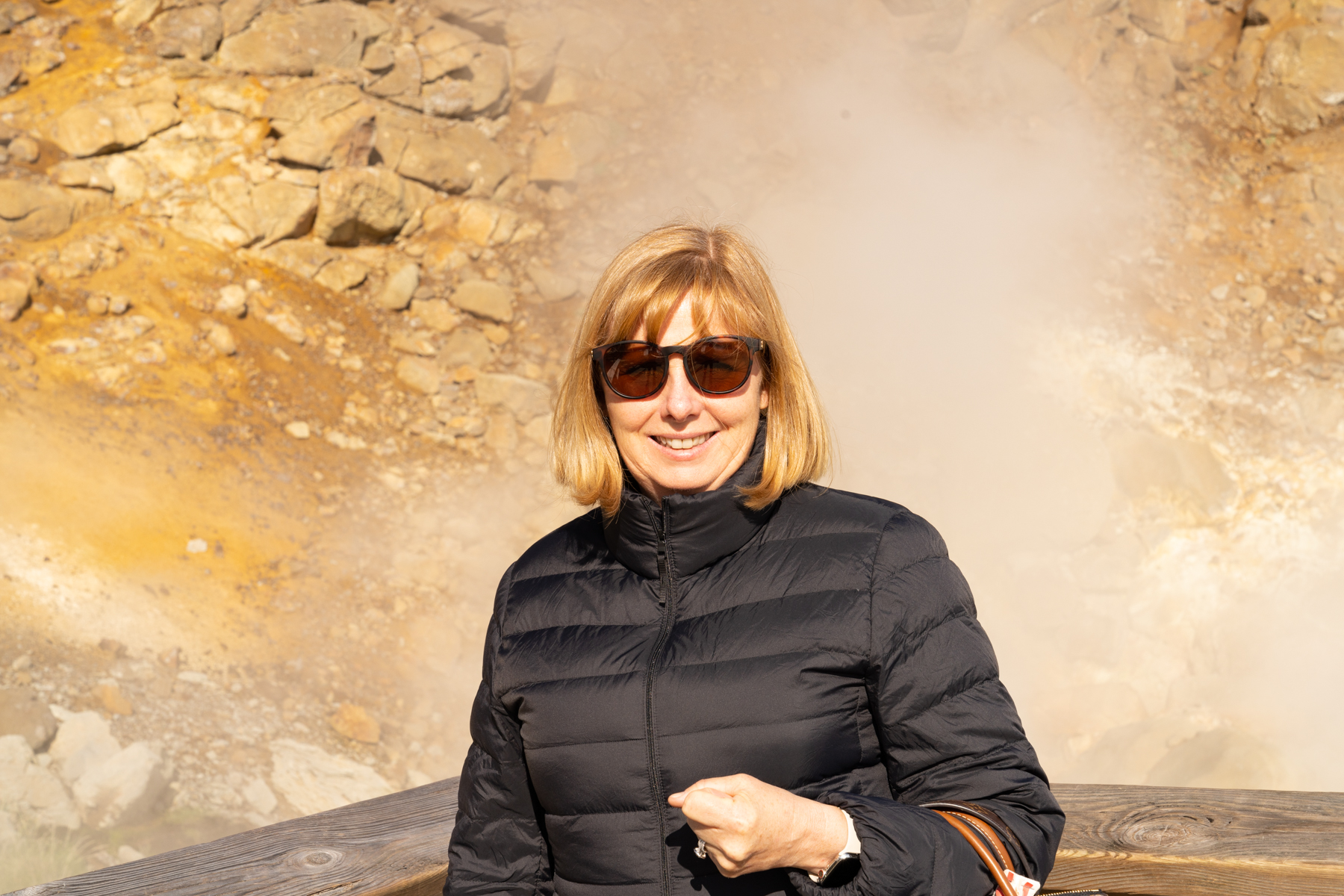
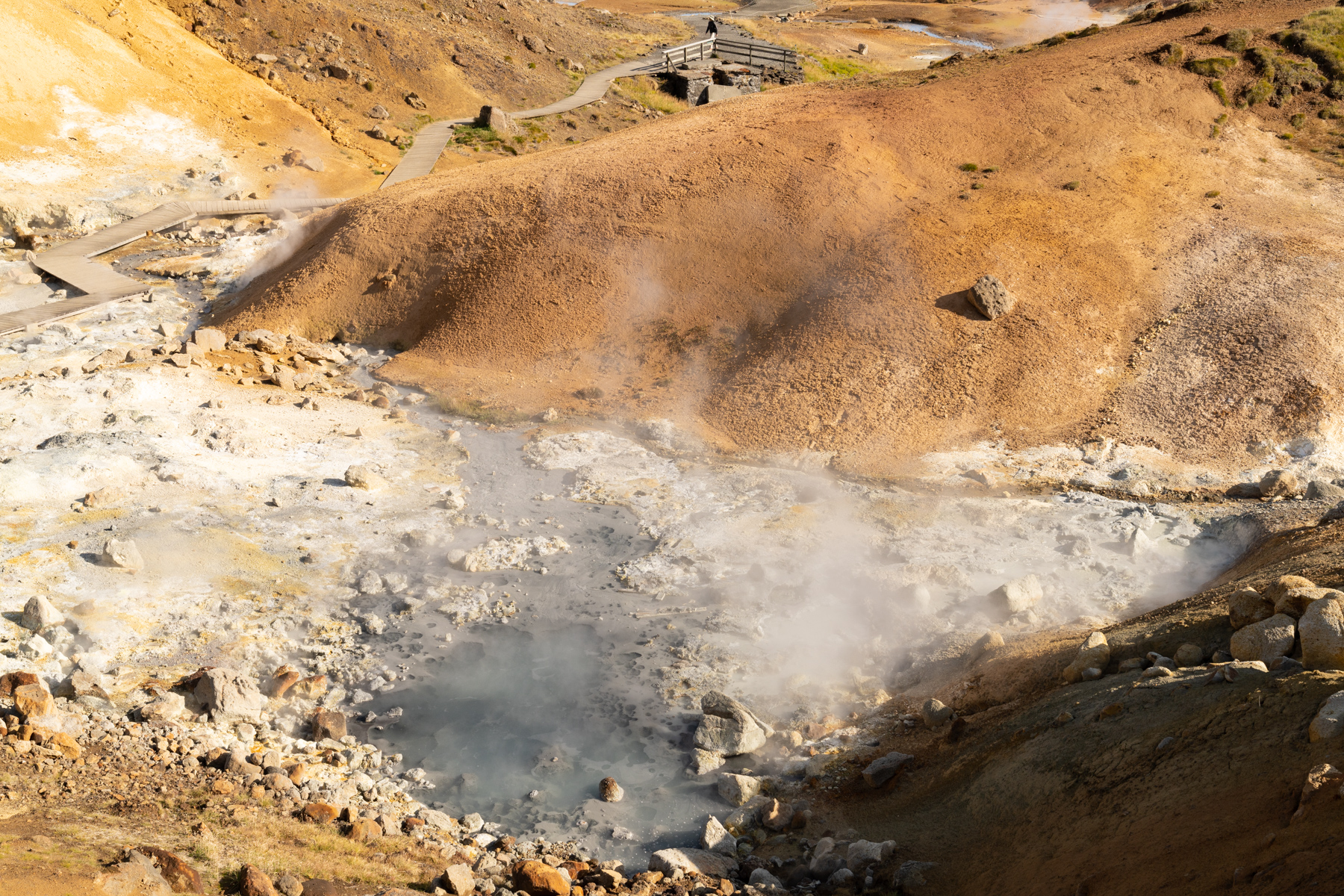
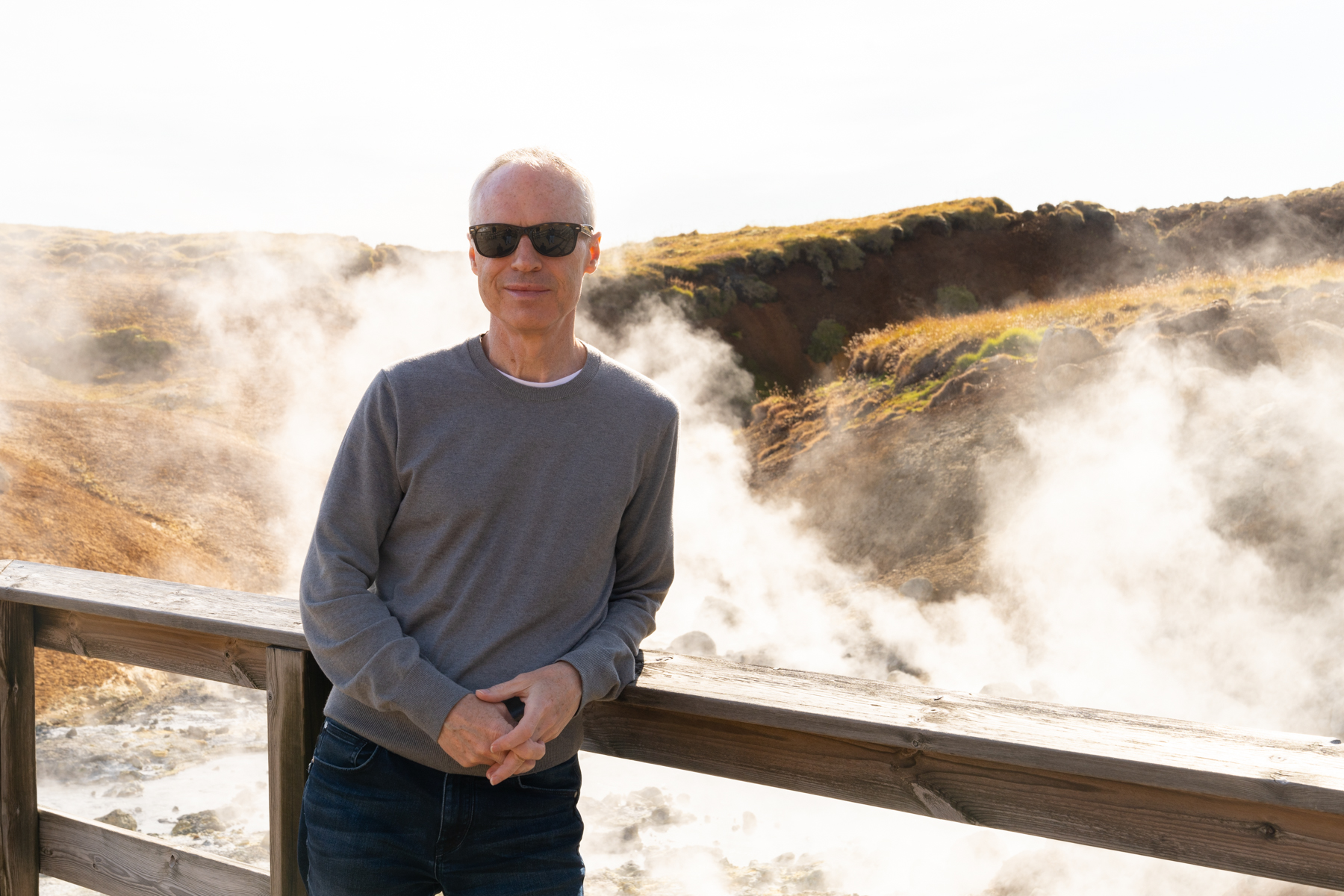
Our first stop on our road trip was the Seltún geothermal area, where we explored a surreal landscape of bubbling mud pools, steam vents, mineral deposits, and hot springs.
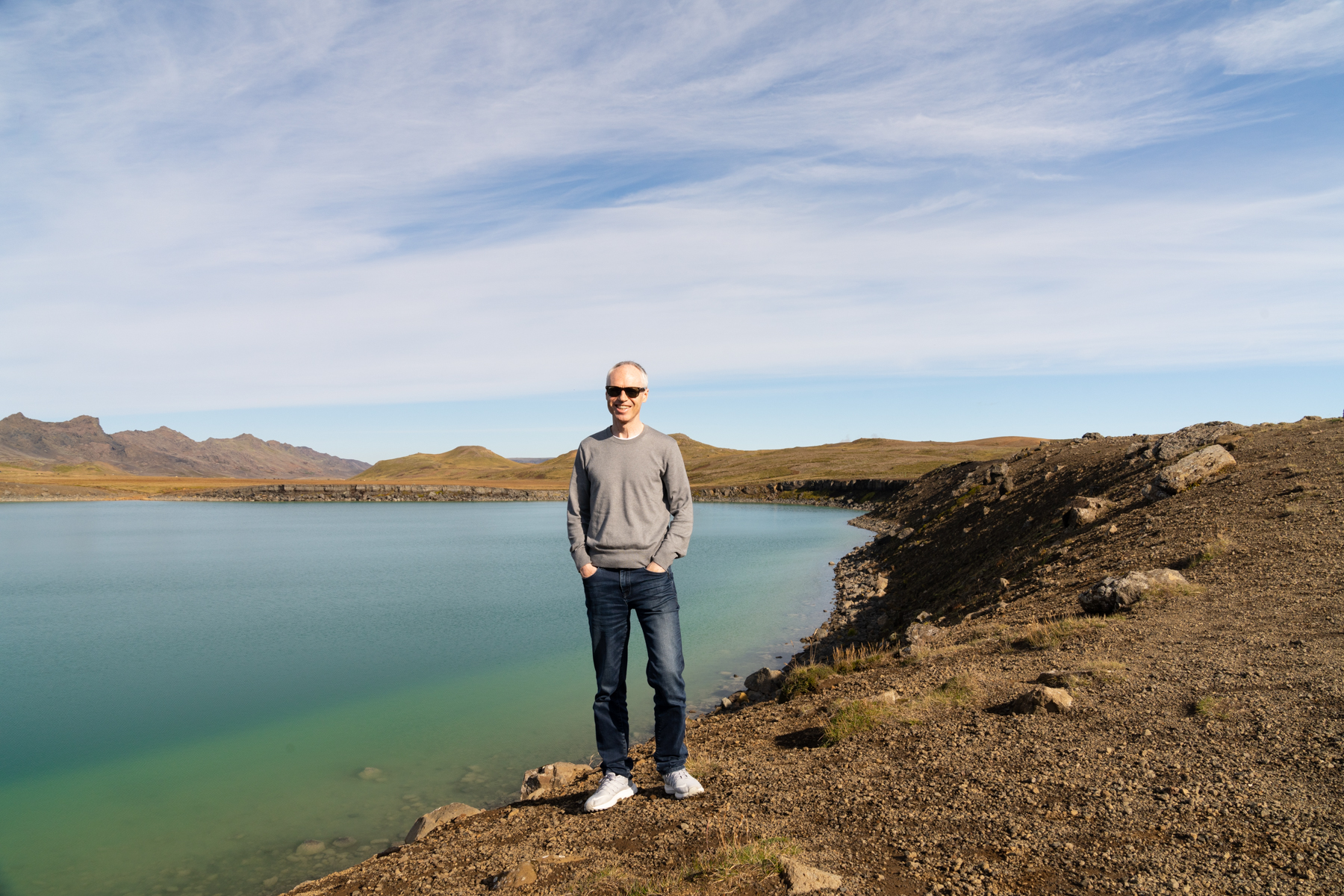
Very near to Seltun are two beautiful lakes: Graenavatn and Kleifarvatn. We only knew about the smaller lake, Graenavatn. But we took a wrong turn leaving Seltún and discovered Kleifarvatn. We drove around Kleifarvatn and kept going until we reached the port town of Hafnarfjordur. Hafnarfjordur is only about 10km south of Reykjavik, which is our final destination of the day. However, we still had a lot to see before we ended up in Reykjavik so we turned around and headed back down highway 42 to stop at Graenavatn. Graenavatn translates to “green lake”. It is a volcanic crater that got its name from its unusual green color. The color is due to a high level of sulphur in the water and its 45 metre depth, which is substantial for such a small lake.
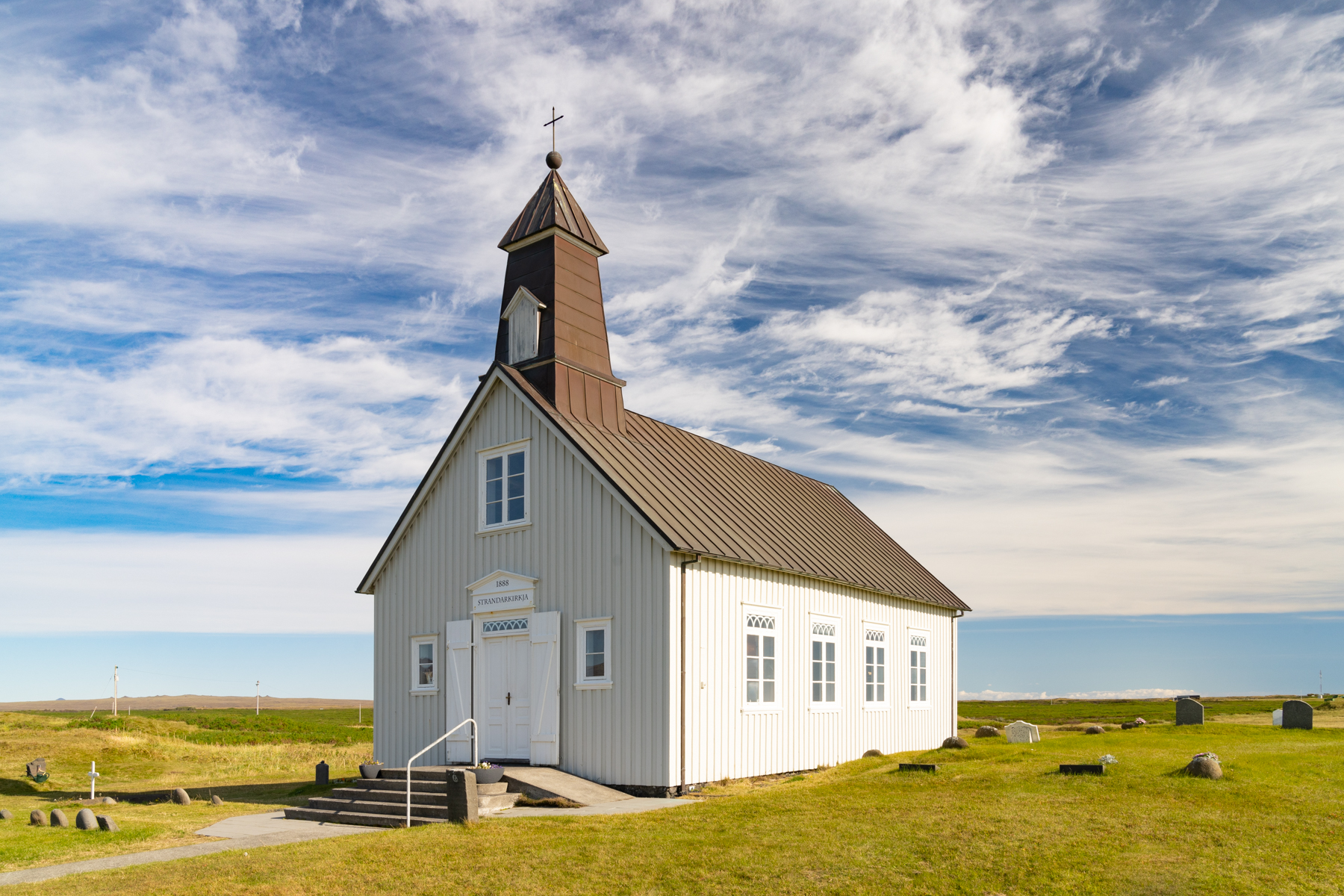
From Graenavatn we headed to Strandakirkja, about 15 minutes away. Strandakirkja is a church that was originally built sometime in the 12th century. The story behind the church is that one night when a group of sailors tried to navigate back to Iceland in a violent storm, they prayed to God for a safe return and vowed to build a church wherever they landed. They claimed that when they ended their prayer an angel, seemingly made of light, appeared before their bow. The angel guided them through the rough seas and led them safely into a bay where they landed. The sailors, making good on their promise, built a wooden church at the site and named it Strandarkirkja.
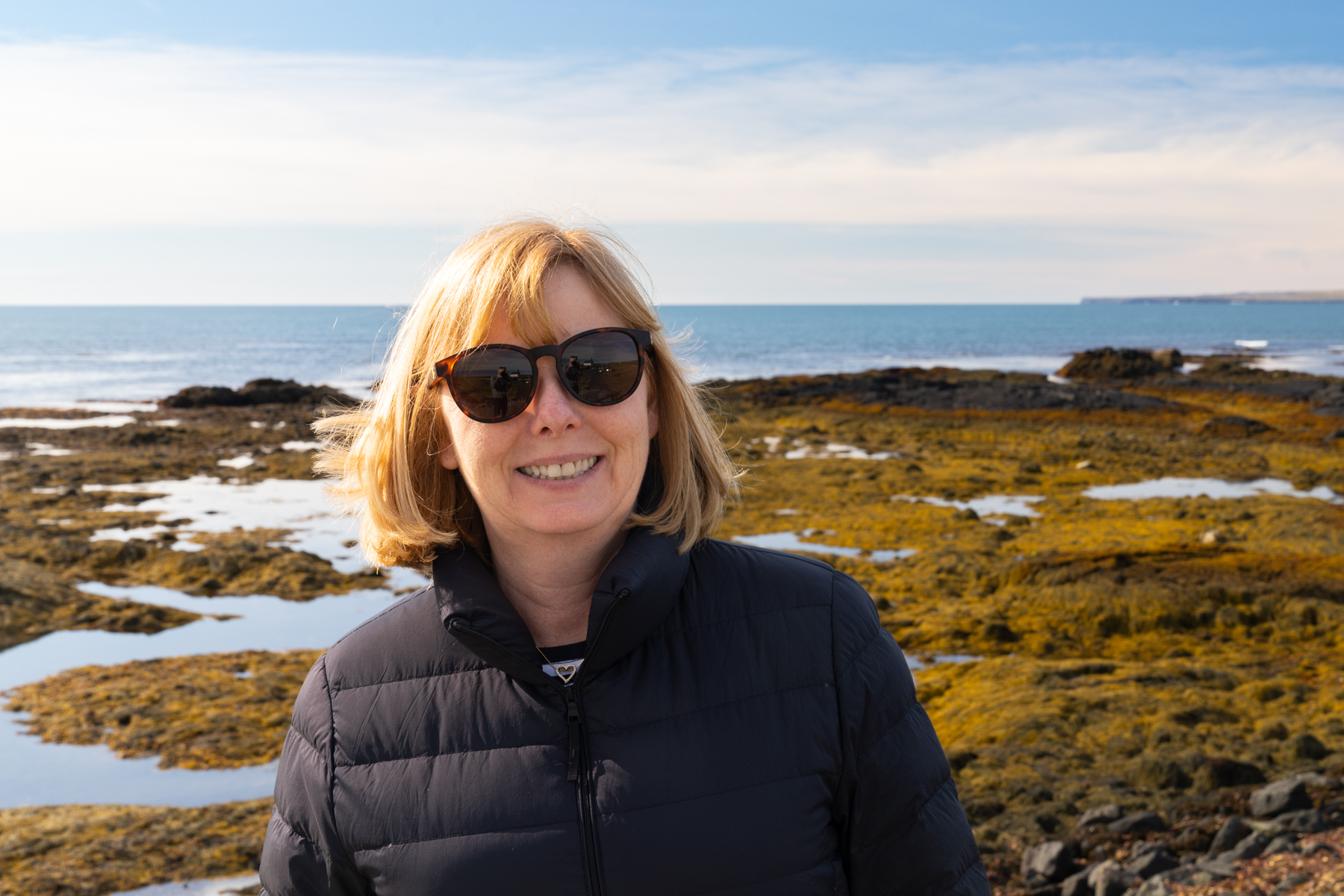
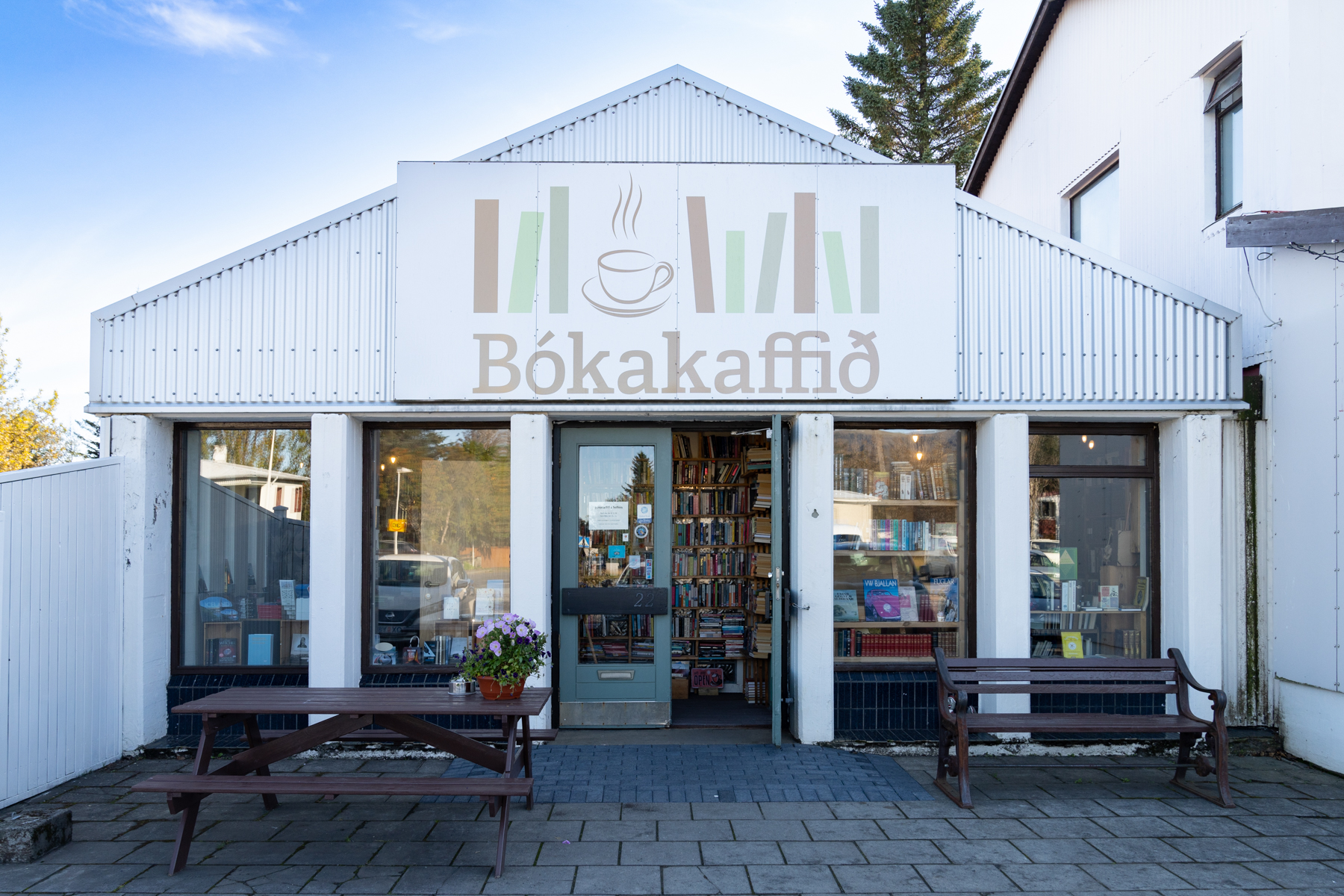
From Strandakirkja we drove about half an hour further along the southern coast and then turned inward to the pretty town of Selfoss. Selfoss is the largest town on the south coast of Iceland, with a population of only about 8,000 people! We stopped at a very cute little cafe and bookshop, where we had a coffee and bought a very interesting book on Iceland, written by the son of the cafe owners.
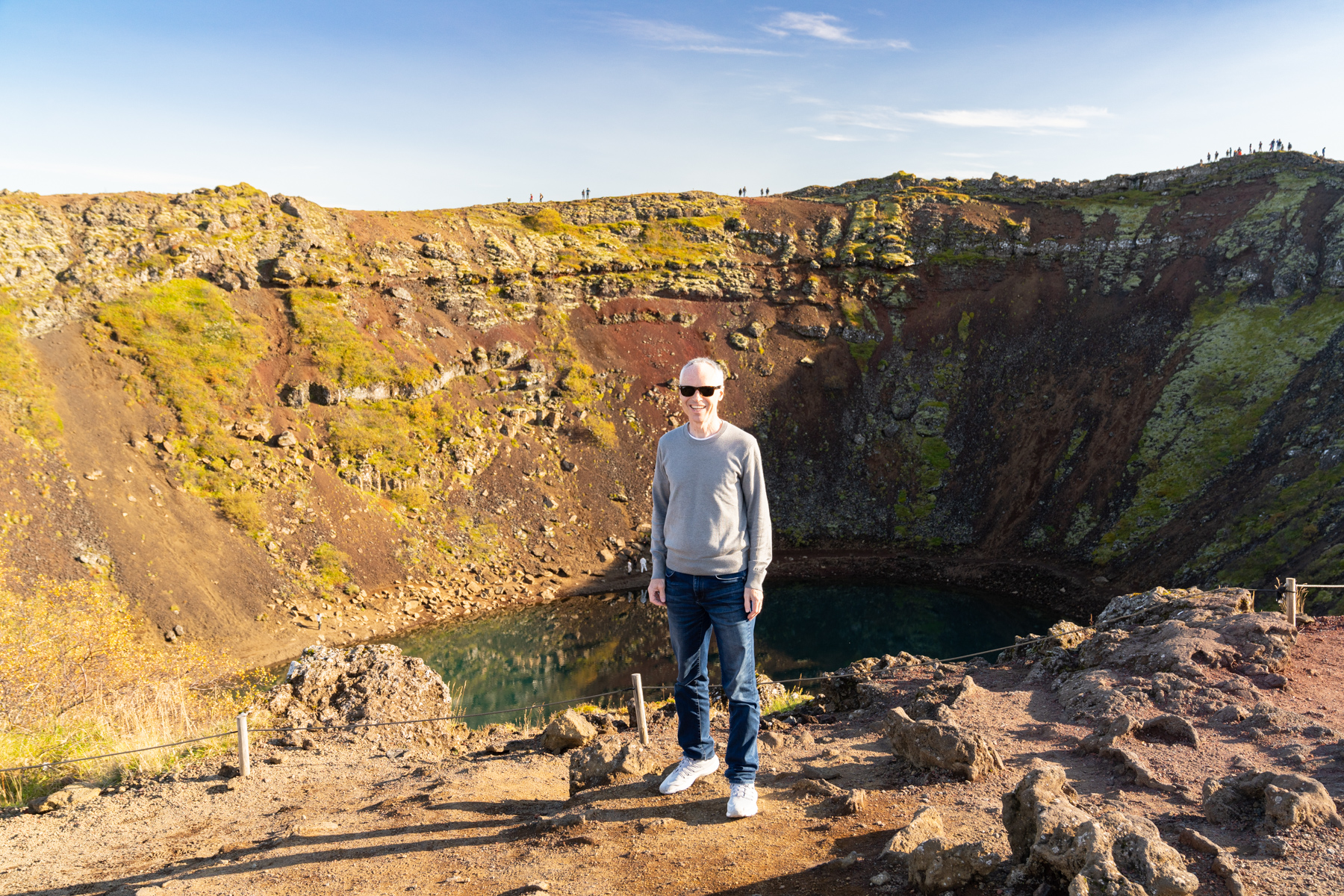
From Selfoss we headed up highway 35 to the Kerið crater lake. The caldera, like the other volcanic rock in the area, is composed of a red (rather than black) volcanic rock. The caldera is approximately 270 metres wide and is about 55 metres deep but the lake itself is fairly shallow (7–14 metres, depending on rainfall and other factors). Due to minerals from the soil, the water is an opaque and beautiful aquamarine. The water in the lake is part of natural water table, not a result of the crater filling with rain water.
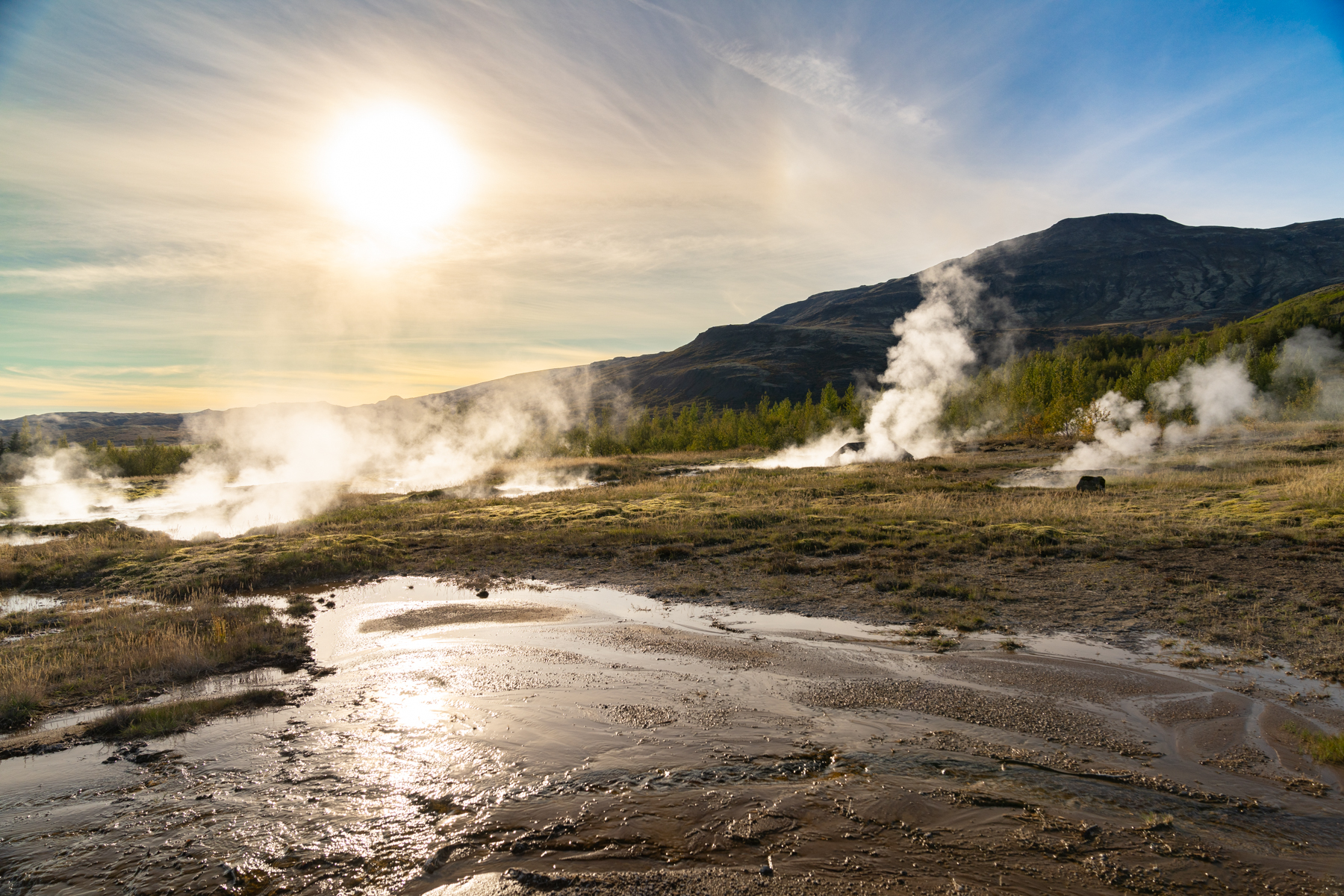
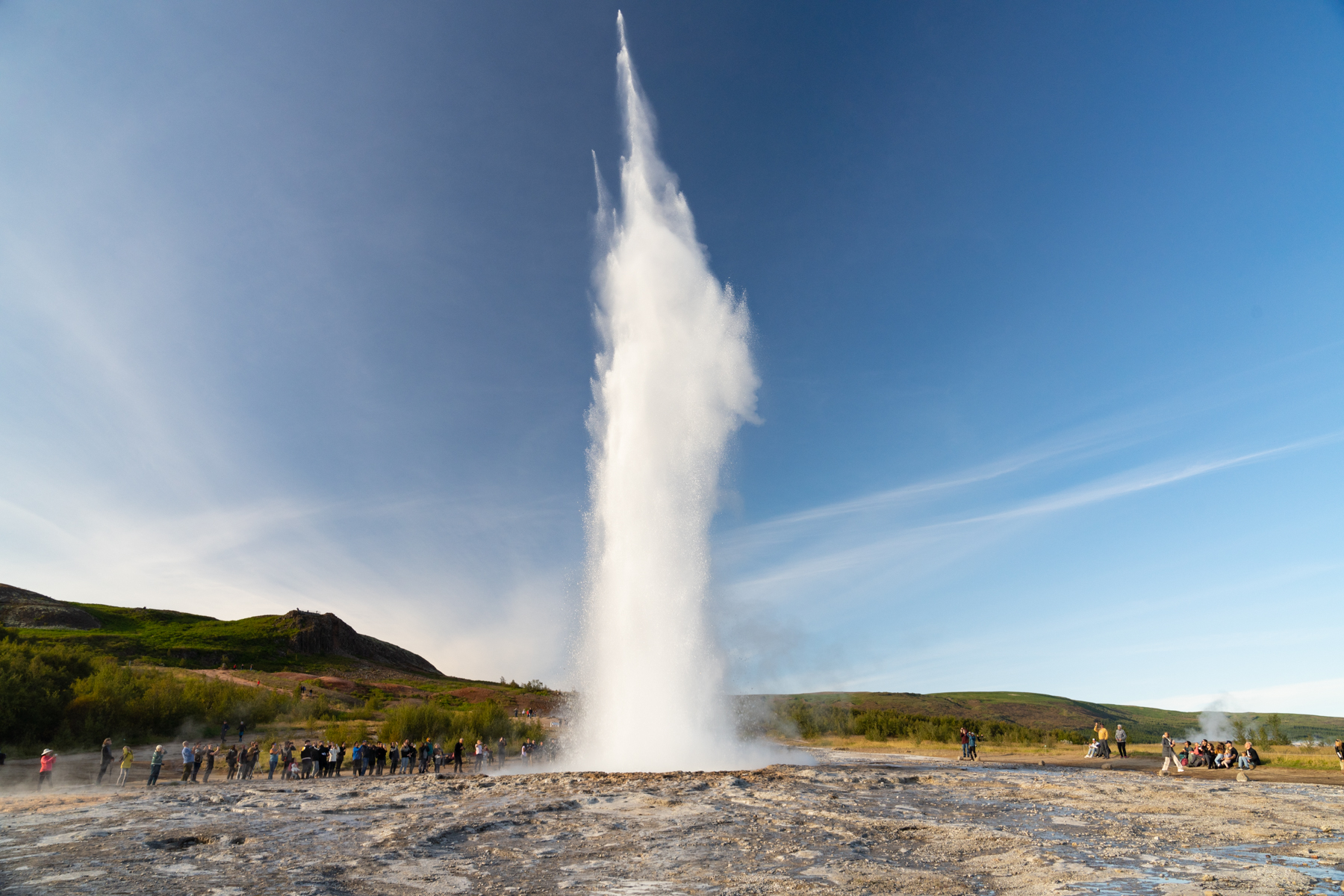
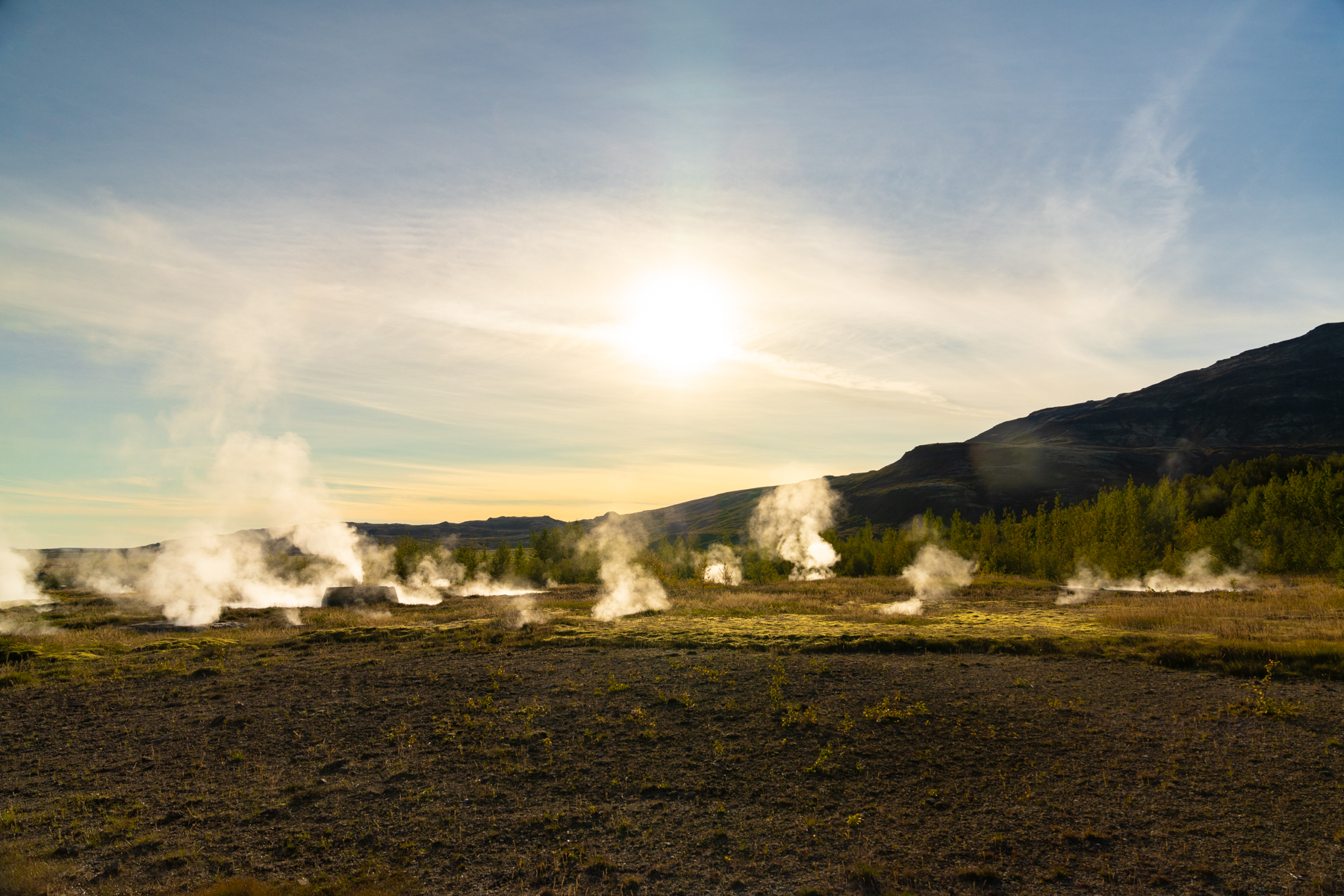
We departed the Kerið crater lake and continued on highway 35 to the Geysir hot spring area. This area has boiling mud pits, lots of small steam vents, and the impressive Strokkur geyser, which erupts every few minutes. (The people in the picture below give a good indication of the height and power of this geyser.)
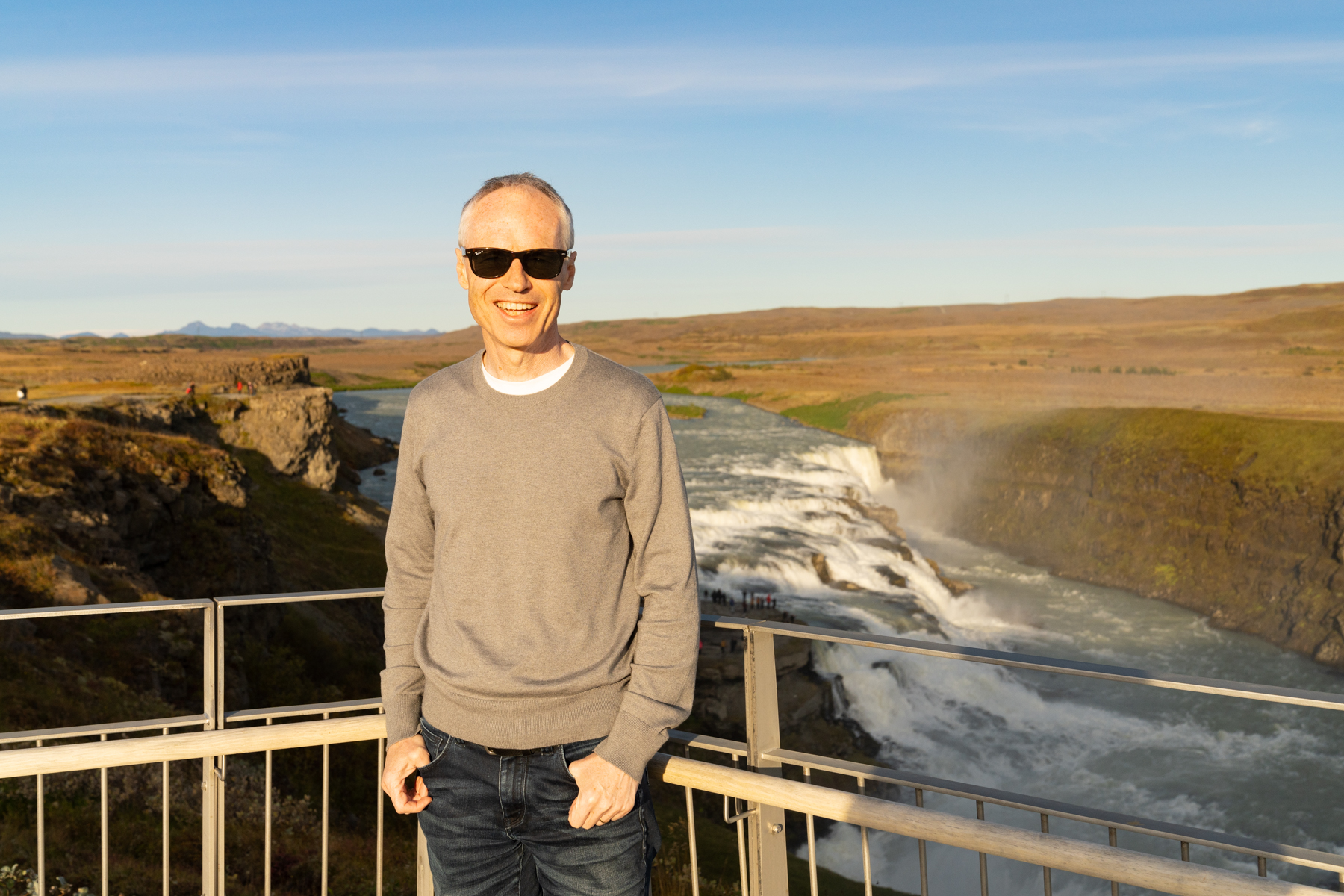
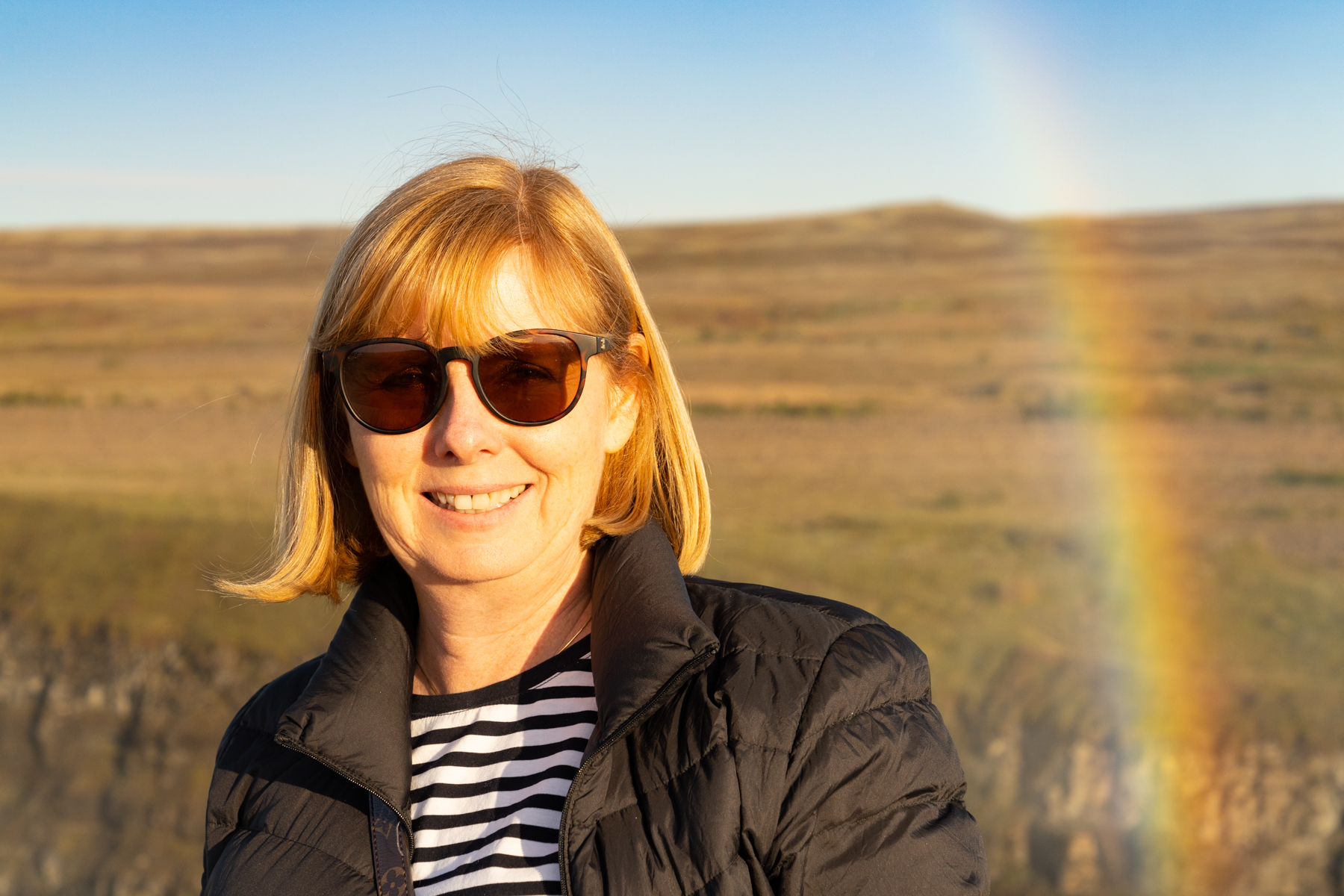
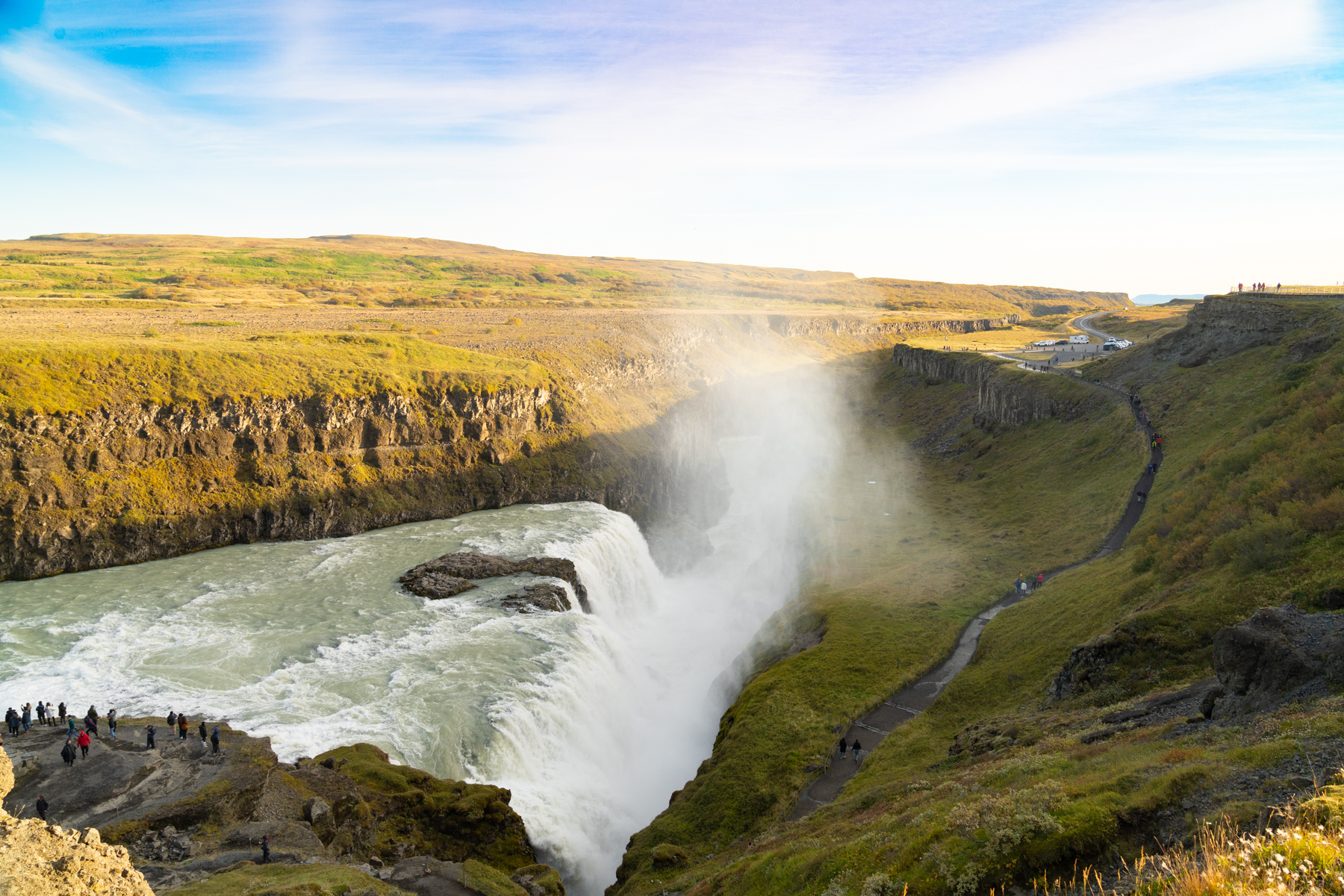
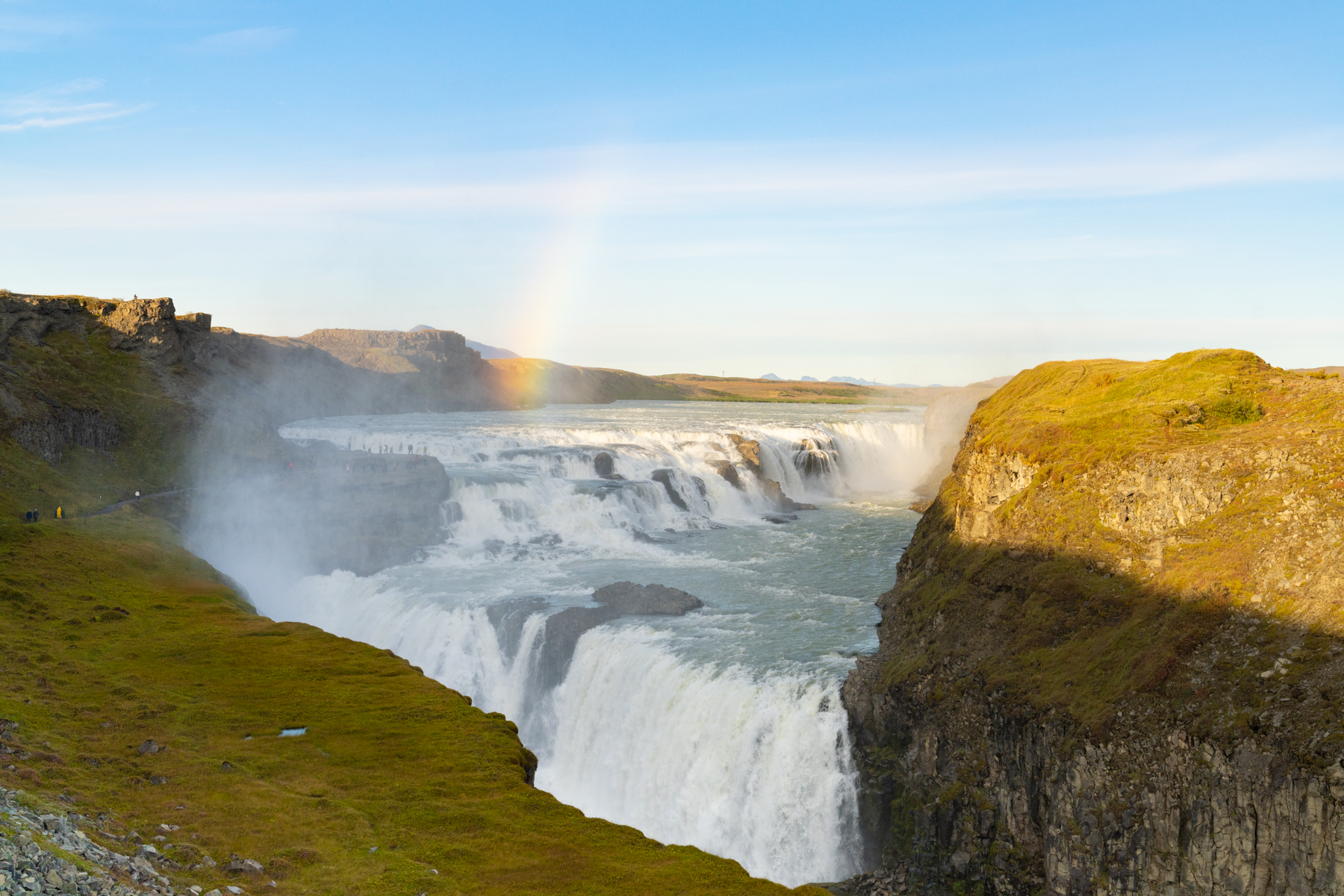
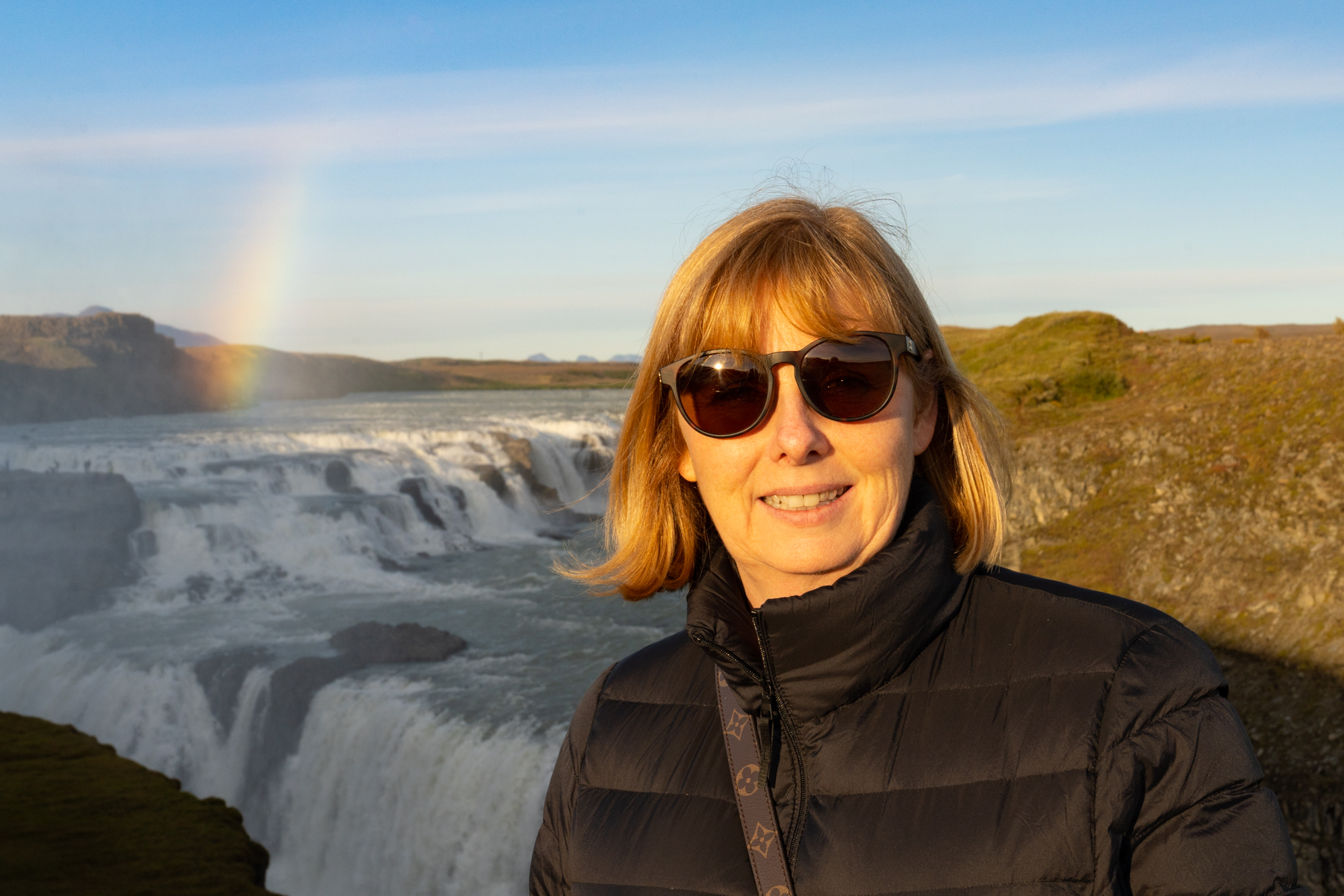
We spent a little time at Geysir, having a coffee at the visitor centre to recharge. We then set off for Goðafoss, a waterfall in the canyon of the Hvítá river. The water in the Hvítá river travels from the Langjökull glacier, the second largest ice cap in Iceland (nearly 1,000 km2), before cascading 32 metres down two stages of the waterfall. The canyon walls on both sides of the waterfall reach heights of about 70 metres. Geologists believe that the canyon was formed by glacial outbursts at the beginning of the last ice age. It is a spectacular sight.
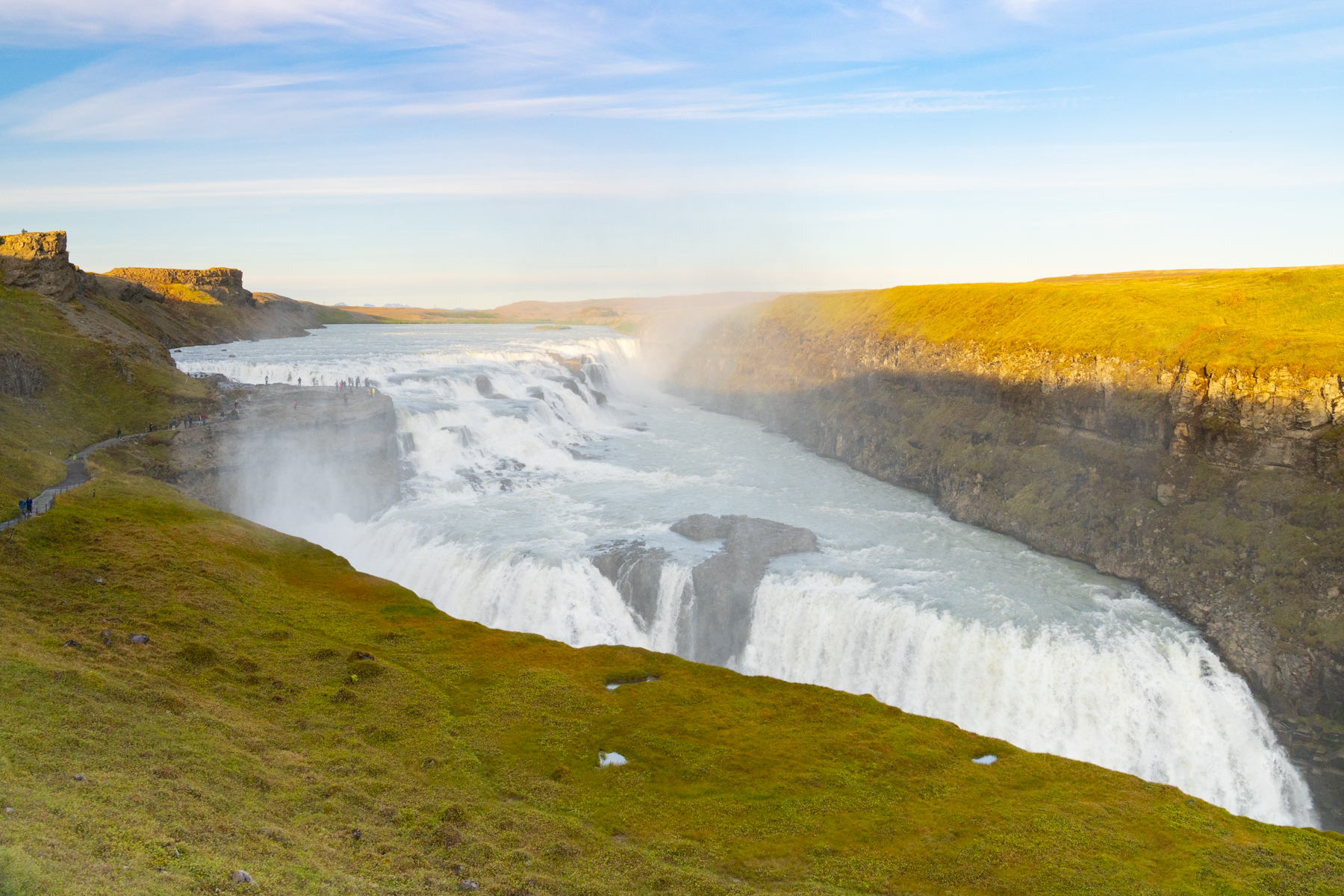
From the falls we headed to the Þingvellir National Park, about an hour’s drive west. The national park comprises dried magma fields covered in Icelandic moss that sit carved by glacial springs and surrounded by a bowl of ancient mountain peaks. Exposed in the park are the North American and Eurasian tectonic plates, which is quite amazing. The name Þingvellir roughly translates to “fields of parliament” and refers to the area’s fascinating history and place in Icelandic culture. It is here that the world’s first democratically elected, and still functioning, parliament was formed in 930 AD. It is also the place where Icelanders abandoned paganism and the belief in the Norse gods (under threat of invasion from Norway, whose king had converted to Christianity around 998 AD).
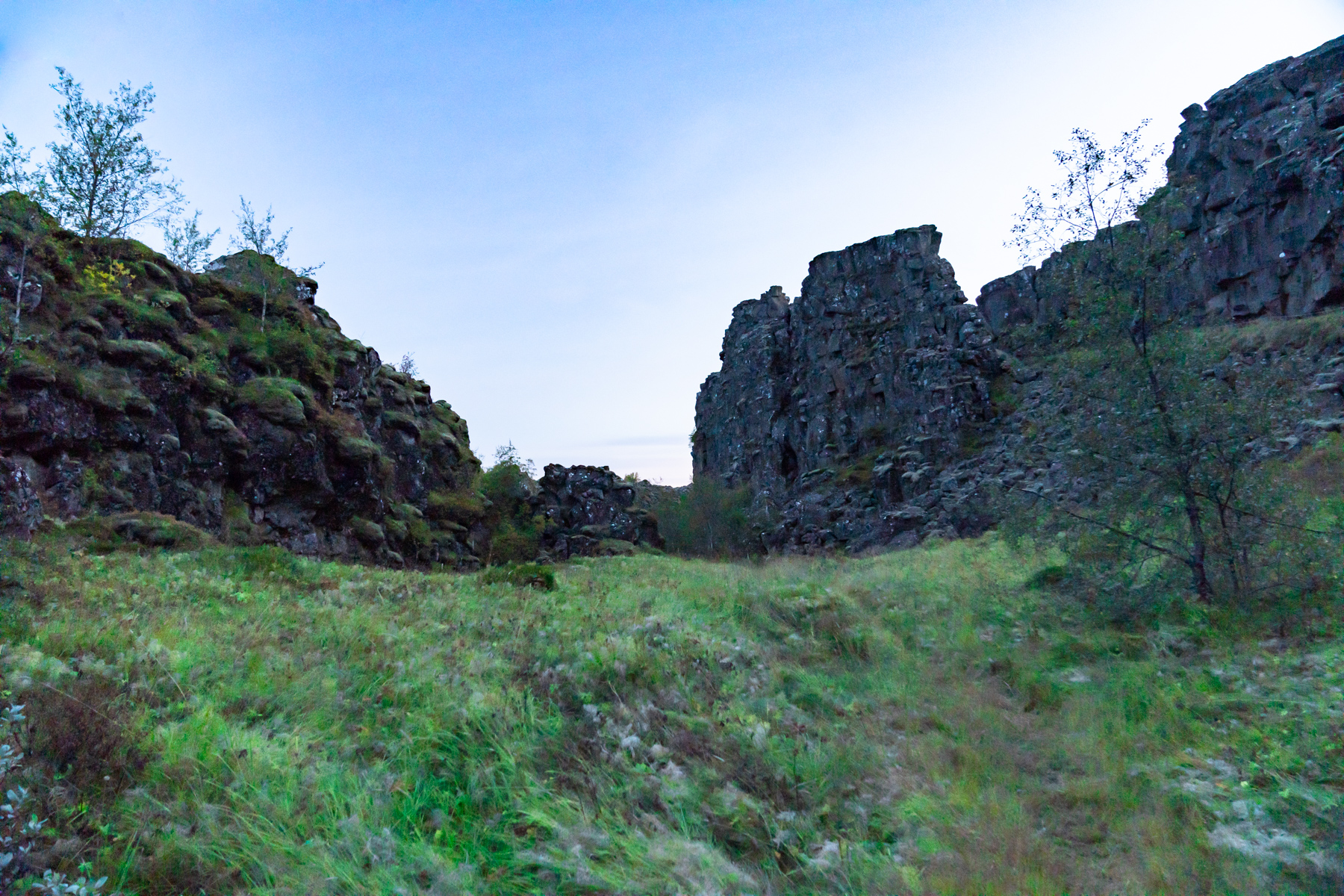
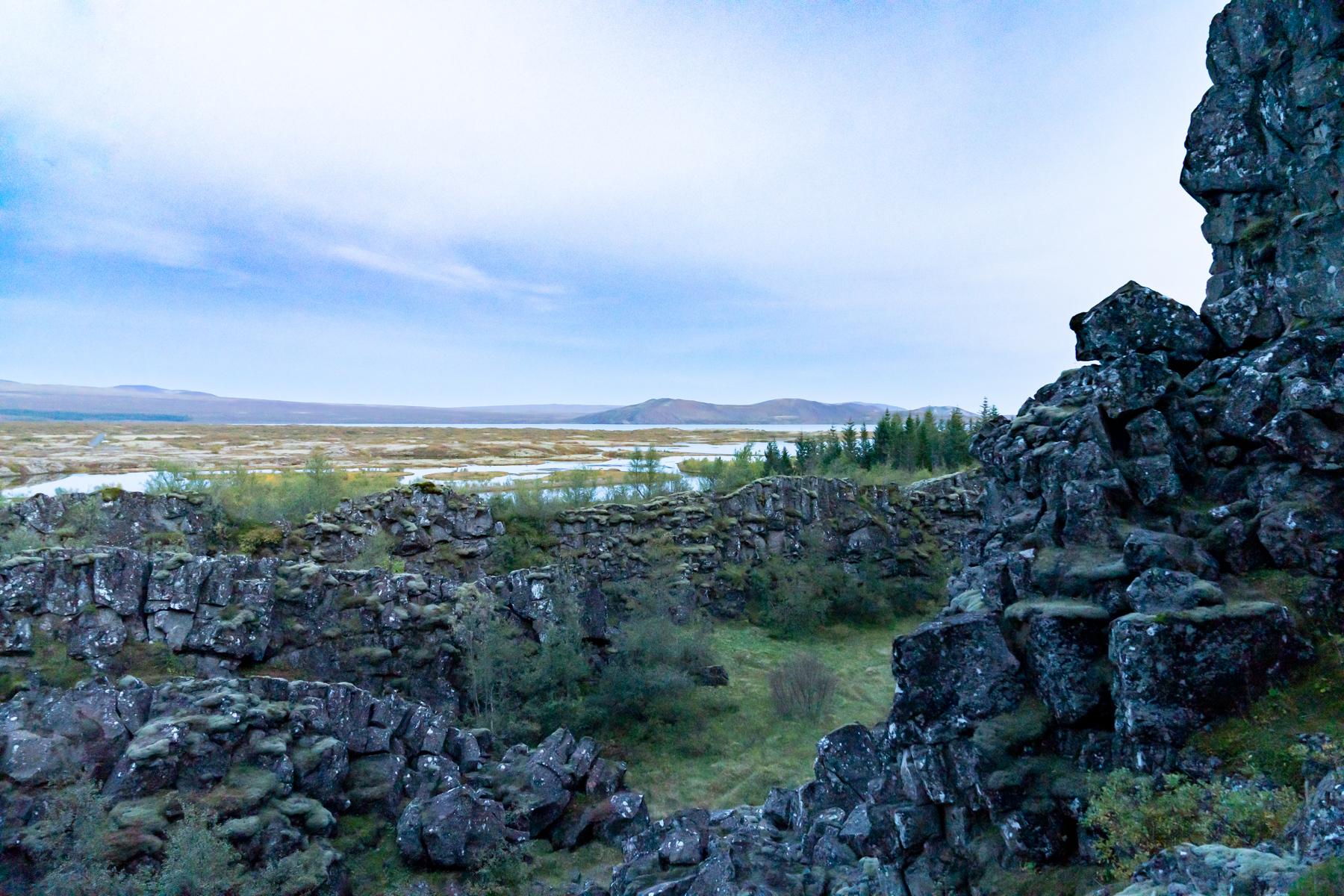
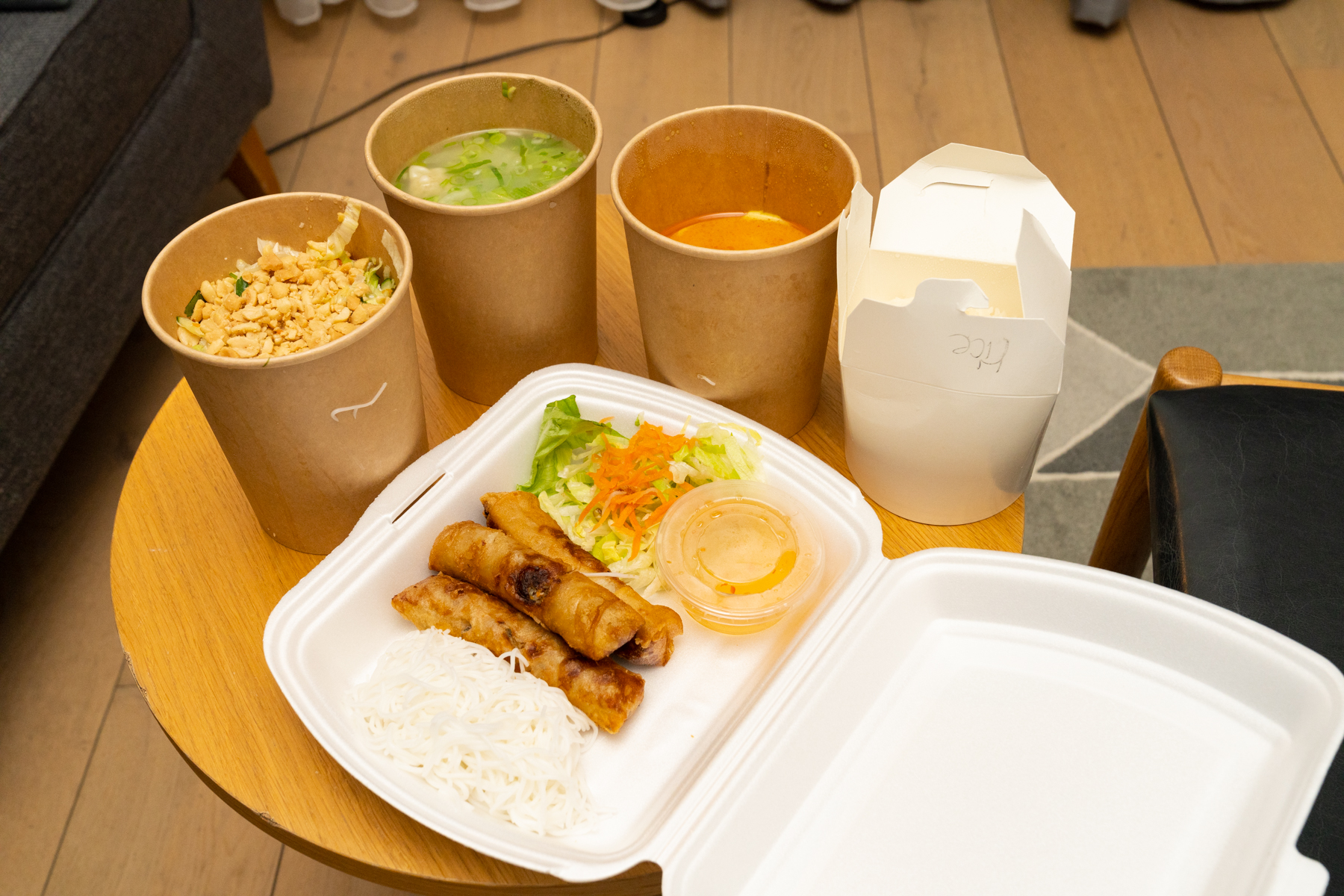
By the time we left Þingvellir National Park, it was nearly dark. Our next destination was our final one for the day, our hotel in Reykjavik. By the time we got to the hotel it was nearly 10:00 pm. We discovered that Reyjavik’s city centre had a lot of one-way streets but we managed to get to the hotel pretty easily. It wasn’t really clear where to park the car so we just left it in the narrow one-way street in front of the hotel and headed in to check in. We enquired about having the car parked (turns out that we had to do it ourselves!), where the hotel car park was (there wasn’t one!), who would bring in our bags (we did!), and whether room service was still available for dinner (there was no room service!). So, after unloading our suitcases, taking them to the room, and parking the car, we headed out to find something to eat. Most restaurants were closed; however, we found a Vietnamese restaurant that was just still open and would cook us some take-away, so we opted for that. Not exactly a Michelin-starred dinner but very tasty nonetheless.
It’s now time for bed after what has been a very big day. Tomorrow, we plan to take it a bit easier and just do some exploring around Reykjavik.