
Around The World
Now in Morocco
We spent last night on a very turbulent six-hour flight from New York to Casablanca. It was so bumpy that we couldn’t even get a glass of water until about three hours into the flight. By the time we’d landed in Casablanca (7:30 am local time but 3:30 am New York time), we’d had very little sleep.
We were met at the plane gate by a young lady who efficiently escorted us through a priority line at immigration.
We then converted some cash to the local currency (Moroccan Dirham), after which we bought two local phone numbers
(since the roaming charges in Africa for us are pretty extreme). With cash and phones sorted, we collected our bags
and headed out to meet our guide (Mohamed) and driver (Dawad).
We were excited to be in Morocco but, nonetheless, were keen to get a little rest before we headed out exploring.
We asked Mohamed how far it was to the hotel, and he informed us that it was nearly 400 kilometres away! So,
we settled in for the drive.
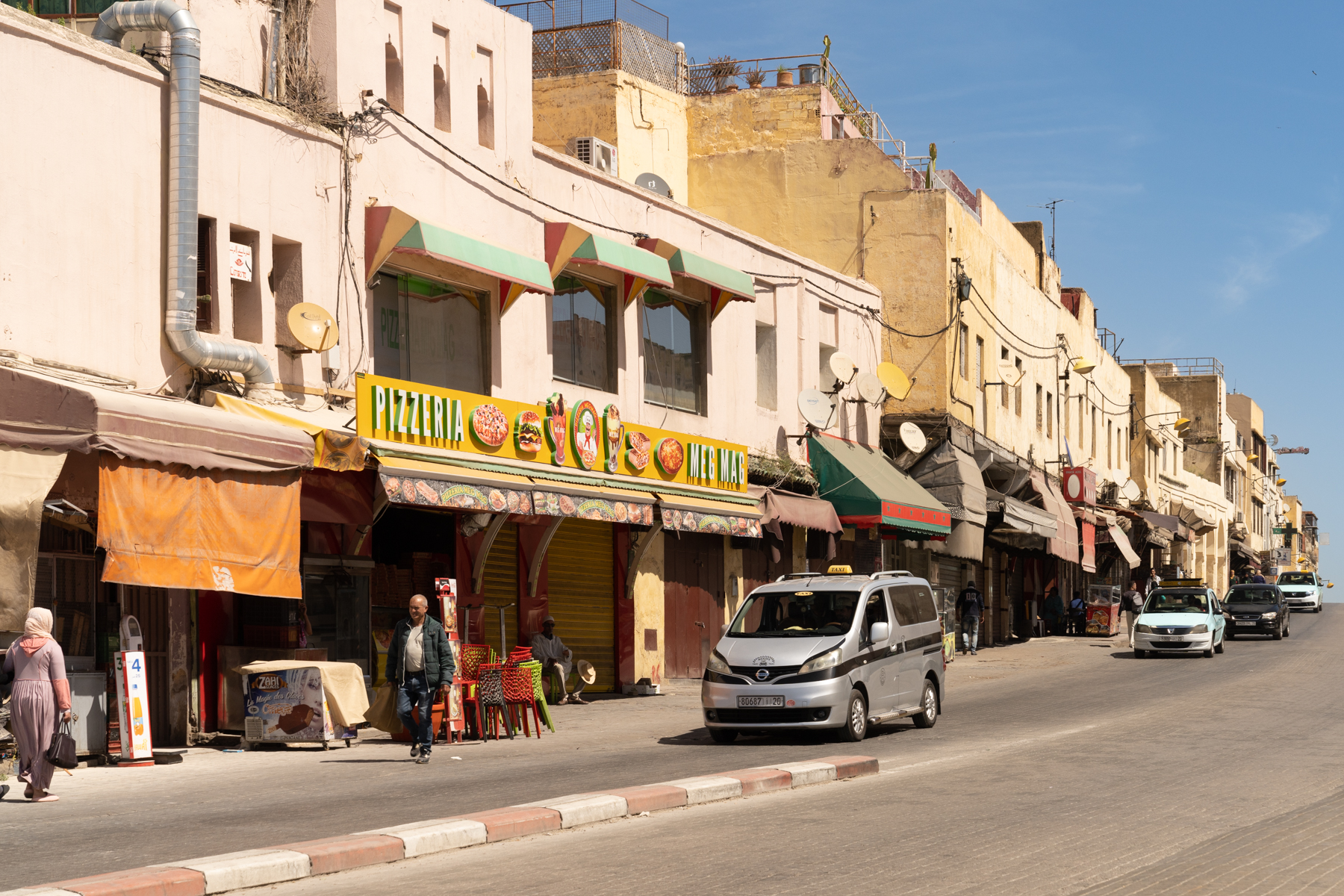
Our first destination was the ancient city of Meknes, founded in the 11th century. We drove around the impressively large city walls before hopping out of the car and going for a walk through the local market, which was very interesting.

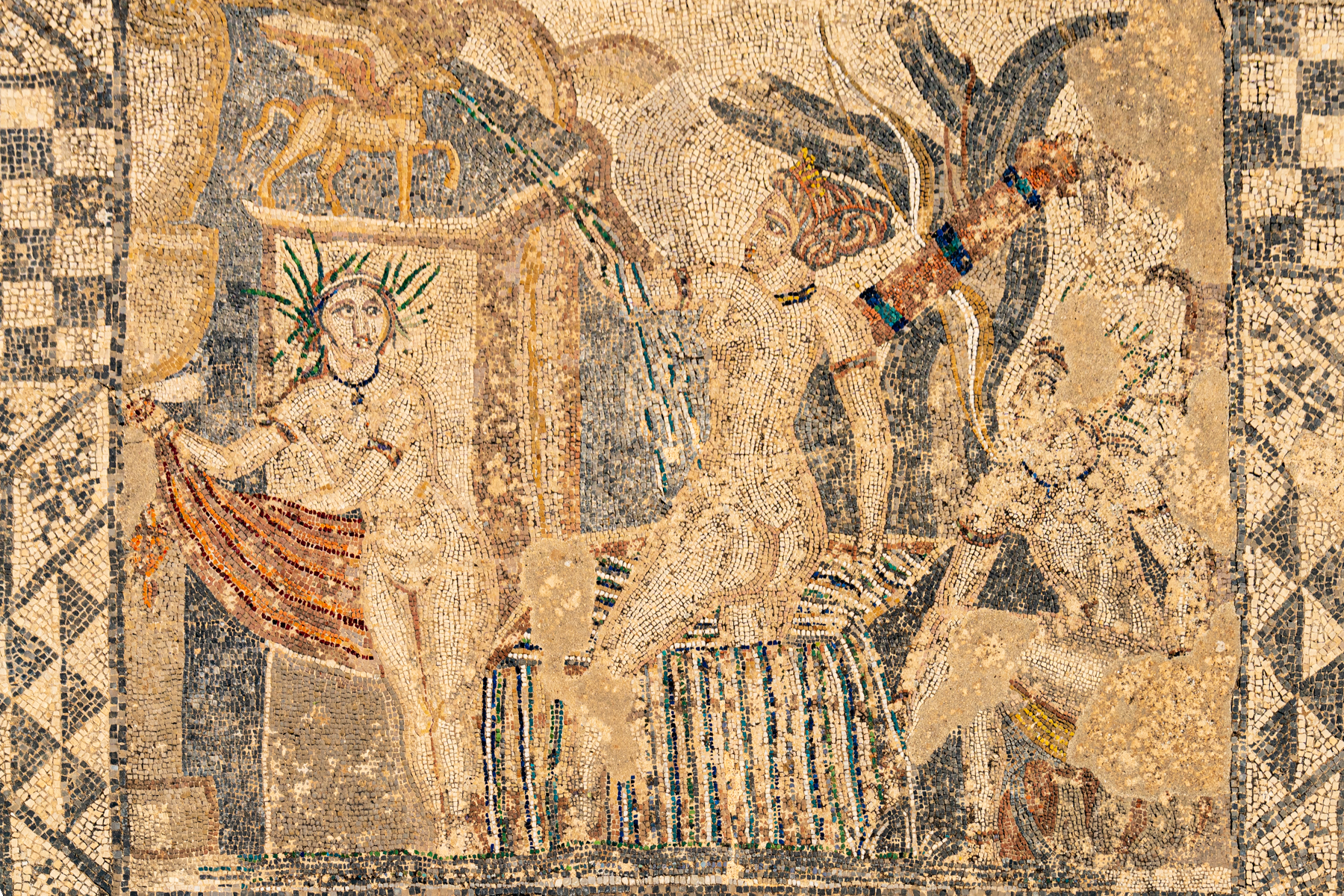
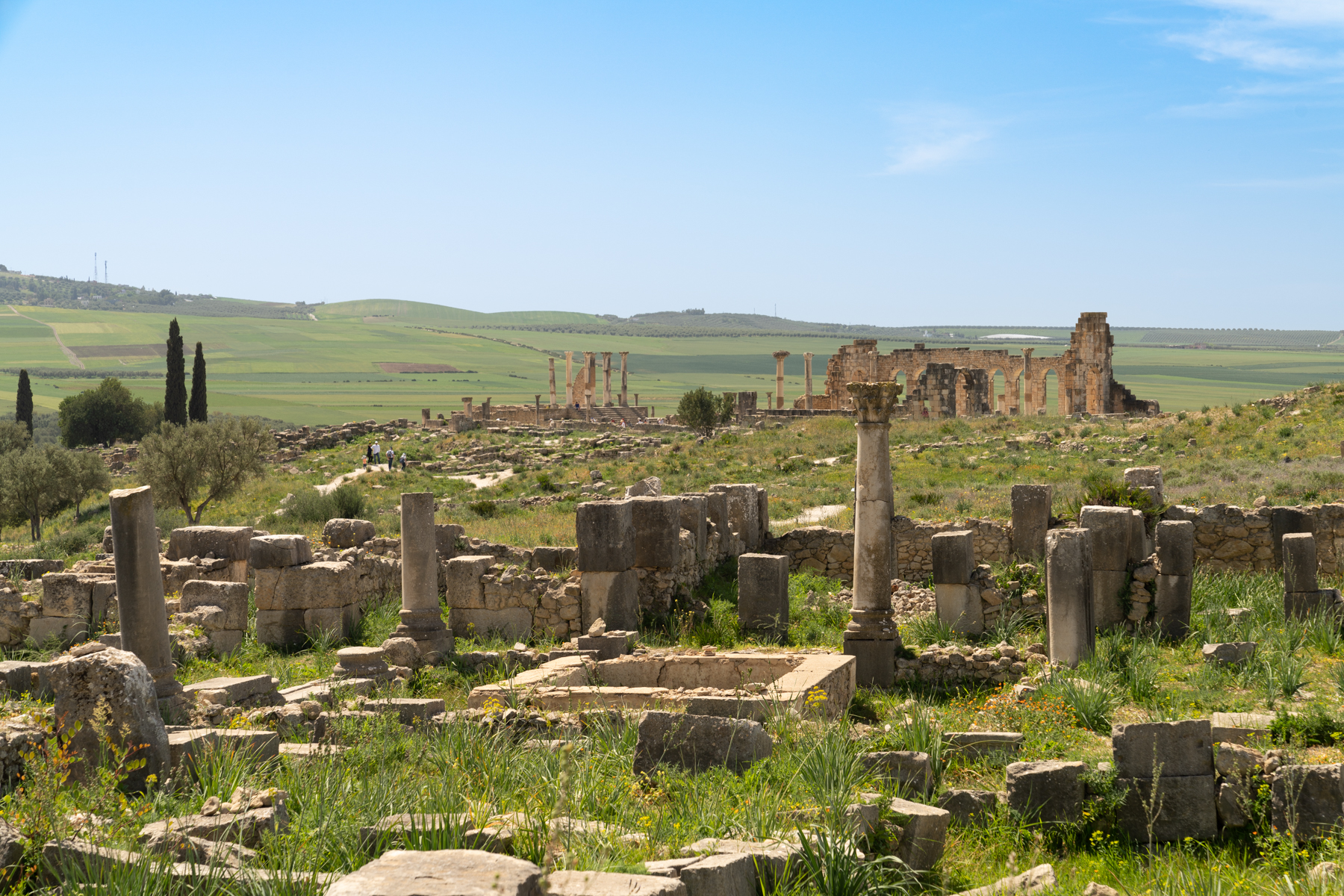
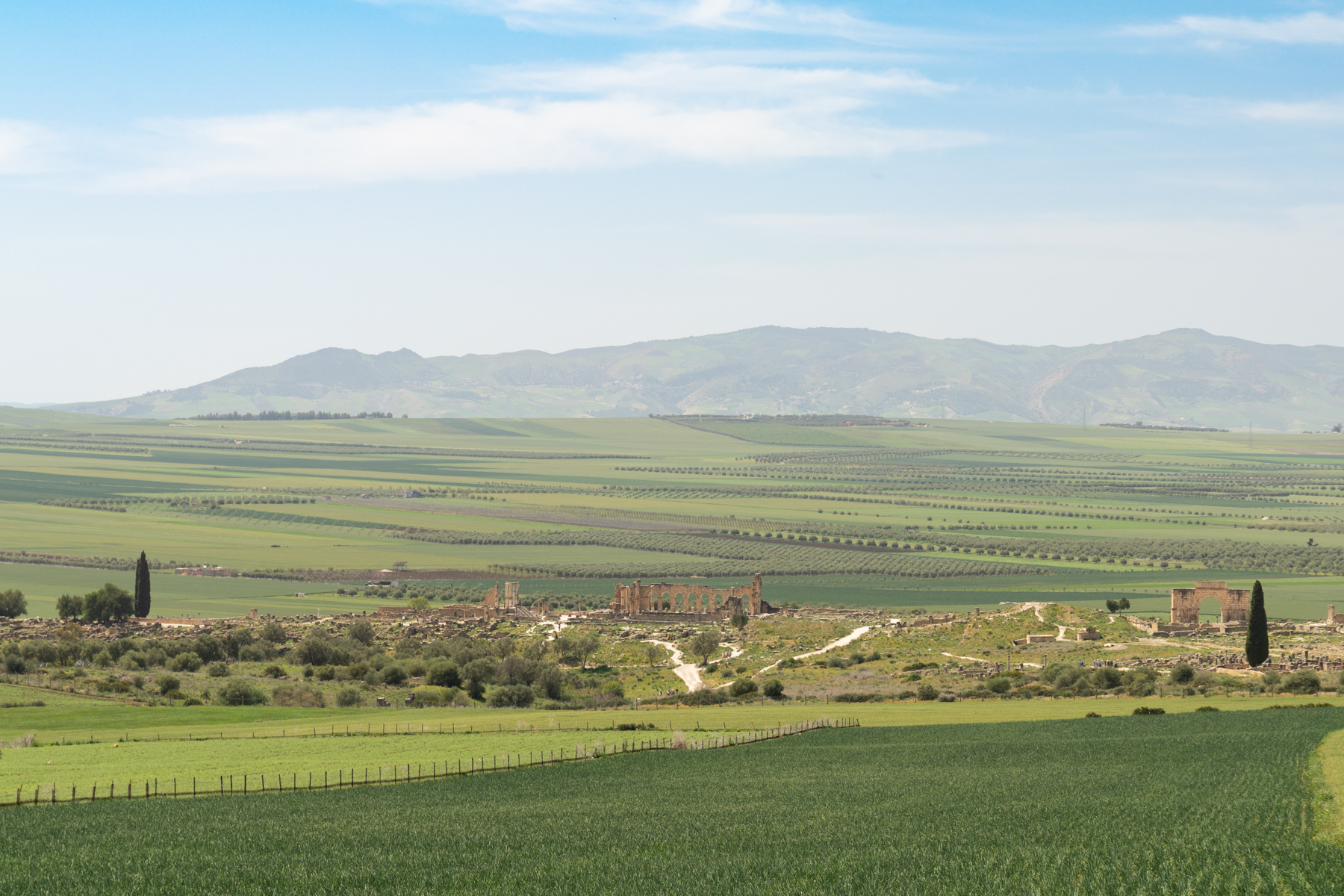
We got back in the car and proceeded north for about 45 minutes to the historical site of Volubilis, a partly-excavated Berber-Roman city that was built in the 3rd century BC. Volubilis expanded rapidly under Roman rule from the 1st century AD to an area of about 42 hectares (100 acres), primarily as a result of its profitable olive-growing industry. In the 2nd century AD, a basilica, a temple, and a triumphal arch were built. Many of the houses in the city had beautiful mosaic tile floors, some of which had been recovered and restored by local archaeologists.
Volubilis was attacked and over-run by local tribes around 285 AD and, due to its remoteness, was never re-taken by
the Romans. It continued to be inhabited for another 700 years but was abandoned some time in the 11th century.
The site remained largely intact until it was destroyed by the 1755 Meknes earthquake and then looted for building
materials.
In 1722, John Windus, the British ambassador to Morocco, visited Volubilis and sketched the site. These sketches have been central to the restoration of the ruins, providing archeologists with a view of how the city looked before it was destroyed by the earthquake.
Volubilis is now a UNESCO World Heritage Site, listed for being “an exceptionally well preserved example of a large Roman colonial town on the fringes of the Empire”.
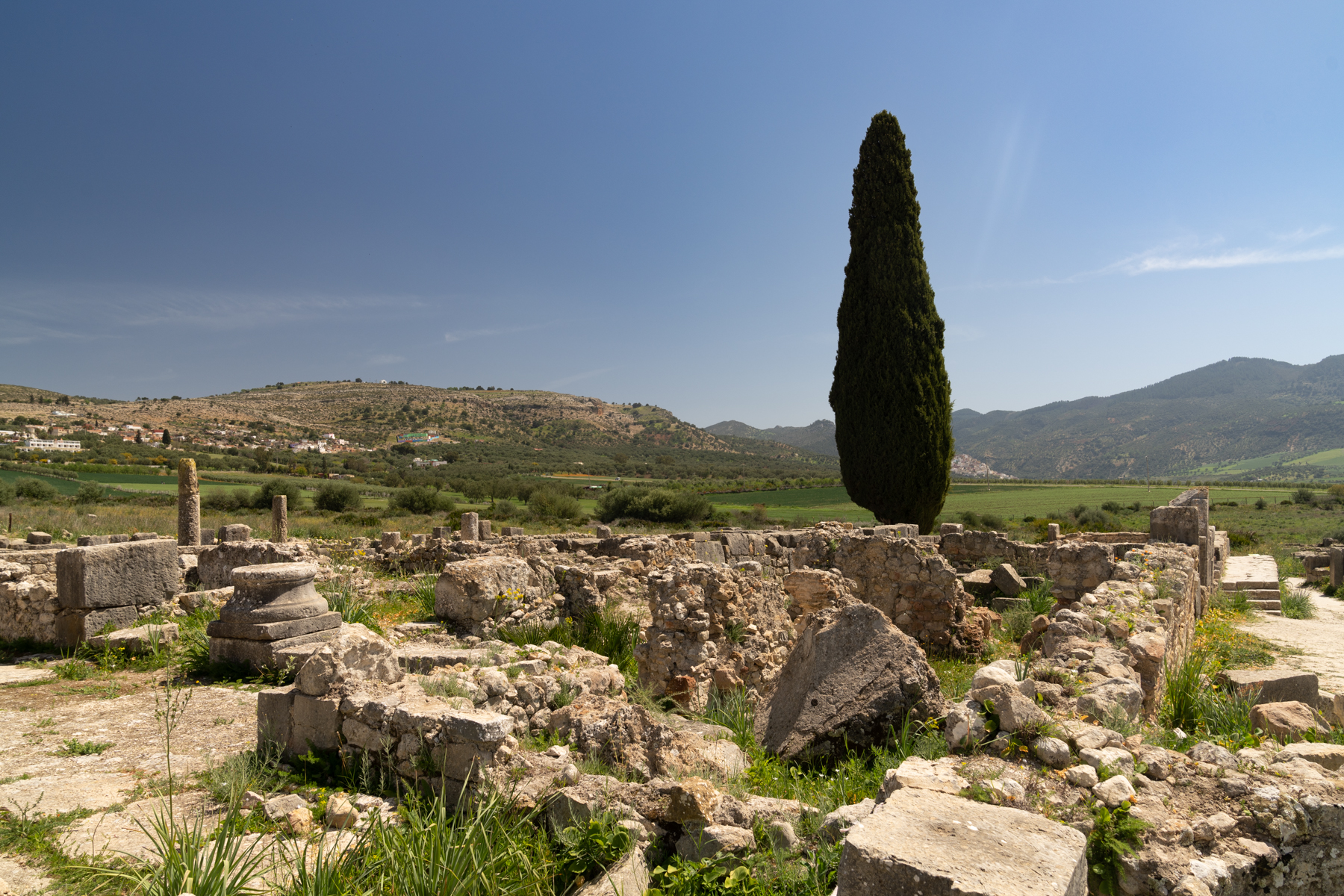
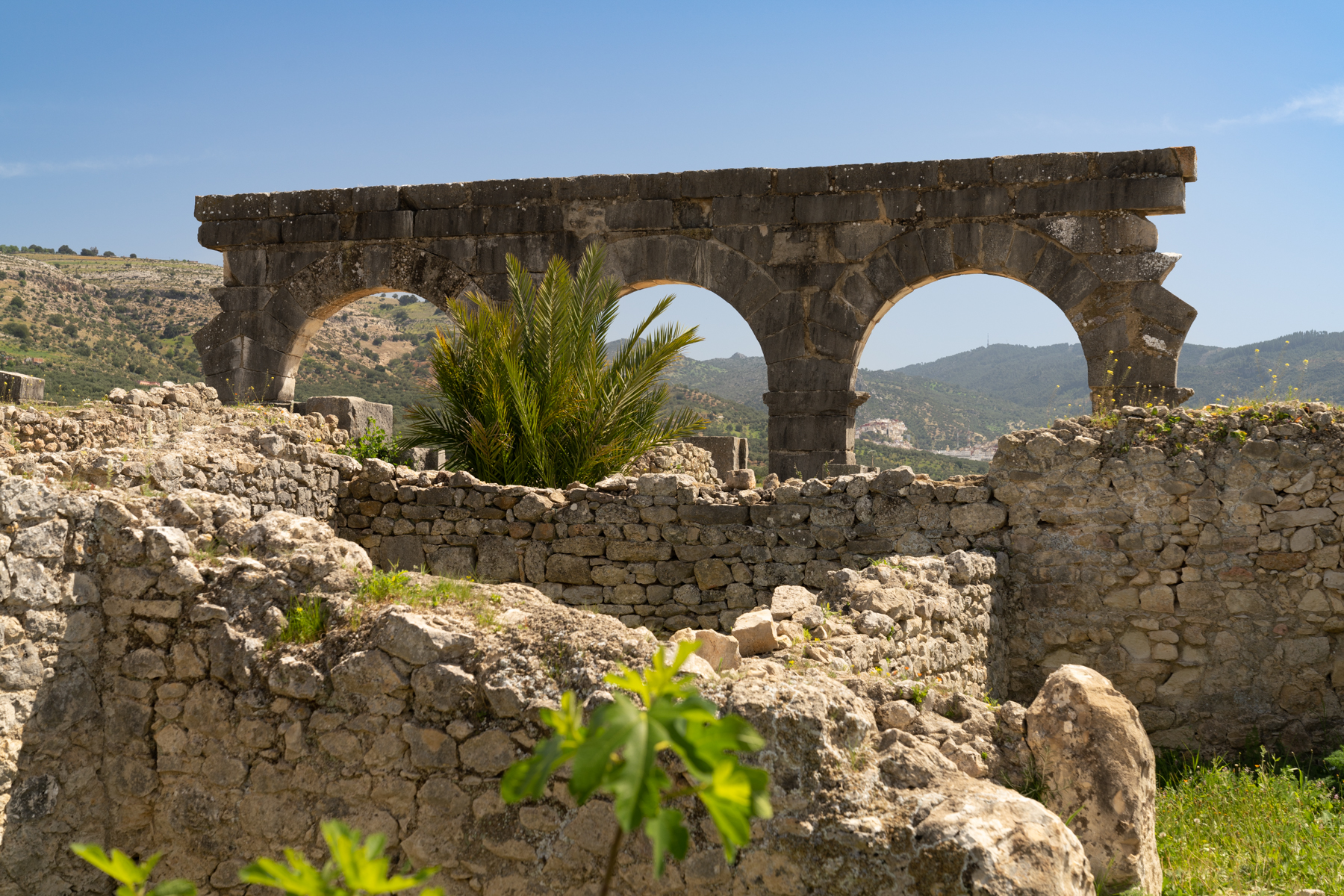
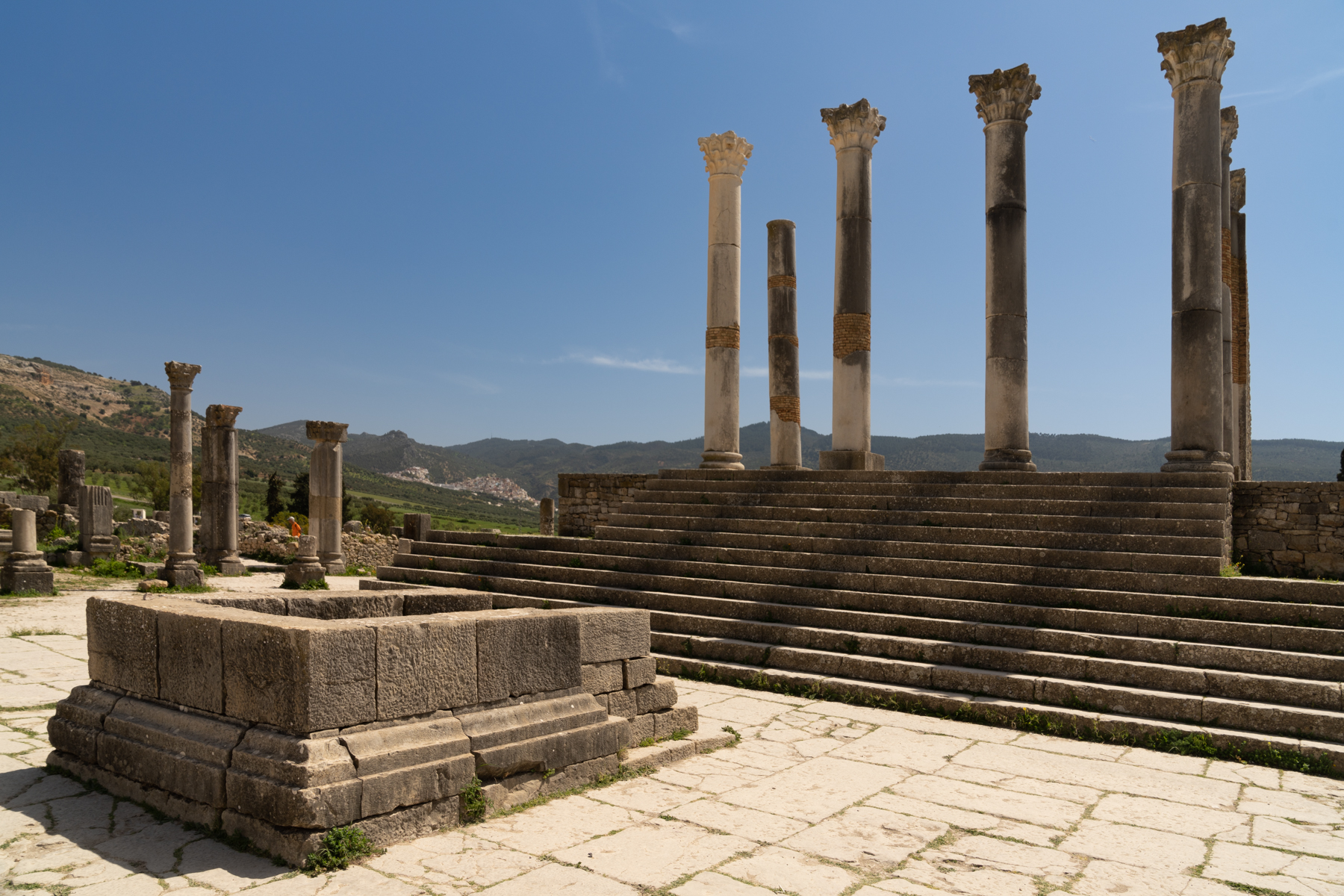
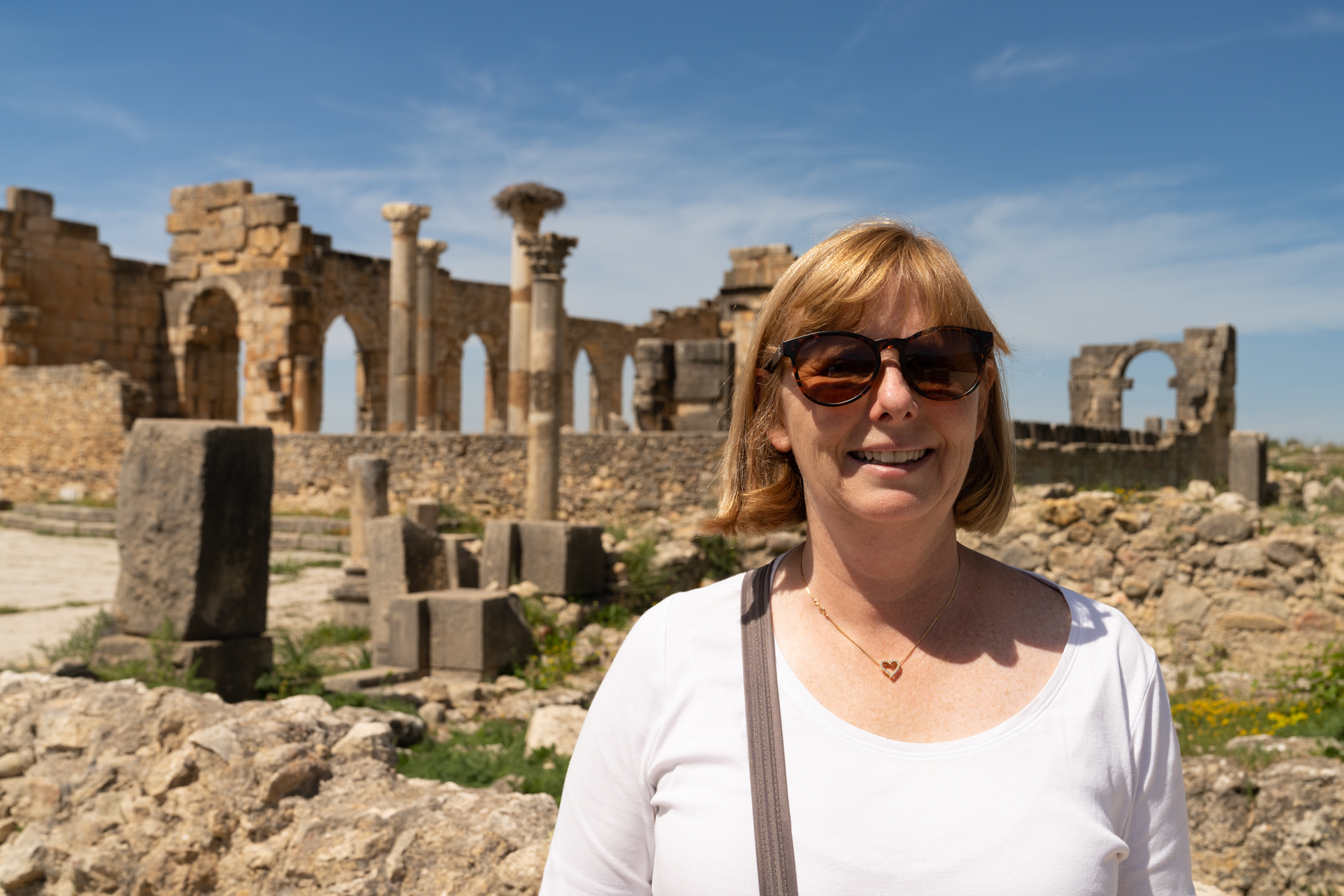
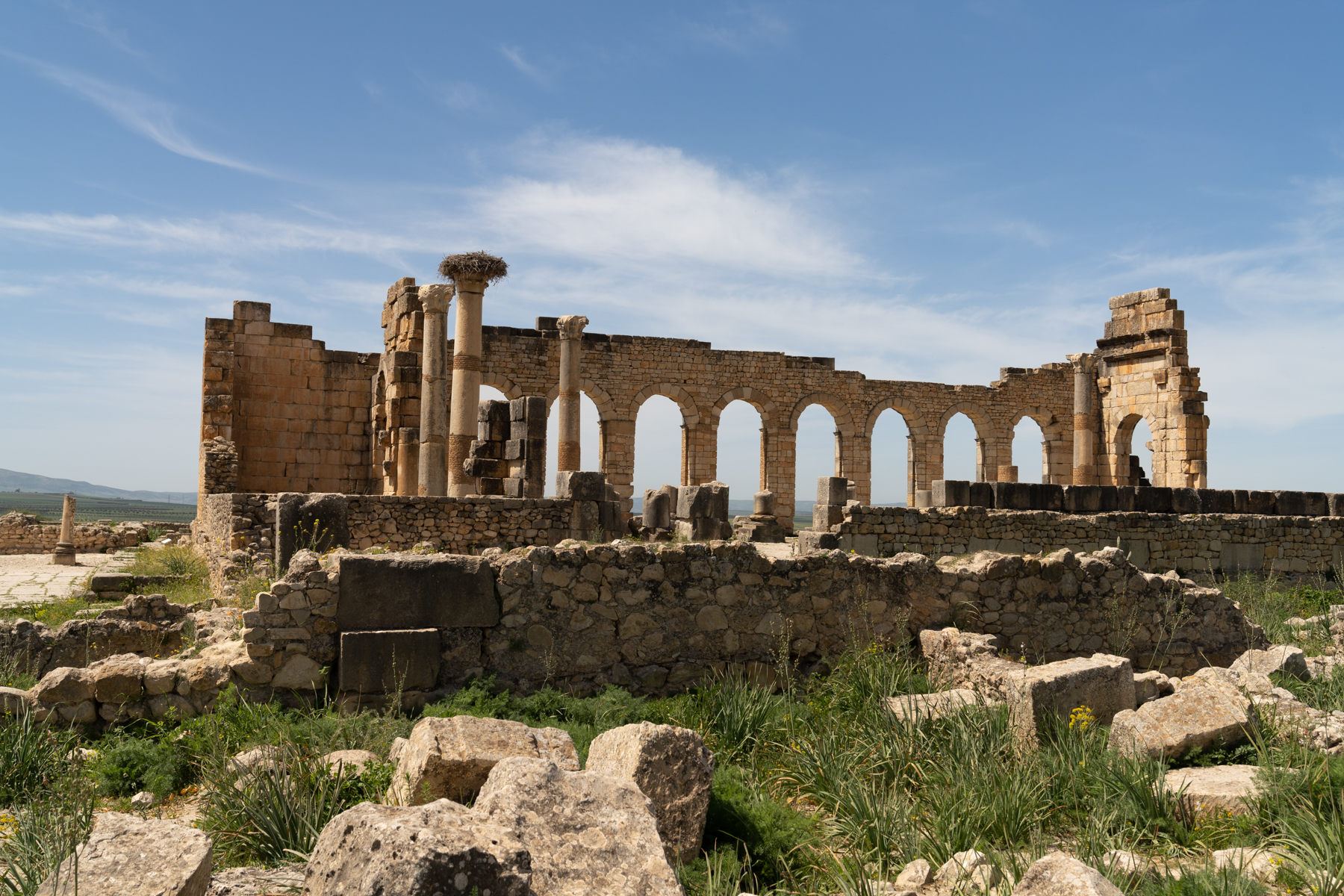
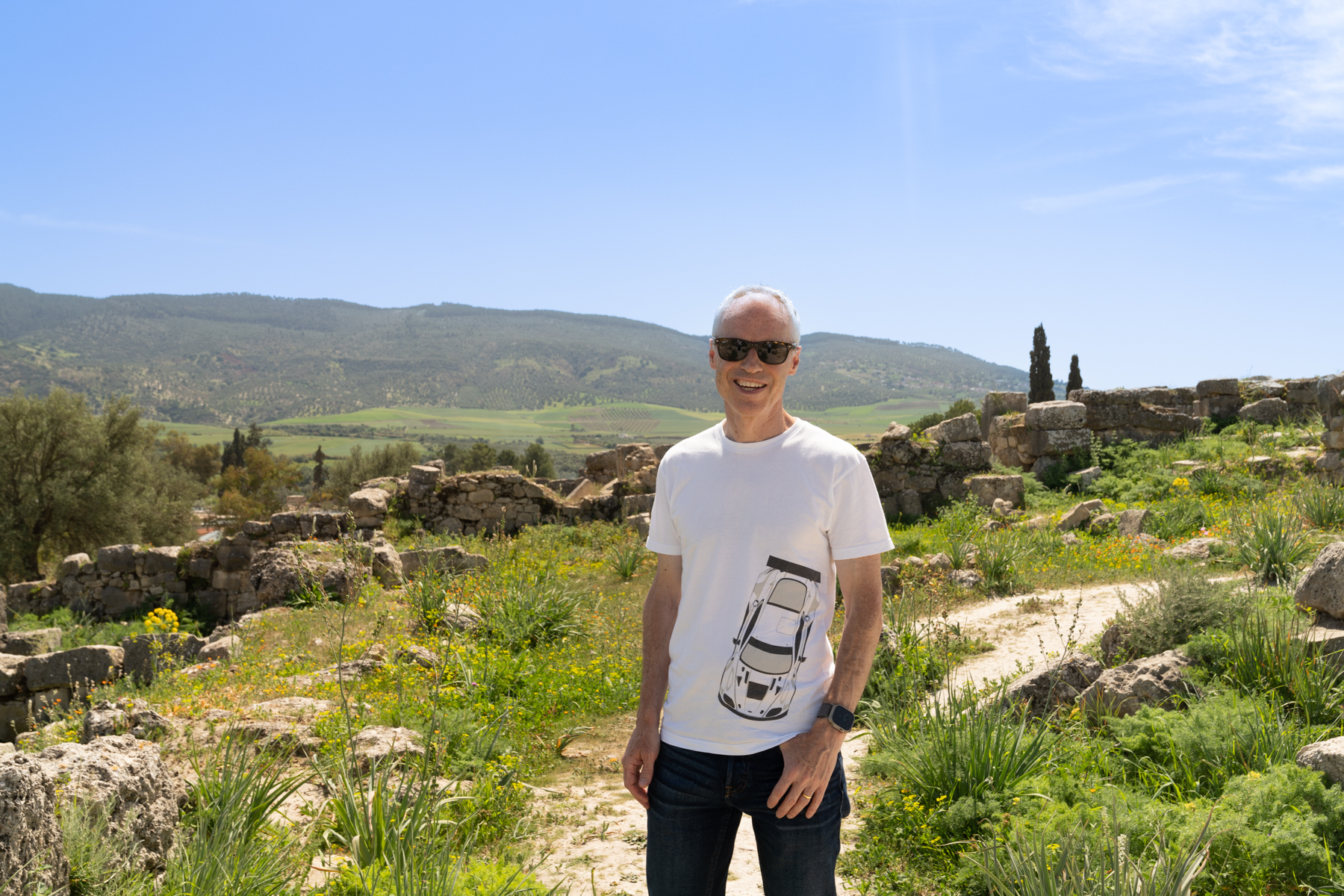
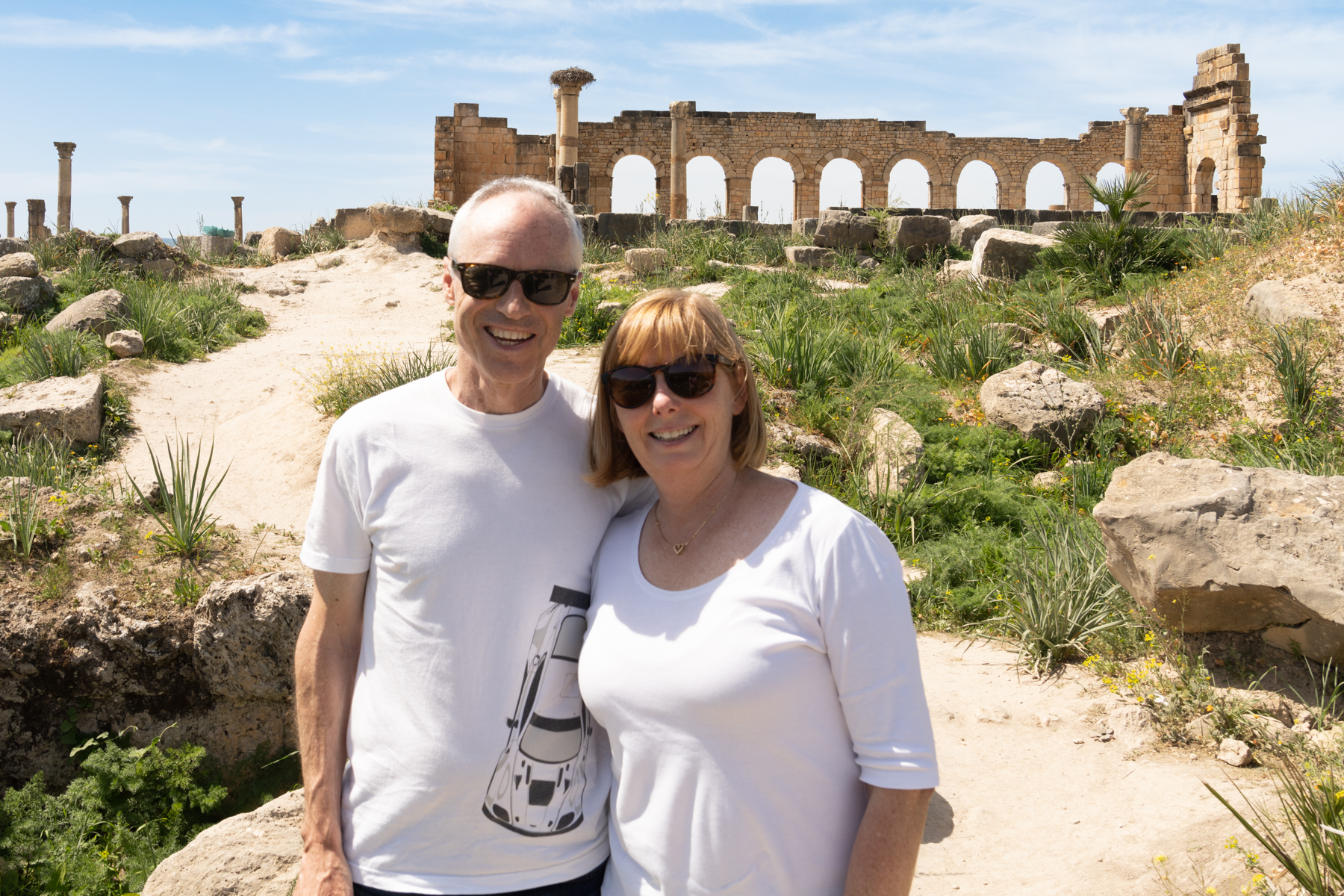
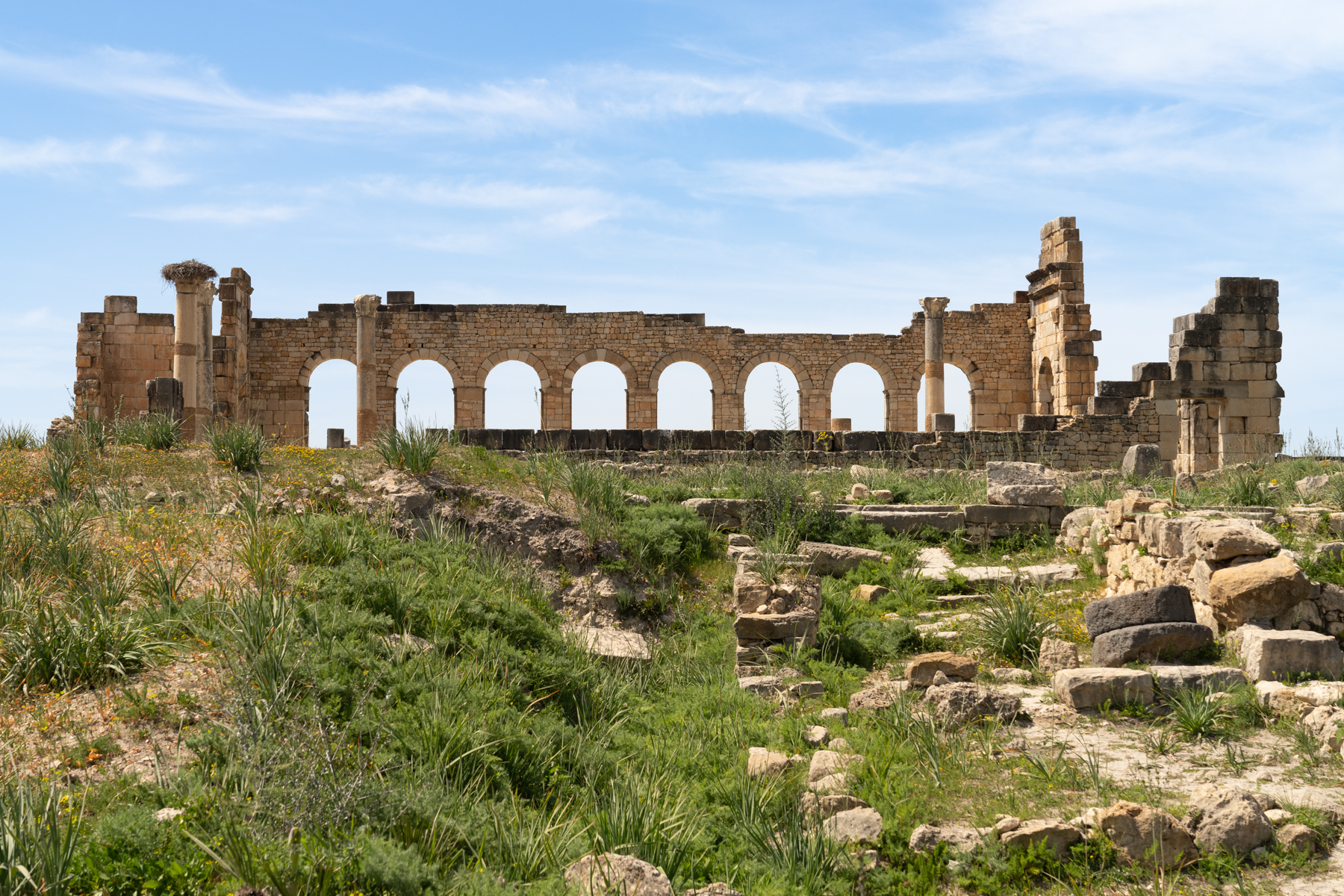
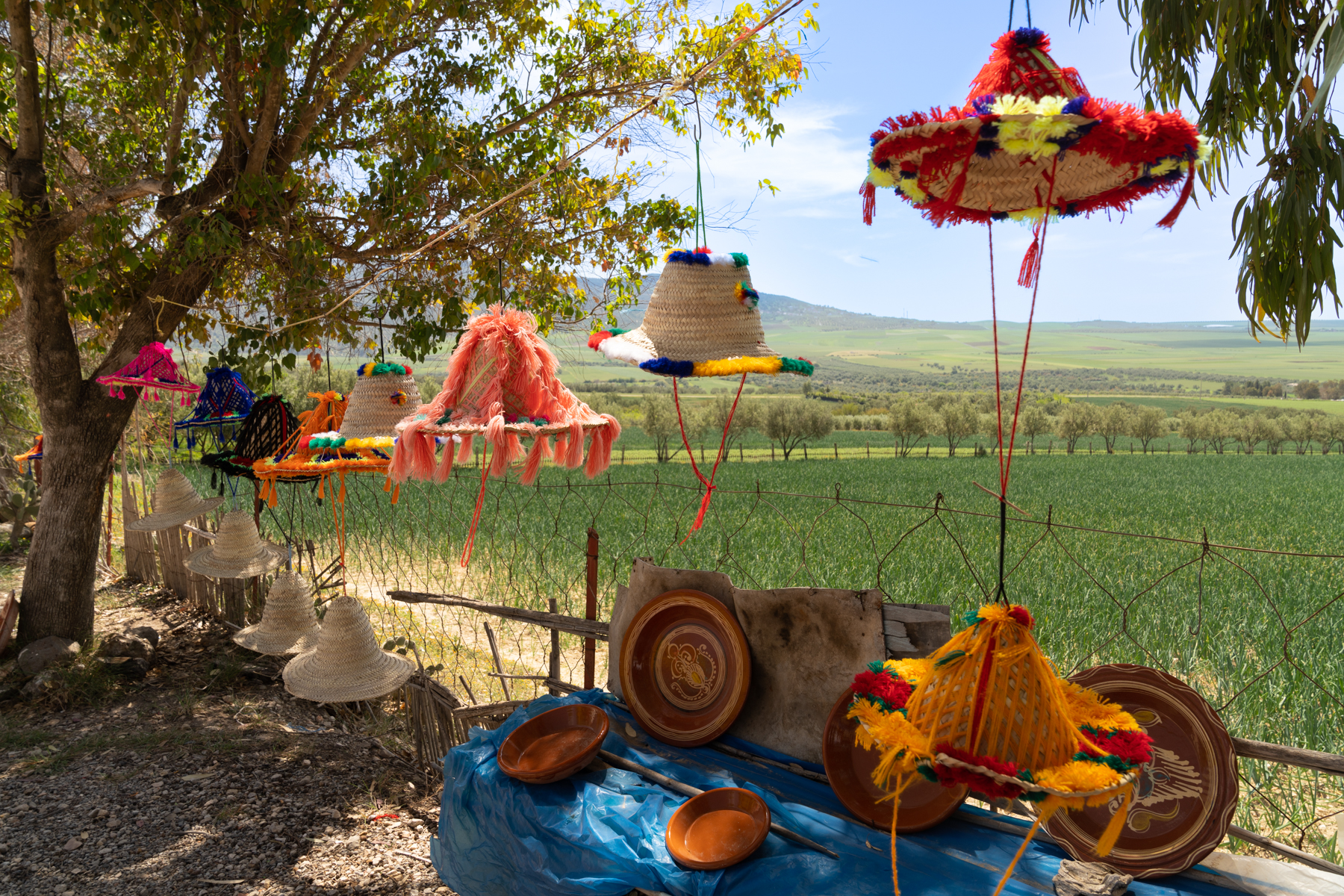
We left the Volubilis ruins and headed back onto the main road, where we stopped to look back and take a photo. We also admired the pretty roadside stall near where we stopped.
By this stage it was about 1:15pm. Our guide Mohamed had a winery in mind for lunch but since it is Ramadan here at the moment, food and drink (including water) are not consumed between sunrise and sunset by the locals. We said that we would be happy to fast with Mohamed and Dawad, so we skipped lunch and headed to our final destination for the day, the city of Fes.
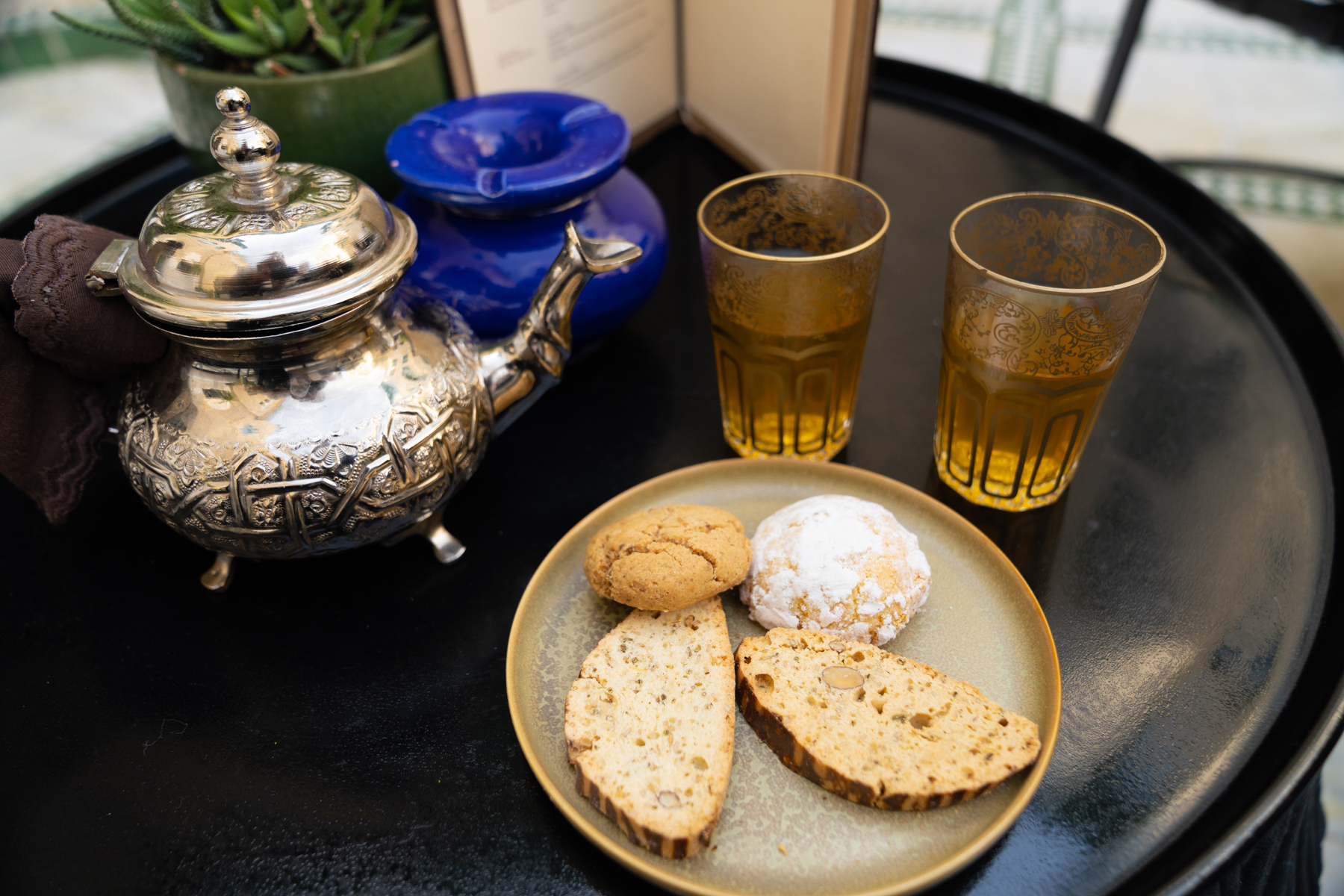
We got to the hotel in Fes, the beautiful Palais Faraj, around 2:45 pm. We checked in and sat in the lovely courtyard, and immediately forgot about fasting as we enjoyed a mint tea and some baked snacks.
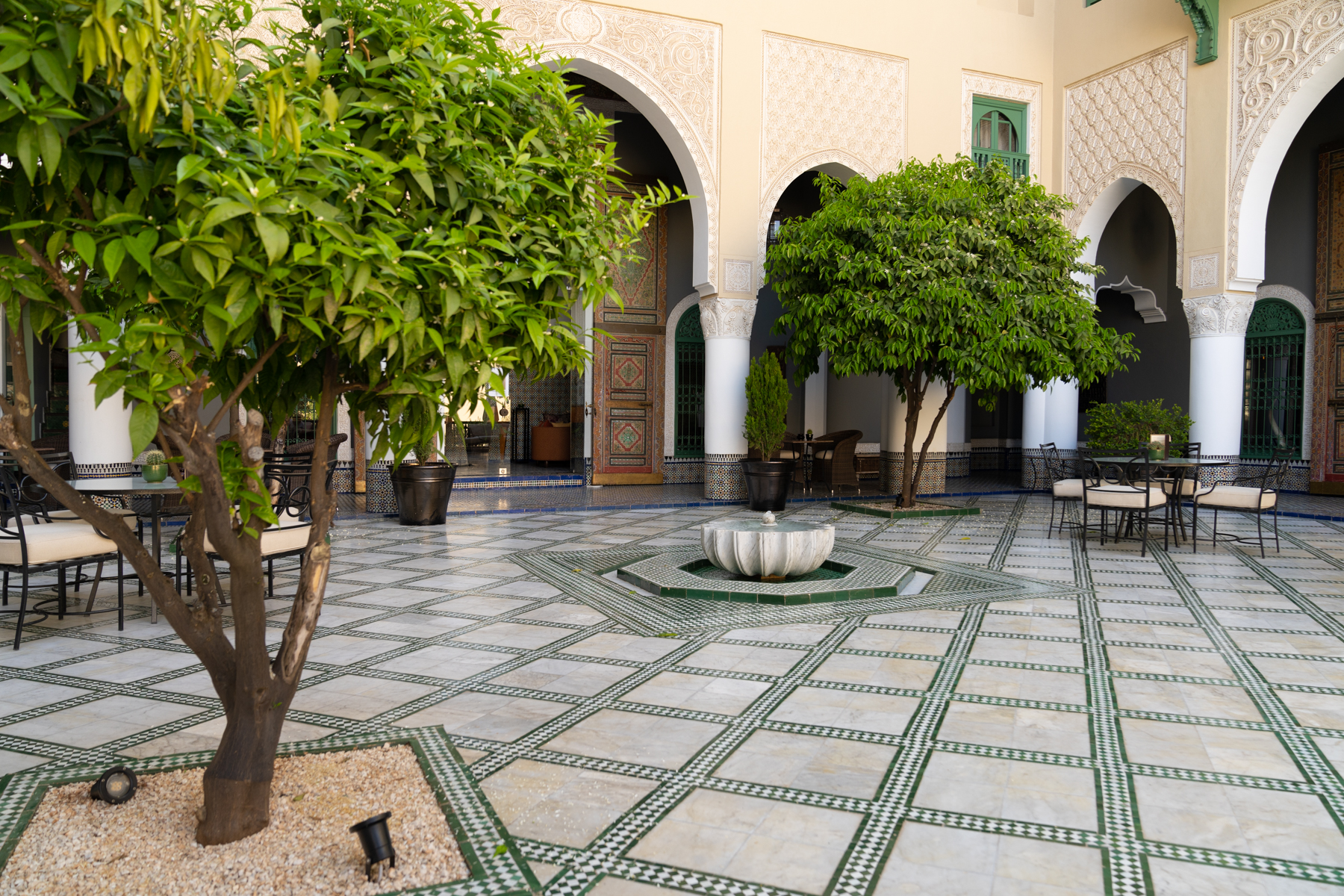
After relaxing in the courtyard for a while, we headed up to our room to settle in. The room is beautiful, very spacious, and on a corner with great views.
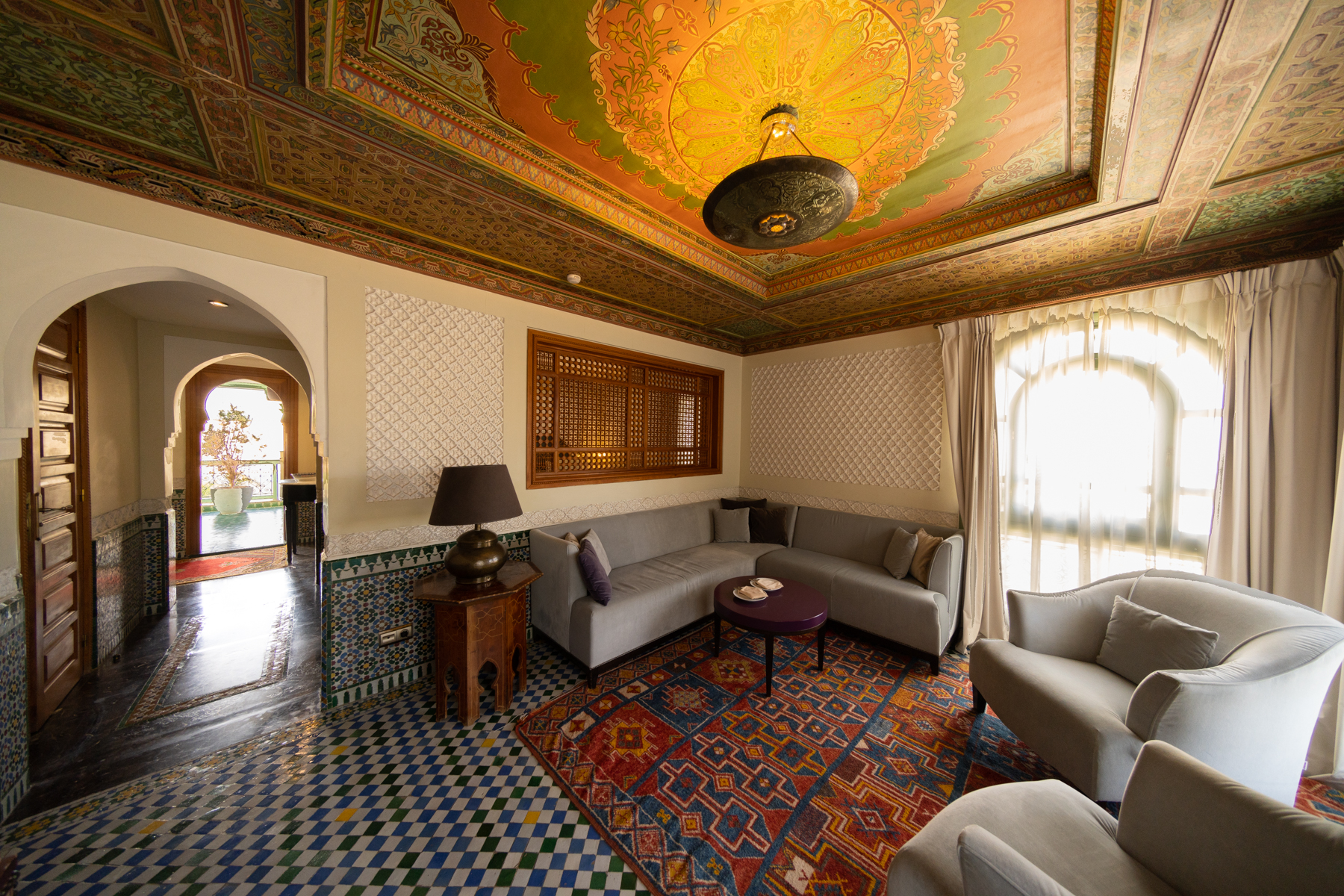
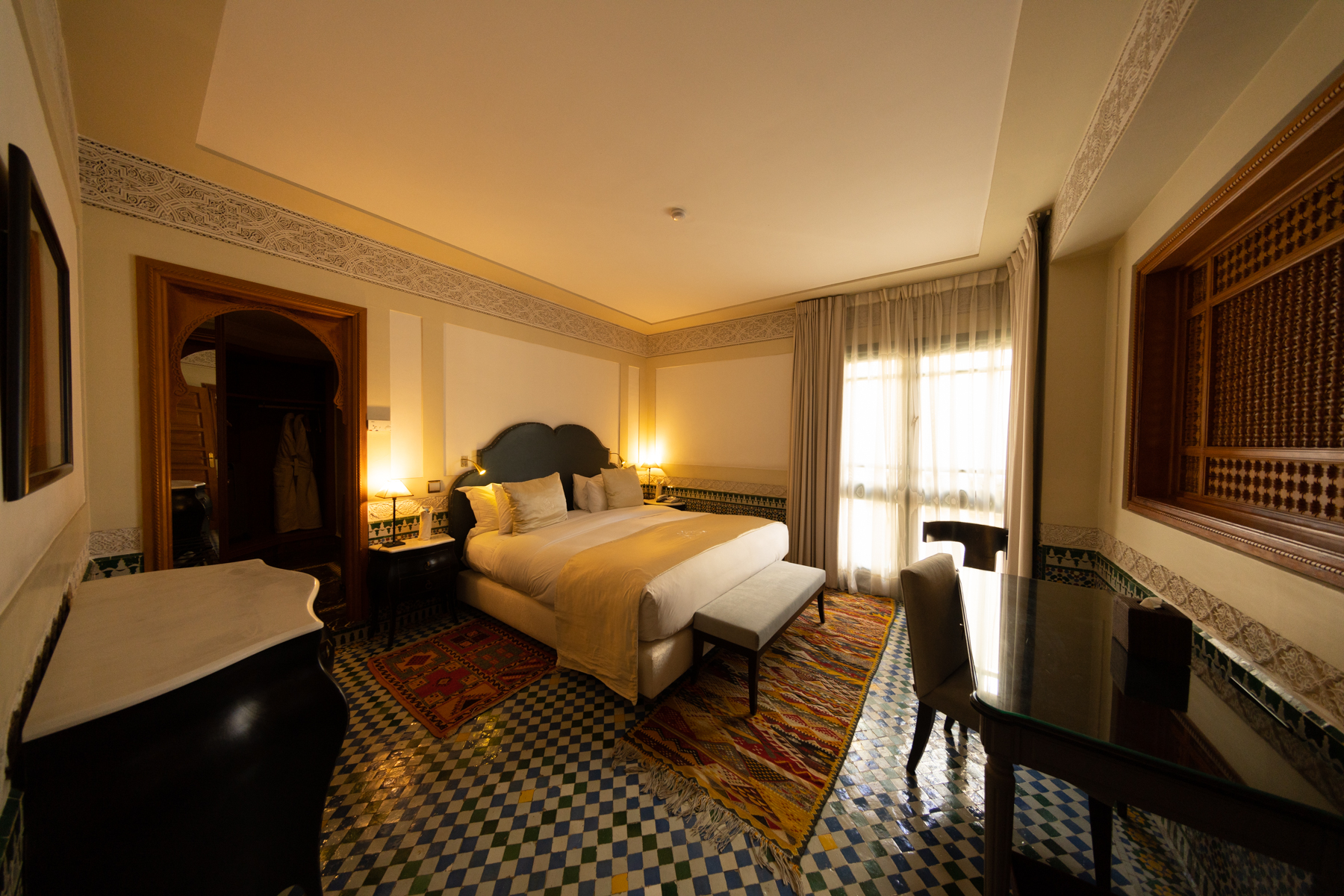
We managed to stay awake for the rest of the afternoon, just relaxing in our room. We headed upstairs to the hotel’s formal restaurant for dinner around 6:00 pm but it didn’t open until 7:00 pm during Ramadan. However, the bar was open and serving food, so we headed there and enjoyed a very nice bowl of spaghetti bolognese.
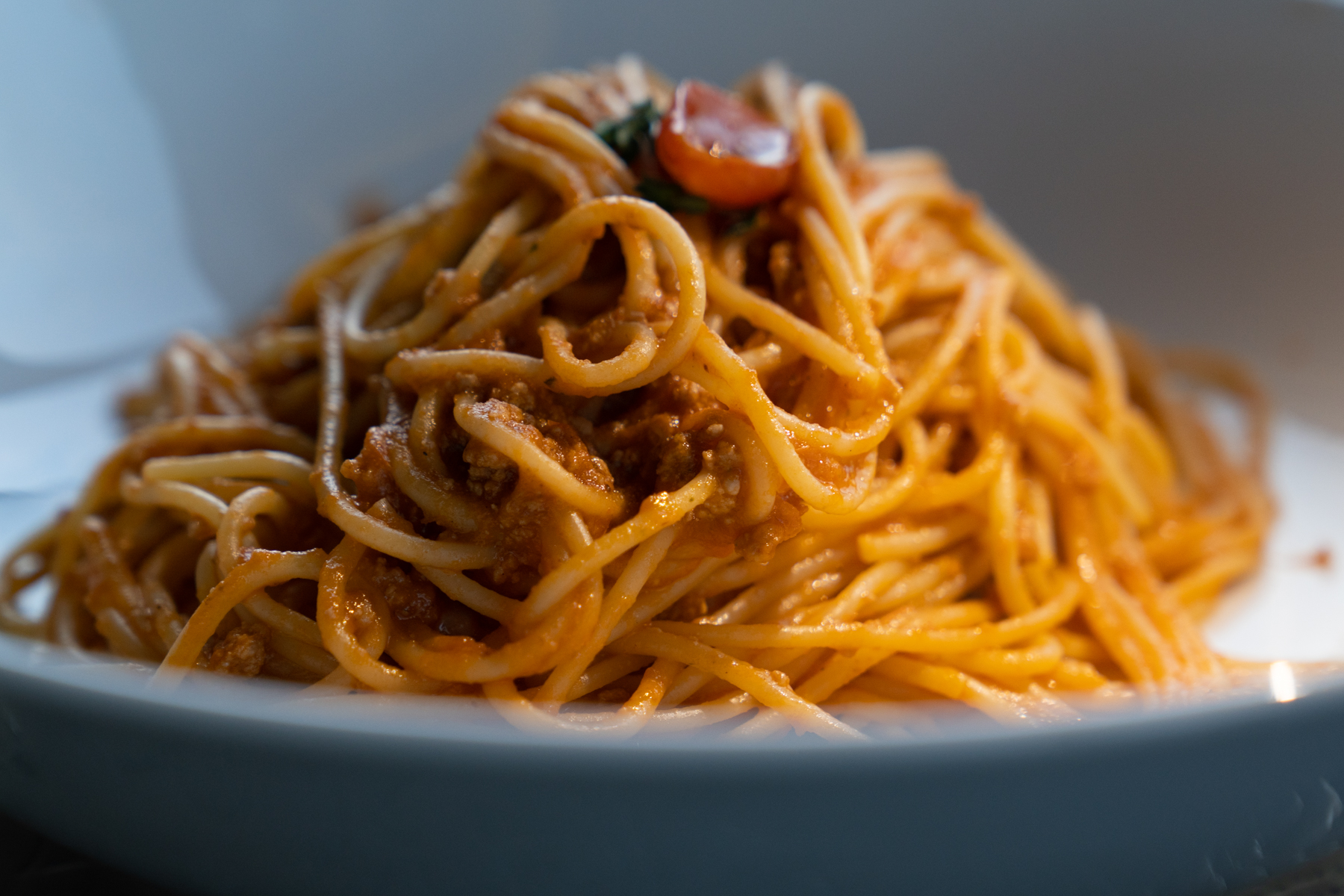
After dinner, we took in the incredible views of Fes from the hotel.
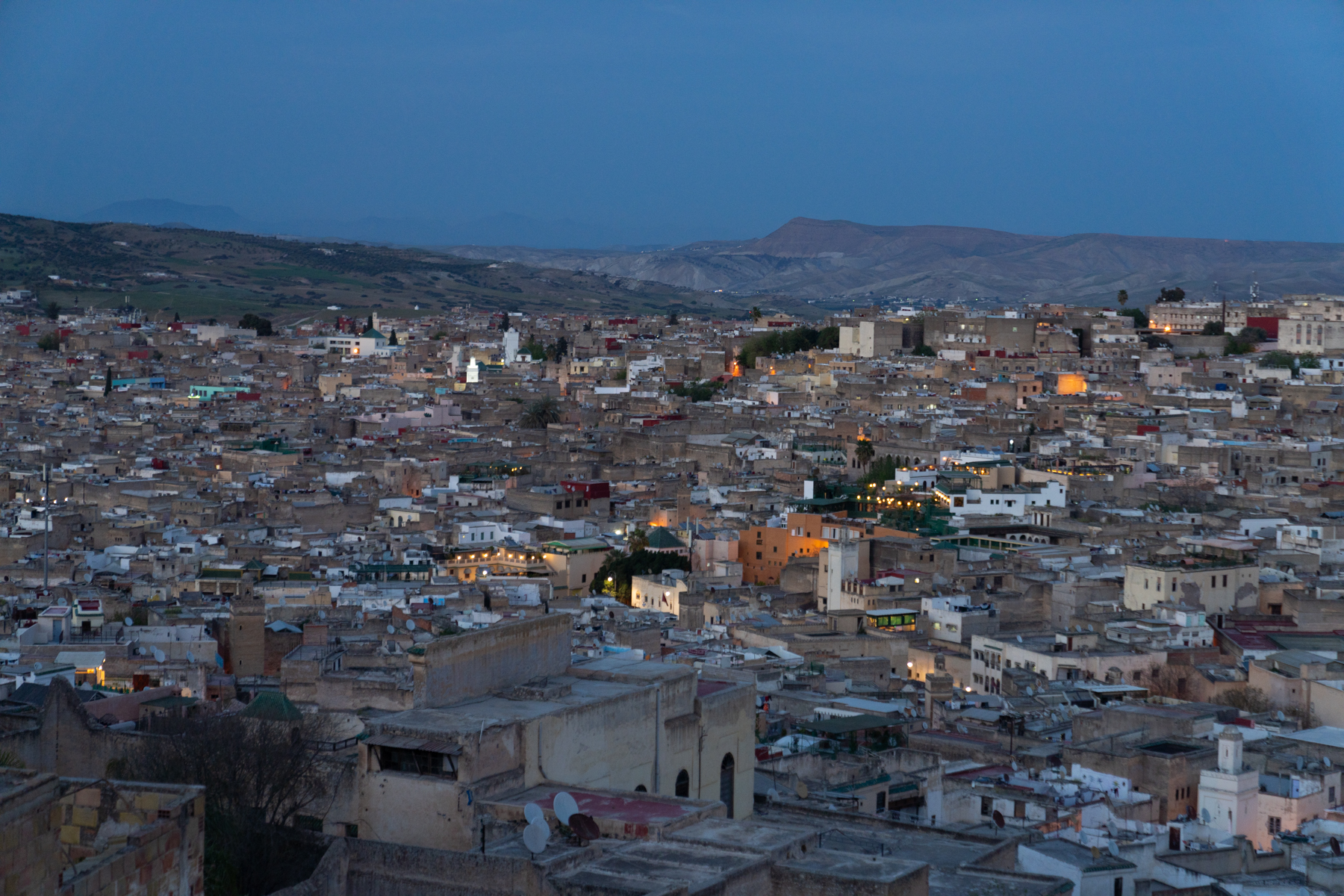
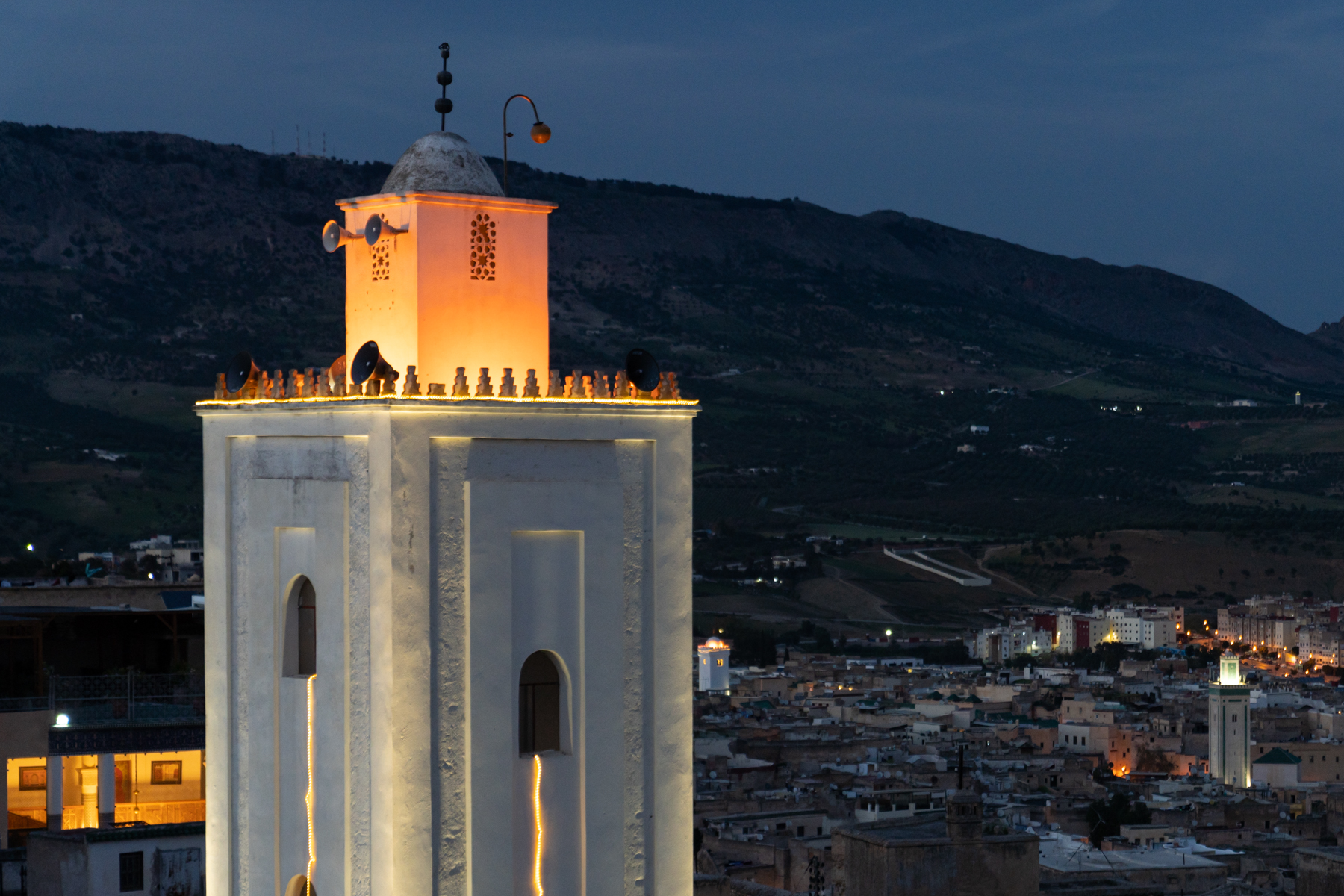
By the time we got back to our room, we were pretty tired. We headed to bed at about 8:00 pm, hoping for a good night’s sleep before a big day of exploring in Fes tomorrow.