
Around The World
Exploring Marrakesh
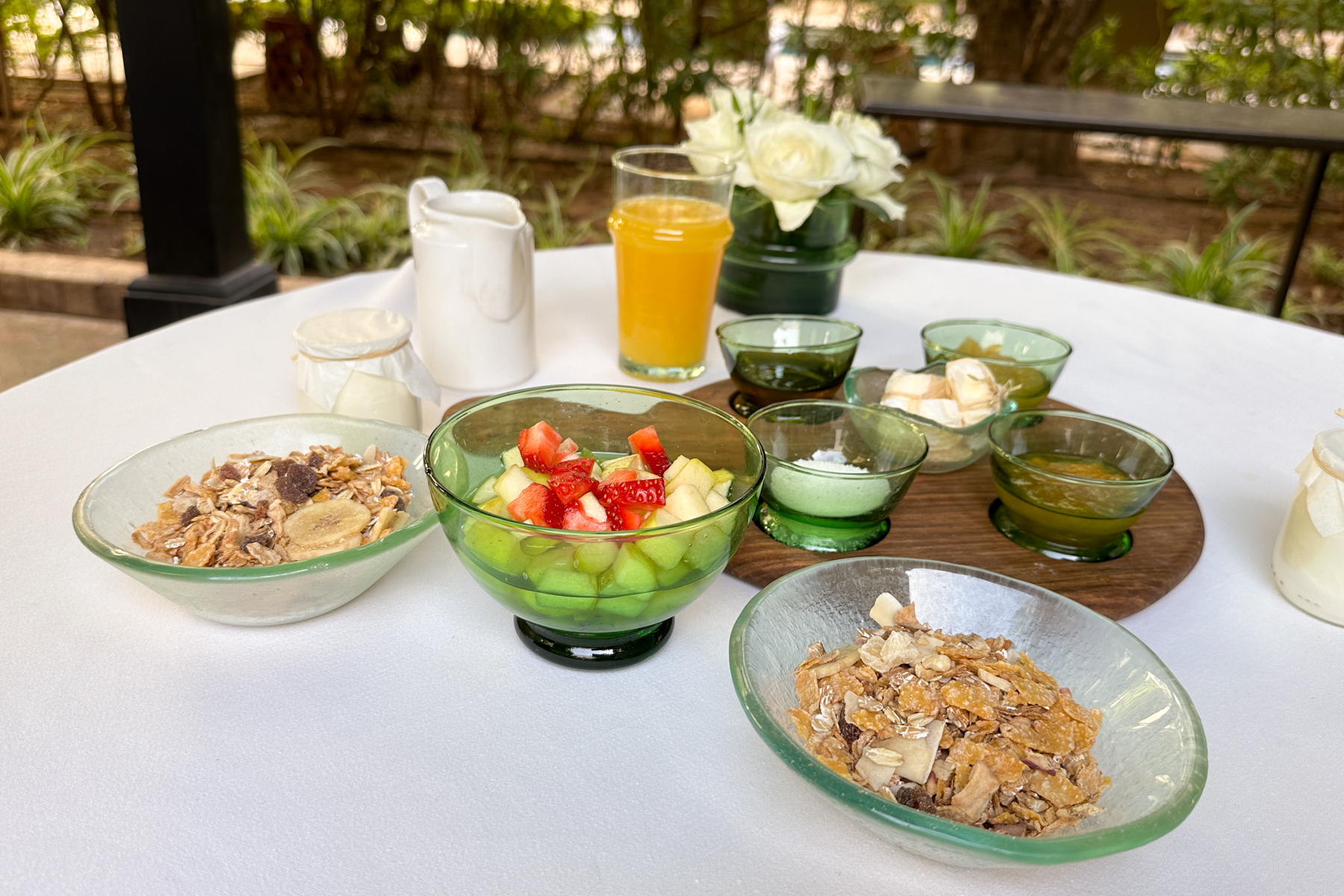
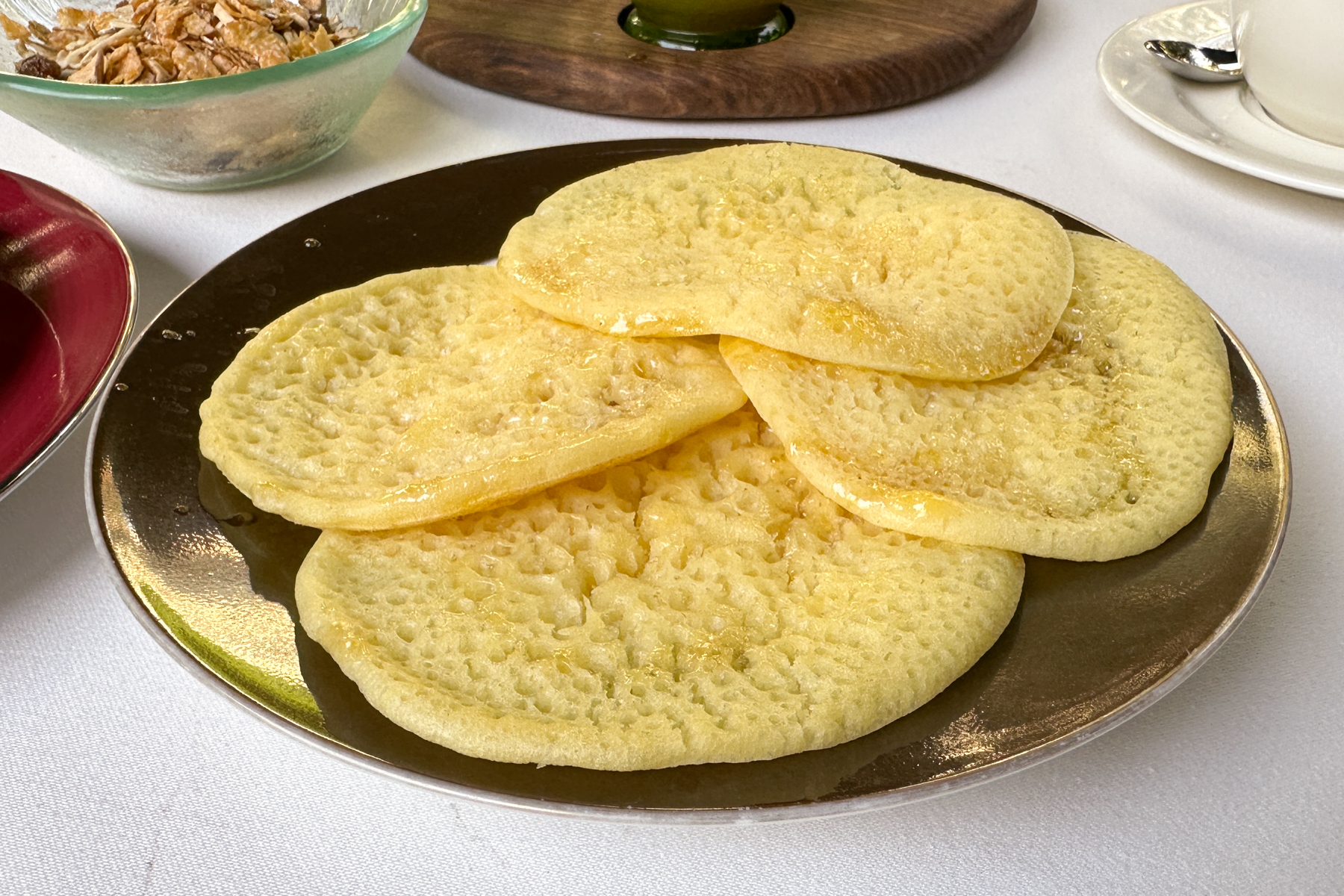
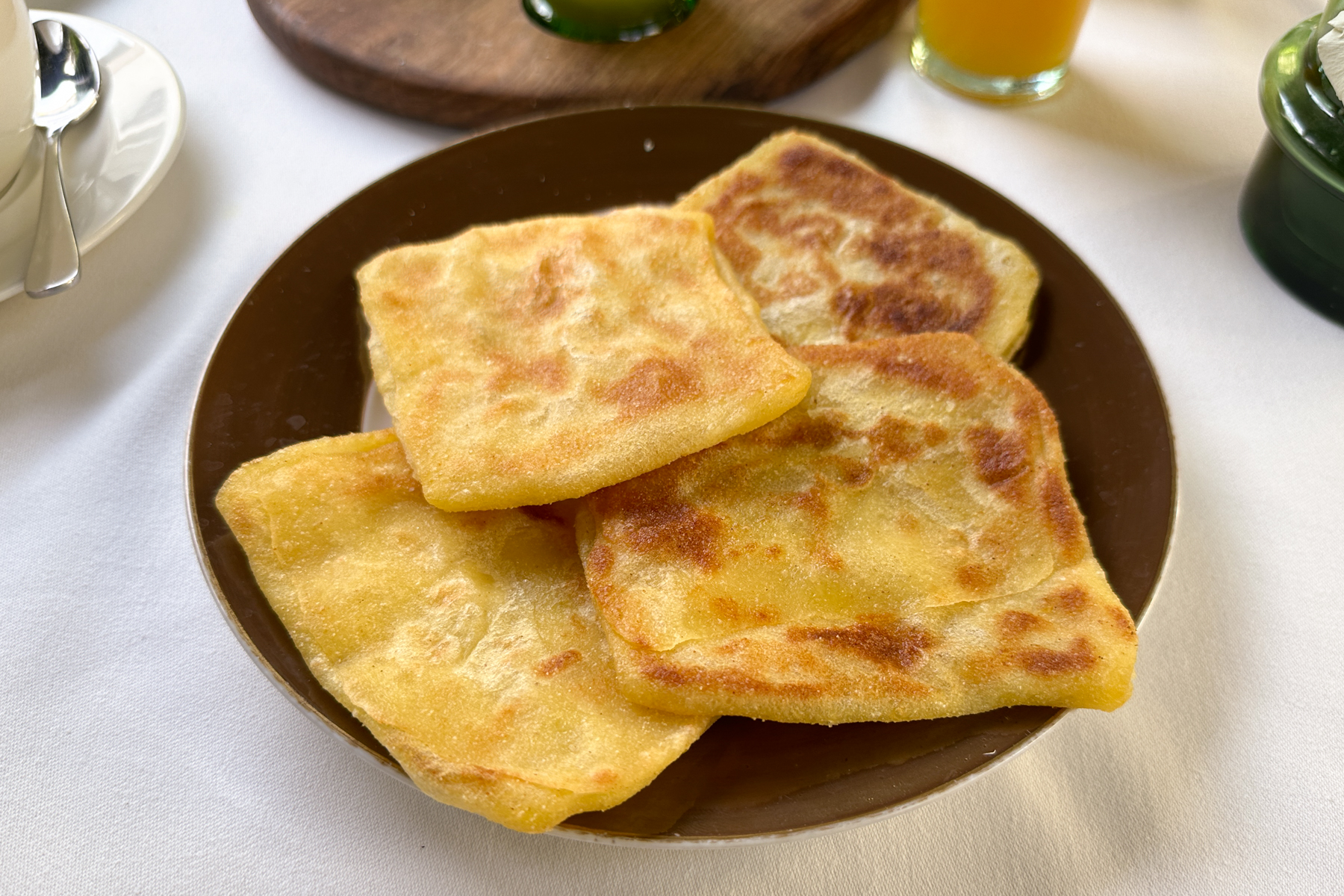
We slept moderately well last night. We were up at around 7:15 am and down to breakfast a little before 8:00 am. We sat outside and enjoyed a nice breakfast.
We met Mohamed at the hotel at around 9:15 am. We then walked down Rue Moulay Ismail and into the Jewish quarter of Marrakesh. The Jewish population in Marrakesh is now quite small (perhaps less than a thousand) but between the 16th and 20th centuries, it was home to one of the largest Jewish communities in the country, most of whom had been expelled from the Iberian Peninsula and other European territories. The Jews were well received by the local authorities, who appreciated their crafting skills, as well as their knowledge of mathematics, medicine, and commerce. Most of the Jews that were in Marrakesh have now voluntarily emigrated to Israel after its establishment in 1948. Many of the buildings in this area still display their Jewish heritage.
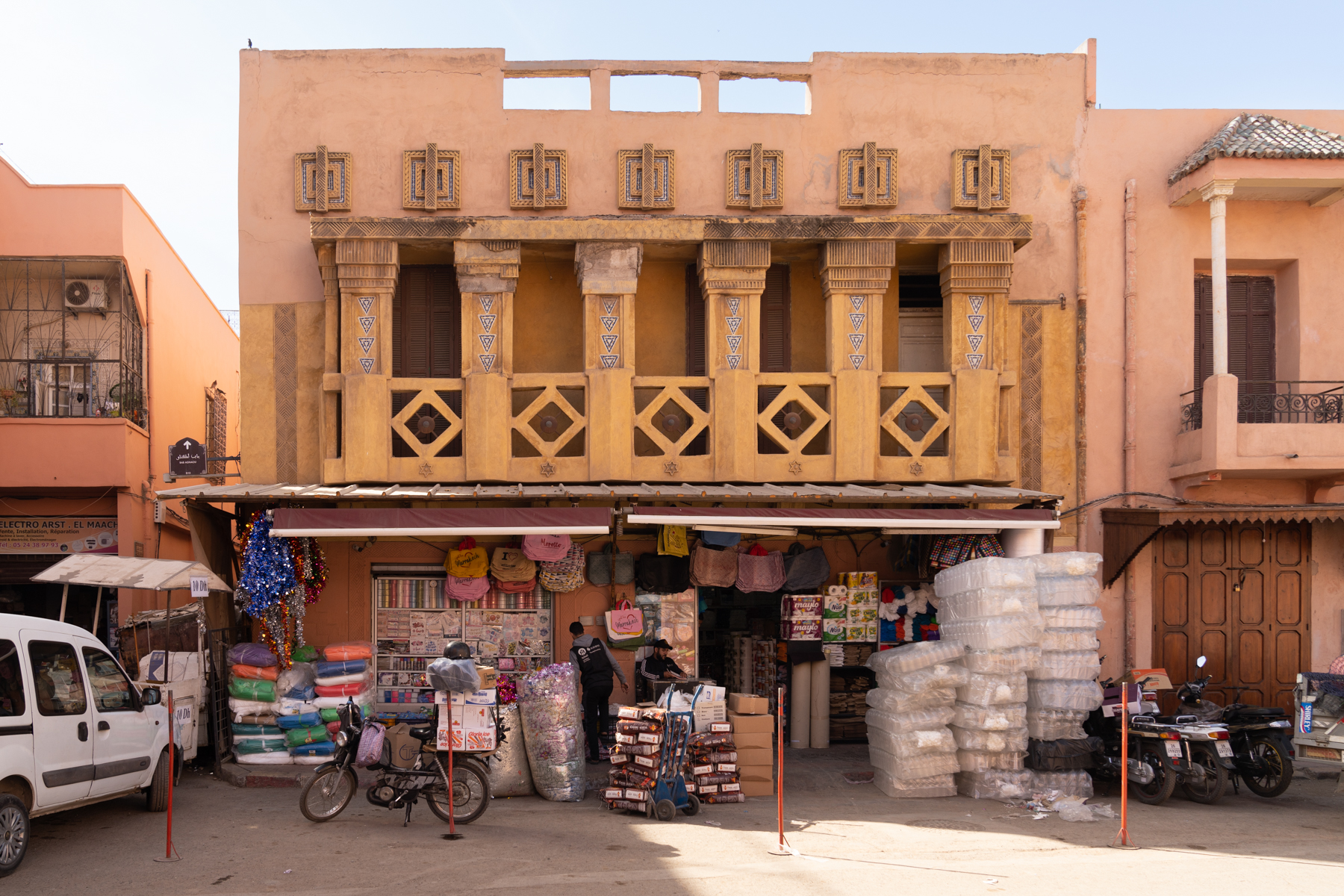
We observed many types of transport as we walked along. Donkeys are still a very common means of getting around in Marrakesh.
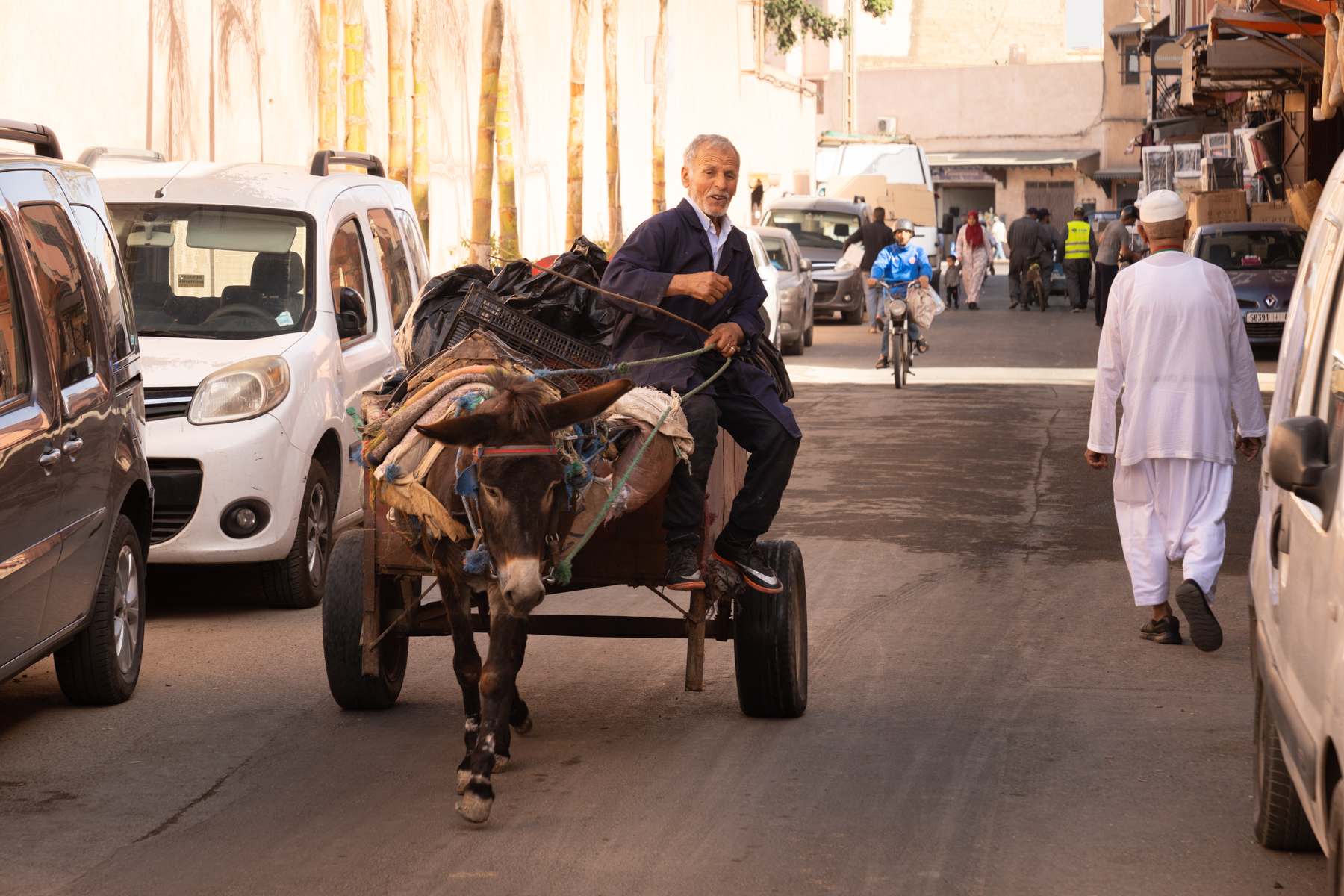
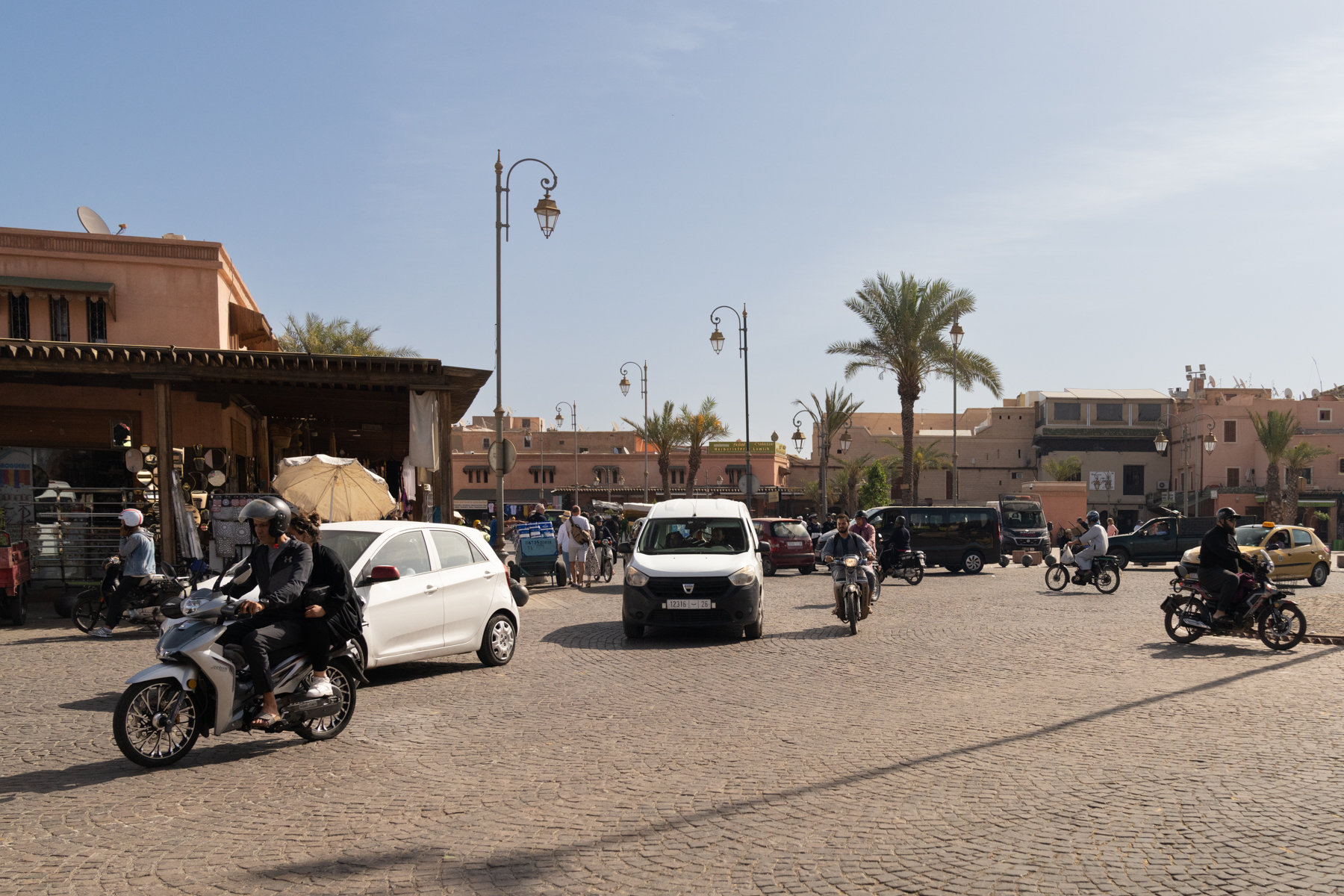
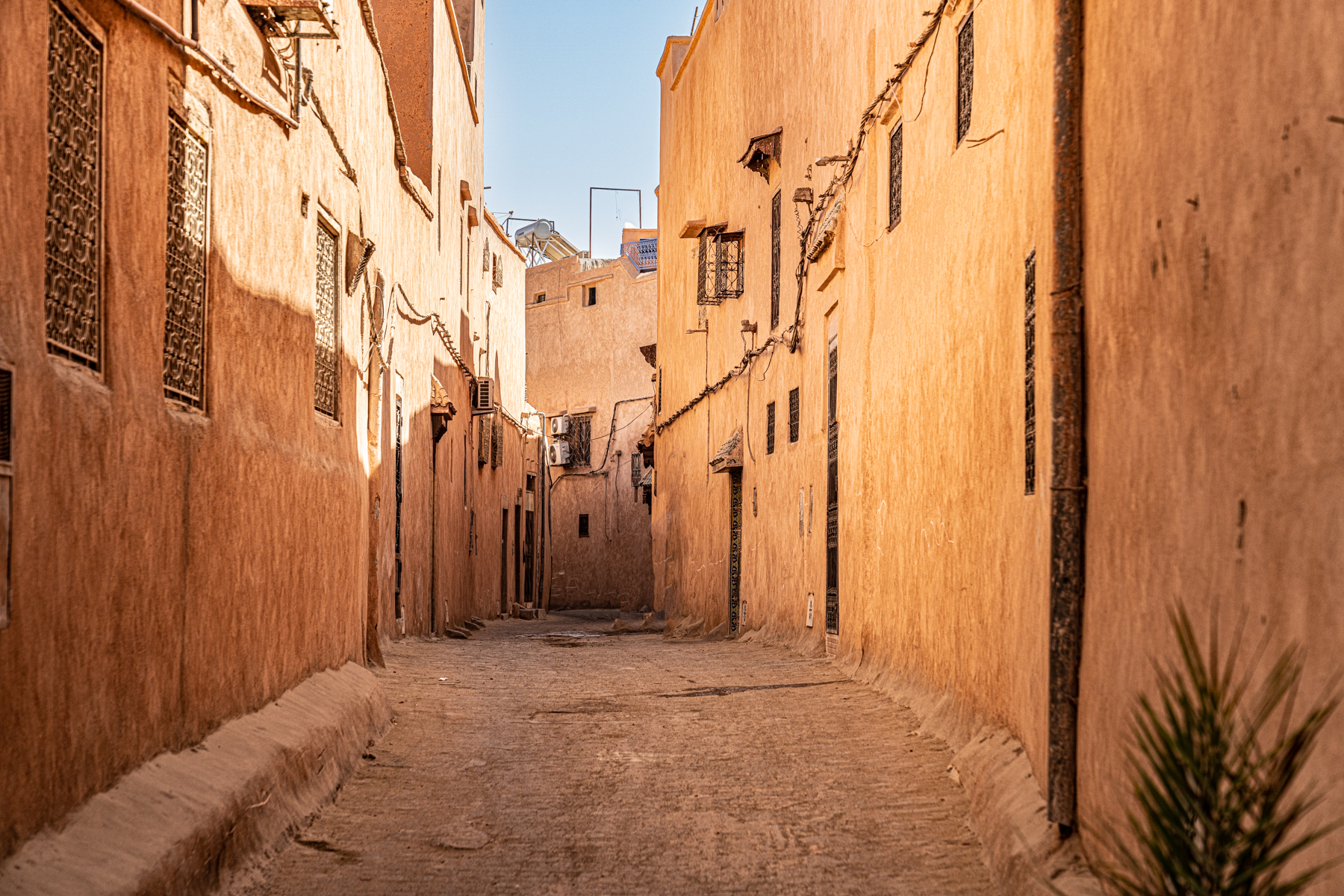
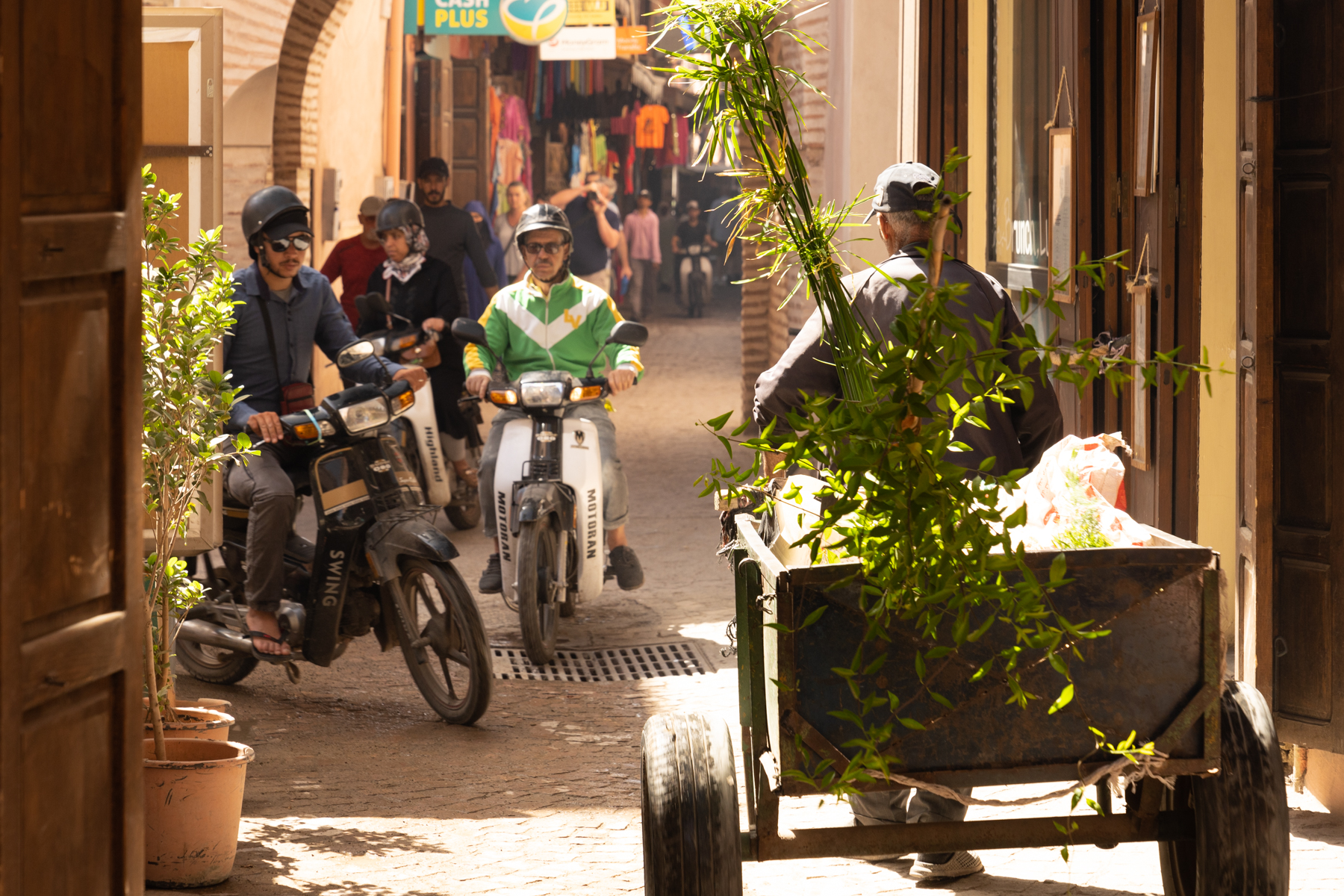
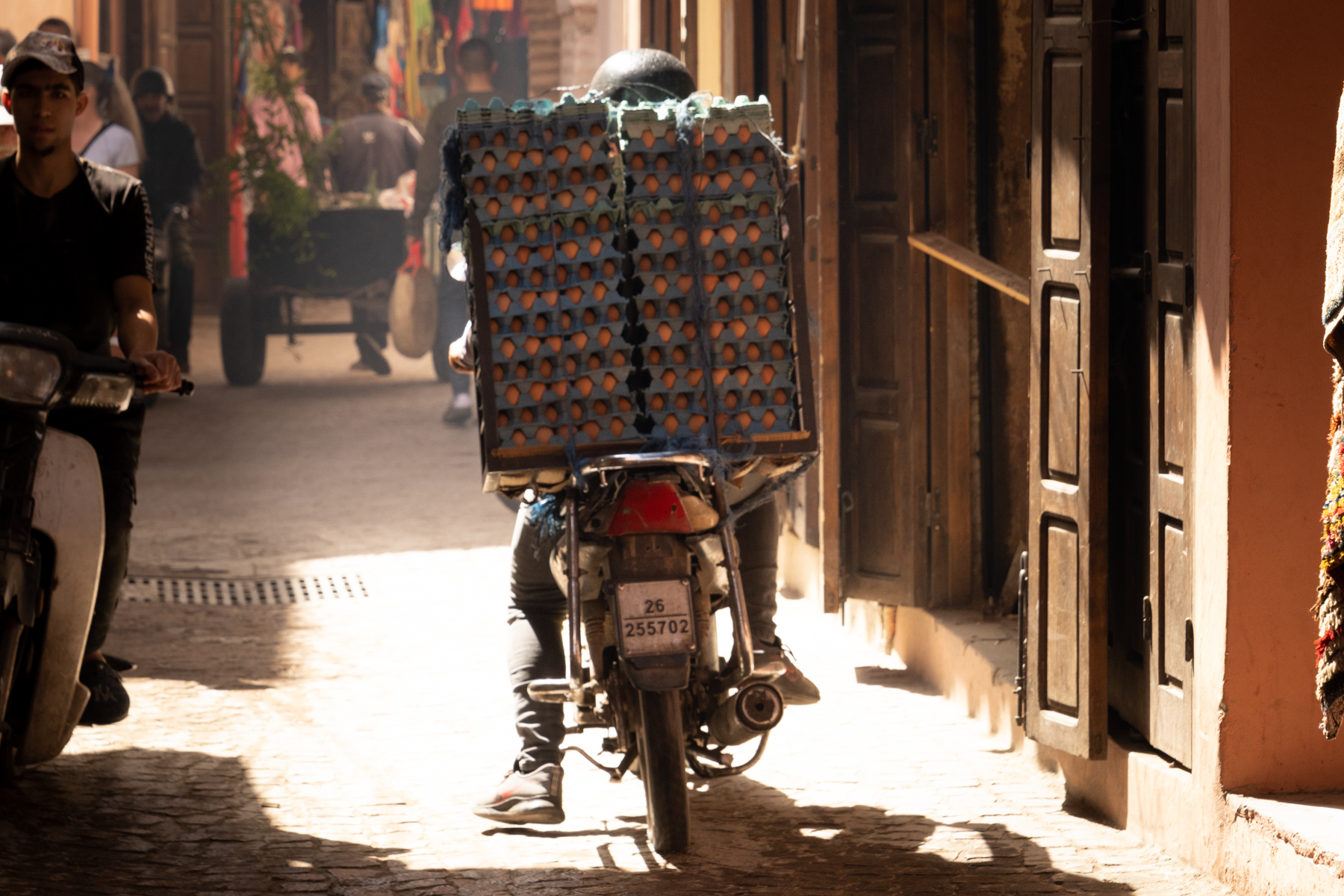
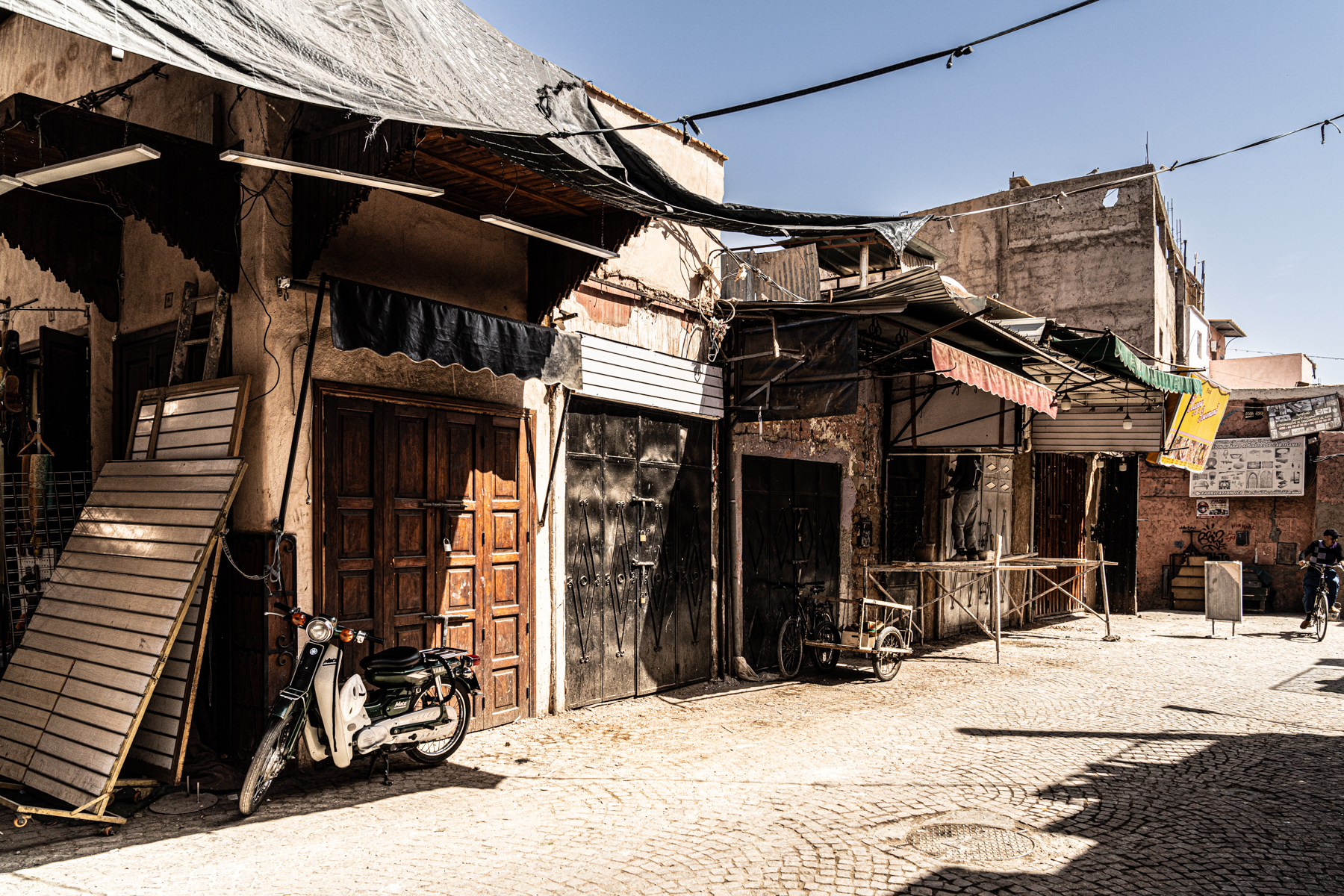
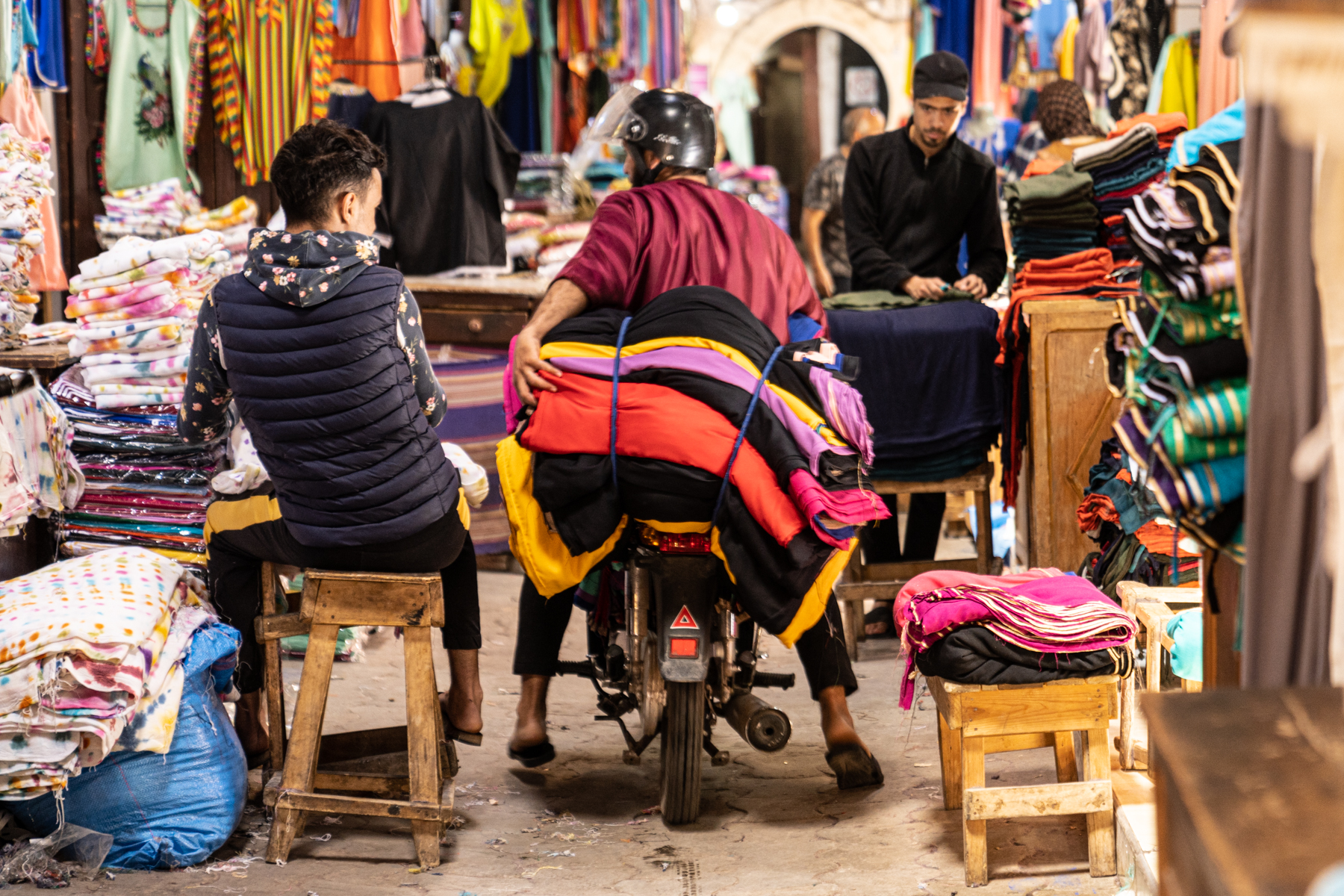
We left the Jewish quarter and headed for the bustling souk. The souk in Marrakesh feels a lot more orderly than it did in Fes. Having said that, there is still a lot going on! We walked through the maze of small streets, dodging cyclists and motorcyclists, many of whom are carrying improbably large loads of goods.
We exited the souk and made our way to the Bahia Palace. The Bahia Palace was constructed in the mid to late 19th-century in the heart of Marrakesh by a Moroccan who was descended from black slaves and rose through the ranks of the royal government. The palace underwent numerous changes of ownership (sometimes forcibly) before becoming the home of the French resident-general in the city after the establishment of the French Protectorate in Morocco in 1912. Today, it is one of the most visited tourist attractions in Morocco (which makes getting photos a bit more challenging!).
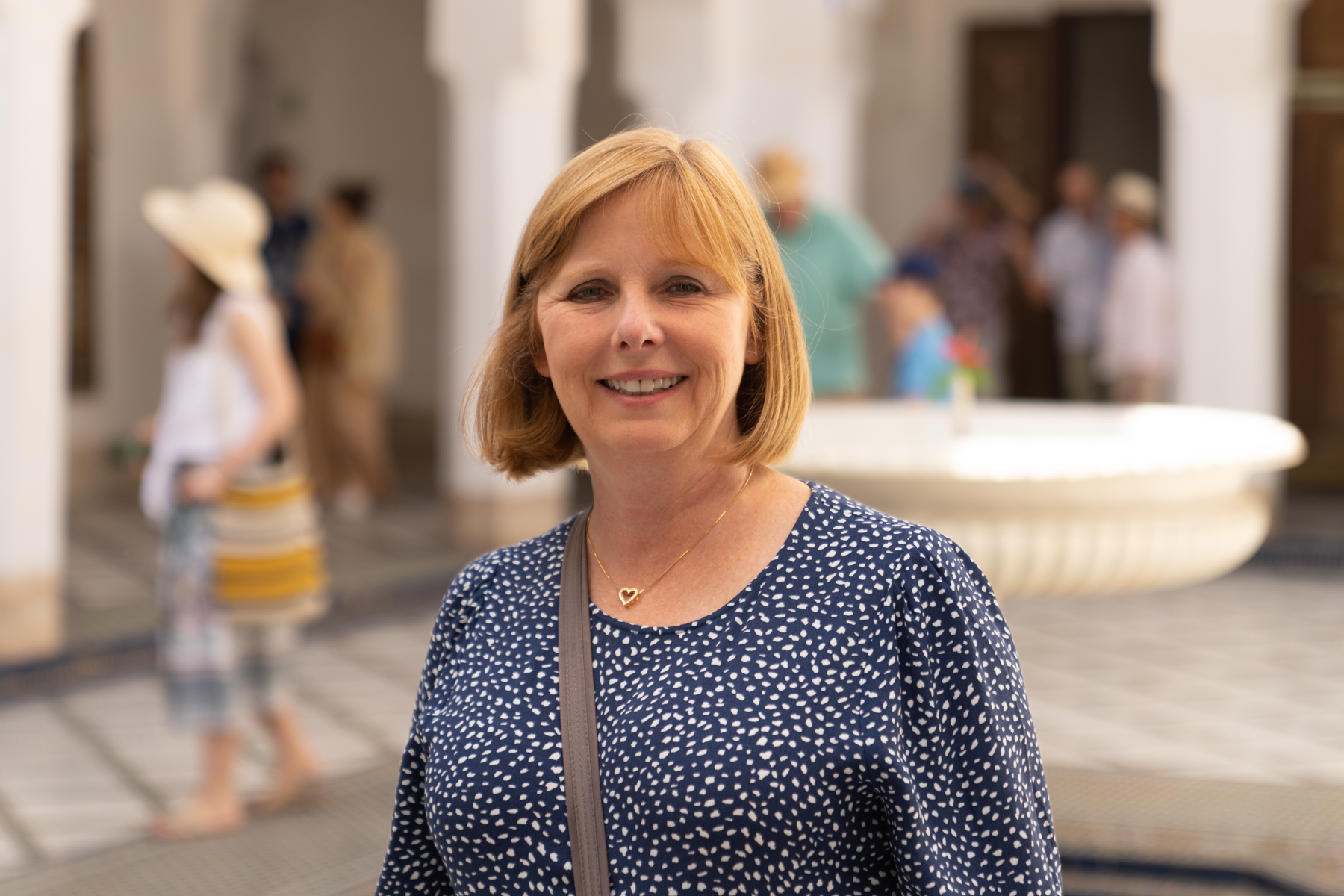
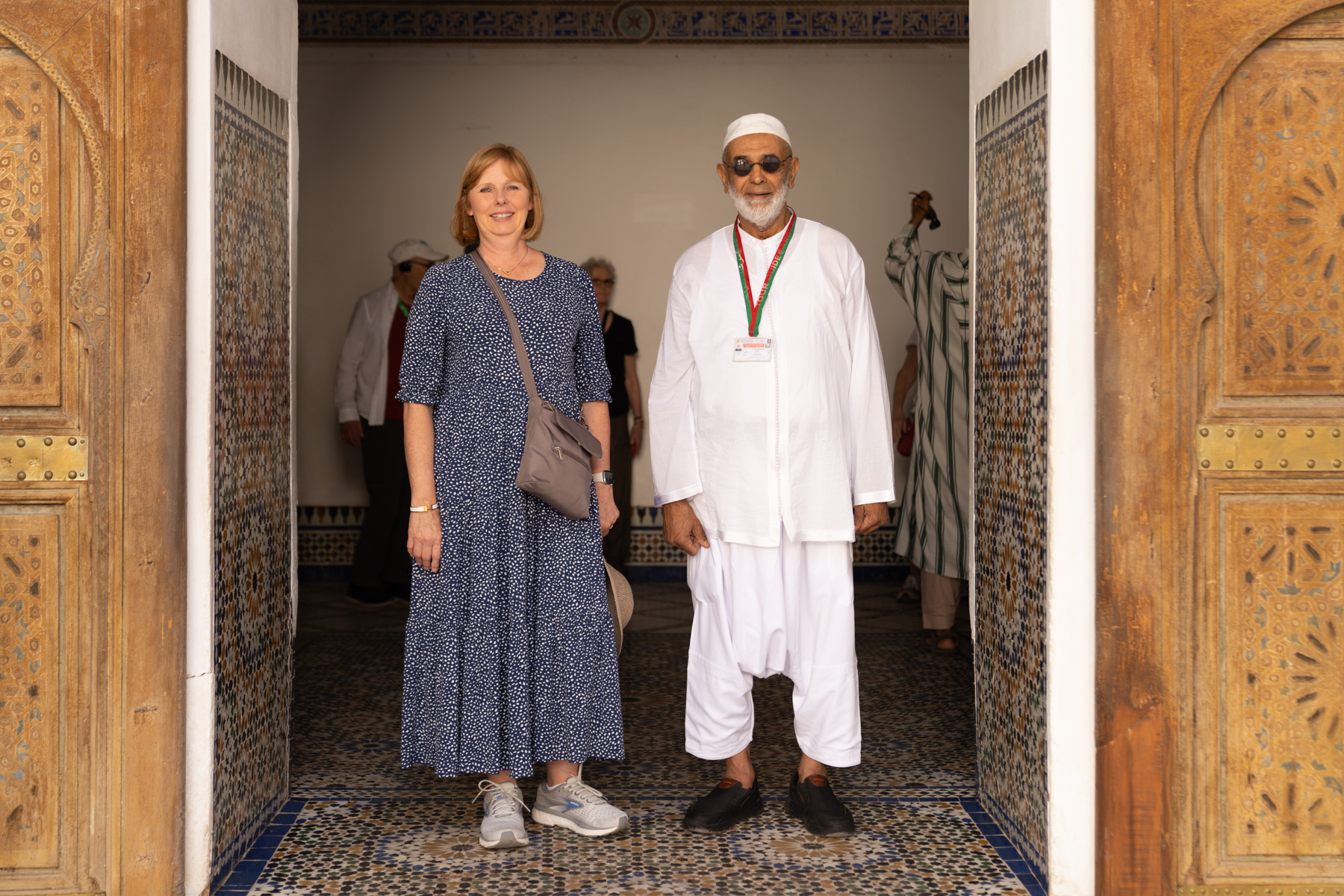
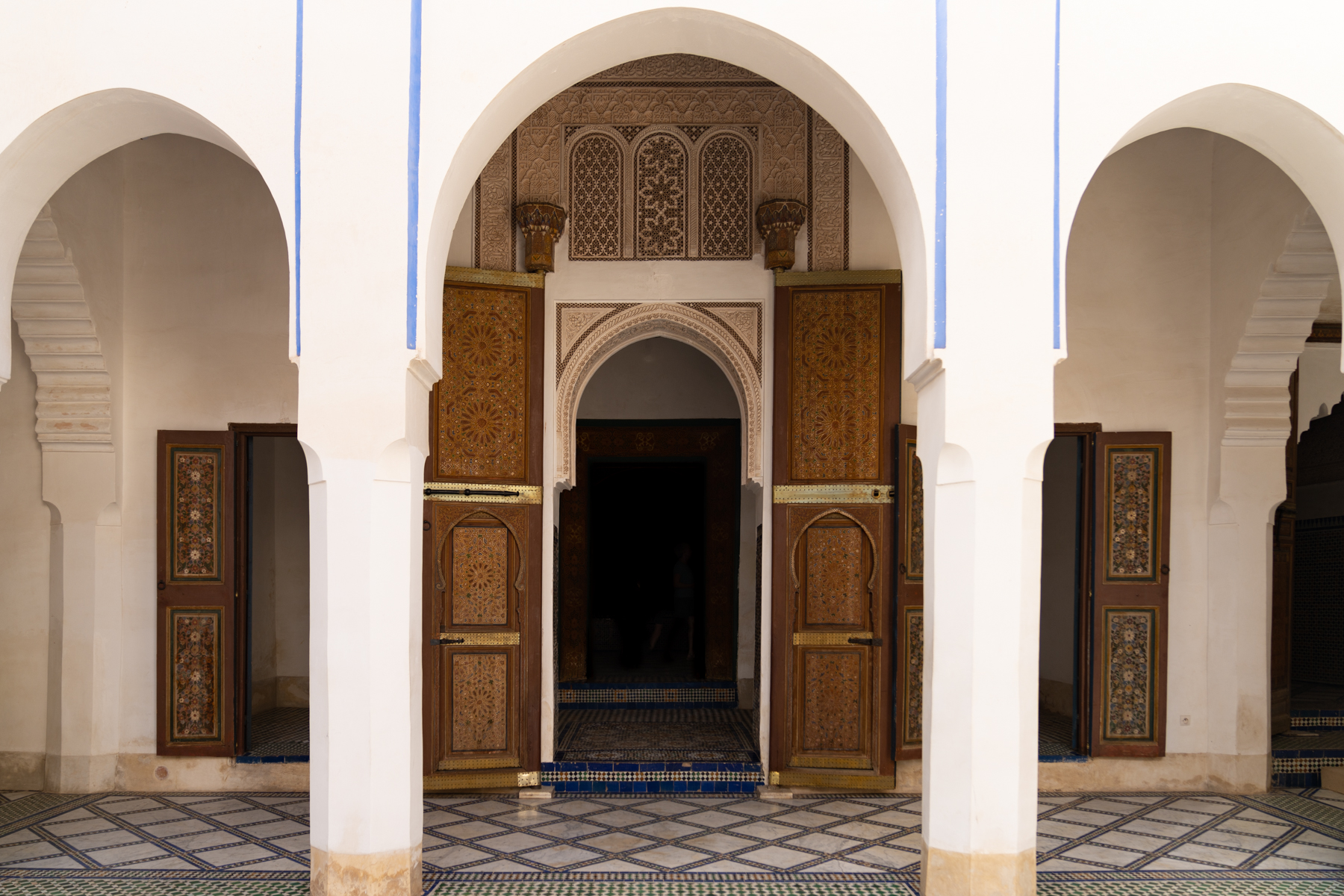
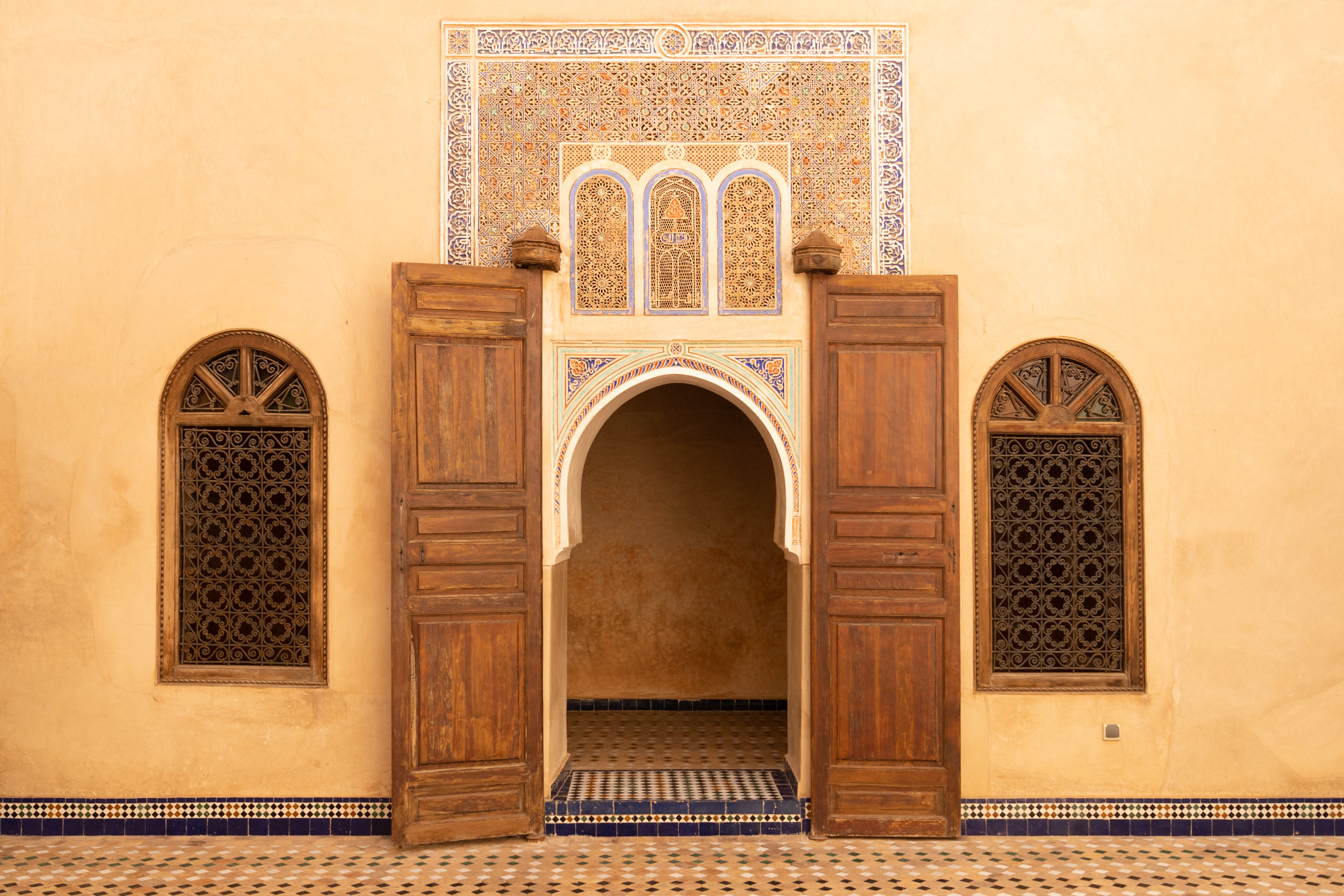
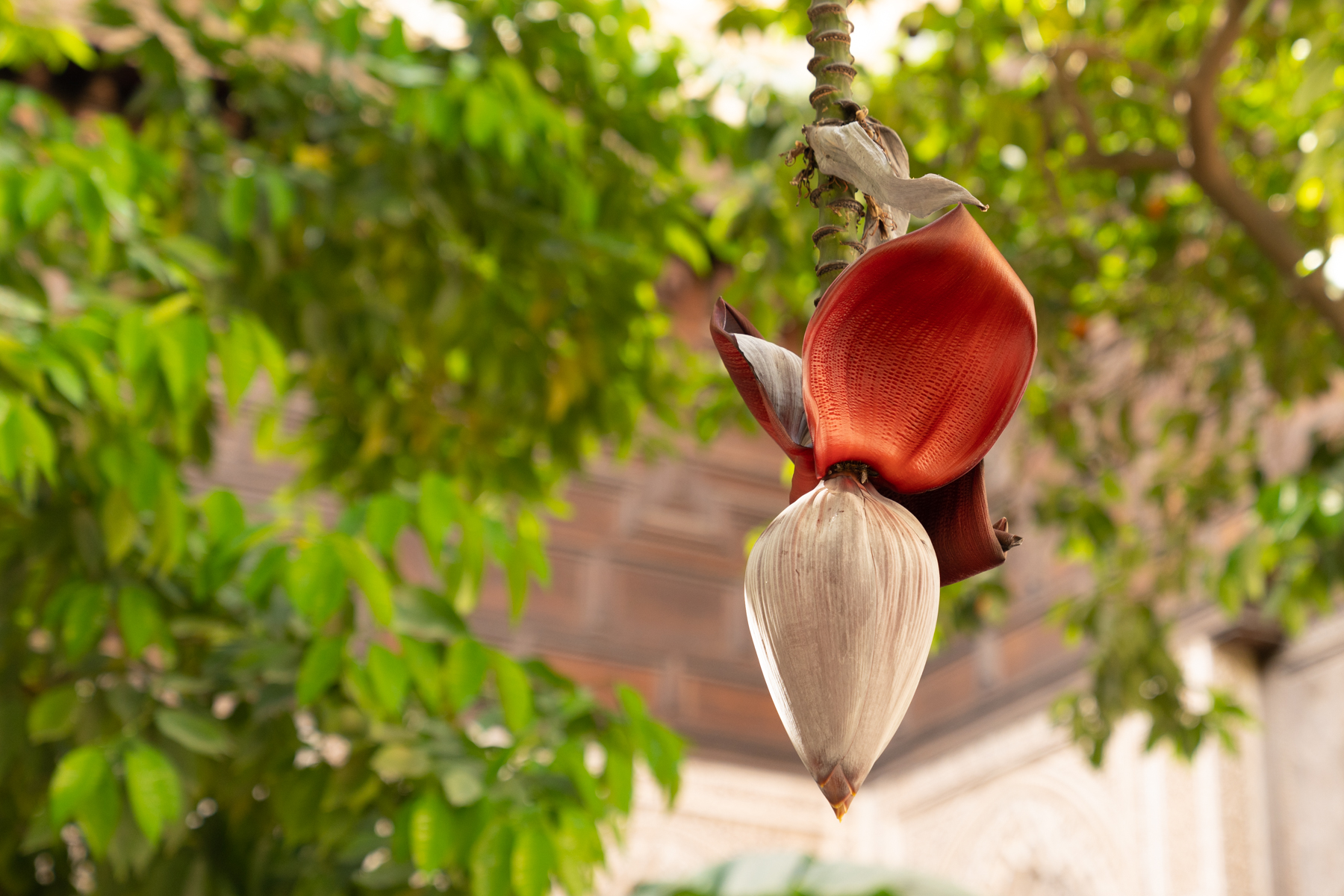
As we walked through the palace, Mohamed explained to us the traditional construction techniques that were used, which was very interesting.
After fighting our way through the crowds in the palace, we exited and headed back to the spice area of the souk.
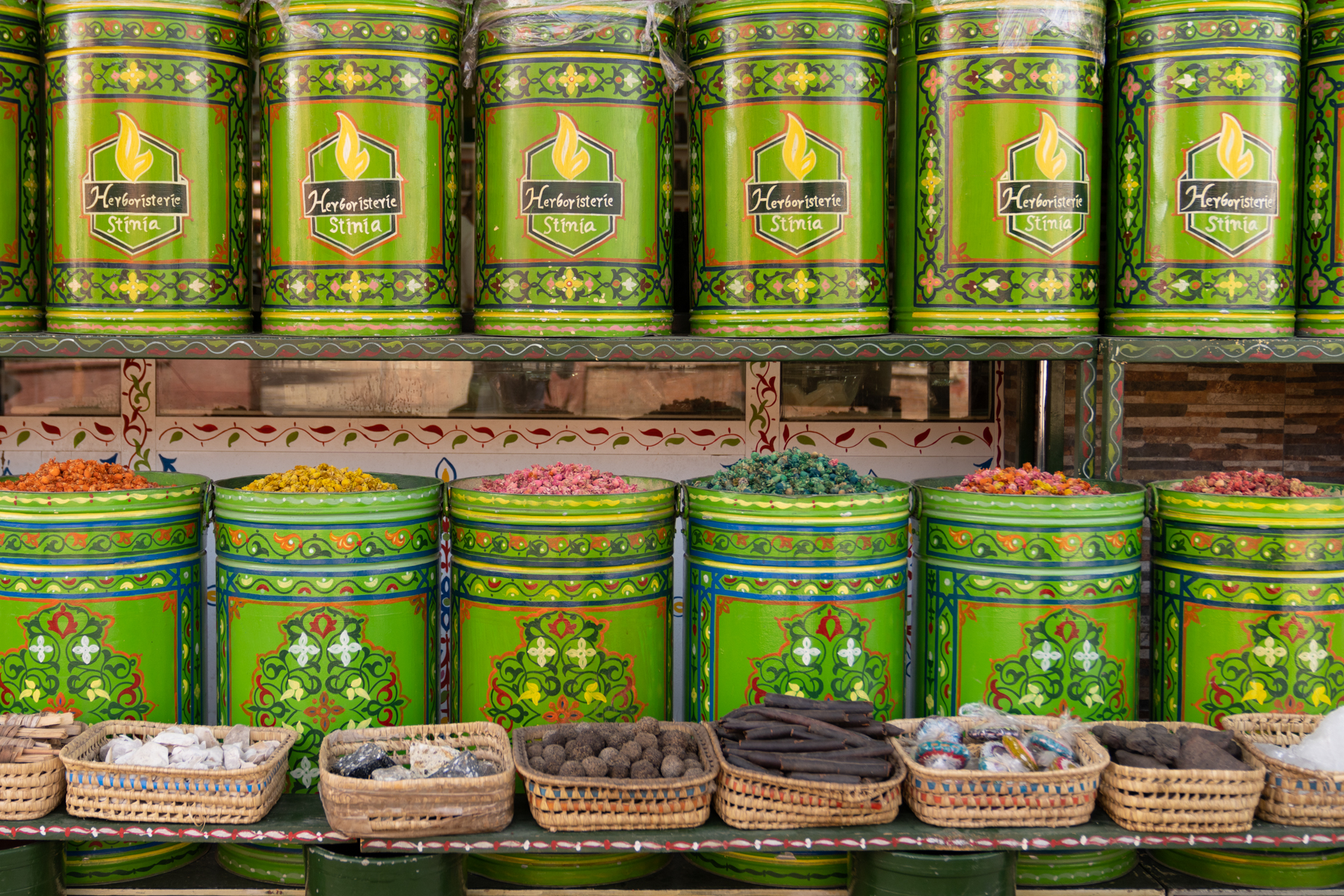
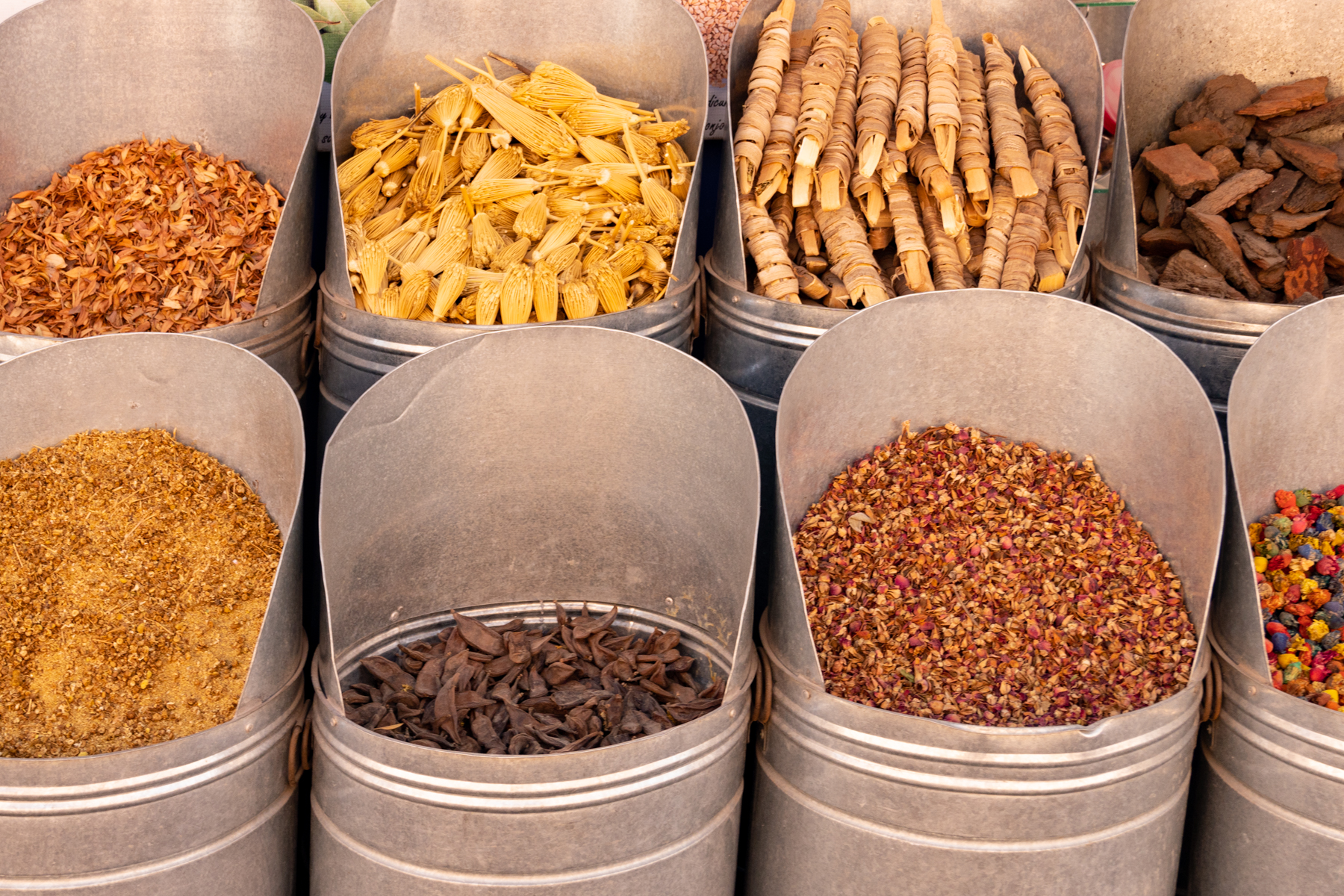
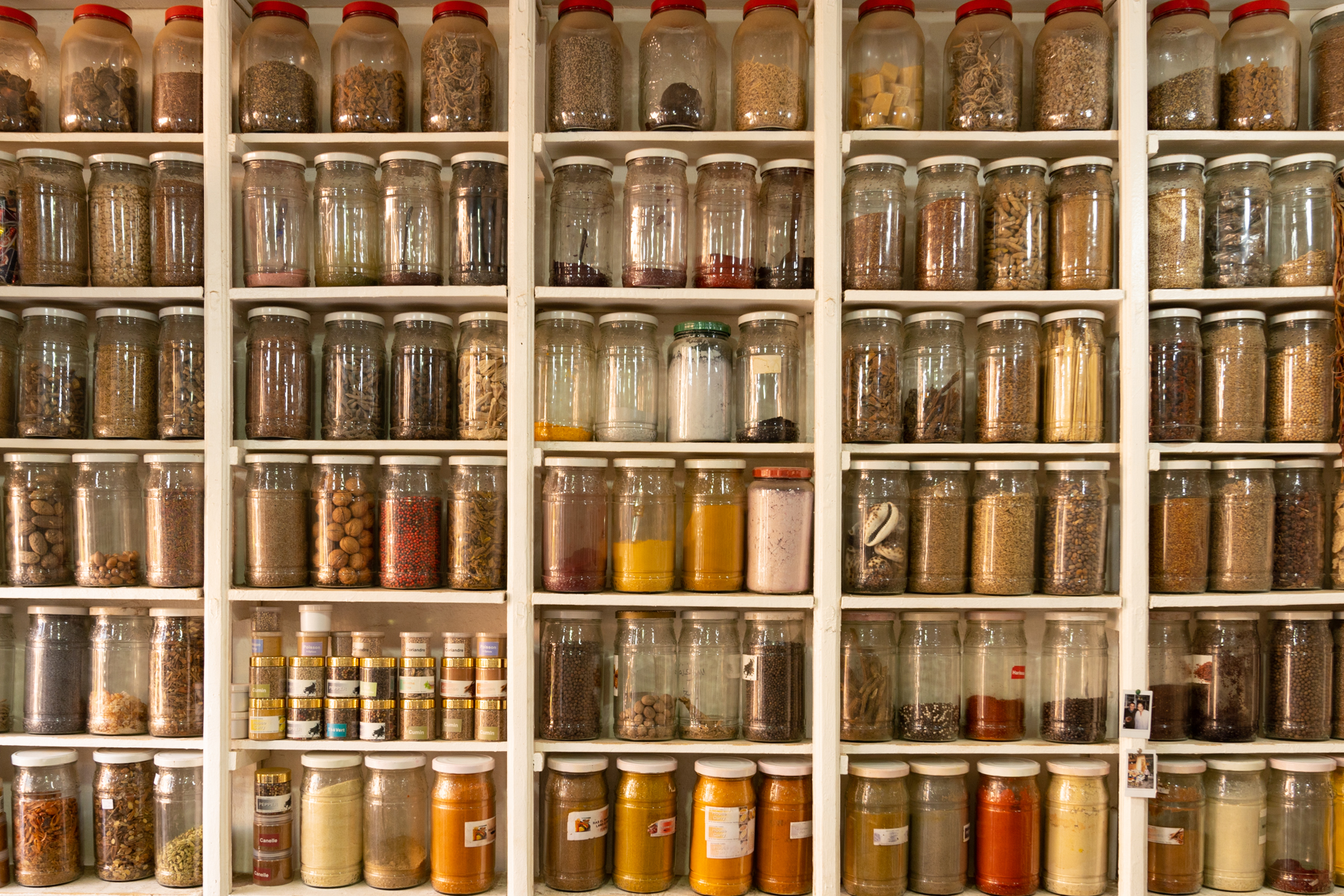
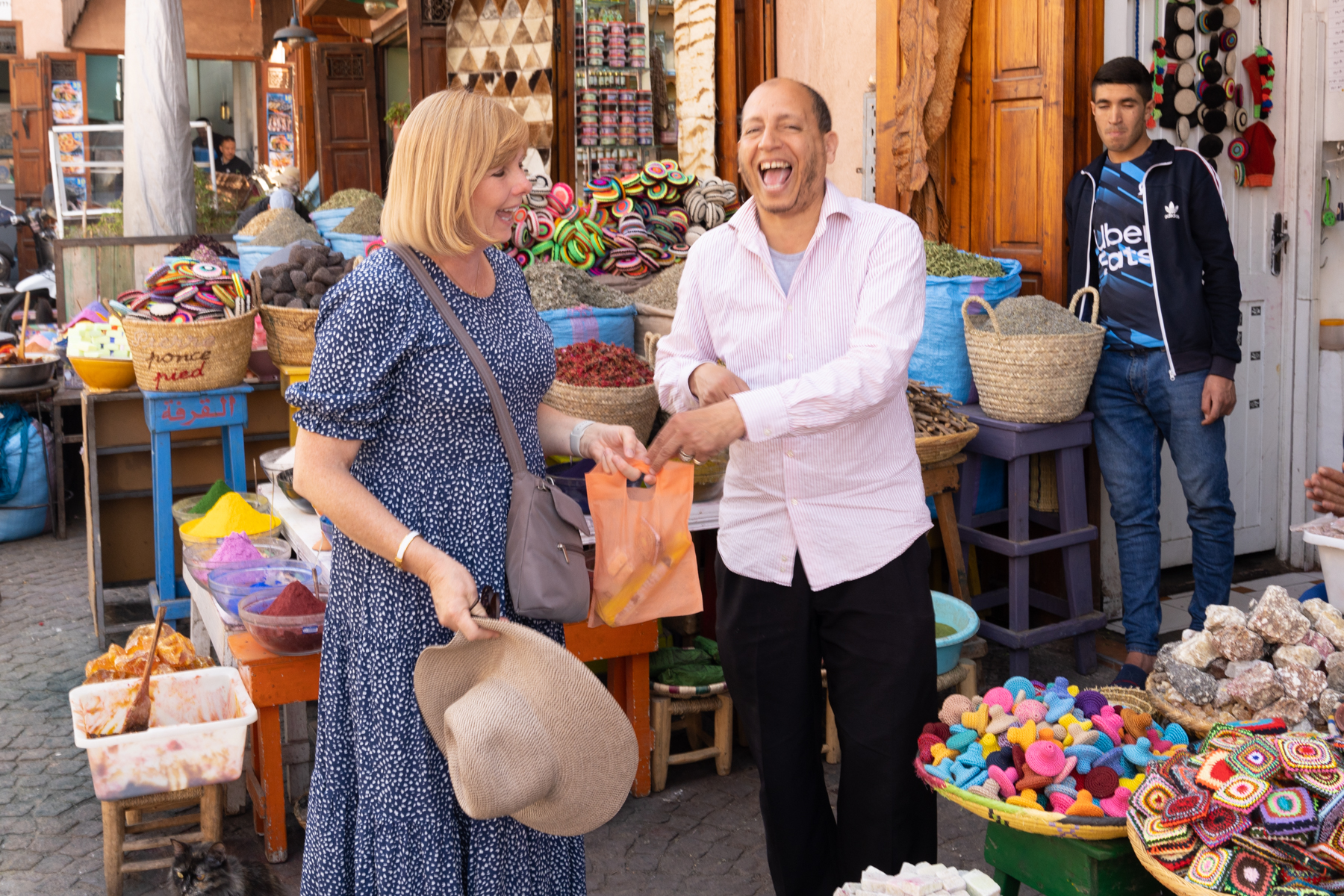
We stopped at a small spice and herb shop called Apothicaire Tuareg, where we smelled a selection of freshly ground spices and remedies. The owner was very nice, and we bought some Argan oil in appreciation for the time he spent with us. (Argan oil is derived from the kernels of the argan tree, which is native to Morocco and parts of Algeria. It is used in cooking and as a skin treatment.)
We continued on from the spice store to the souk area that specialised in leather goods.
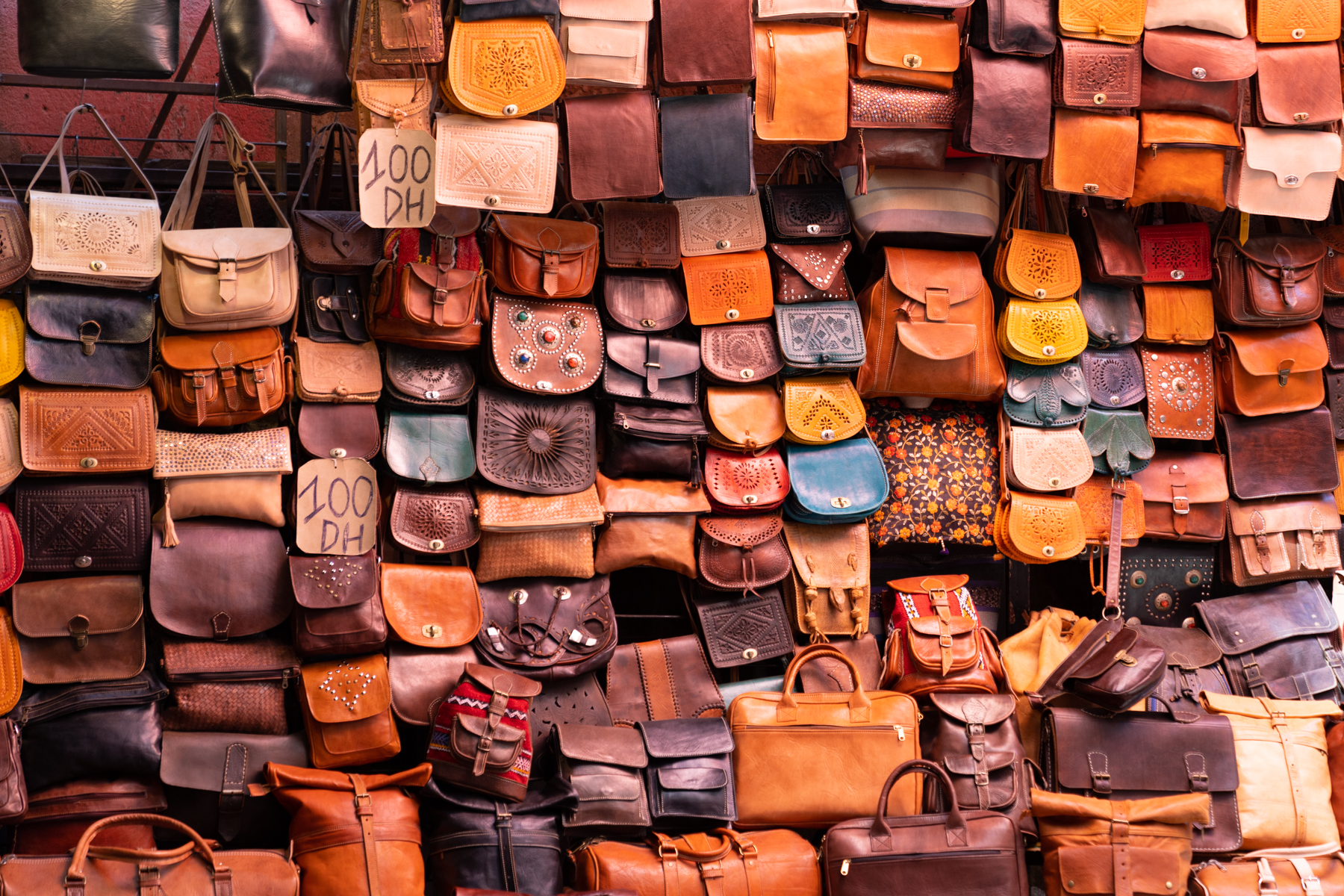
We stopped to look at some babouches (Moroccan leather slippers) since we’ve been wearing them in our hotel and we thought that they might make a nice keepsake.
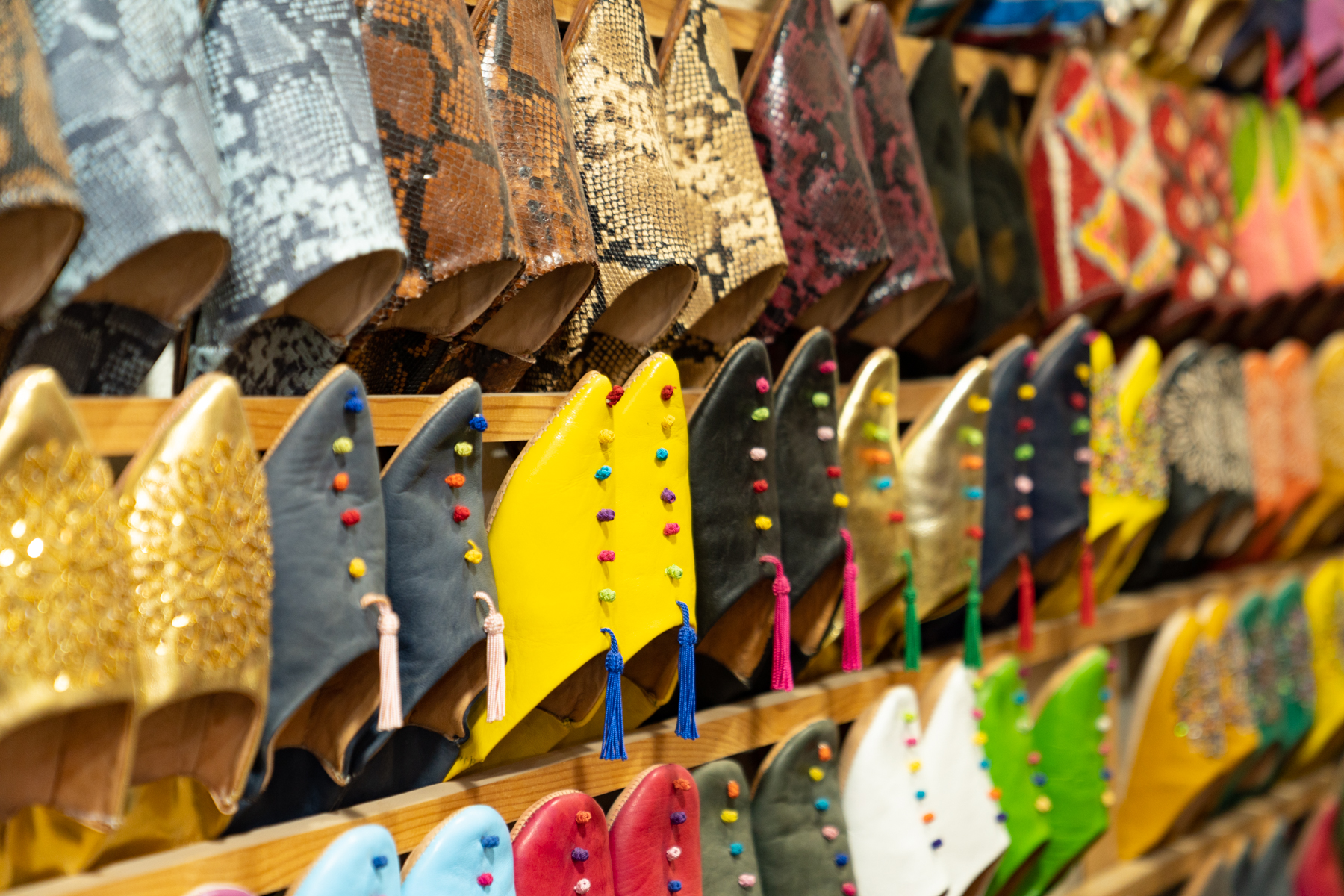
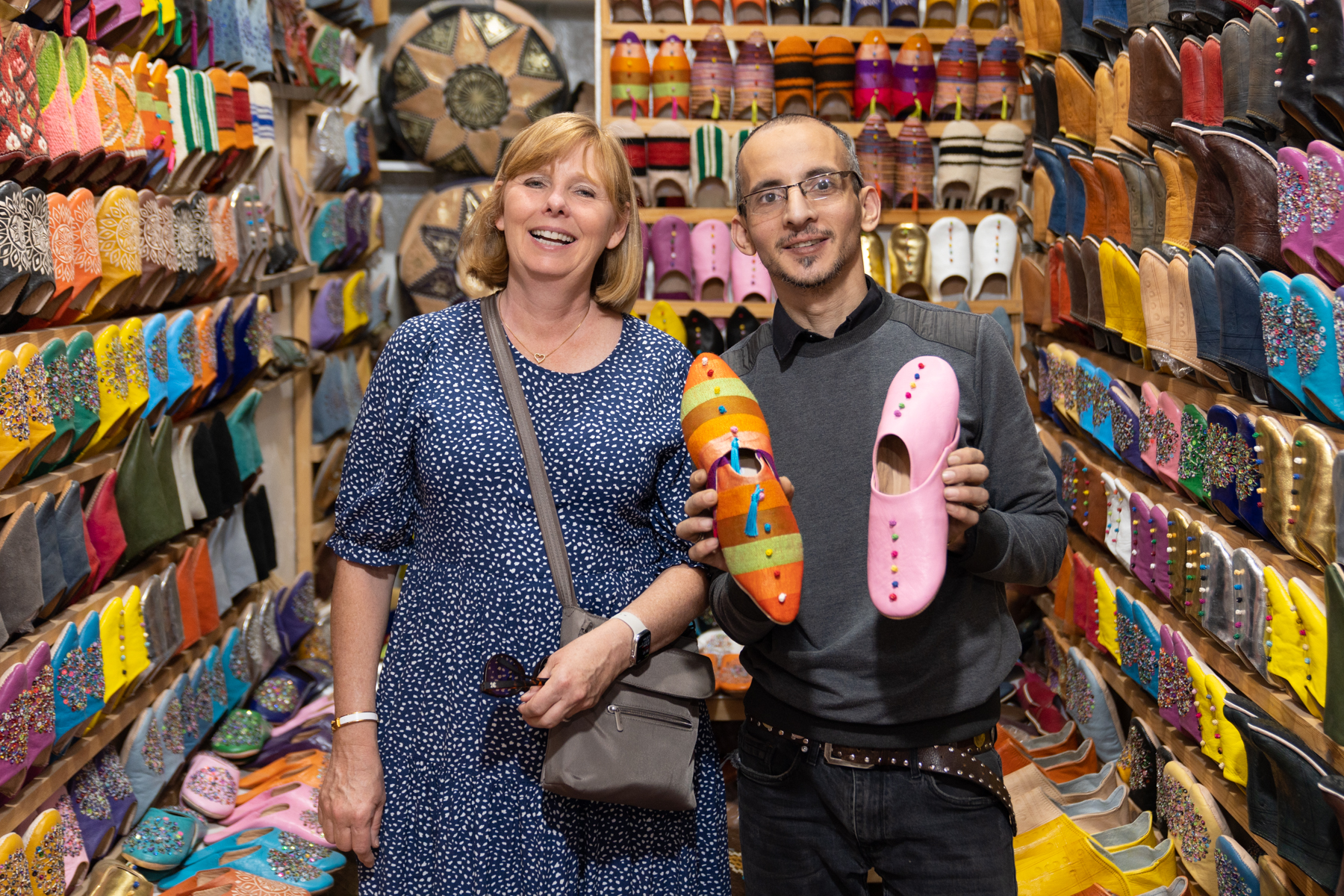
After purchasing some babouches, we headed to an area where craftsmen were making baskets.
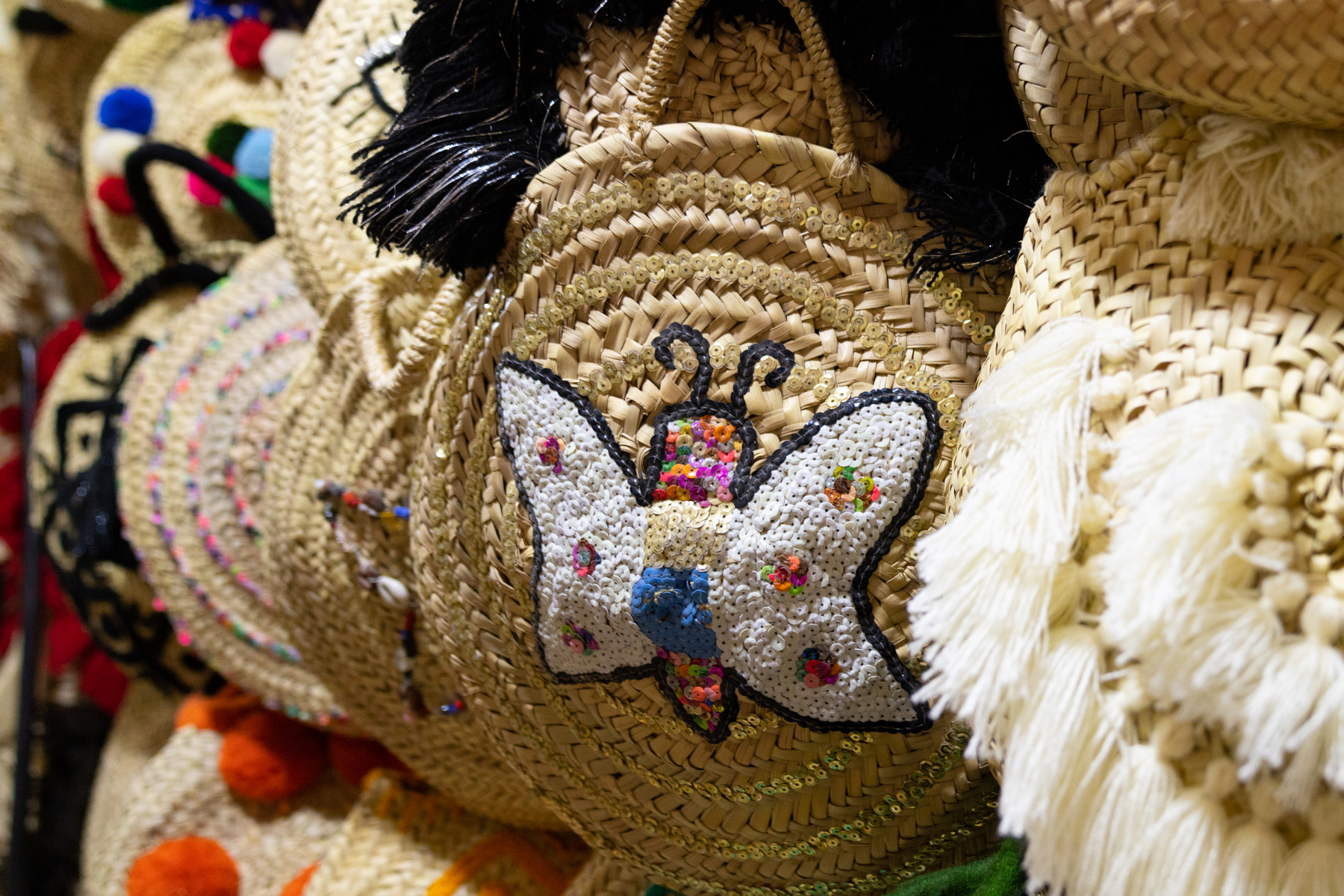
We stopped for a while and watched the baskets being made (and made a few small purchases while were there!), all the time ready to dodge the heavily-laden motorbikes coming through.
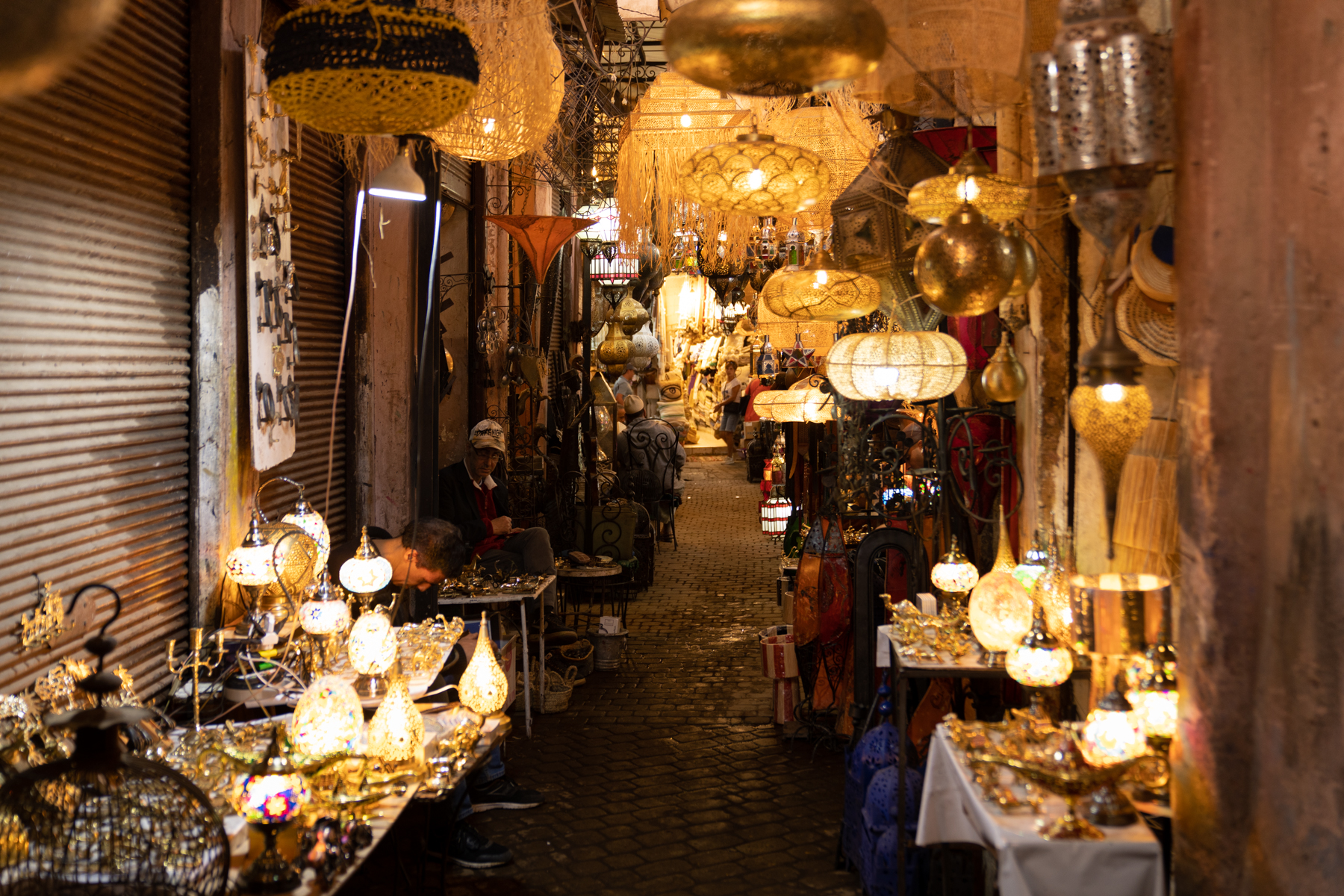
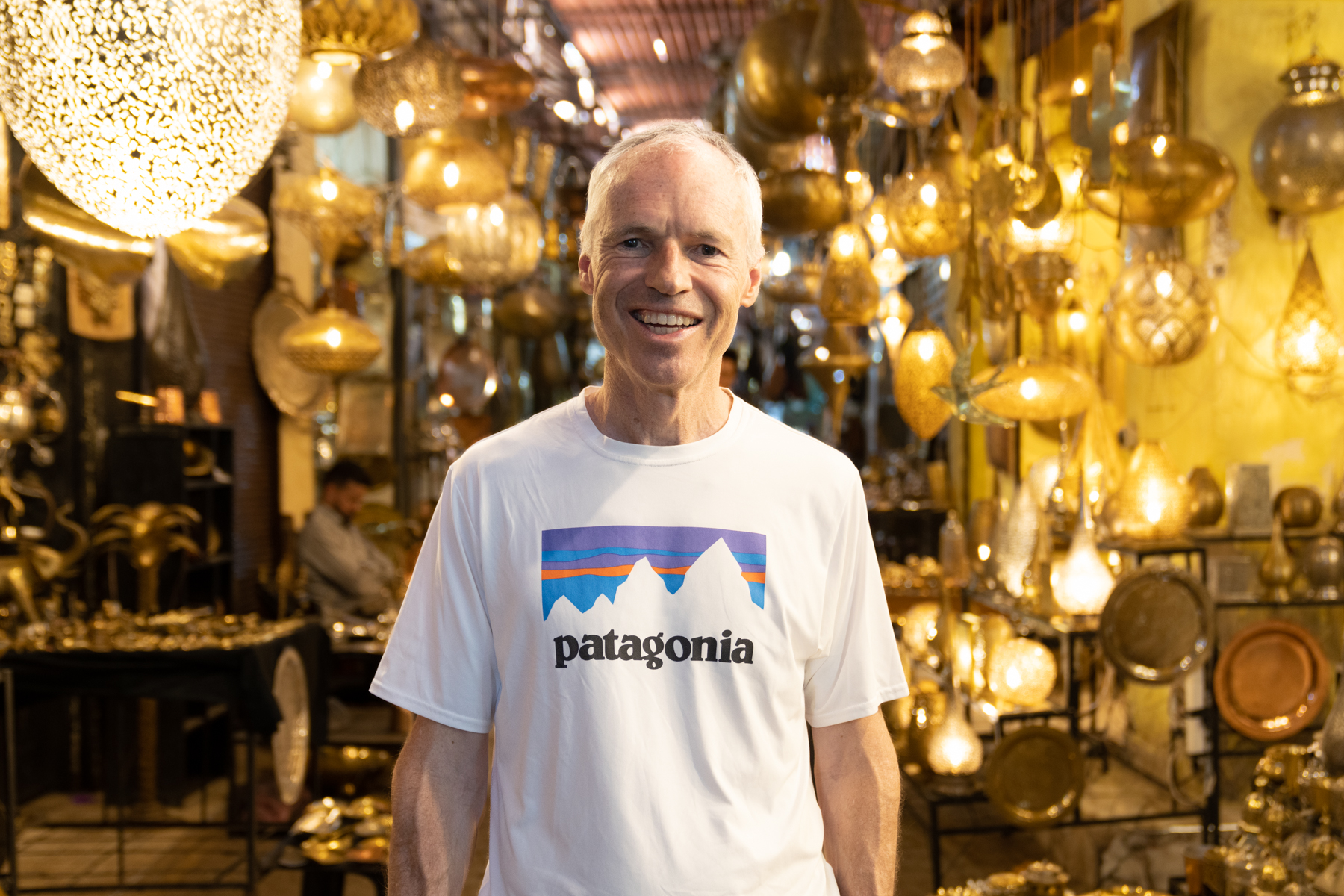
The next area we headed to was the domain of the blacksmiths. Evidently, lamps and lamp fittings are somewhat of a speciality!
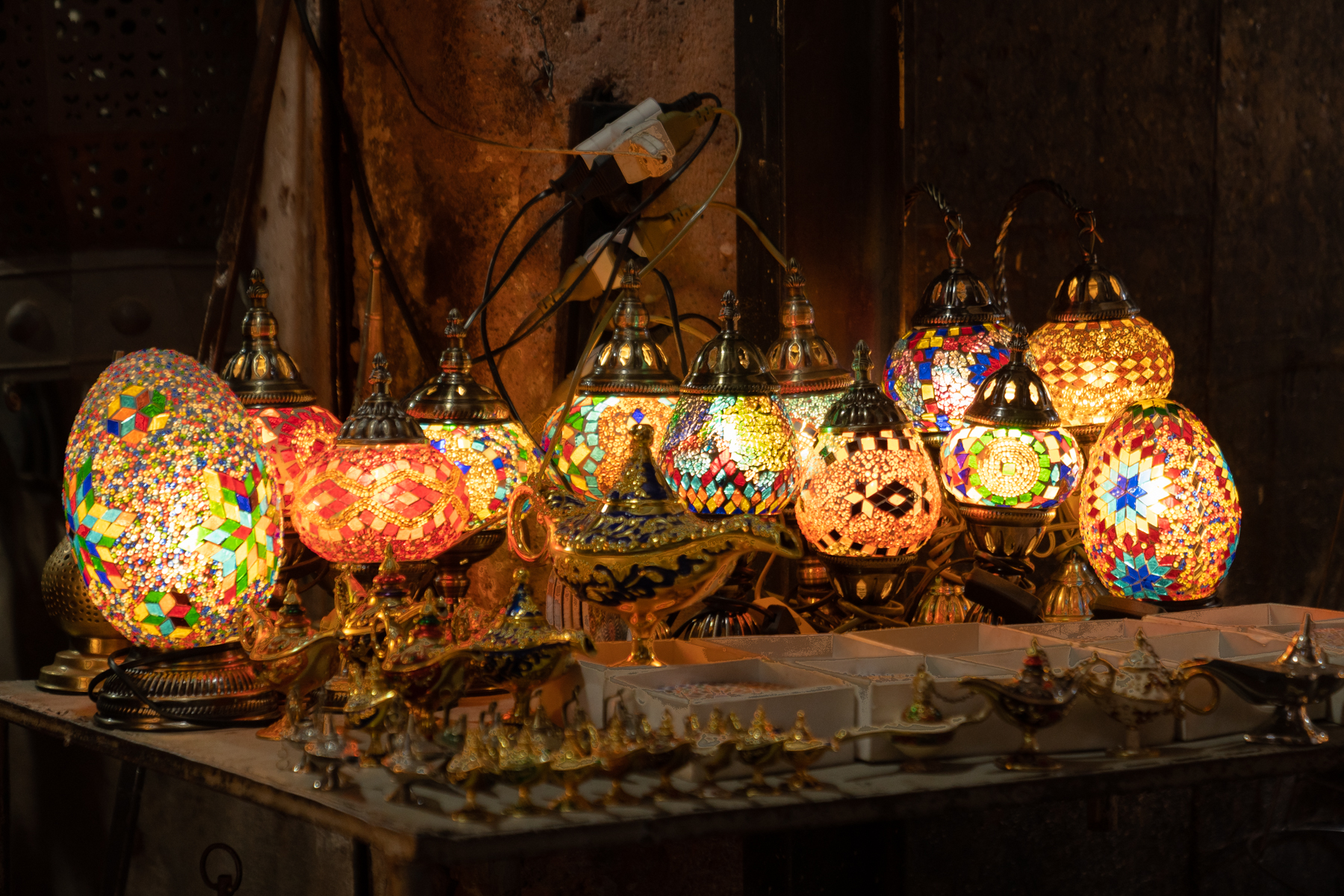
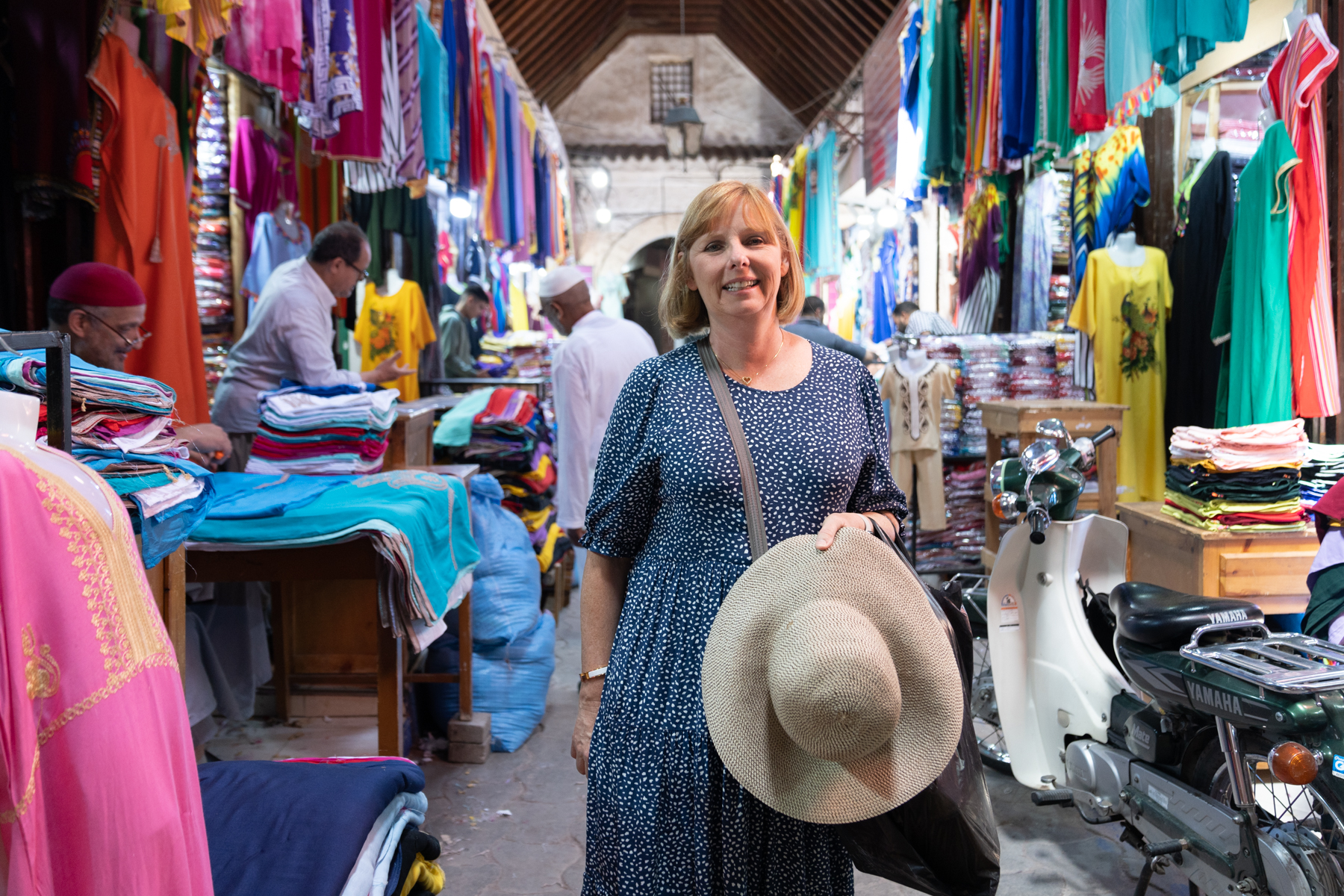
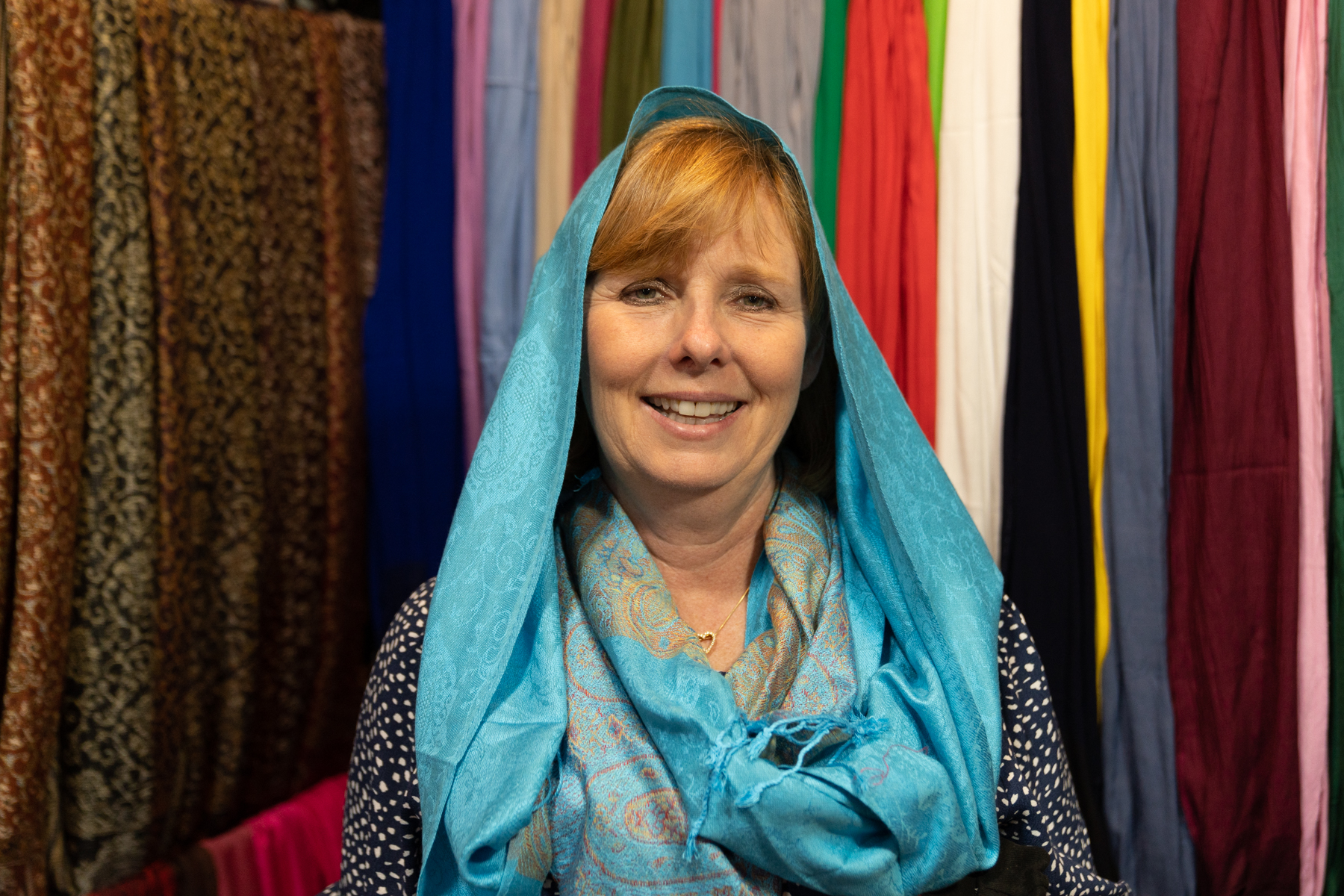
We then entered another area where the specialty was textiles and, probably unsurprisingly, we ended up buying a few things. Unlike a lot of other markets around the world that are now full of mass-produced rubbish, most of the goods in these souks are made by locals, who are using techniques that have remained the same for thousands of years. It feels much more rewarding to buy something from the people who are making it themselves so that they can earn a living.
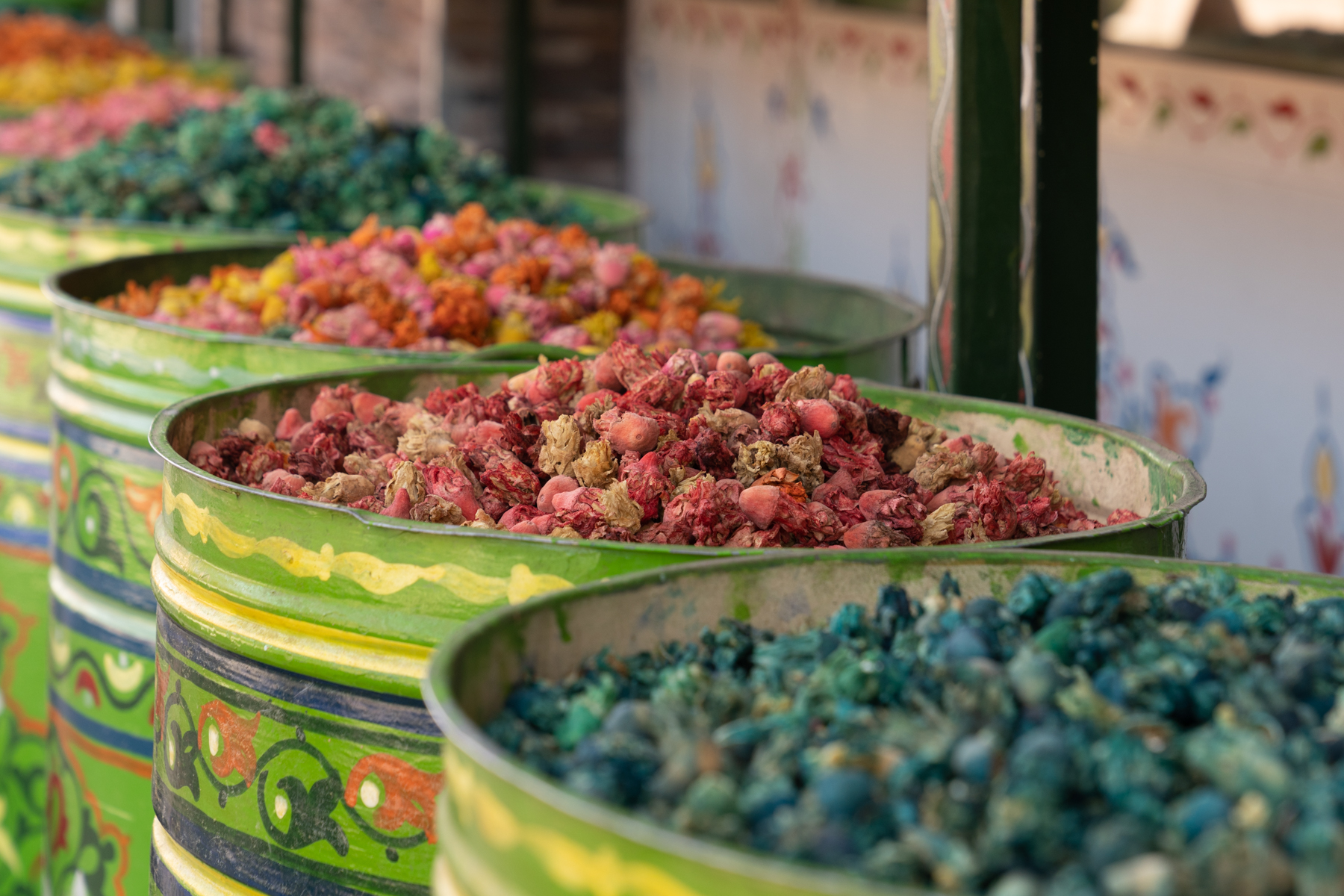
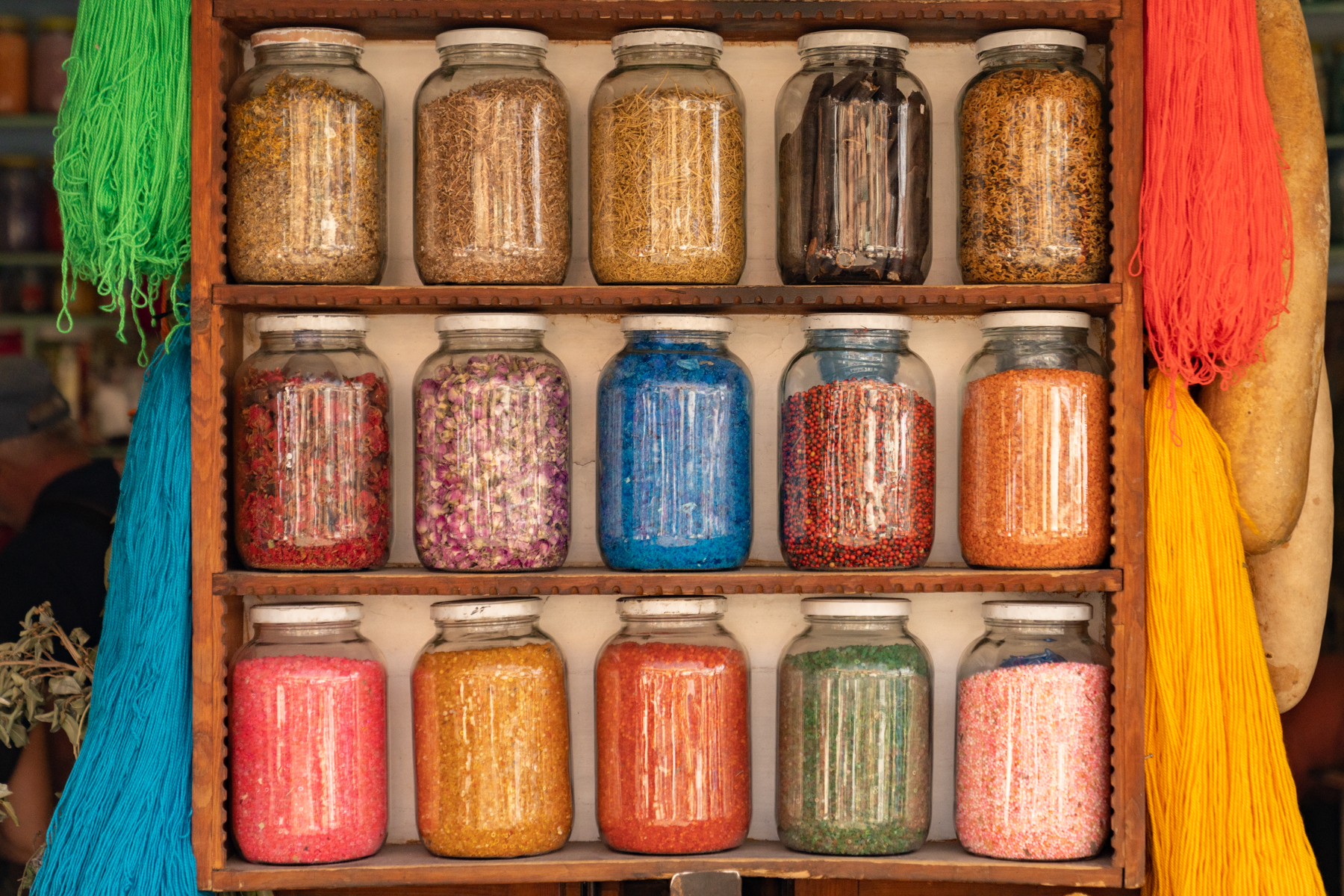
We couldn’t help but be amazed by the beautiful displays of colour as we continued to walk through the souk.
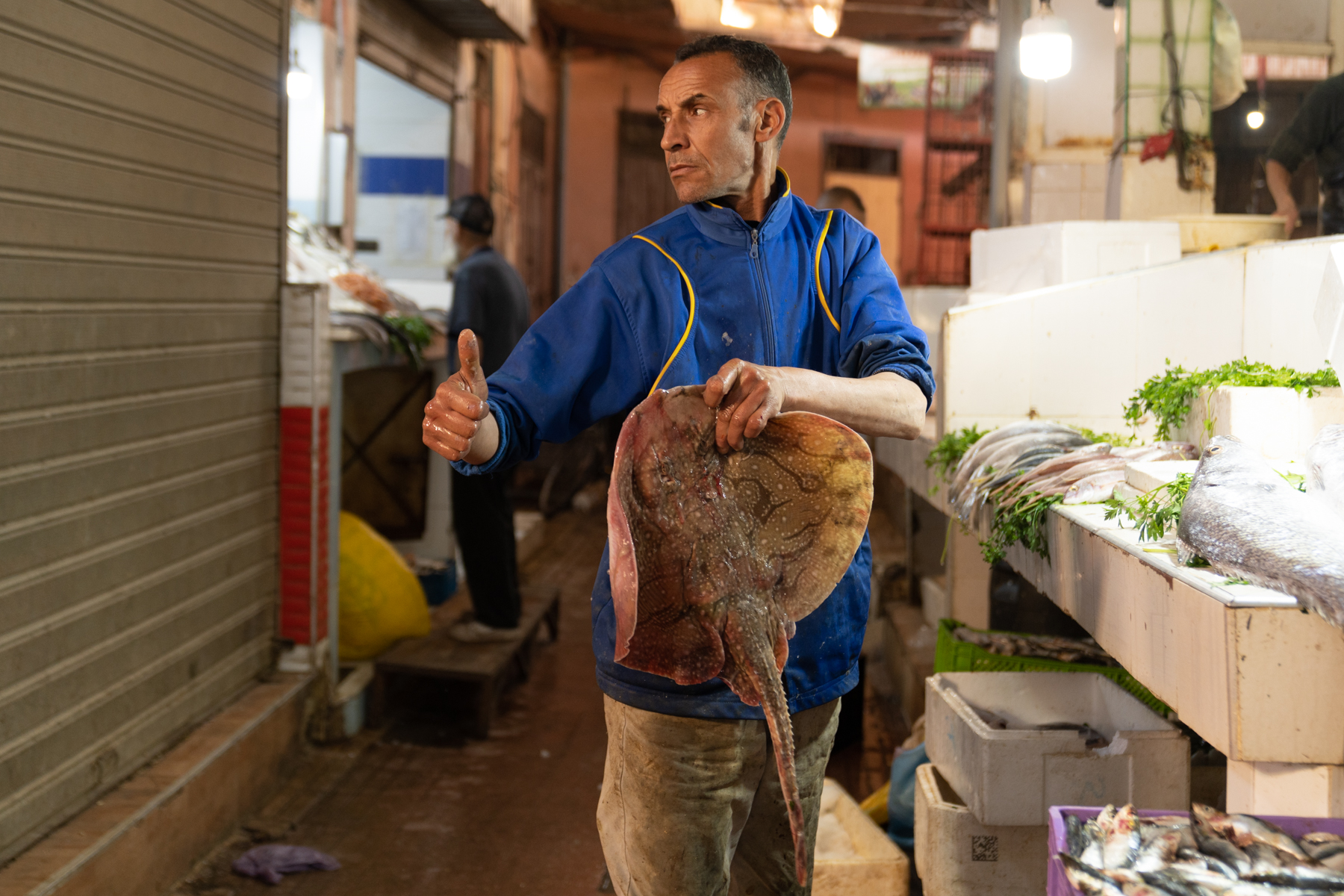
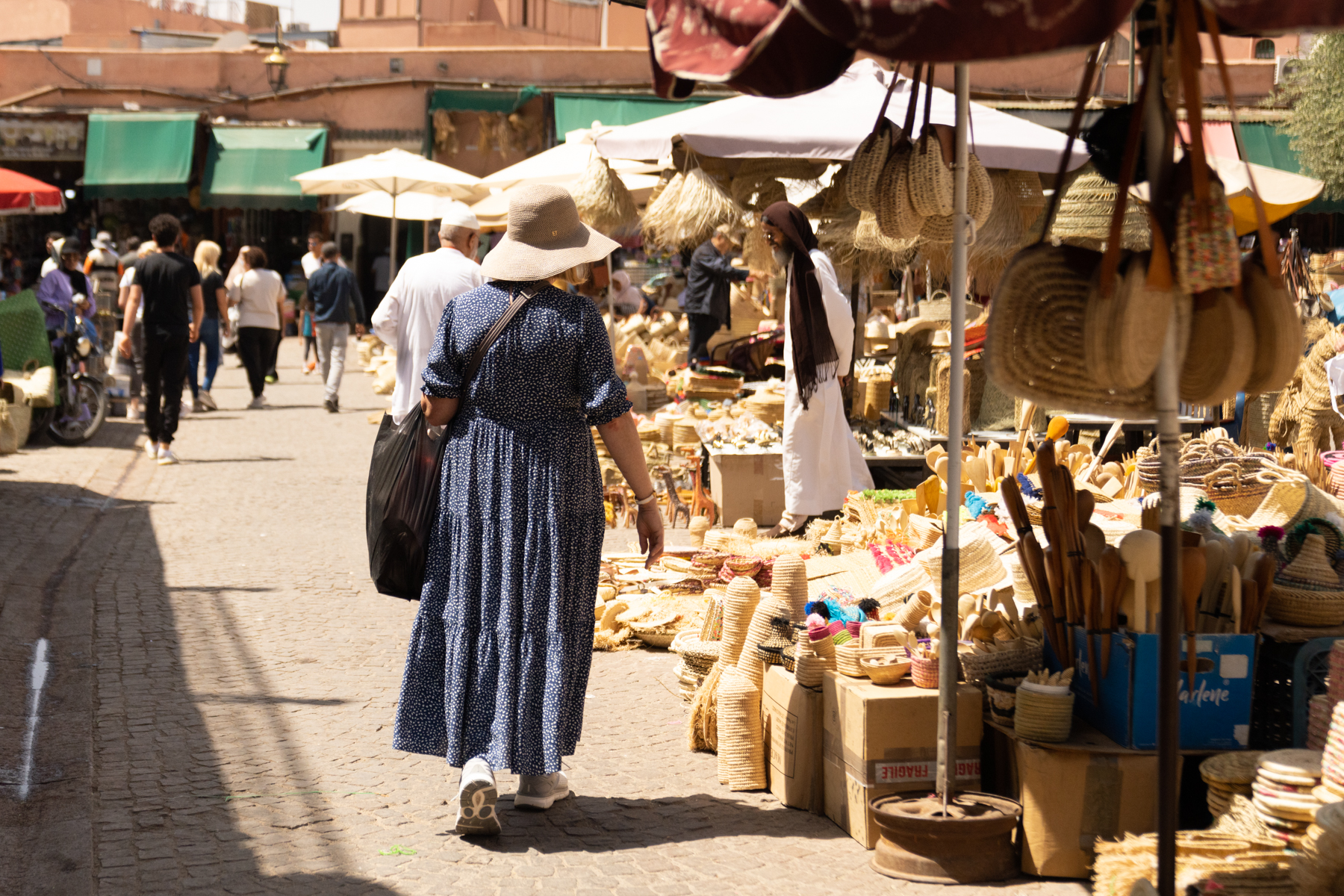
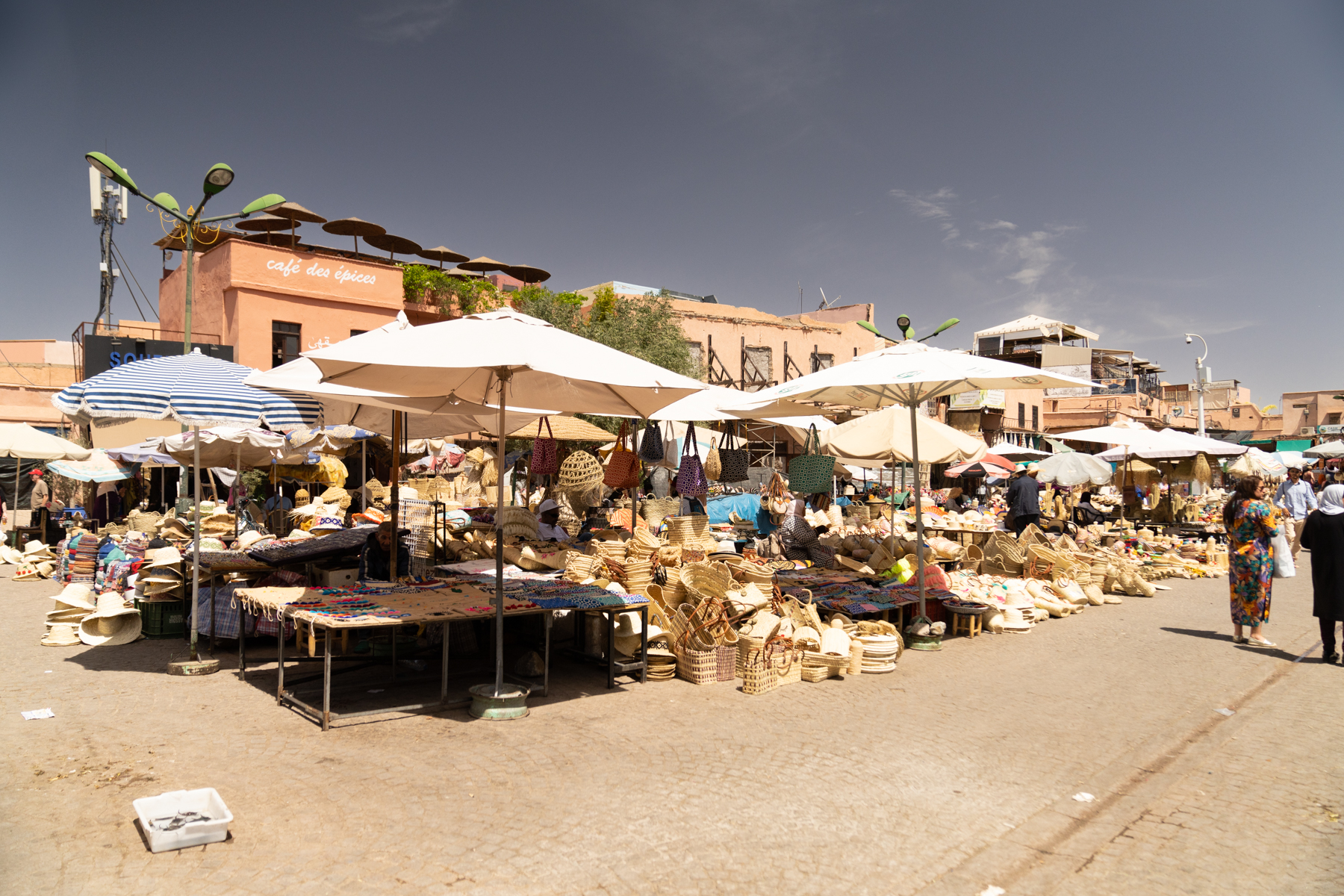
Next we headed for Jemaa el-Fnaa, a meeting square and marketplace in the medina. It was a bustling area, full of weird and wonderful things, from wicker baskets to fresh stingray eggs!
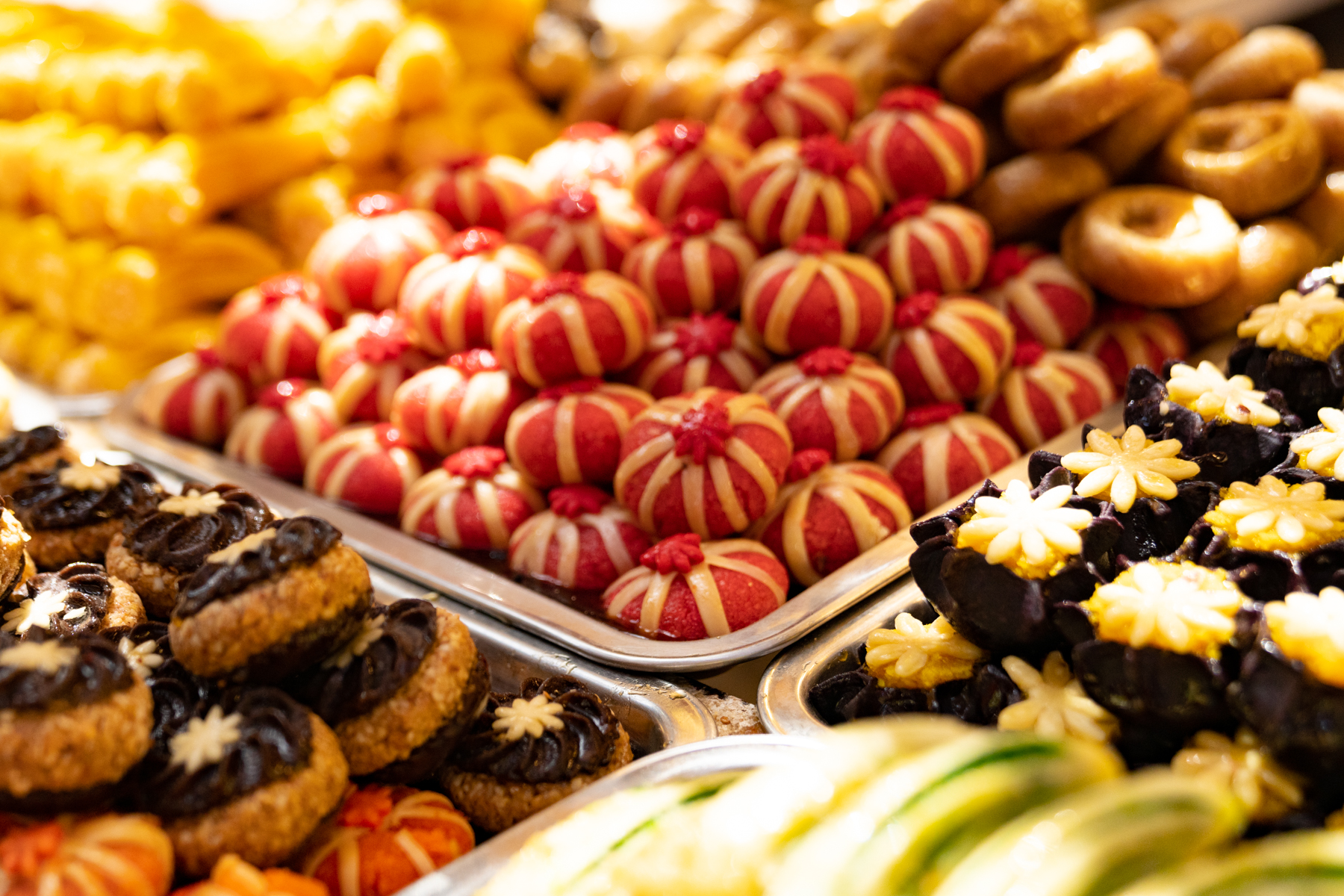
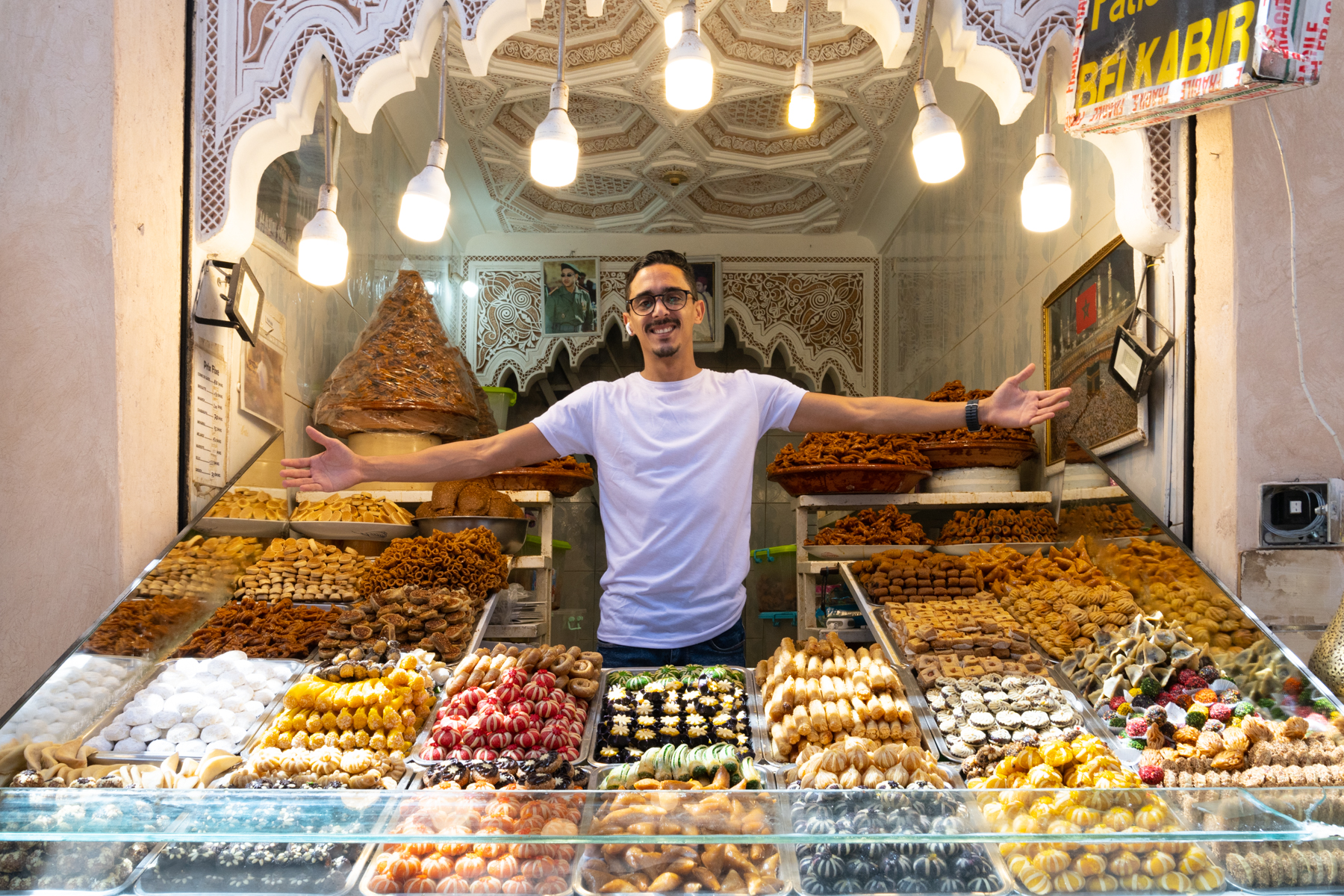
As we walked through the sweet vendors, we stopped and spoke with a nice main at Pâtisserie Belkabir. We bought a nice selection of sweets from him.
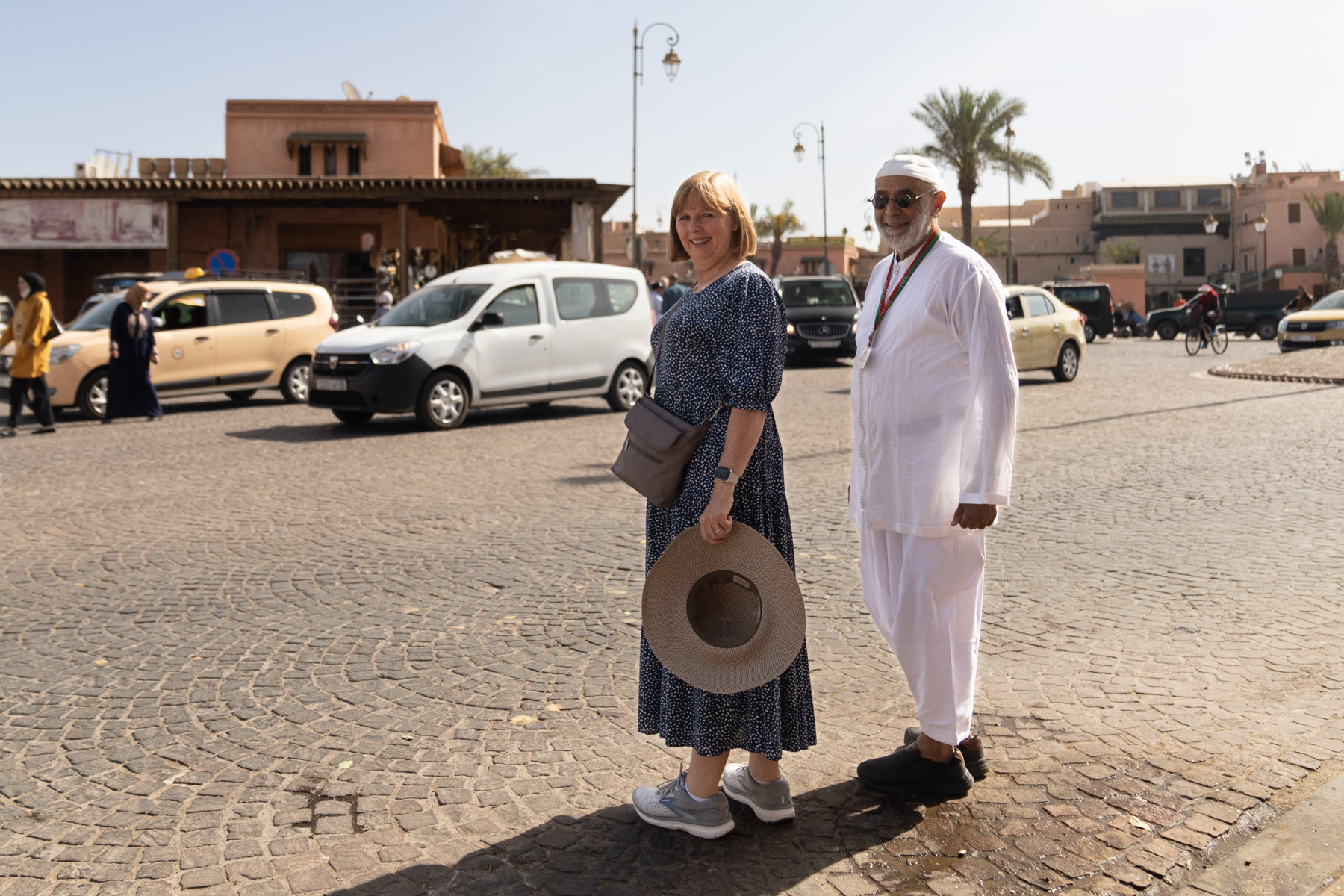
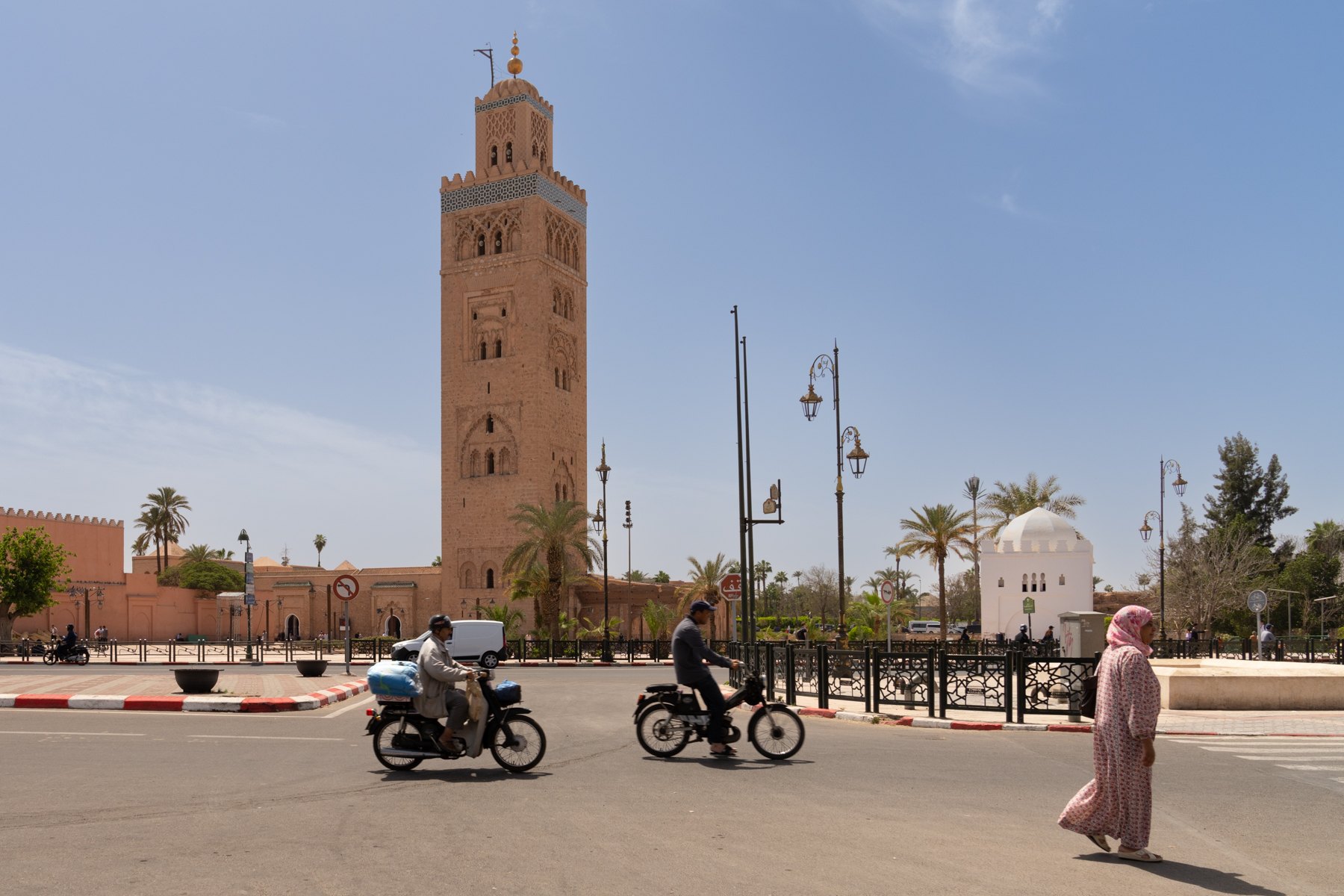
We then walked on through the souk, down Rue Koutoubia, to meet Dawad for the drive to our next destination, Majorelle Garden. We got a nice view of the Kutubiyya Mosque as we exited the souk.
We arrived at the Majorelle Garden a little earlier than the time allotted to us on our tickets. Mohamed doggedly negotiated with the staff at the entrance to let us in early, which they eventually did! The garden contains the Berber Museum, which is where we started. The Berbers in Morocco are an indigenous people of North and Sub-Saharan Africa, whose existence dates back more than 20,000 years. The museum has a wonderful collection of Berber artefacts.
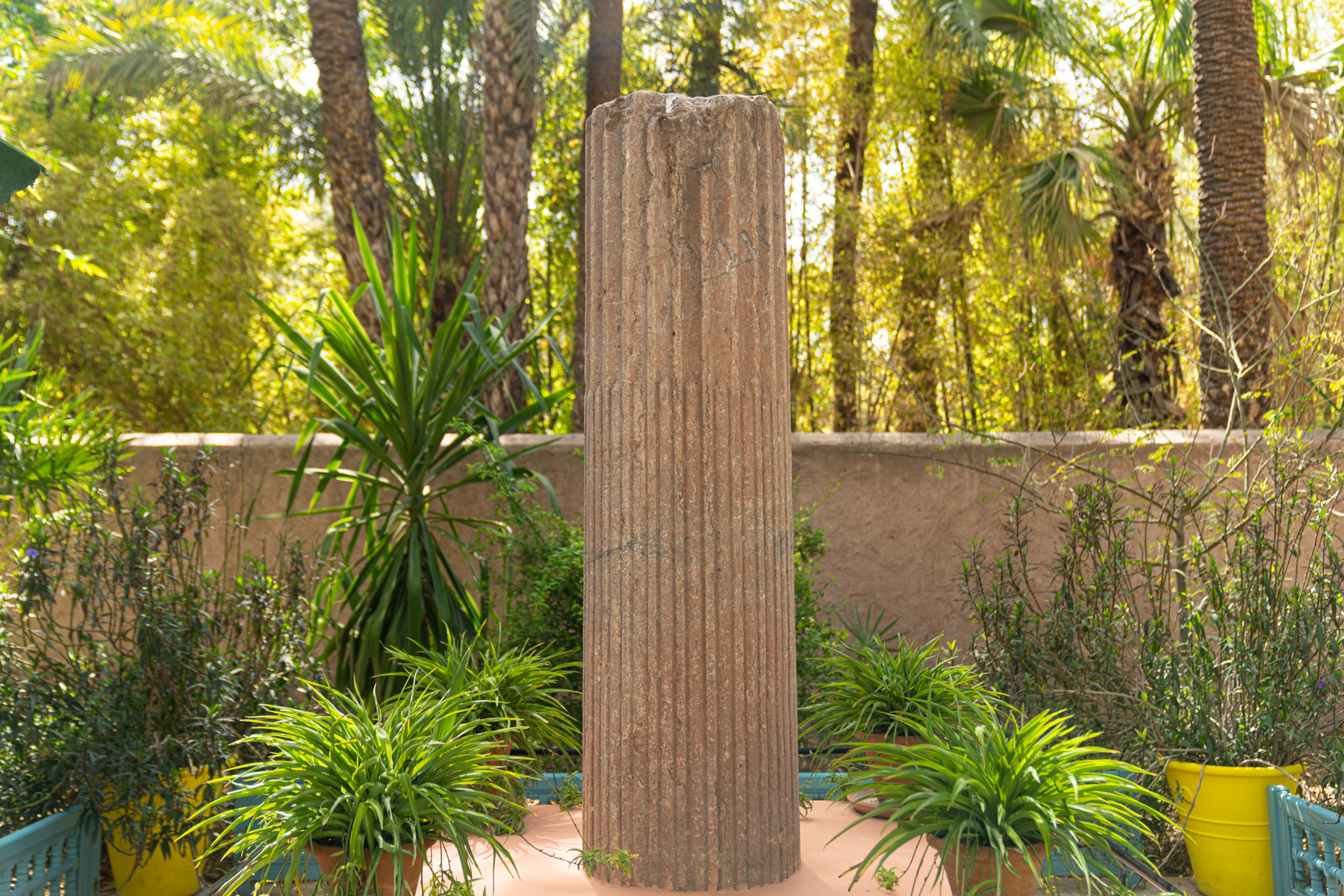
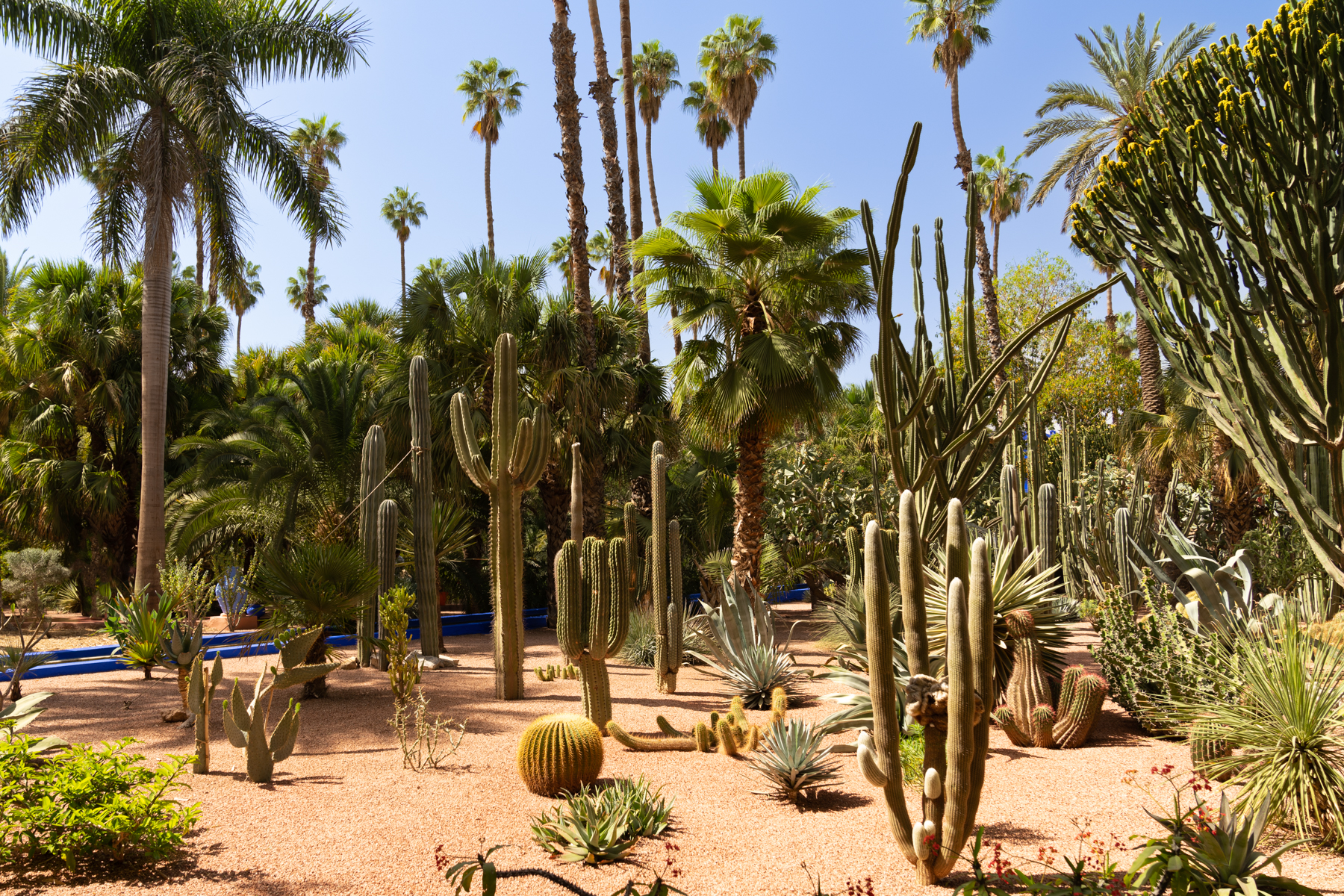
After the museum, we walked through the garden. The Majorelle Garden is a one-hectare botanical garden, created by Jacques Majorelle over more than three decades, starting in 1923. Majorelle and his wife lived on the property until their divorce in the 1950s. The garden fell into disrepair but was purchased in the 1980s by Yves Saint-Laurent and his partner, Pierre Bergé, who restored it to its former glory. More than 700,000 people visit the garden every year.
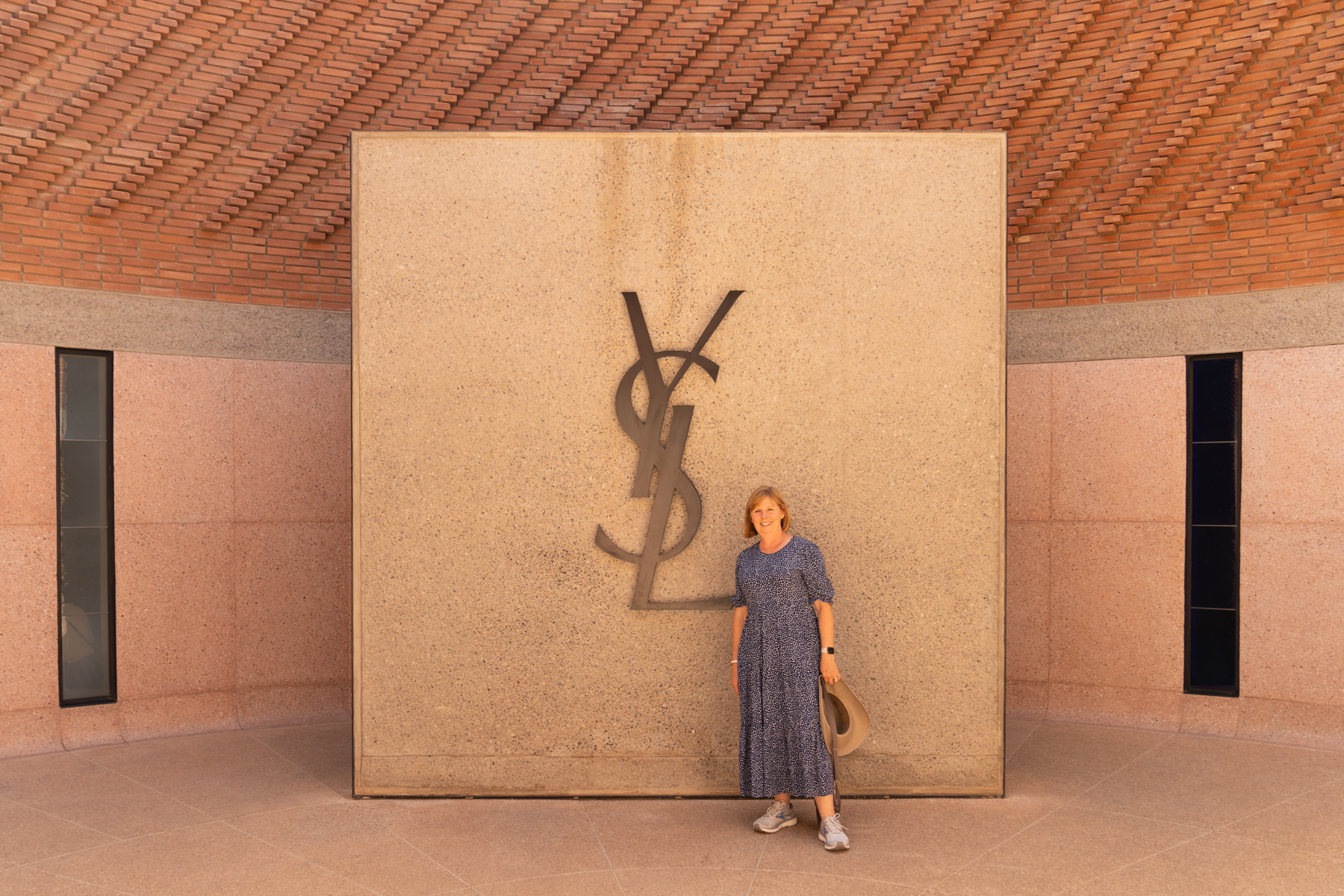
After leaving the garden, we walked next door to visit the Yves Saint-Laurent Museum. There are two YSL museums: one in Paris and this one in Marrakesh. Yves Saint-Laurent spent a considerable amount of time in Marrakesh and derived much inspiration from the Moroccan way of life. We very much enjoyed learning more about his artistic process of sketching his designs, as well as looking at a collection of some of his work.
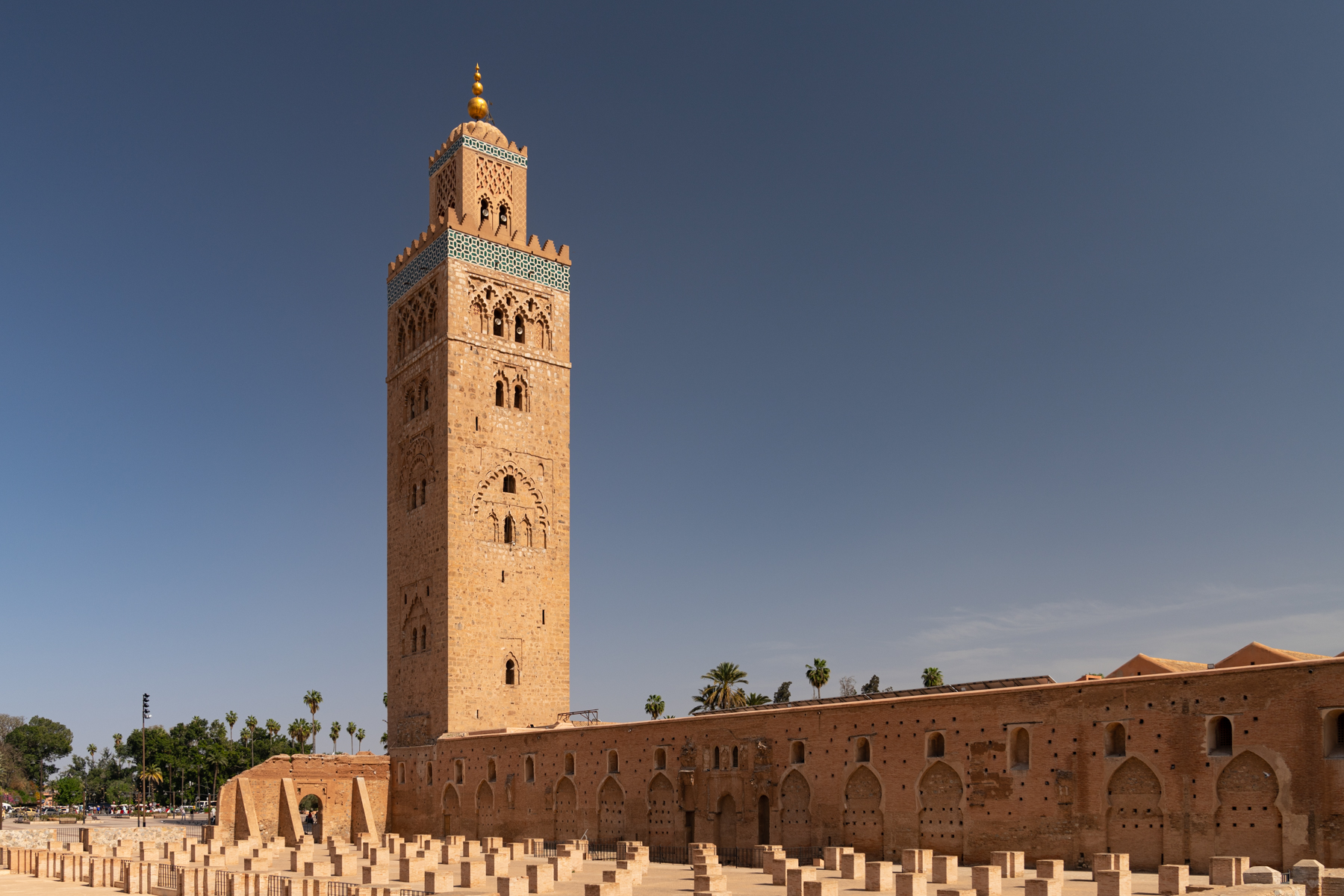
After exiting the museum, we met up with Dawad again, and drove to the Kutubiyya Mosque. The mosque dates back to 1147 but the one that stands there today was completely rebuilt around 1158. It is the largest mosque in Marrakesh, and it considered to be an important example of Moroccan mosque architecture. (We have quite a nice view of this mosque from the upstairs terrace in our hotel room but, thankfully, we’re sufficiently far away that the 4:45 am call to prayer is not too loud!).
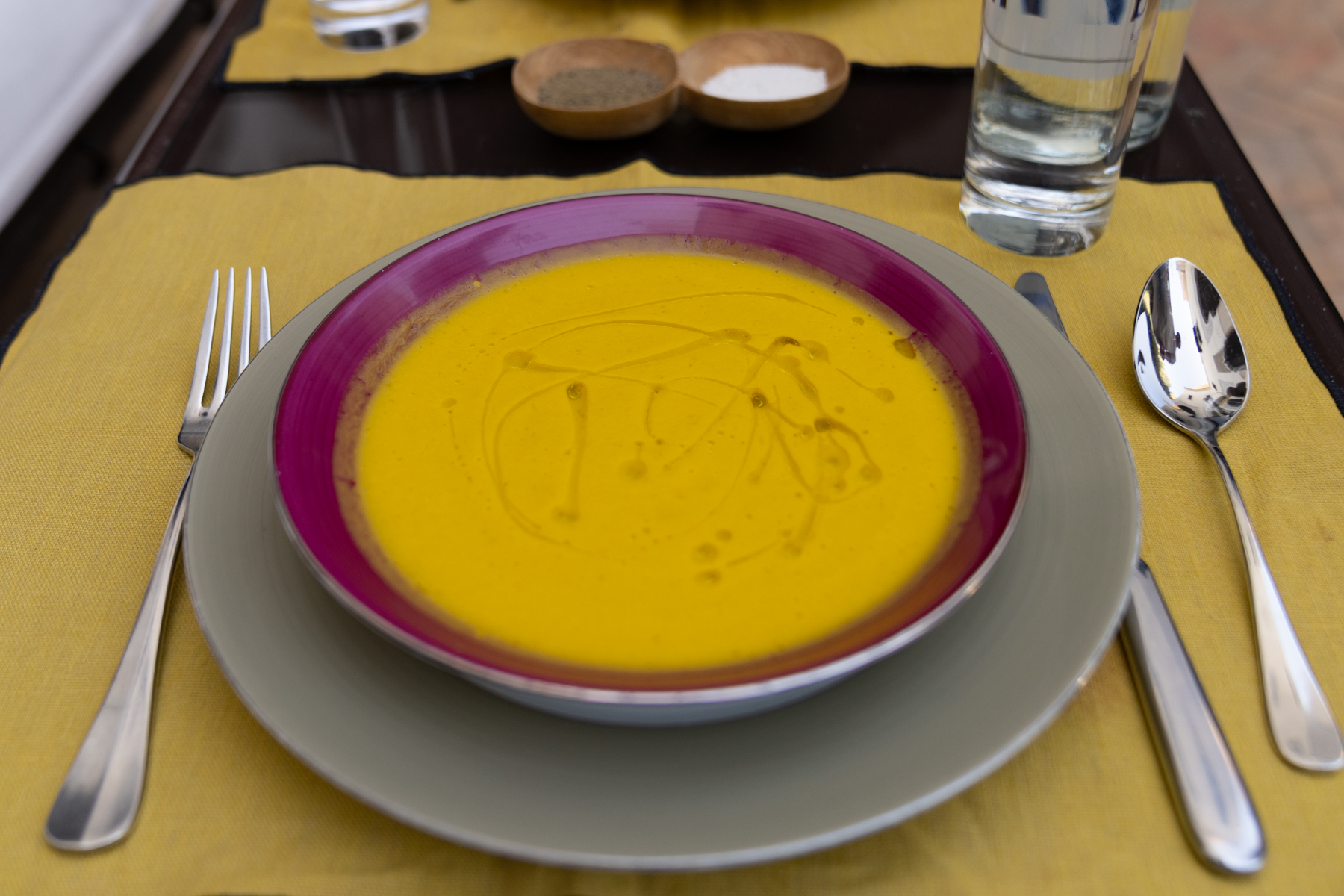
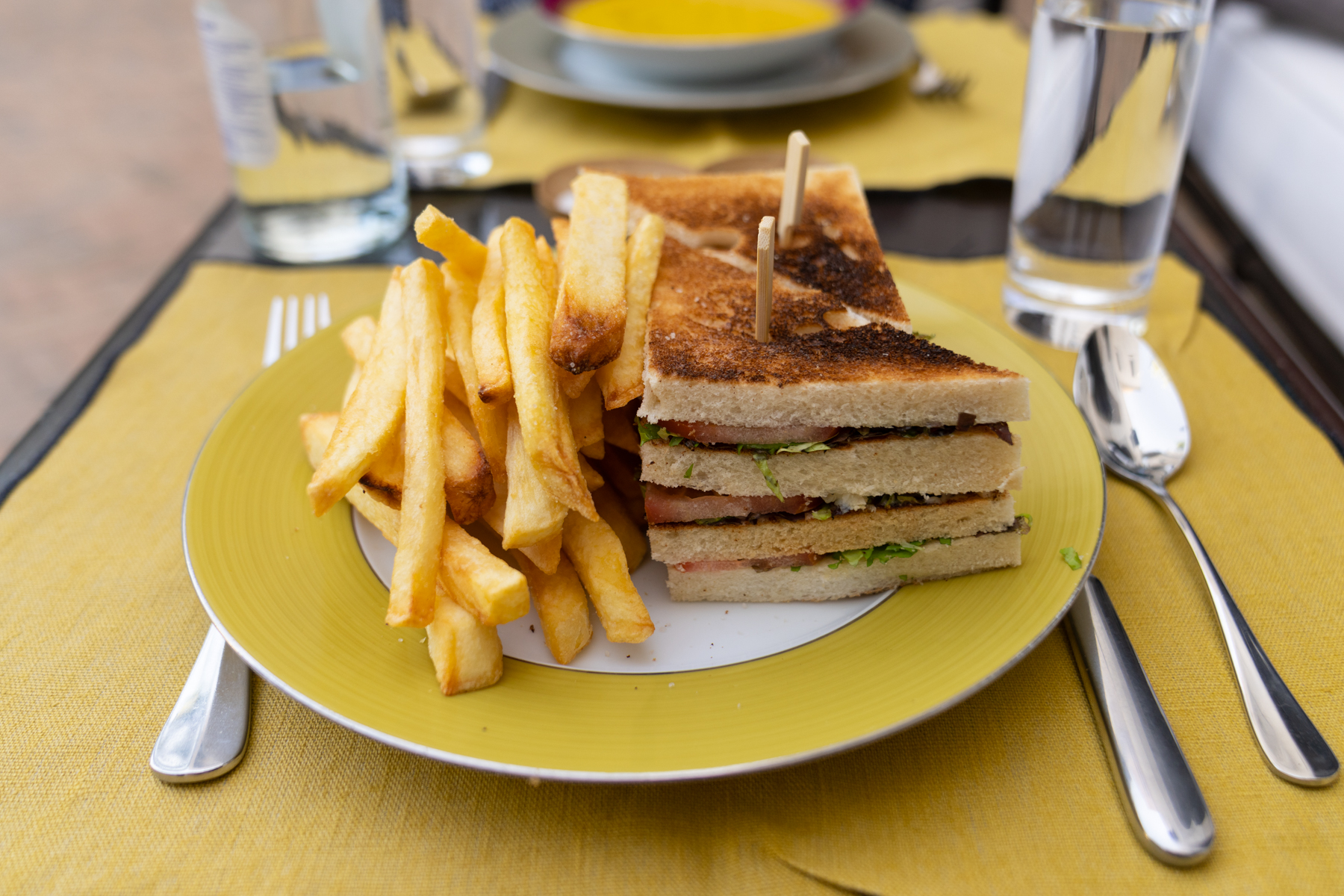
After a big day, we headed back to the hotel. We thought we might eat dinner at the hotel’s restaurant but decided on an early meal by the pool instead, for two reasons: firstly, the hotel’s restaurant does not open until 8:00 pm during Ramadan; and, secondly, it was fully booked!
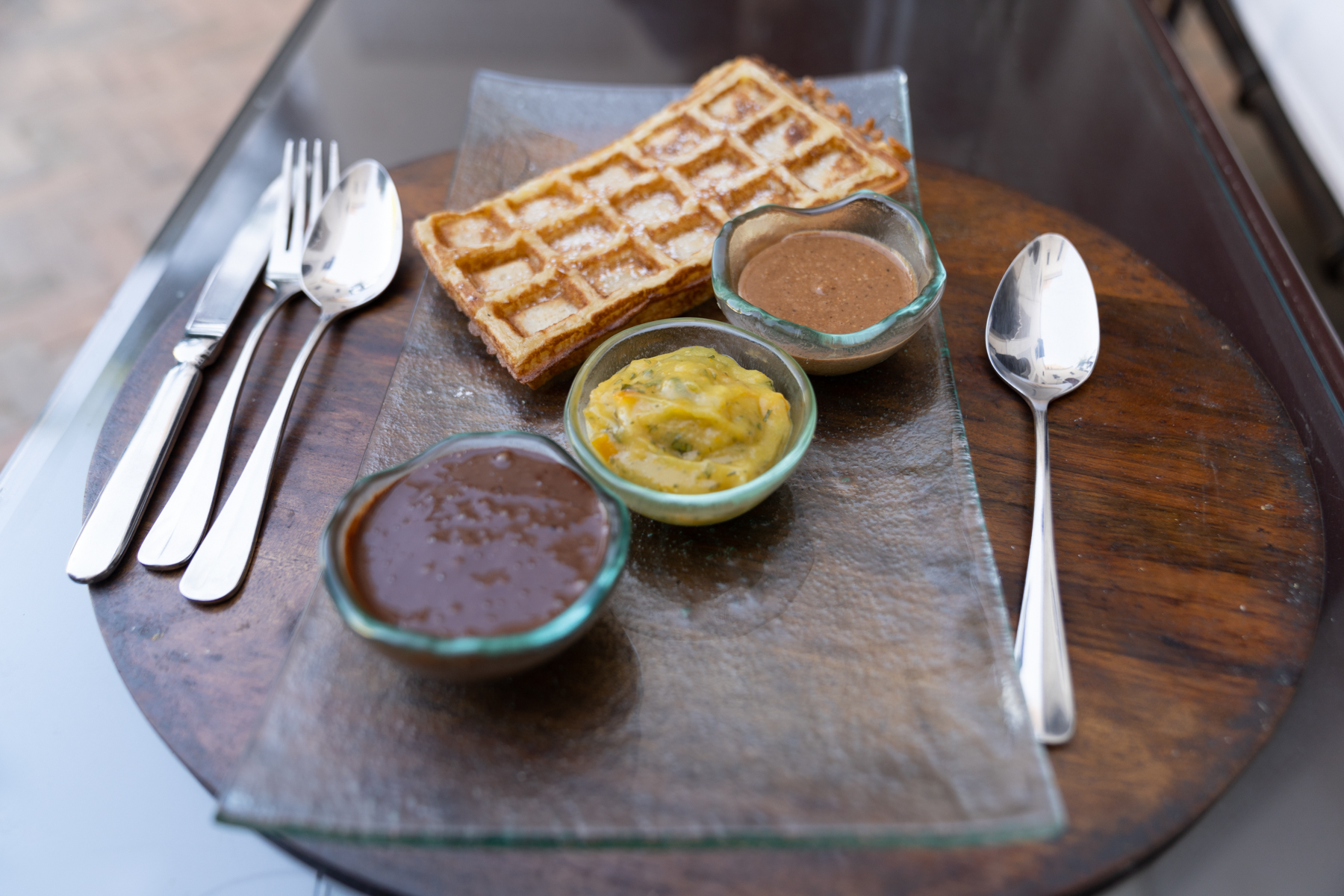
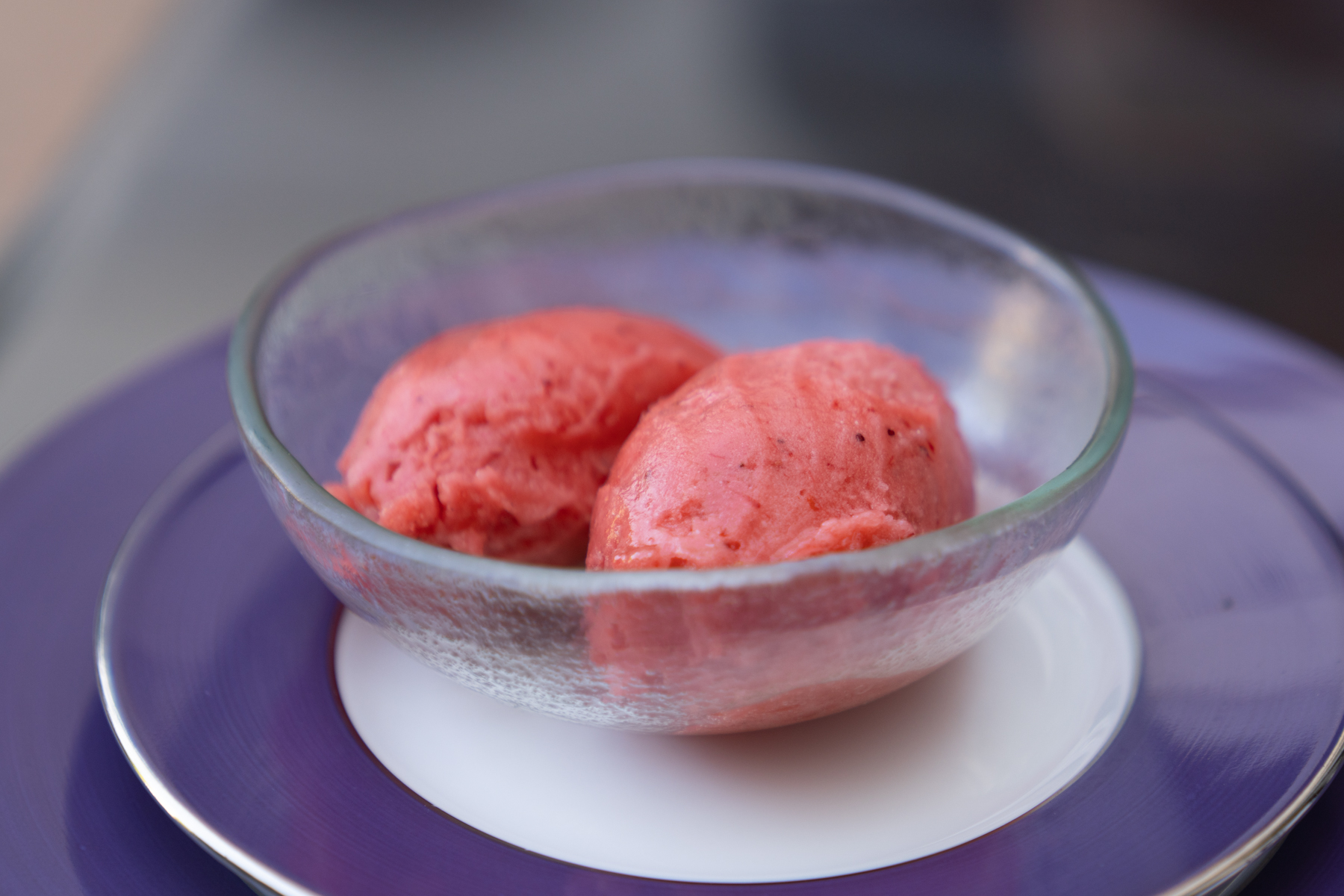
After dinner, we headed back to our room and had a post-dinner sleep. It was too early retire completely for the evening, but we knew we’d struggle to stay awake, so we didn’t fight it. We were woken by a knock on our door at around 7:15 pm, when our laundry was delivered back to our room.
We spent the rest of the evening relaxing in our room. Tomorrow, we’re heading out of Marrakesh to the Atlas Mountains, which should be a fun experience.