
Around The World
Exploring around Cairo
We slept well last night and were up early to have breakfast before heading out for a big day of exploring around Cairo.
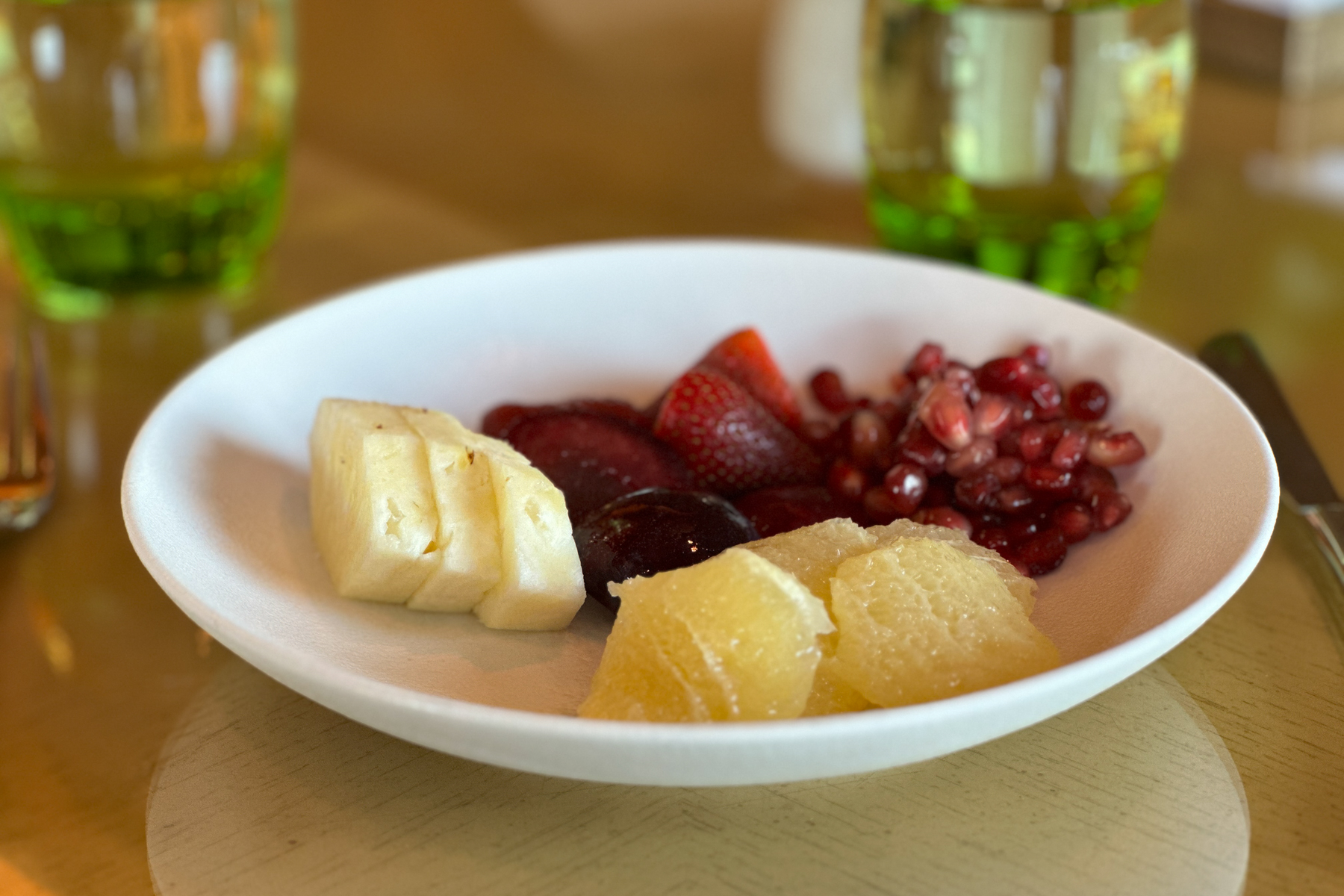
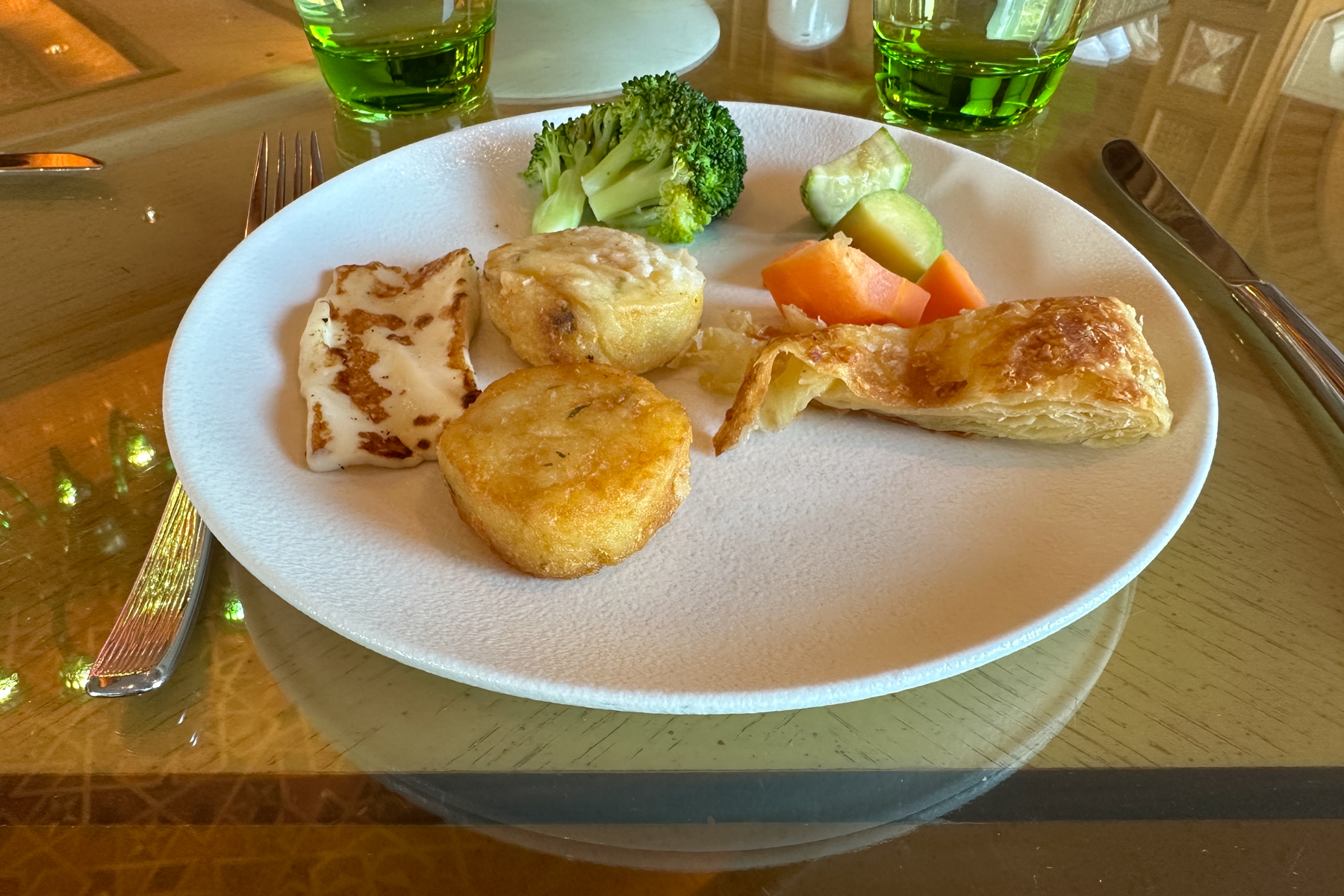
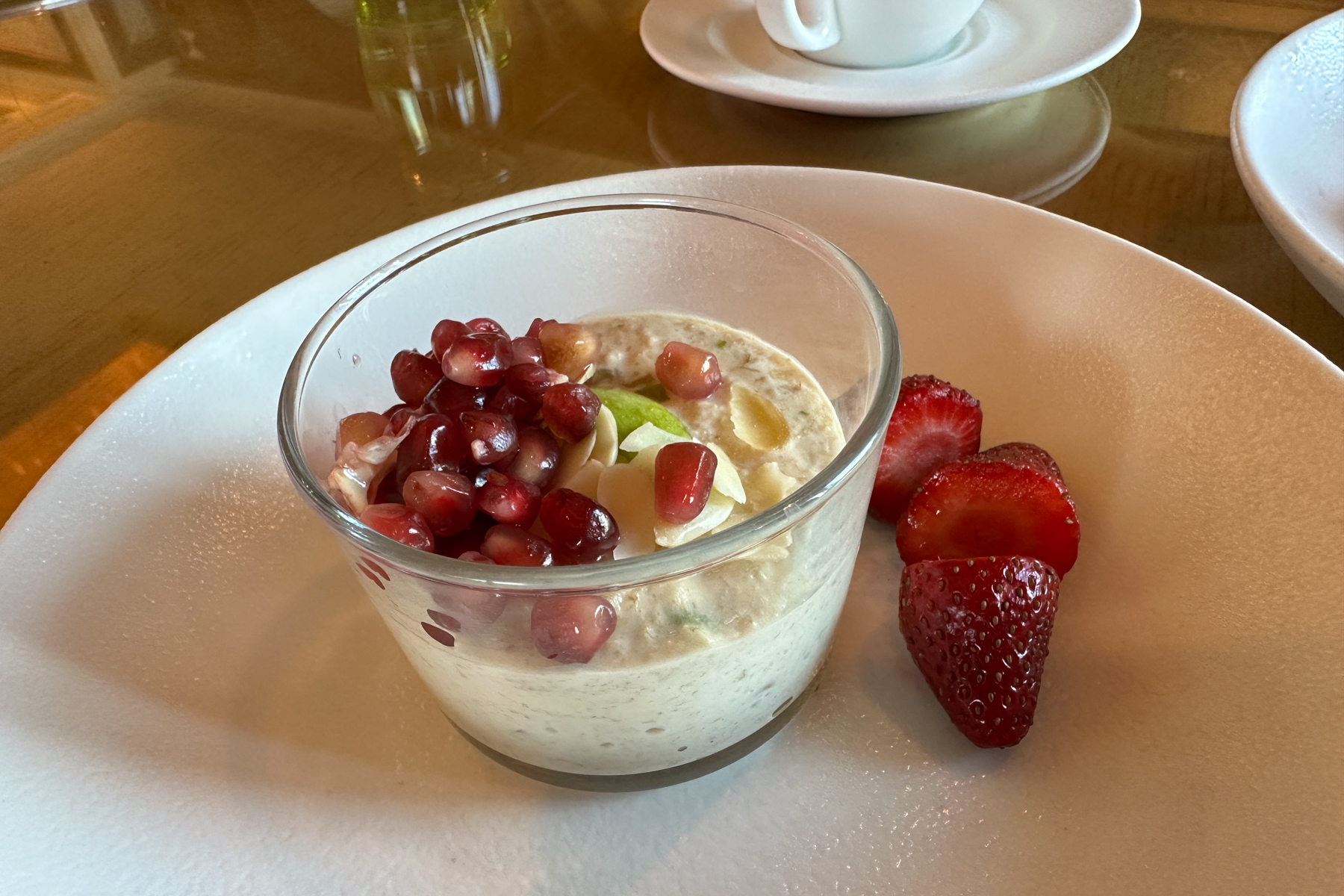
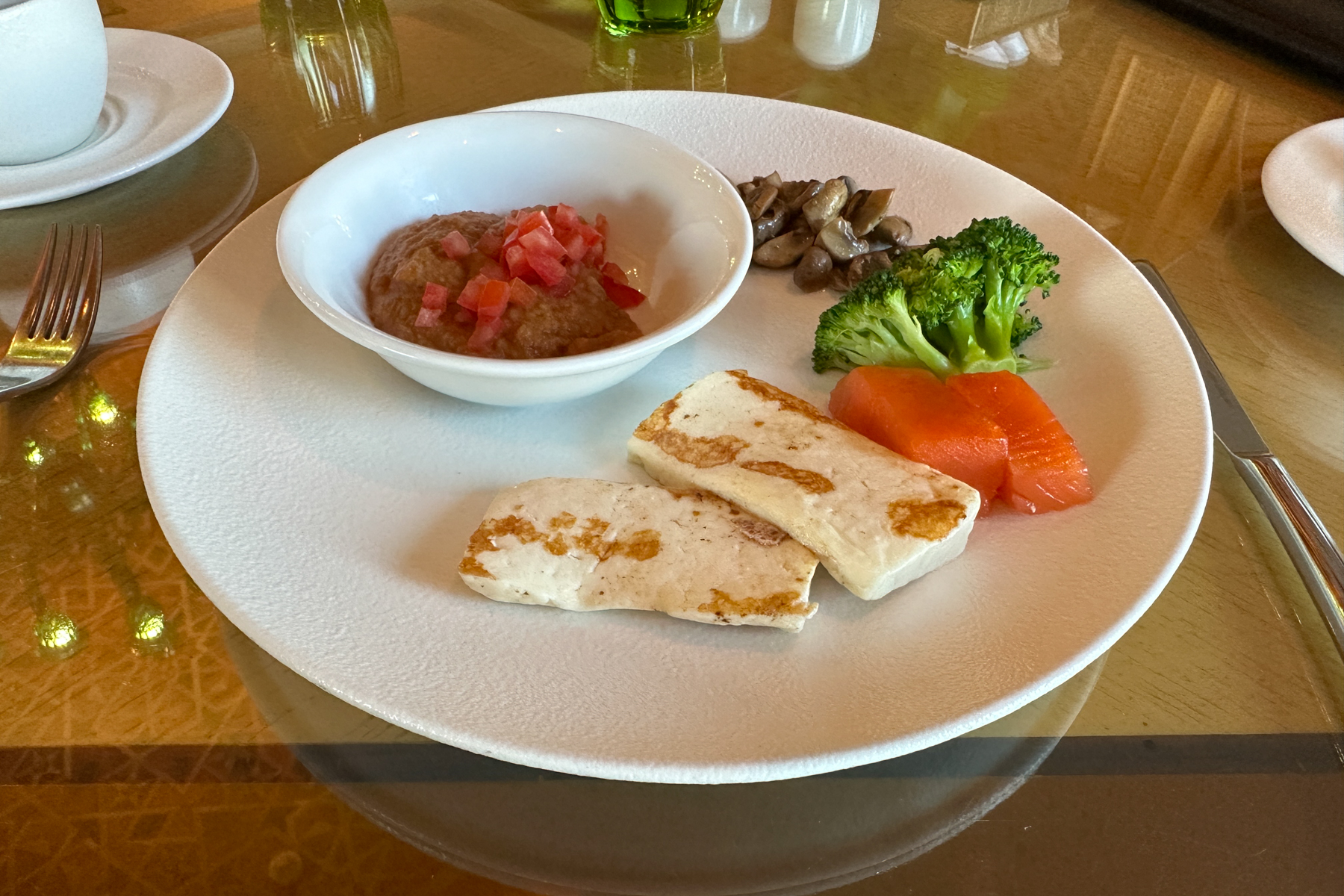
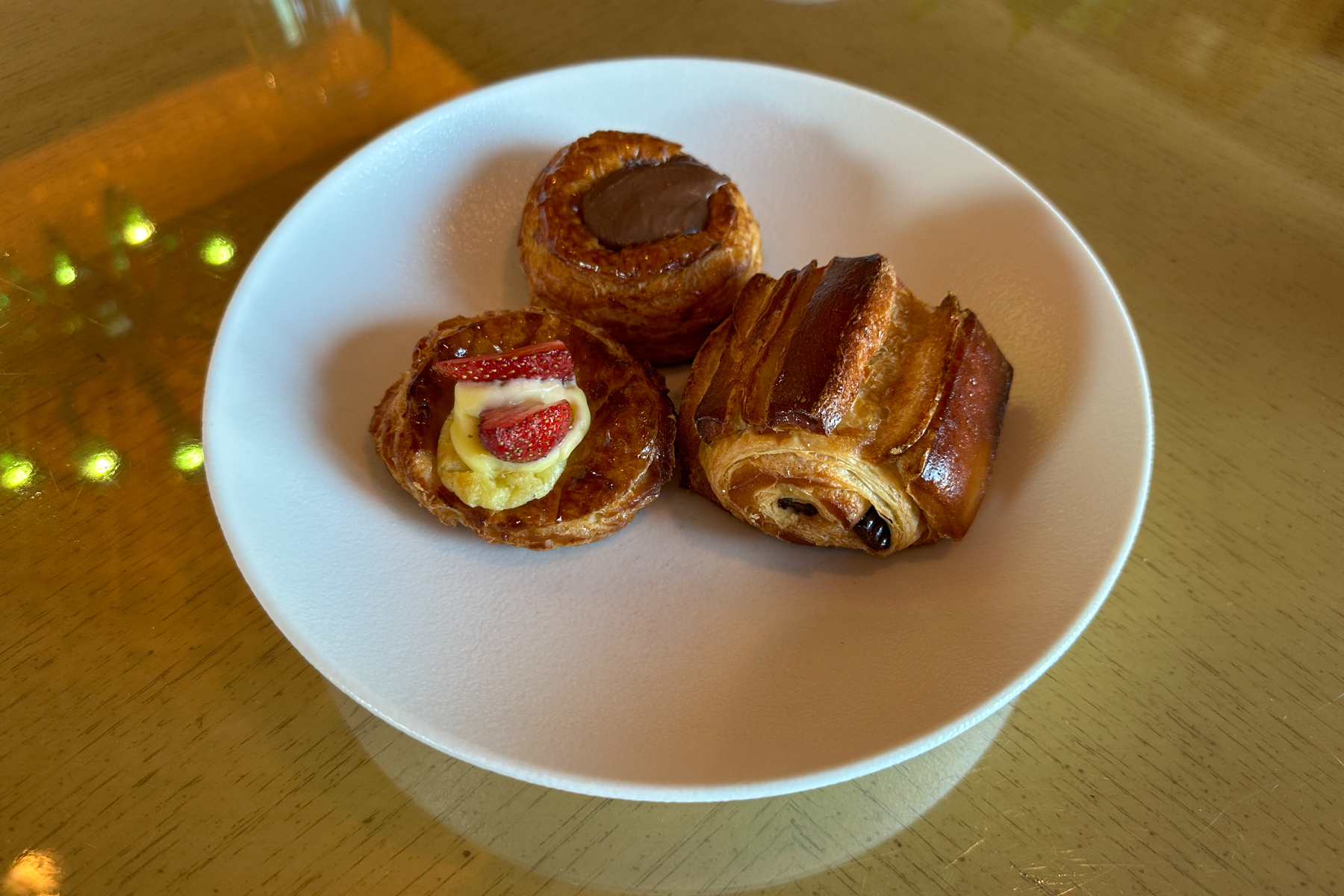
We finished breakfast, went back to our room to get organised, and then headed to the lobby at 8:00 am to meet Sally, our guide for the day, and Hachem, our driver.
Our first stop was the Giza pyramid area on the edge of the Western Desert (part of the Sahara), a drive of only 20 kilometres from our hotel in downtown Cairo. But even though it was only a short drive, it took nearly an hour in the insane Cairo traffic. We arrived at about 9:00 am and were astounded by how many bus loads of people were already there.
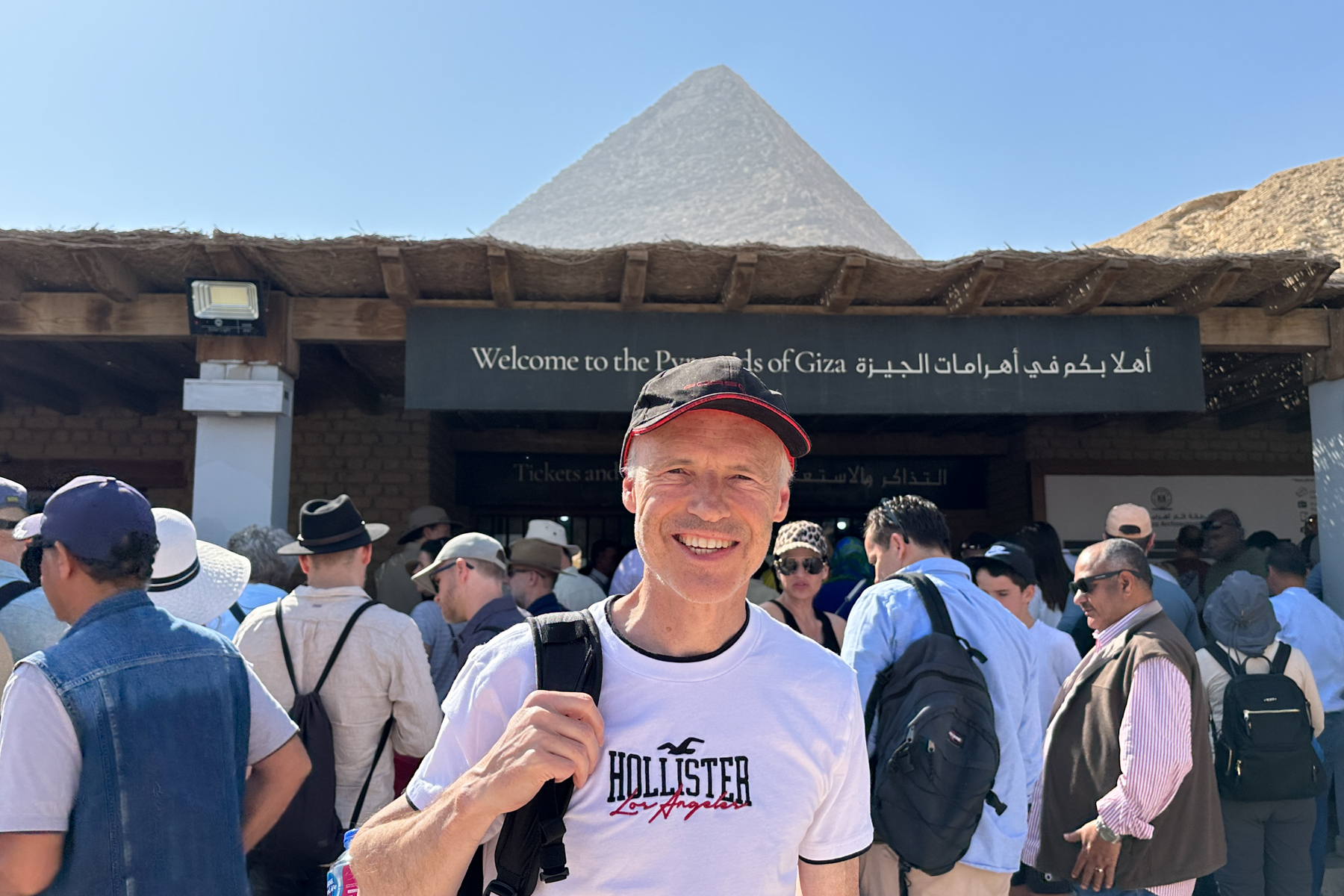
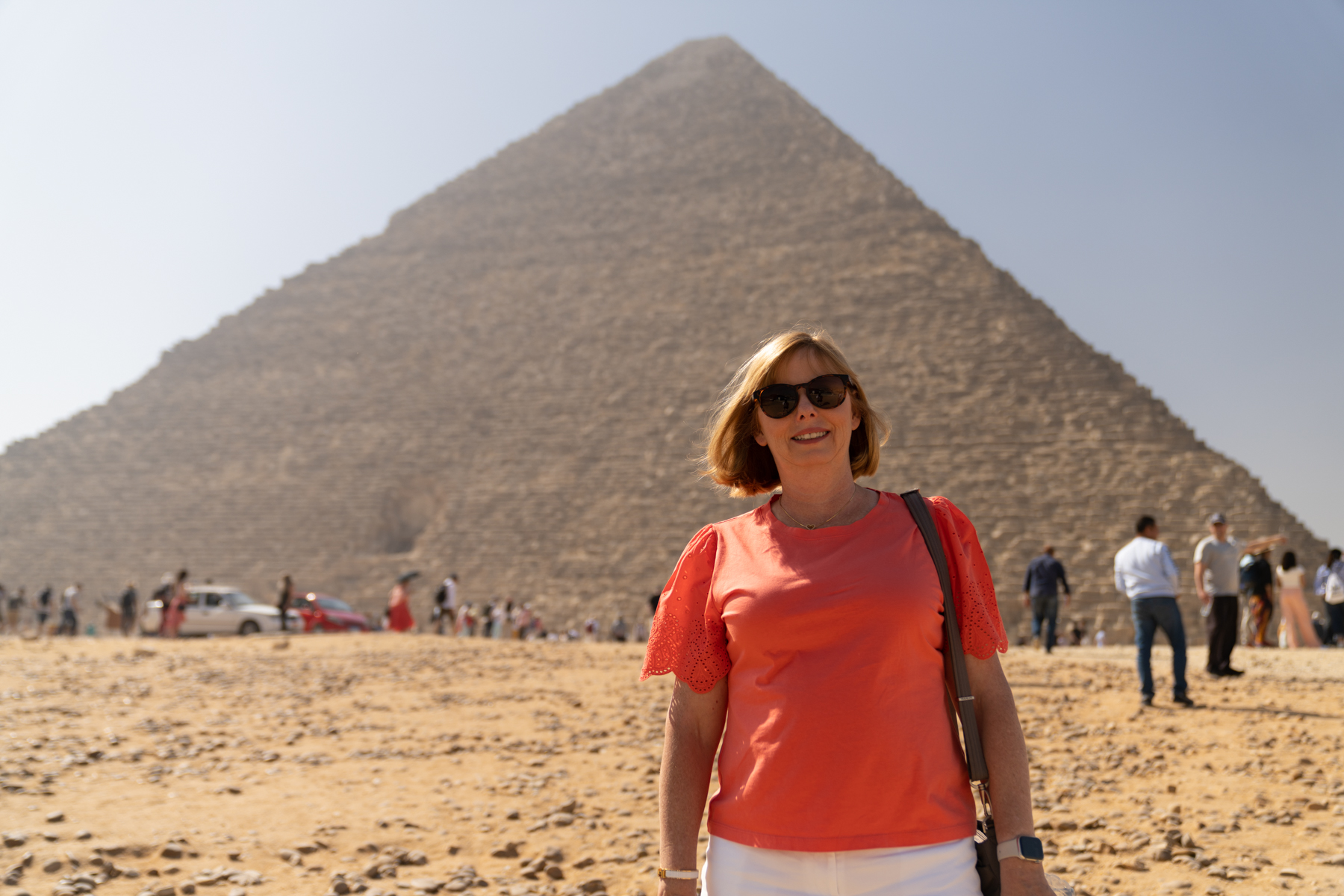
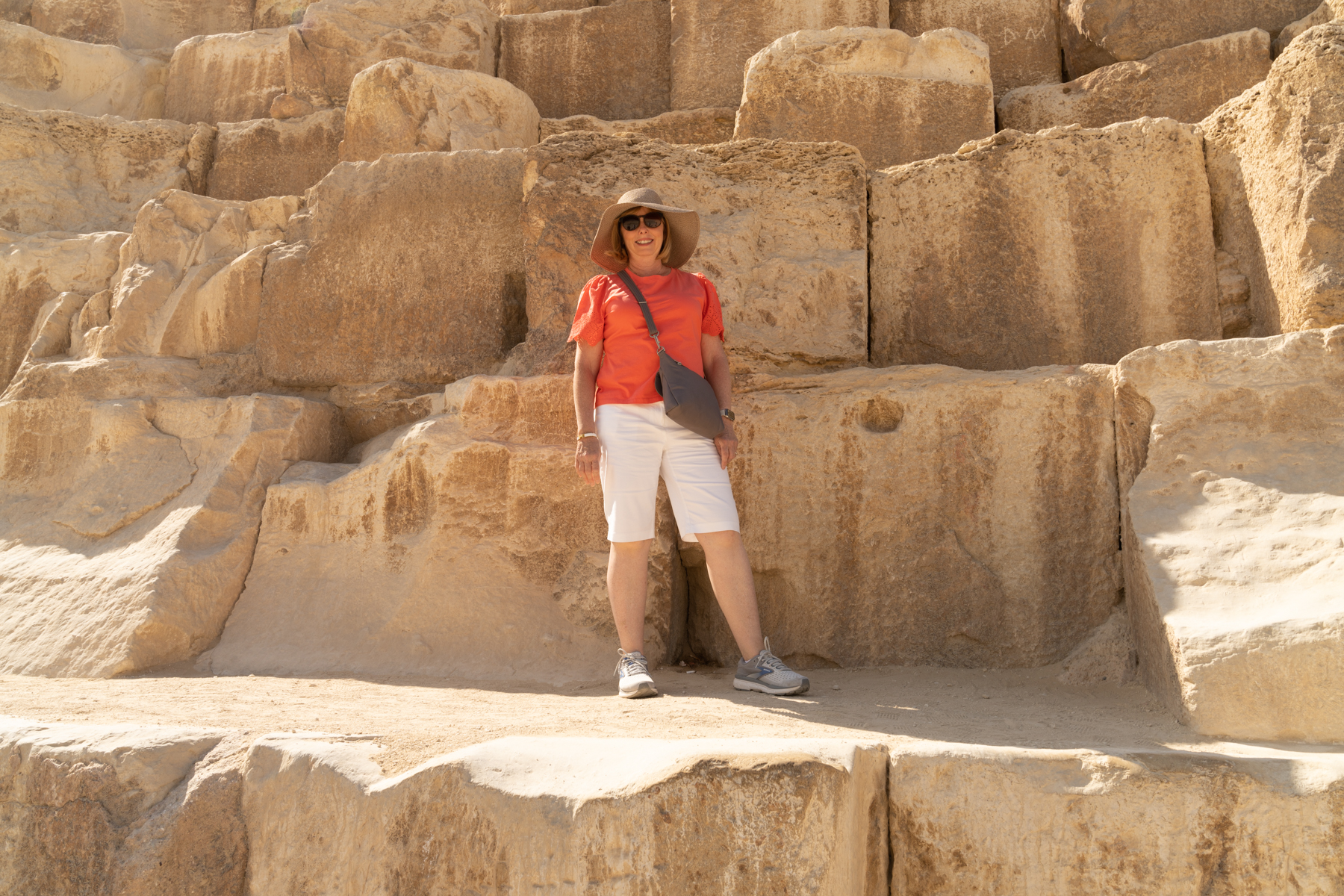
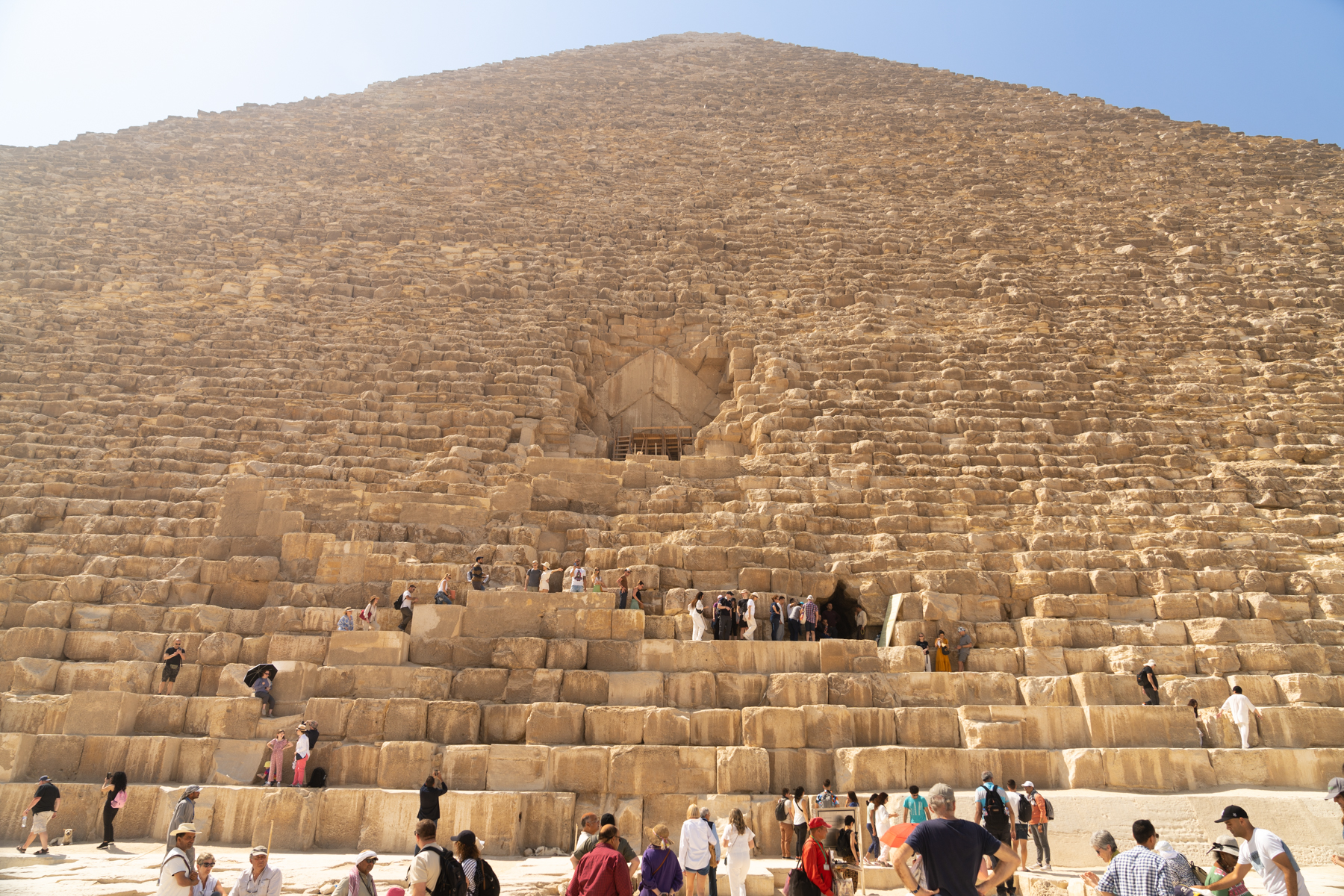
The Giza pyramid complex comprises three main pyramids and three smaller pyramids. All six pyramids were constructed during the Fourth Dynasty of the Old Kingdom of ancient Egypt, between 2500 and 2600 BC. The largest is the Pyramid of Khufu, also known as the Great Pyramid, which is where we headed.
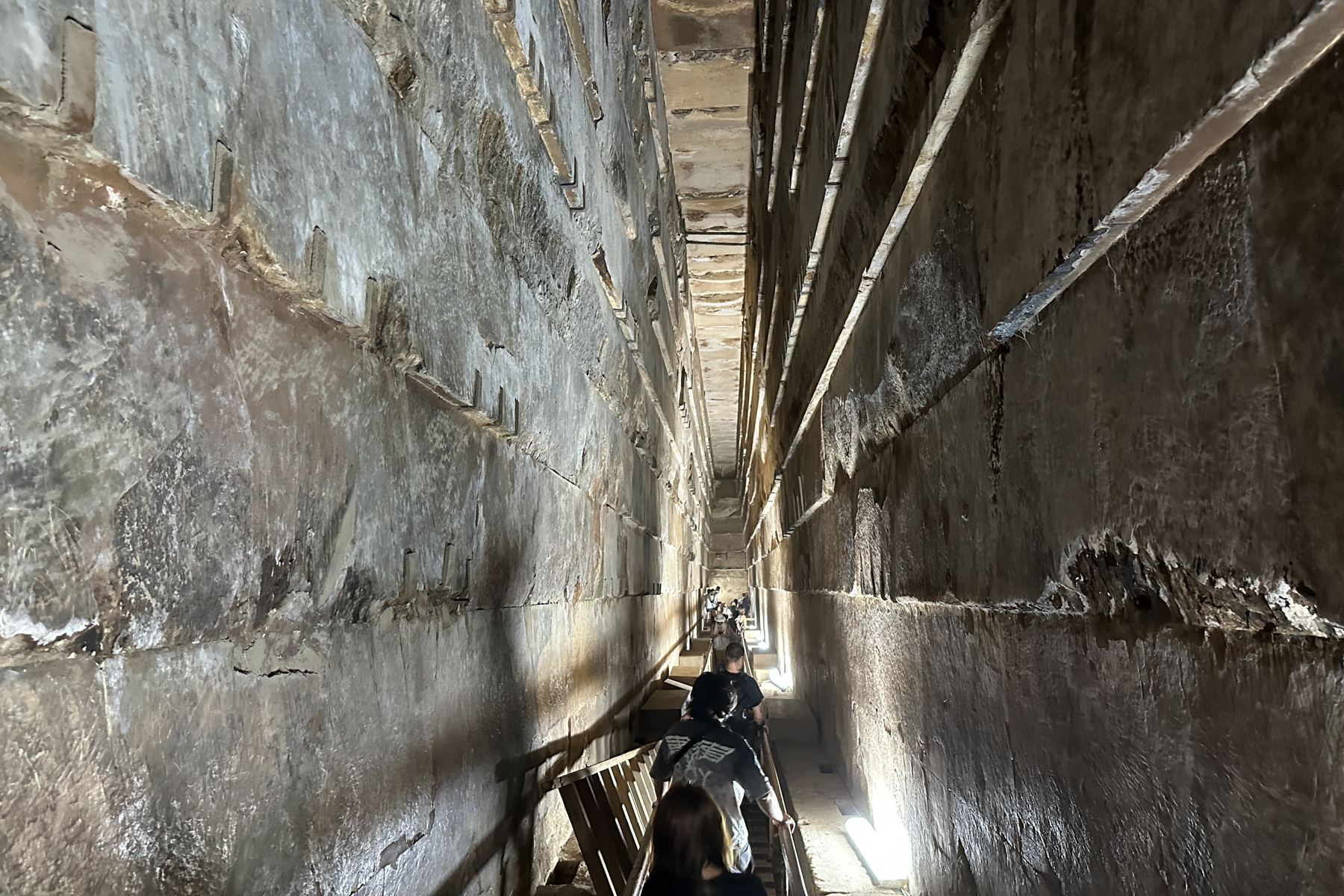
Our guide, Sally, asked us whether we were prepared to try the walk into the inside of the Great Pyramid to the King’s
Chamber to see the sarcophagus of the ancient king (even though it is now empty). Access to the King’s Chamber is
not through the main entrance (which was, of course, hidden when construction was completed); rather, it is via the
“Robbers’ Tunnel”, a very steep (around 27 degrees!) and narrow tunnel, barely a metre high for much of its length
so we spent a lot of time crouched over trying to move through it. Sally warned us that it would be uncomfortable,
claustrophobic, and extremely hot inside. But we didn’t come all the way here to just hear about it without
experiencing it for ourselves. So, we joined the line, and in we went.
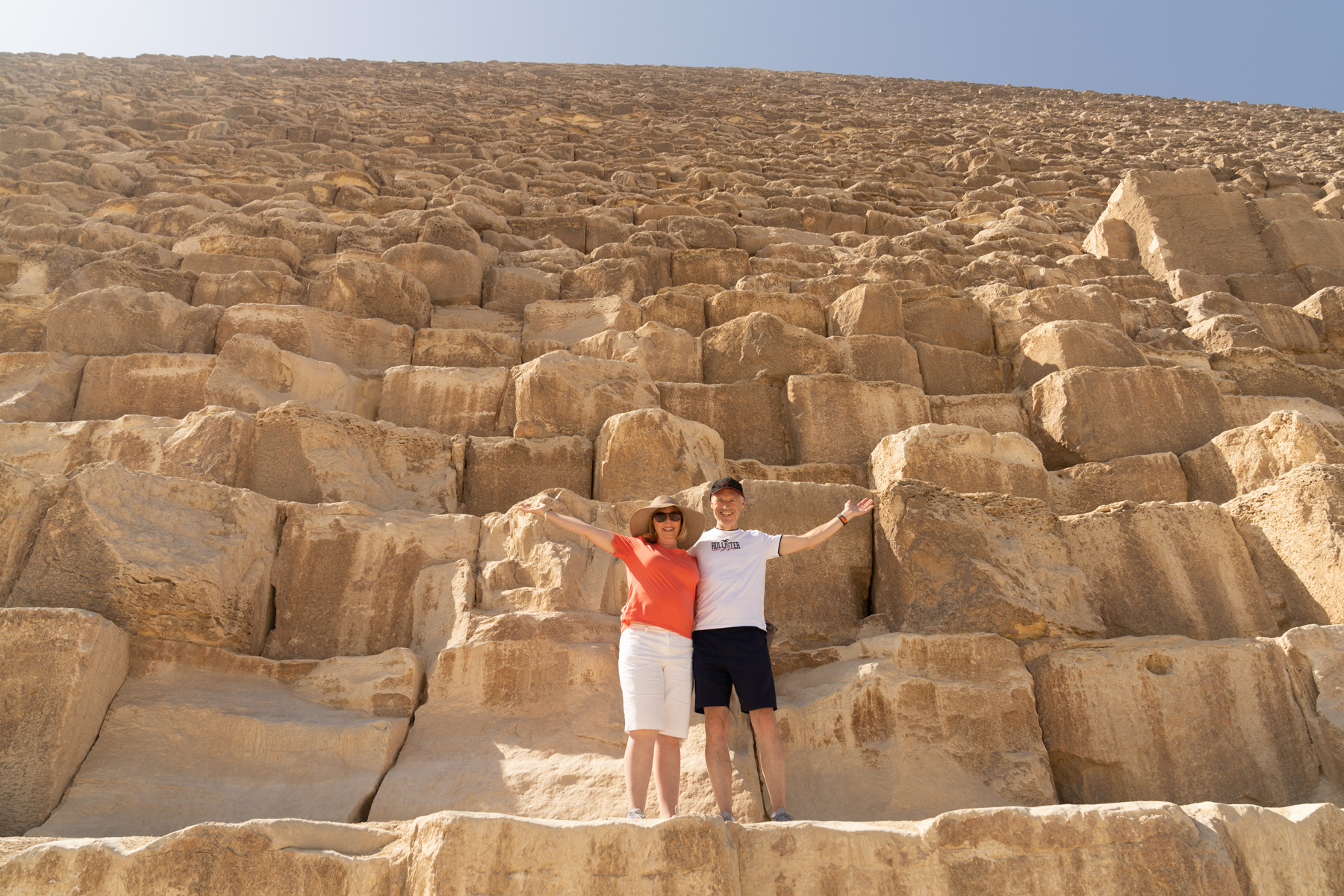
We quickly discovered that Sally wasn’t kidding about how uncomfortable it was trying to move through the tunnel.
And to make it even trickier, there was only one way in and out, so we frequently had to stop to let past us those
who were trying to get out.
Scholars have differing views on the origin of the Robbers’ Tunnel. Some think it was carved shortly after the pyramid was constructed; others believe it was dug around 820 AD by the caliph who reigned at the time in then-Islamic Egypt.
The Robber’s Tunnel eventually connects with the Ascending Passage in the pyramid, which is much taller and easier to navigate (since it has a handrail whereas the Robbers’ Tunnel has no such assistance measures).
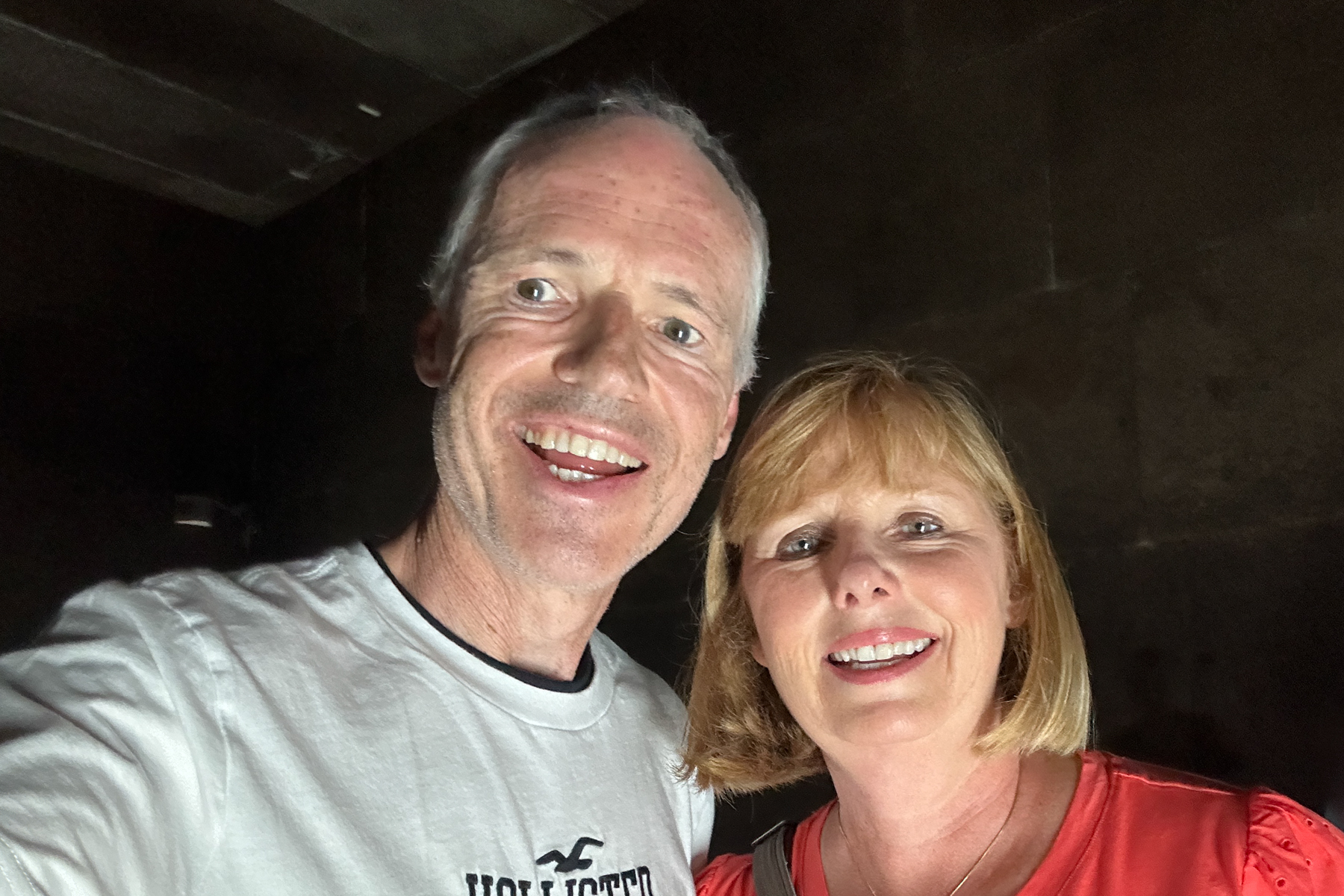
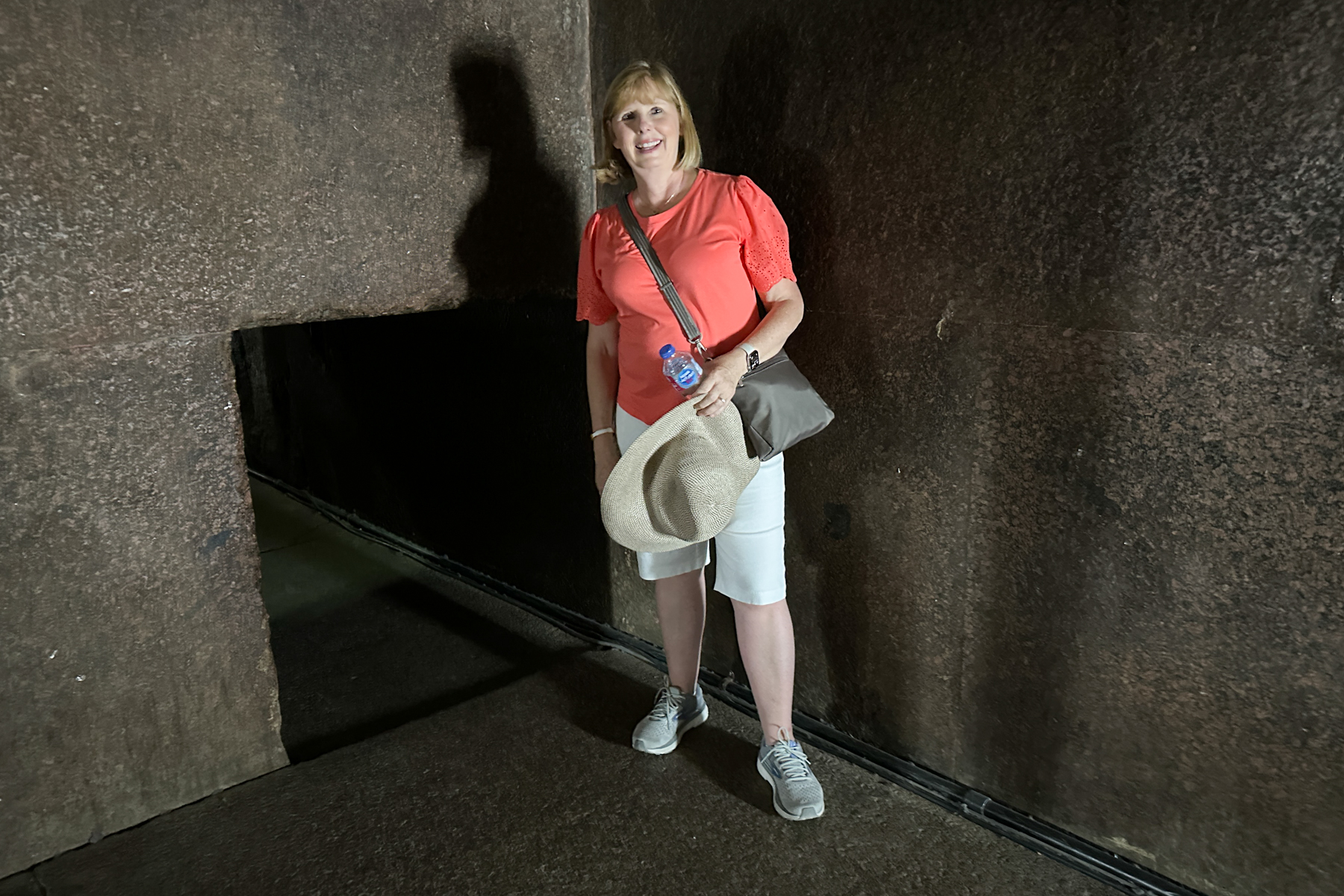
By the time we got to the top of the Ascending Passage and into the King’s Chamber, we were hot and very uncomfortable. But we were pleased to have made it, even though there is very little to see now in the chamber. We had a quick look at the sarcophagus, took a few pictures (of low quality on the phone camera, since real cameras are not permitted inside the pyramid), and made our way back down.
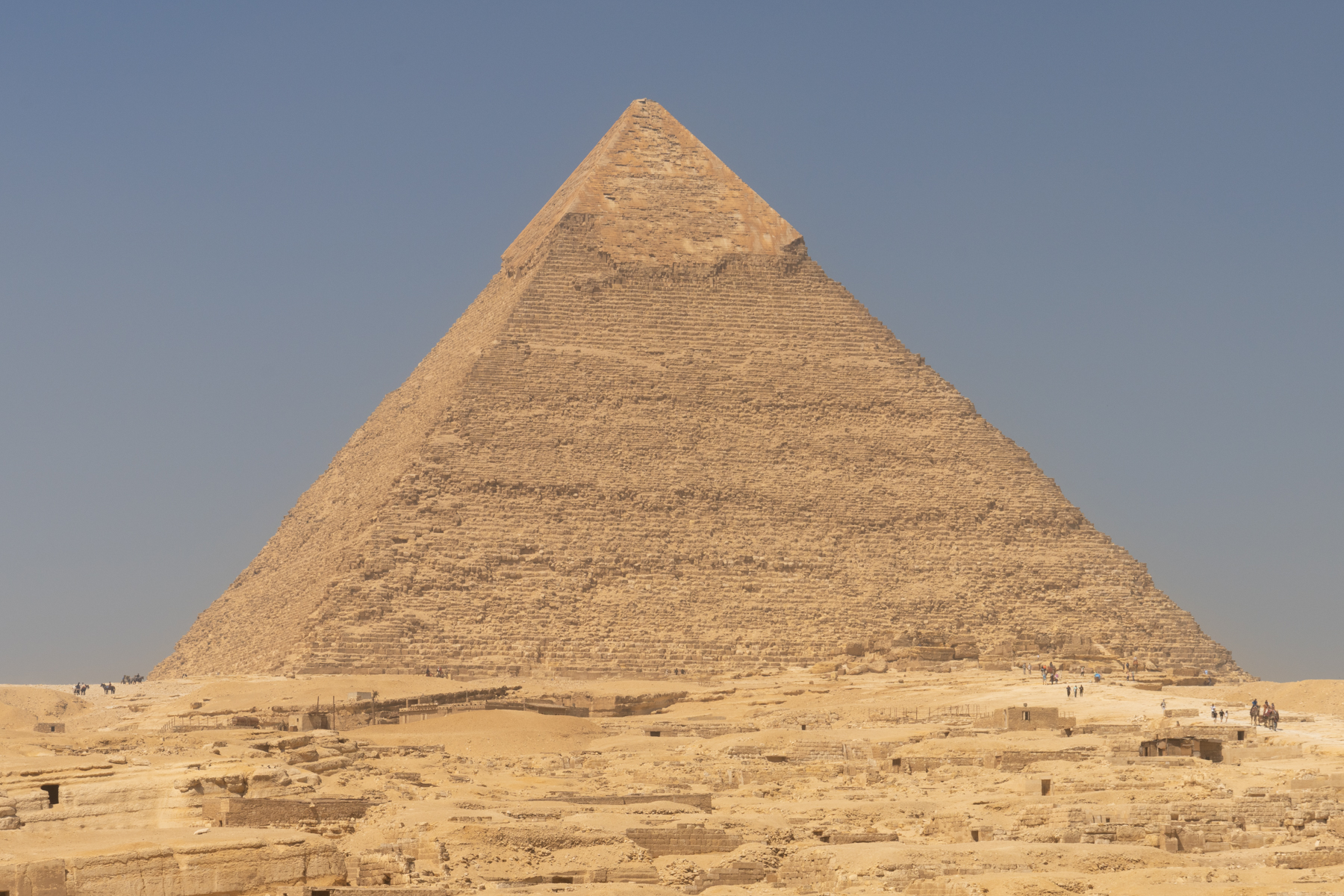
Relieved to back outside, we headed back to the car to drive around to the other side of the pyramids to get a different perspective. We got a nice view of the second-largest pyramid, the Pyramid of Khafre, which retains some of the original limestone at the top that was used to fully encase all the pyramids when they were built.
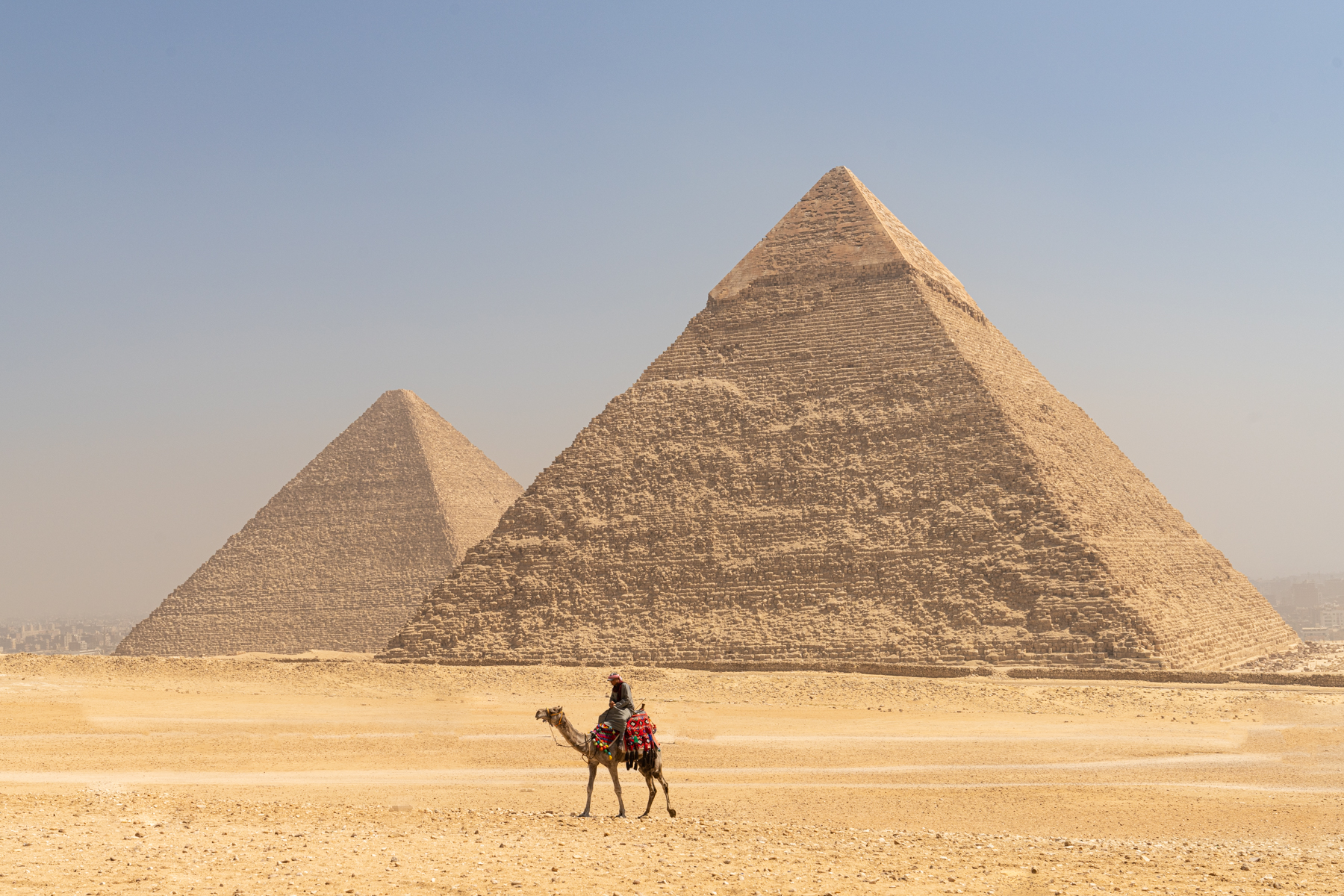
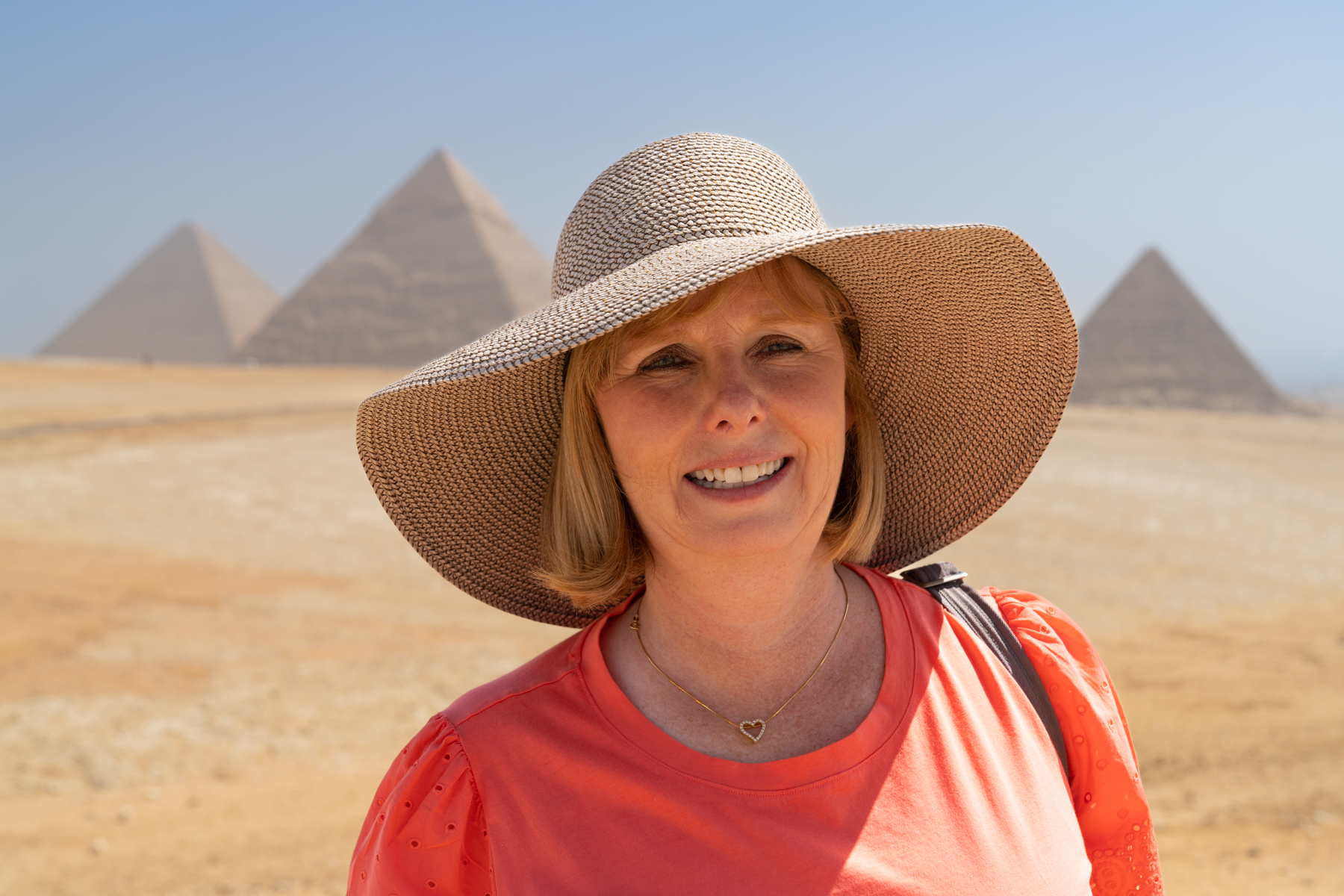
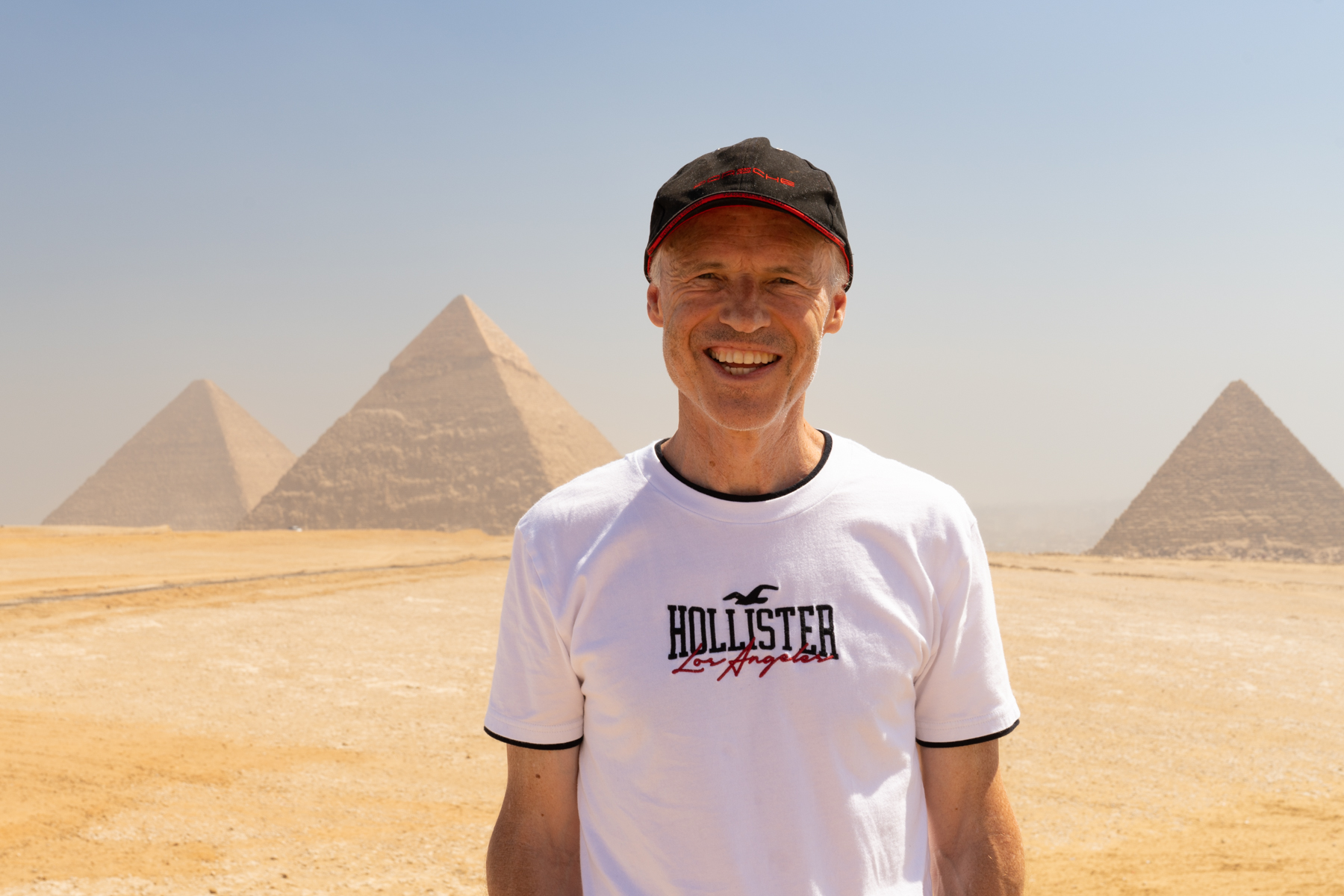
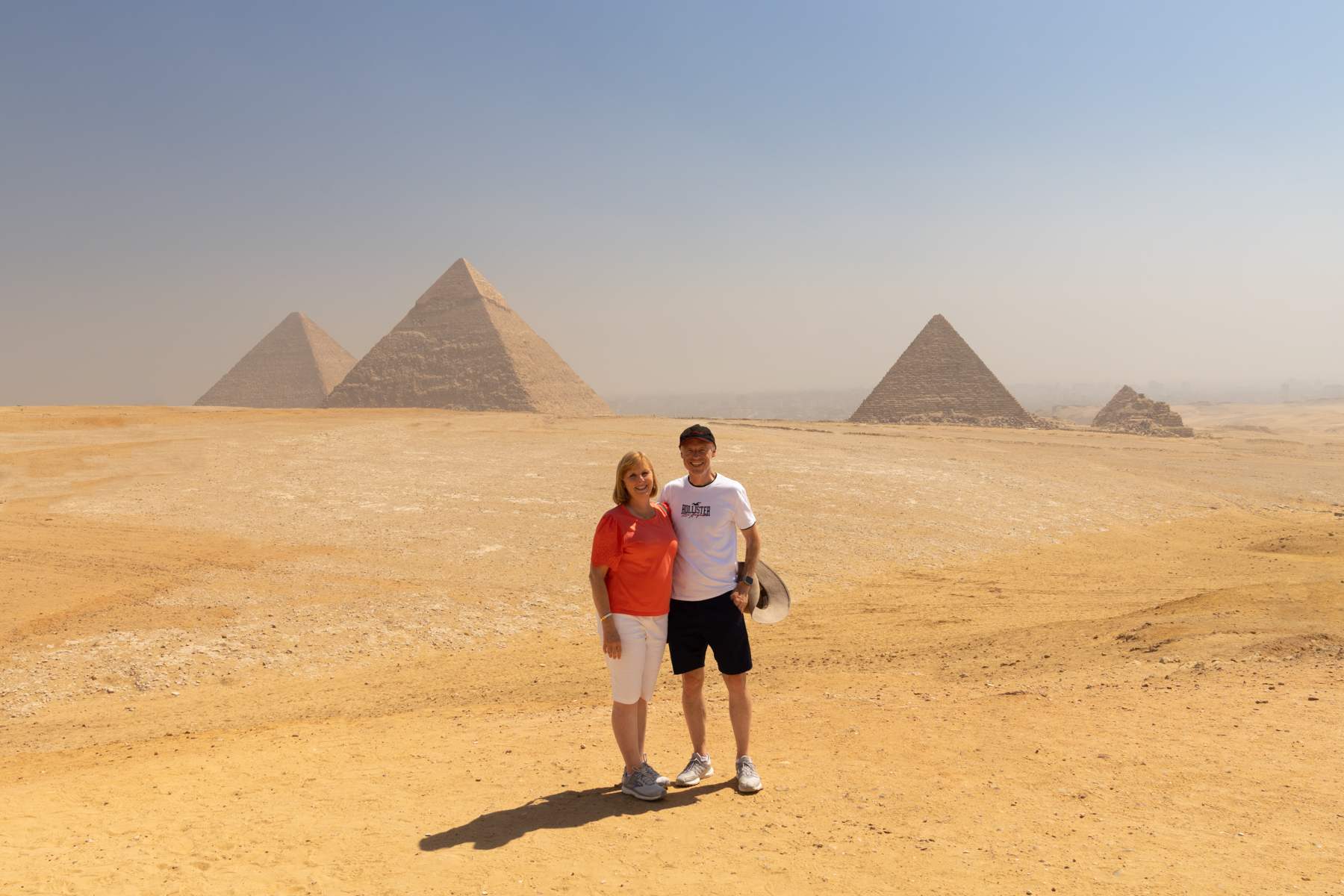
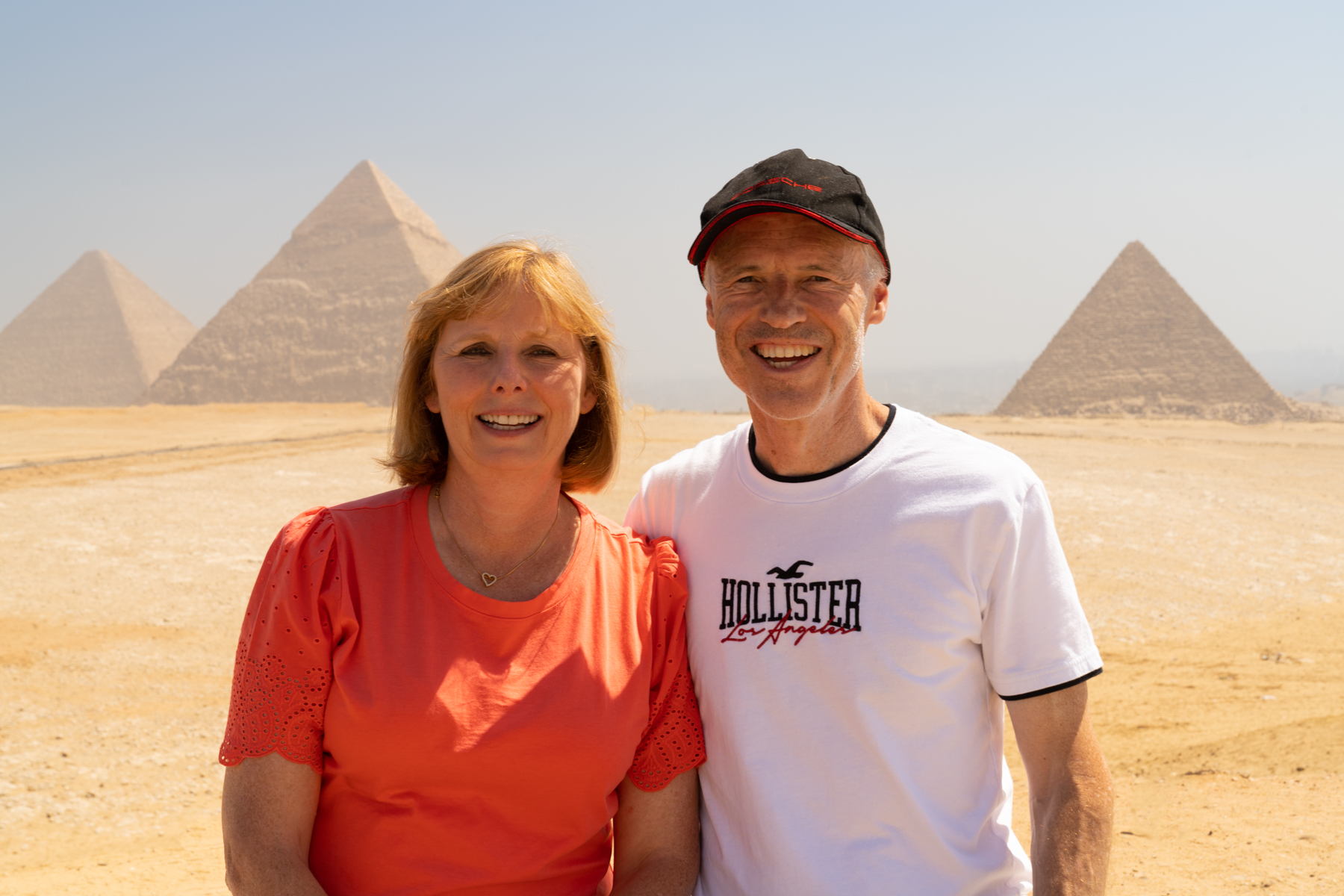
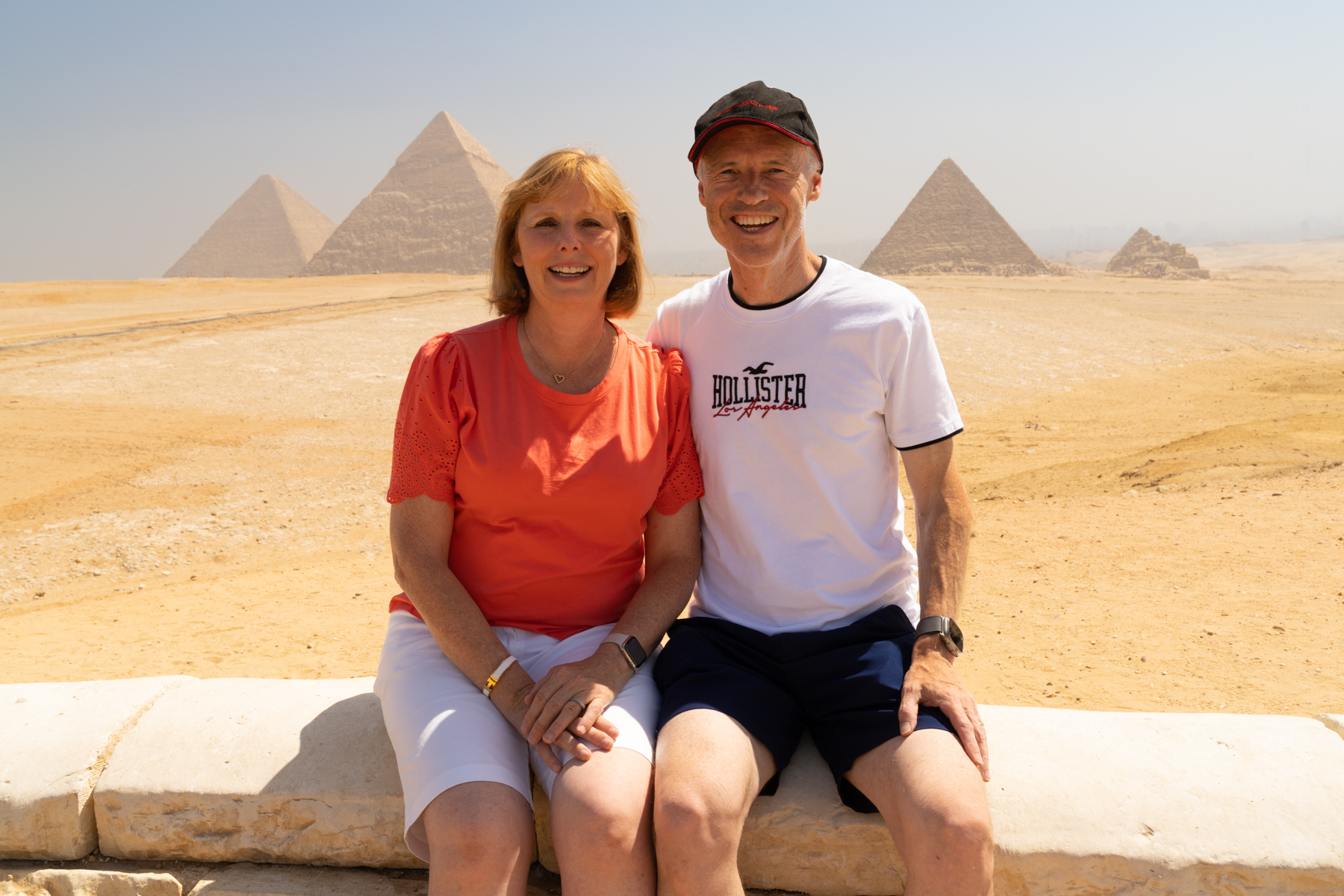
It was clear that camel riding was big business at the spot where we stopped.
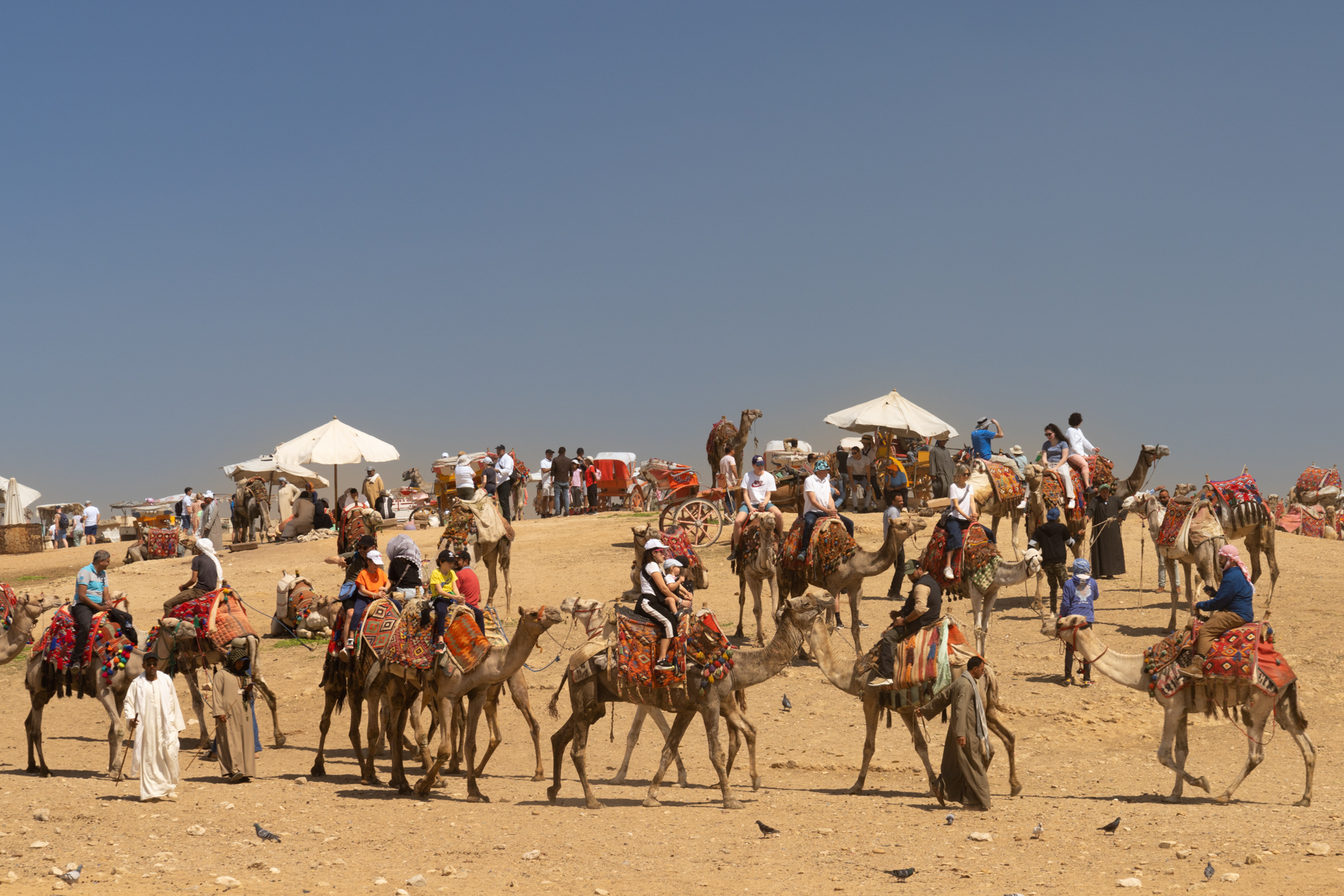
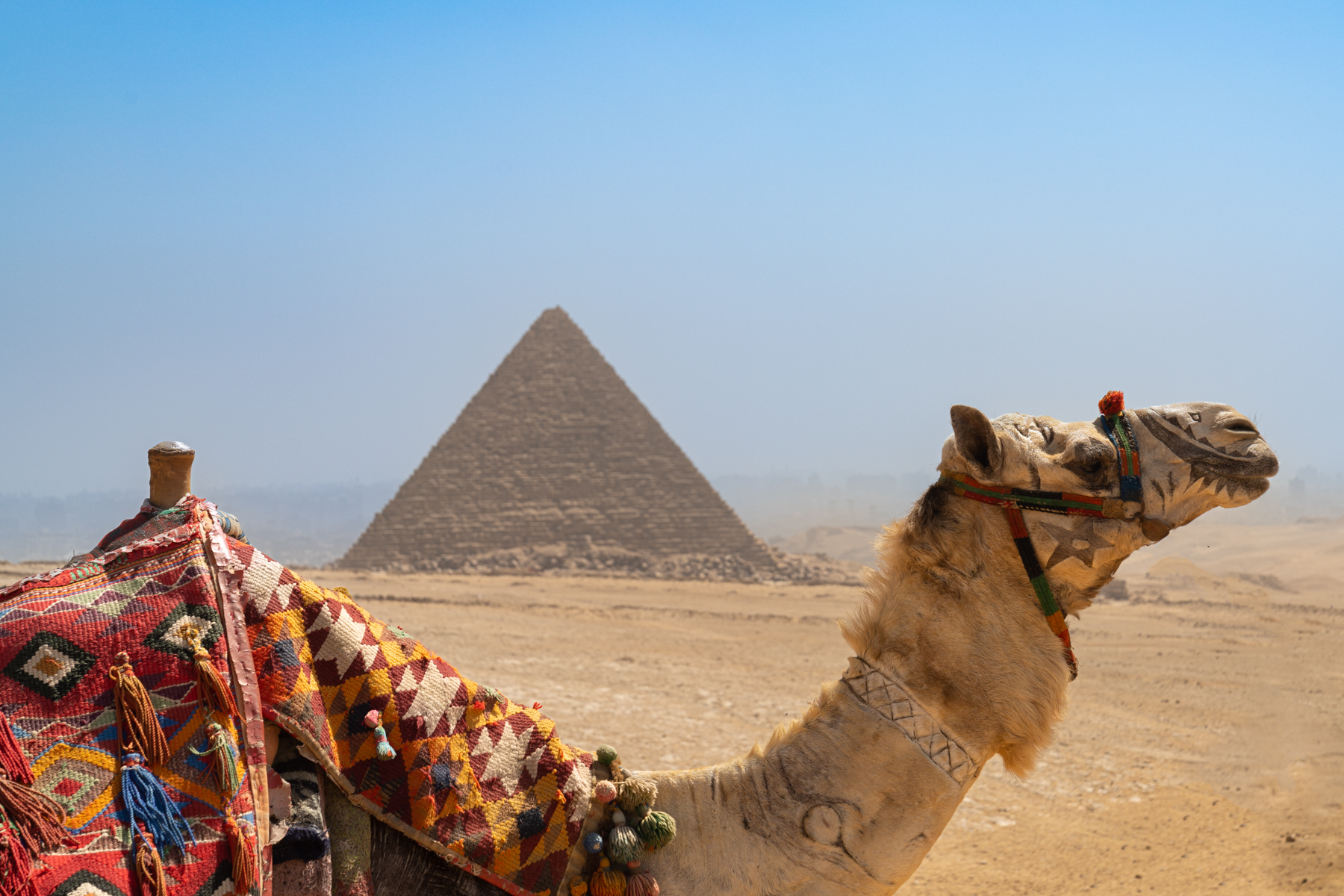
We had no intention of riding a camel. But the photographic evidence below goes some way to conveying the persuasive powers of the average Egyptian camel-ride vendor!
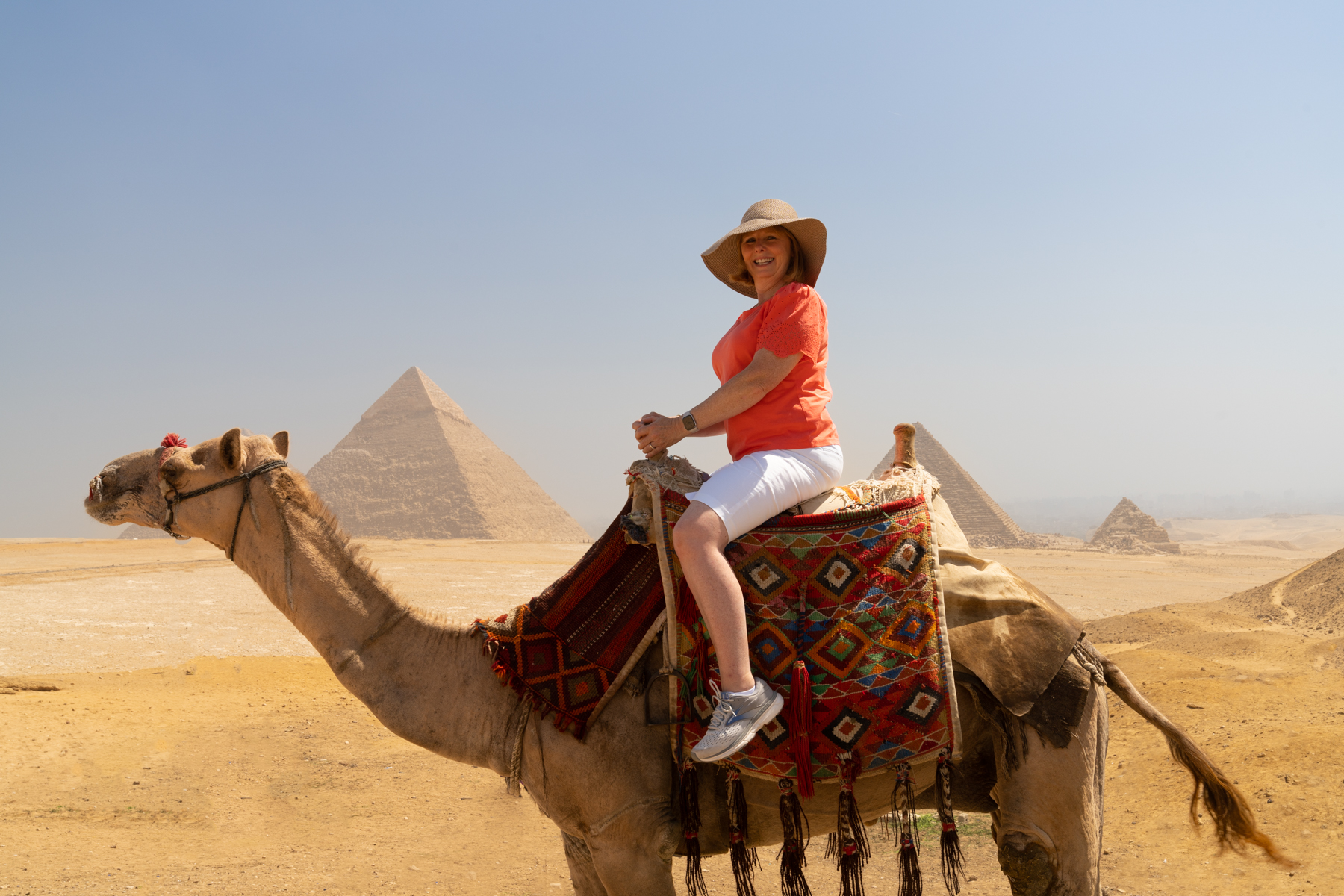
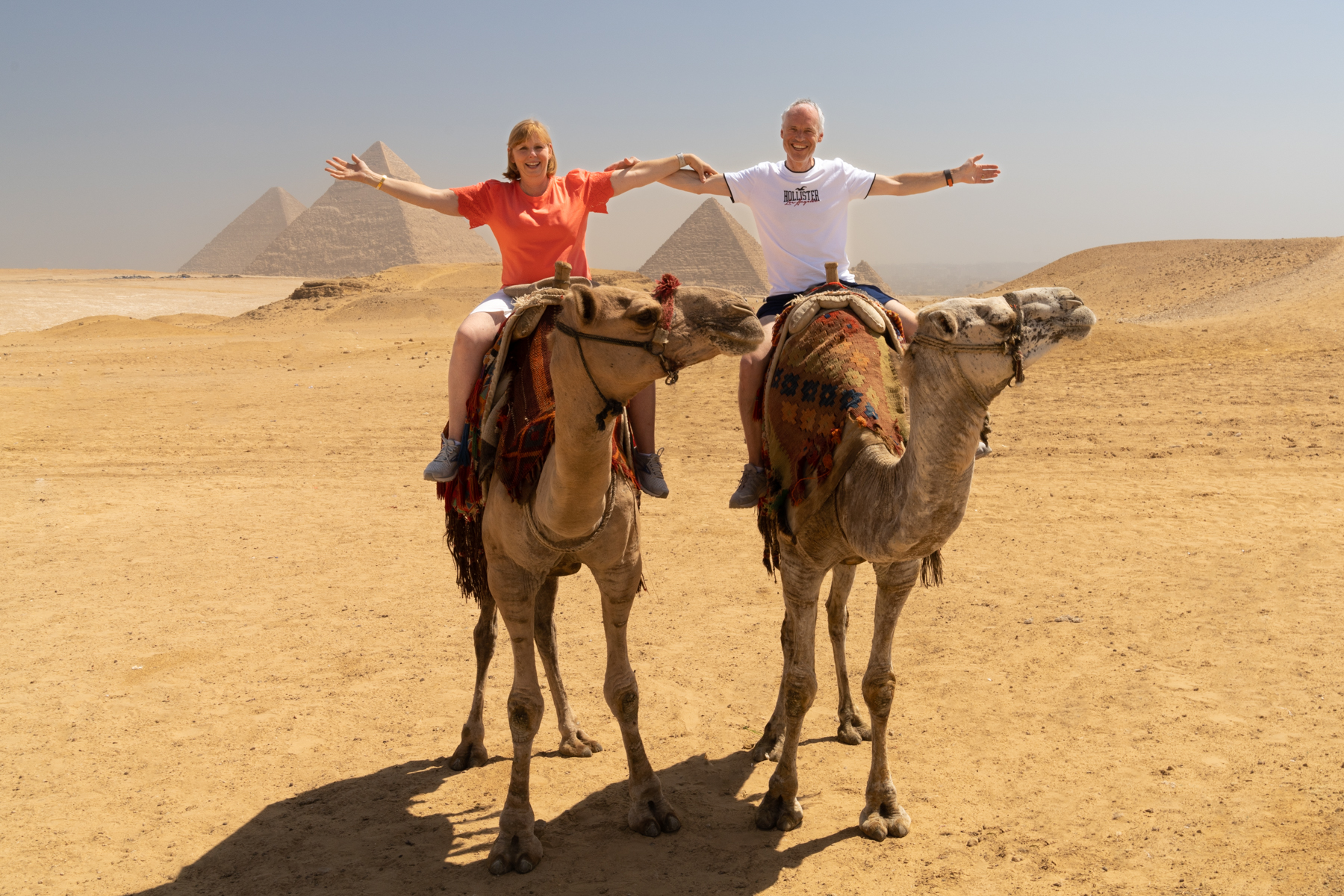
After the camel ride, we hopped back in the car to head to our next stop, the Great Sphinx. We got a nice view of the Pyramid of Khafre along the way.
The Great Sphinx is also located in the Giza pyramid complex, so we had a drive of only a few minutes to get there.
We started with a walk through the temple next to the Great Sphinx.
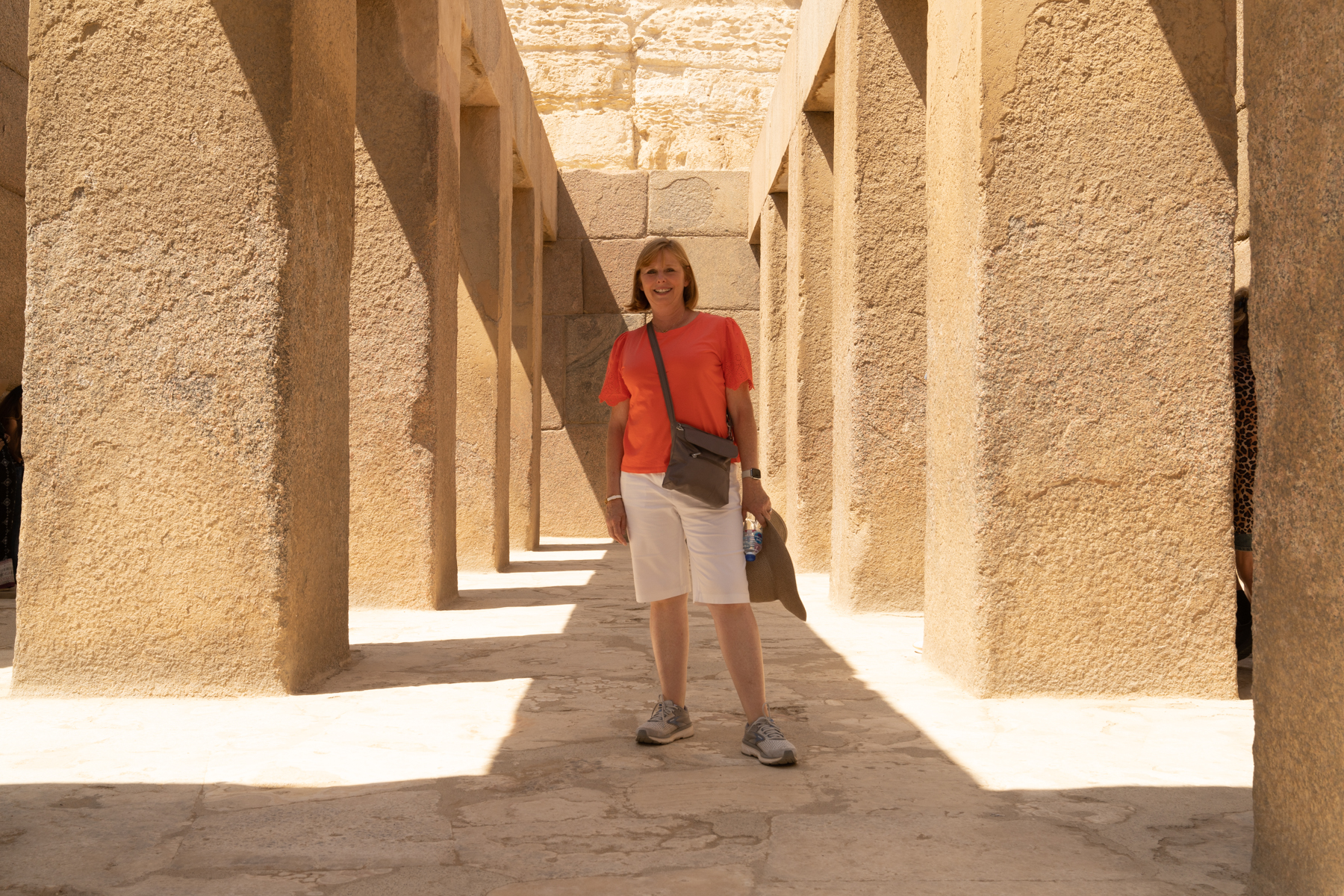
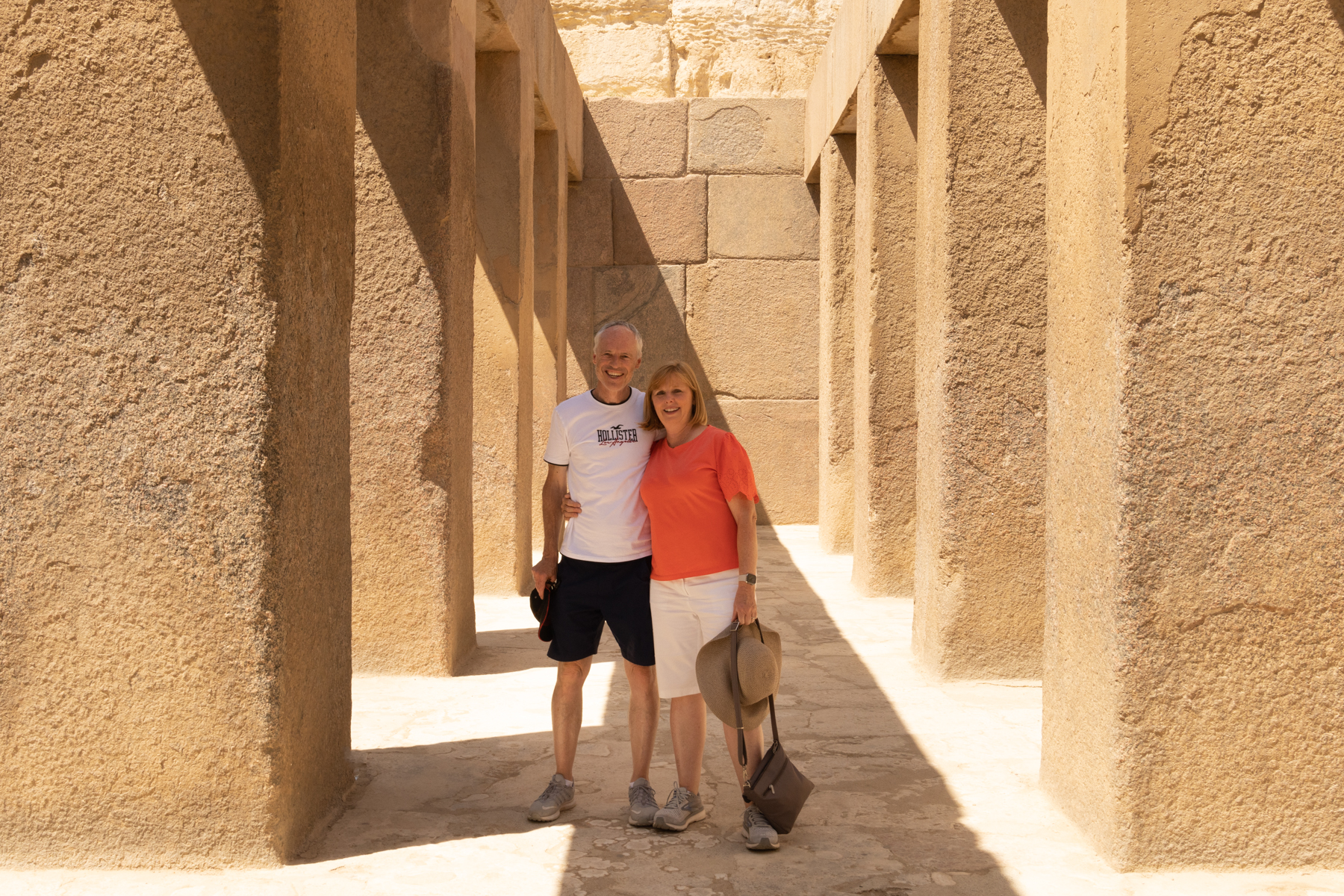
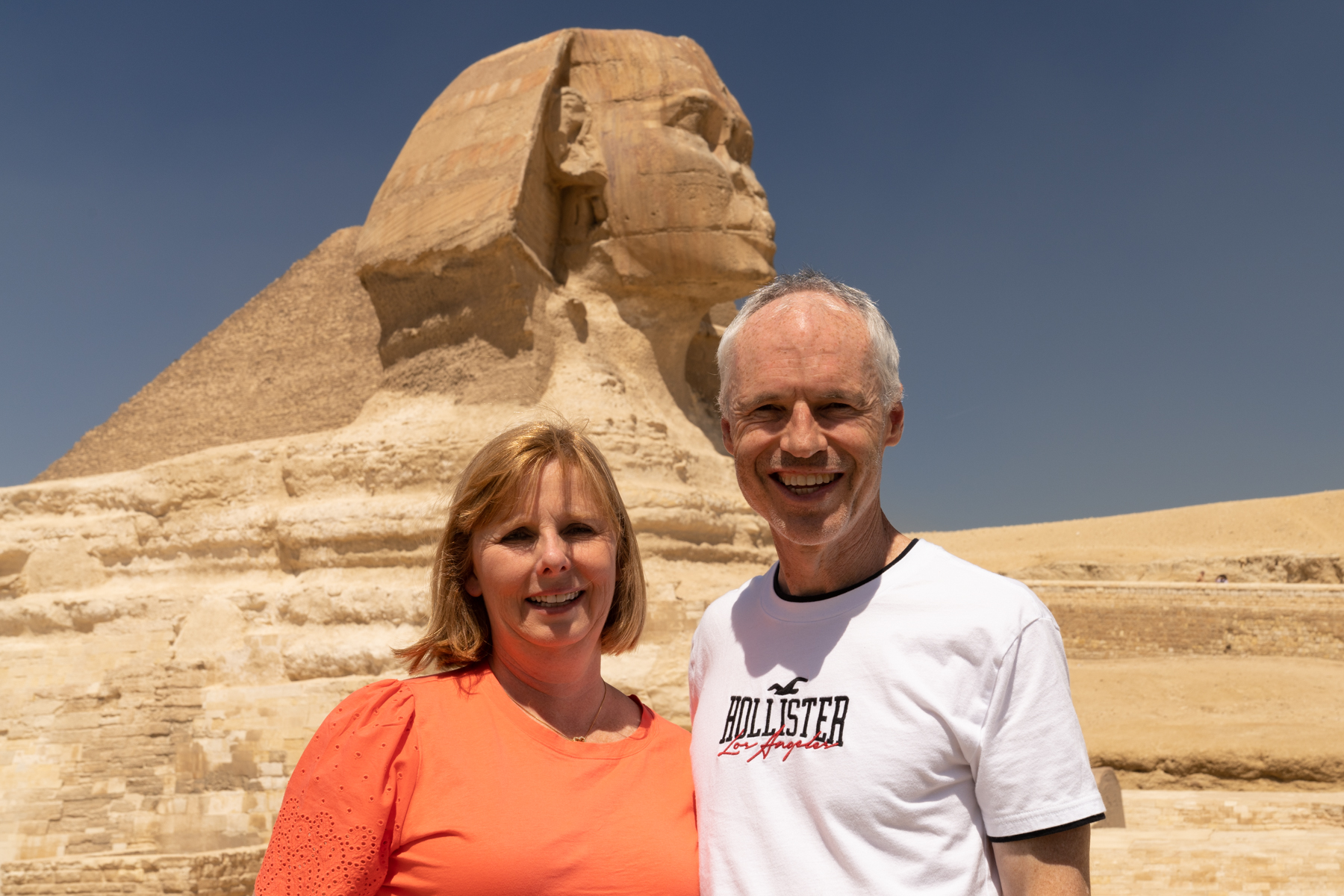
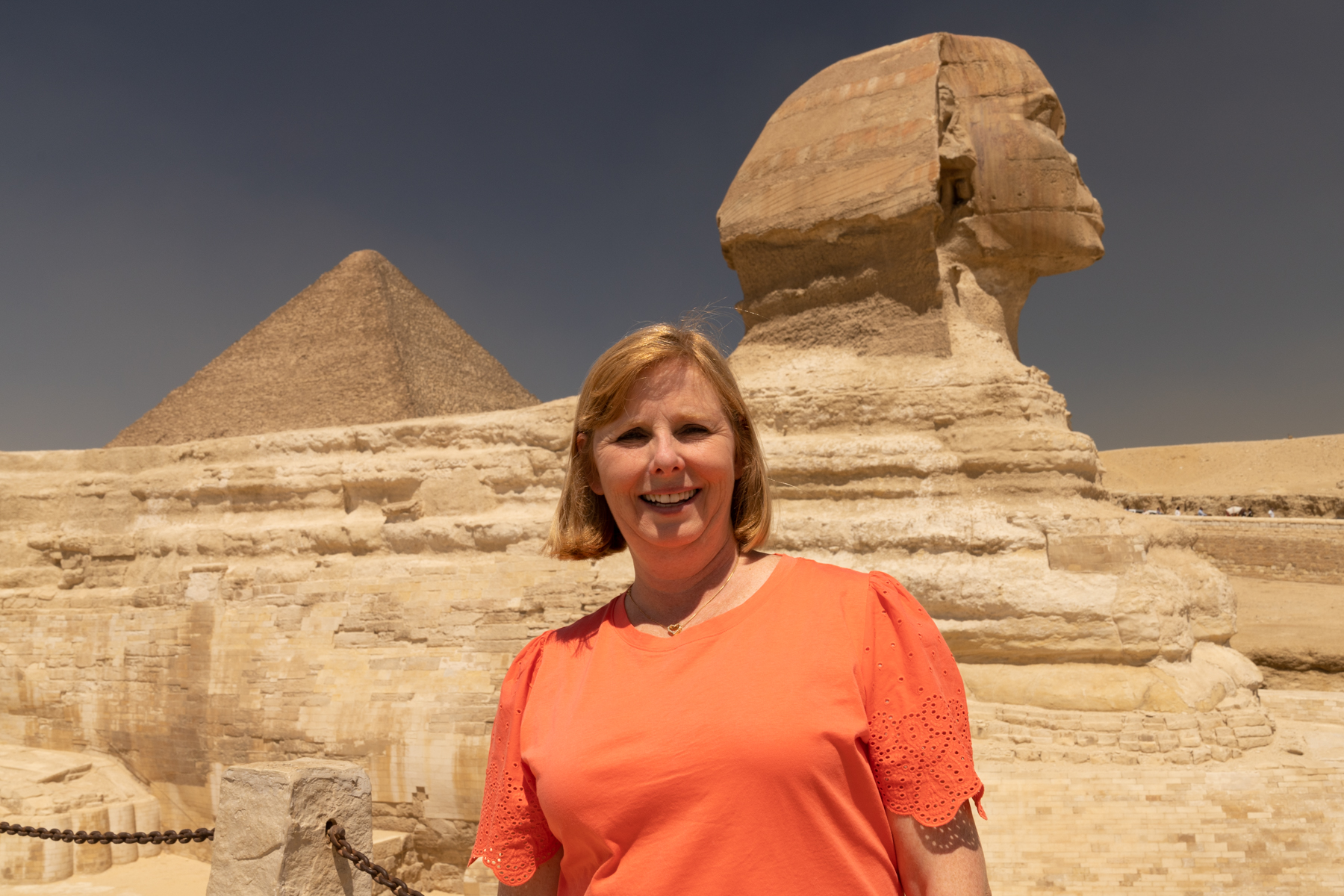
Archaeological evidence suggests that the Great Sphinx was created around 2500 BC for the pharaoh Khafre. The Sphinx is huge and very impressive. Even more impressive is that it is not built from constituent rocks; rather, it was carved from the bedrock of the surrounding plateau.
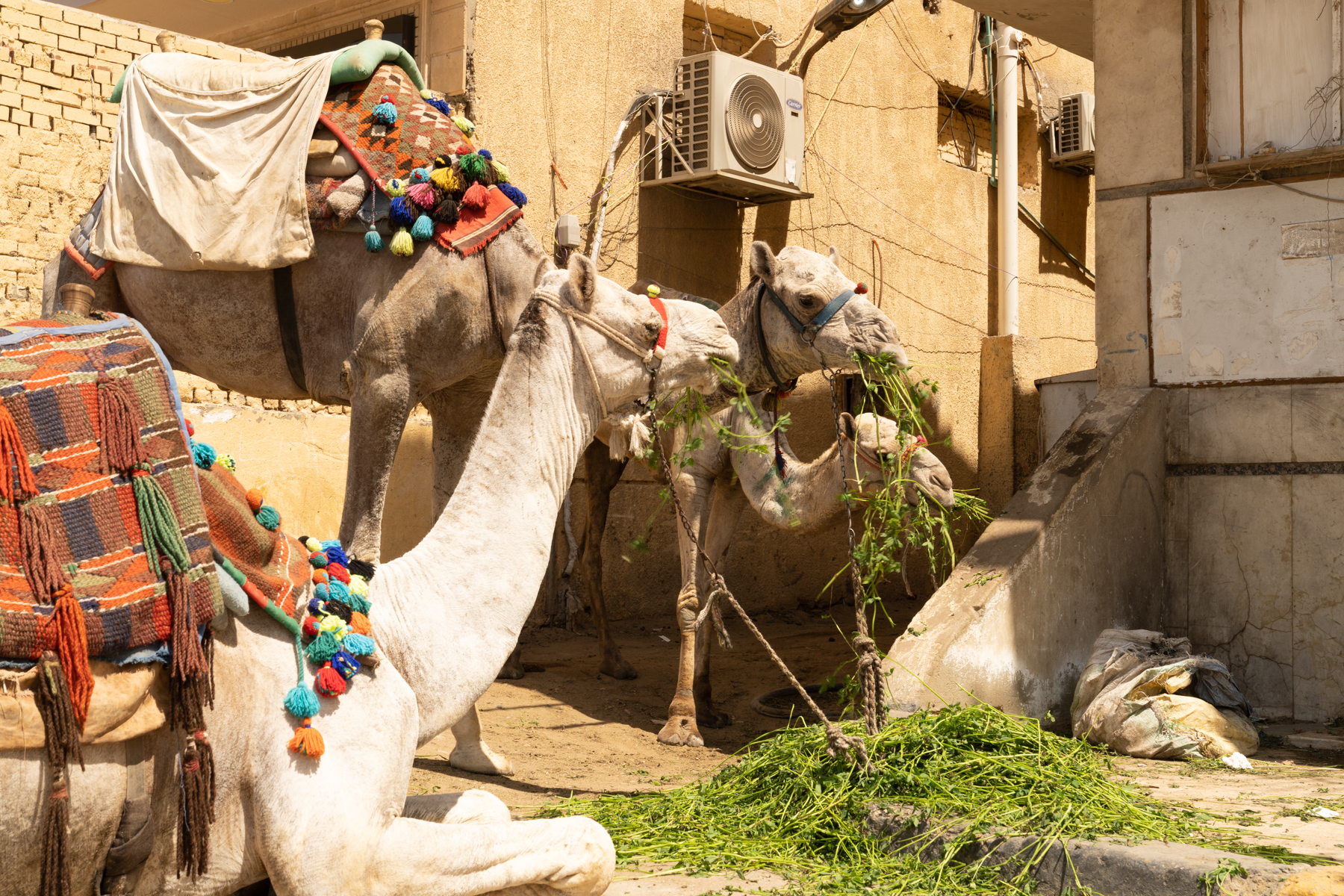
After an enthralling visit to Giza, we hopped back in the car. As we left the car park, we spotted a few camels having a snack.
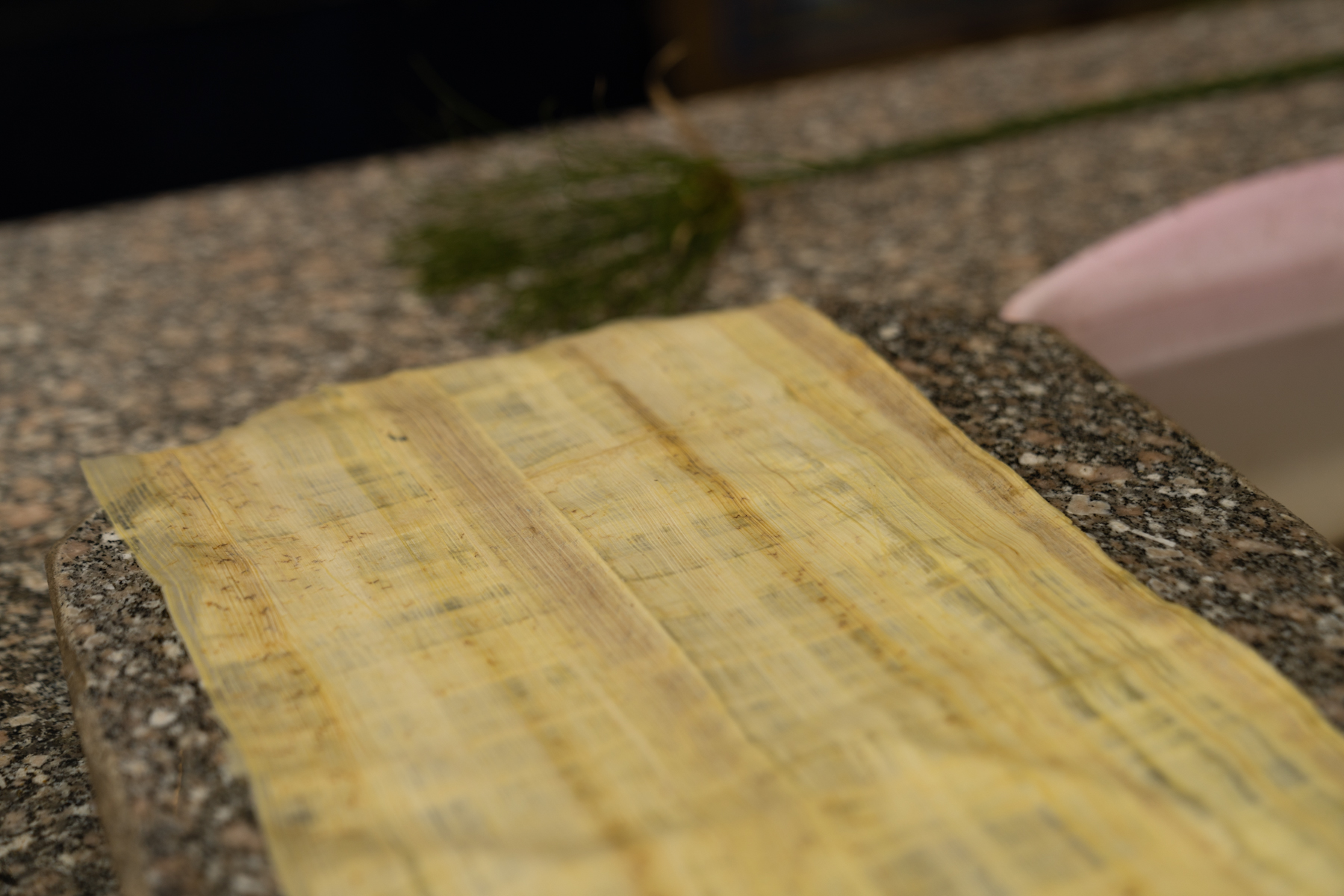
We headed back into Cairo, where we stopped at two shops. The first shop sold products made from papyrus. We had a demonstration of how paper was made from papyrus, which was very interesting. (The word “paper” is derived from “papyrus”.)
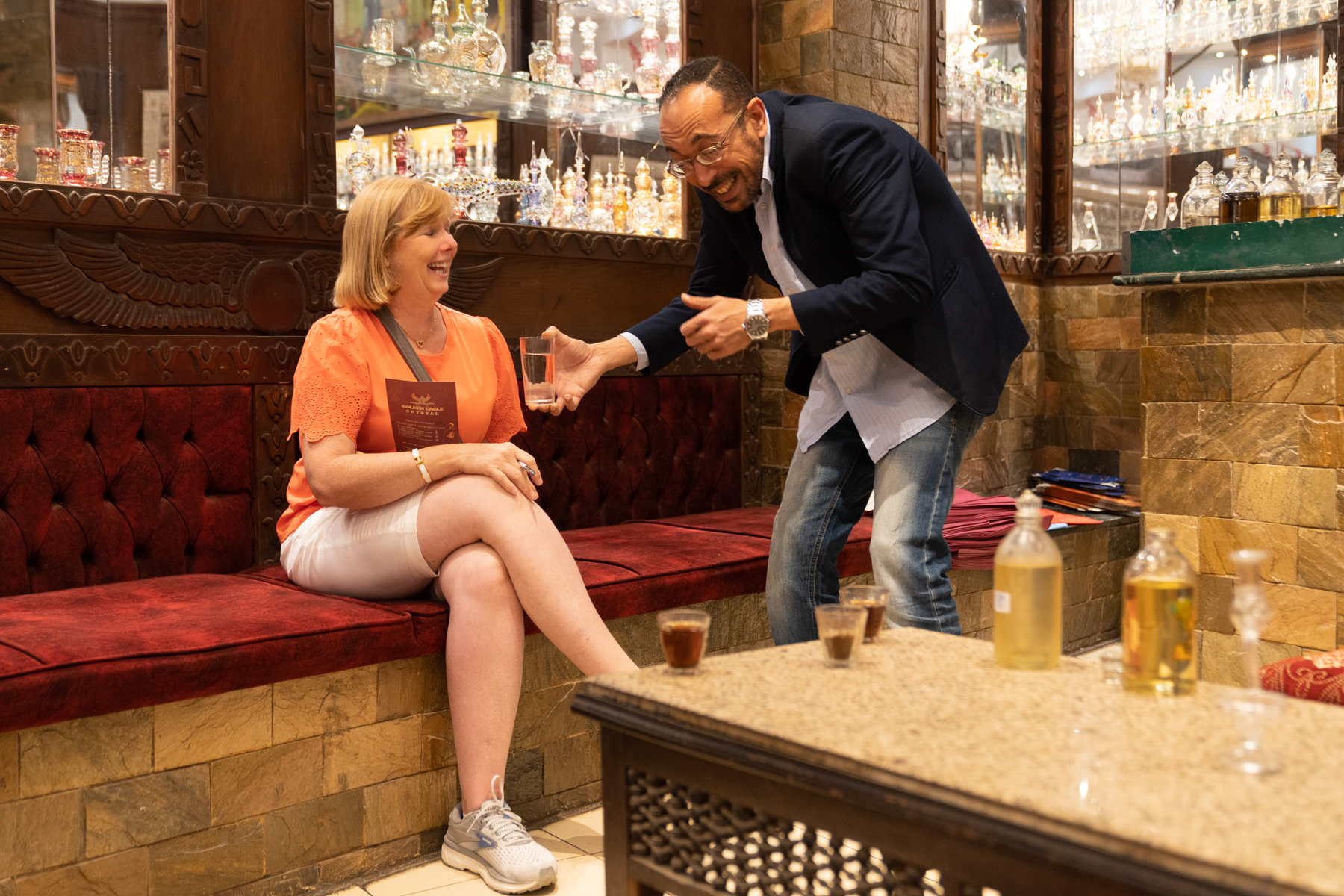
The second shop we stopped at was a specialist in scents and oils, which was quite interesting.
Our original plan was to spend the afternoon with Sally on a visit the Egyptian Museum in Cairo. But we decided that we’d change the itinerary so we could head to the ancient ruins at Saqqara instead. Interestingly, this meant that Sally had to call the hotel to inform them of the change because every guide has to make sure that accurate records of an itinerary are recorded in advance, in case there is a security issue. We have always felt safe as we have moved around the tourist sites so far and that is not accidental: there is a huge police presence in every tourist area. When we commented on this, Sally informed us that these police would not get involved in any domestic issue; rather, they are there purely to protect tourists. Tourism is a huge source of revenue in Egypt and it seems that the government takes this very seriously.
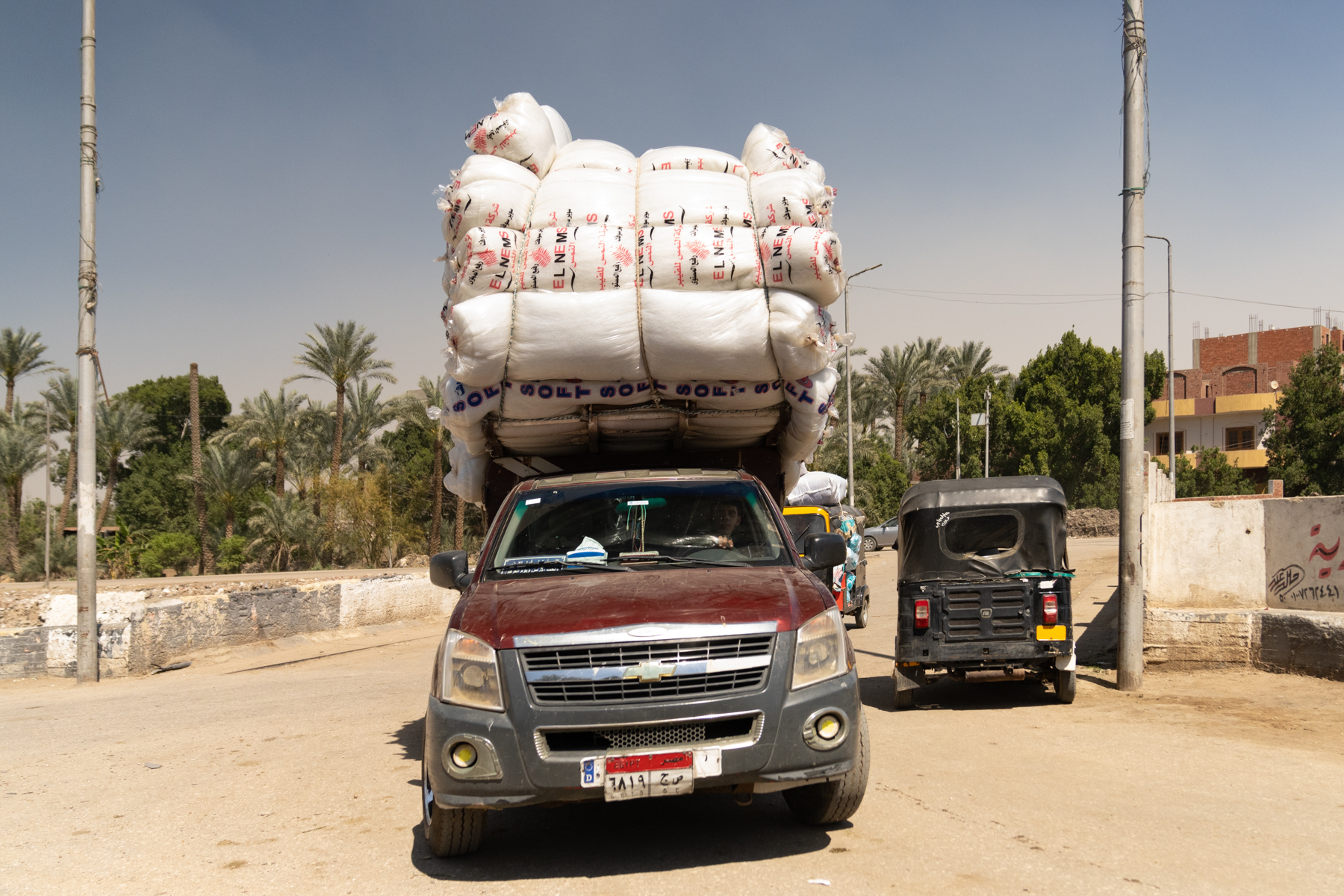
So, with the hotel updated on our plans, we set off for the hour-long drive to Saqqara. The traffic outside Cairo is more subdued but still very interesting!
We got to Saqqara just after 1:00 pm. We got out of the car, bought some entry tickets, and headed in to the see the Saqqara necropolis.
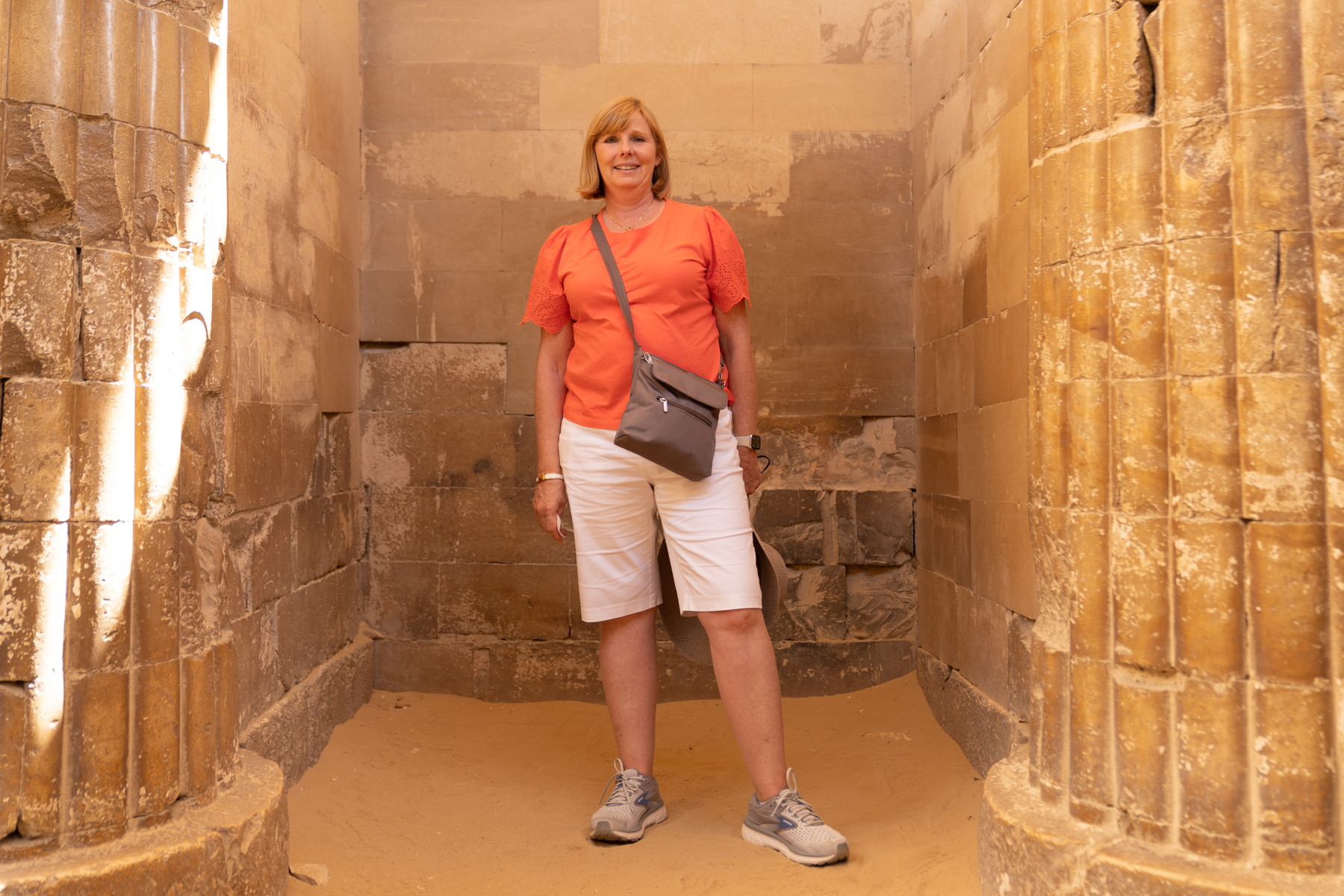
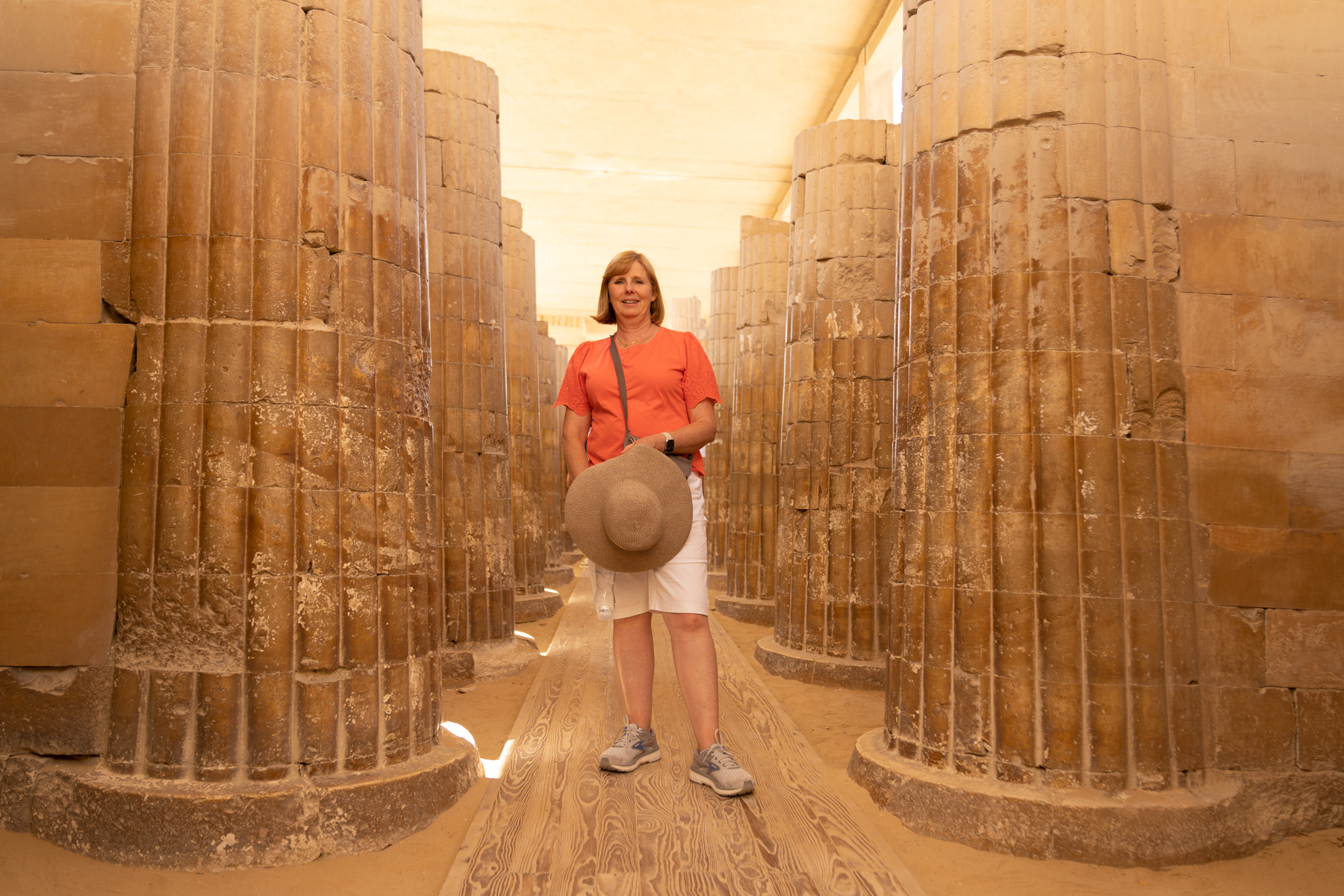
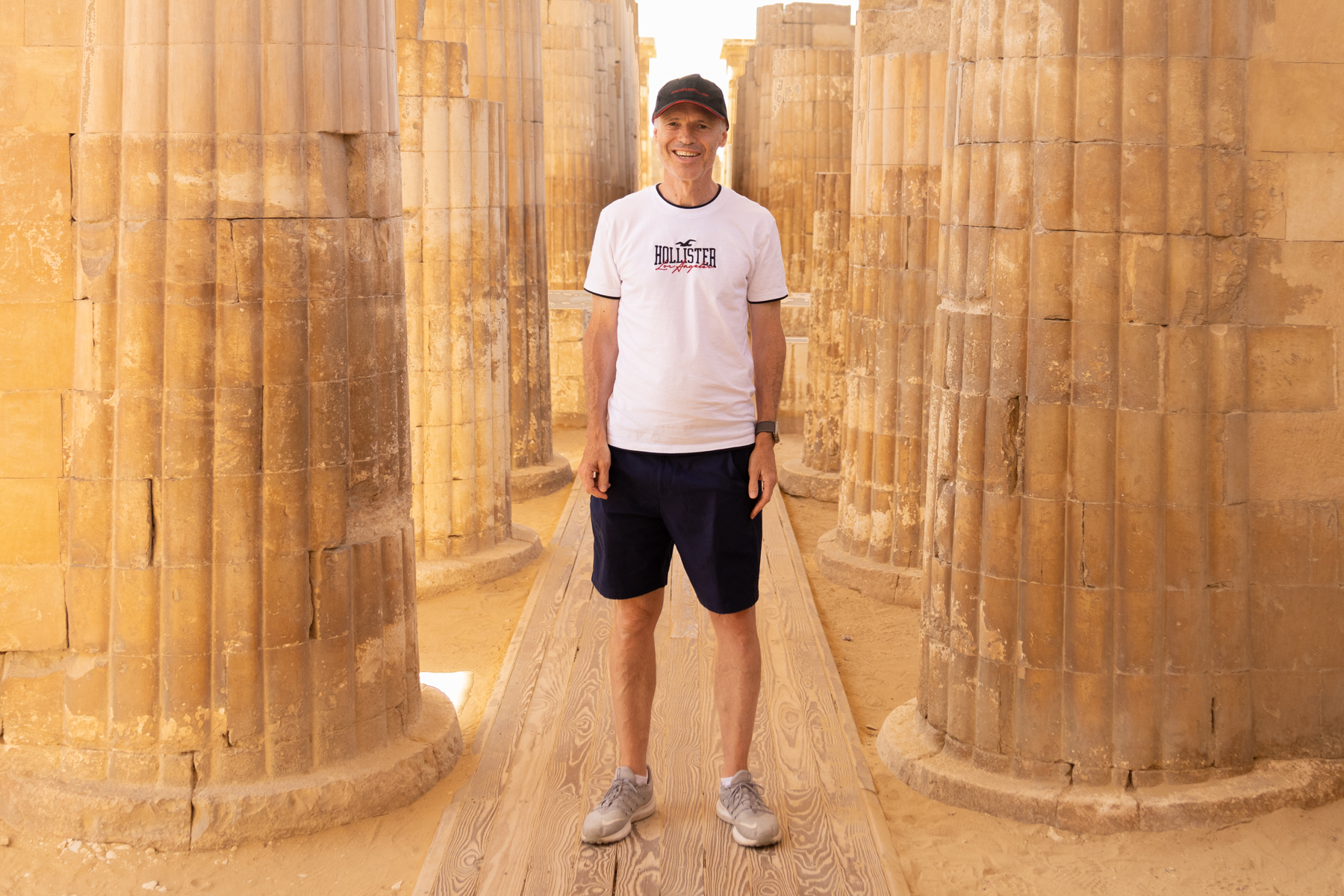
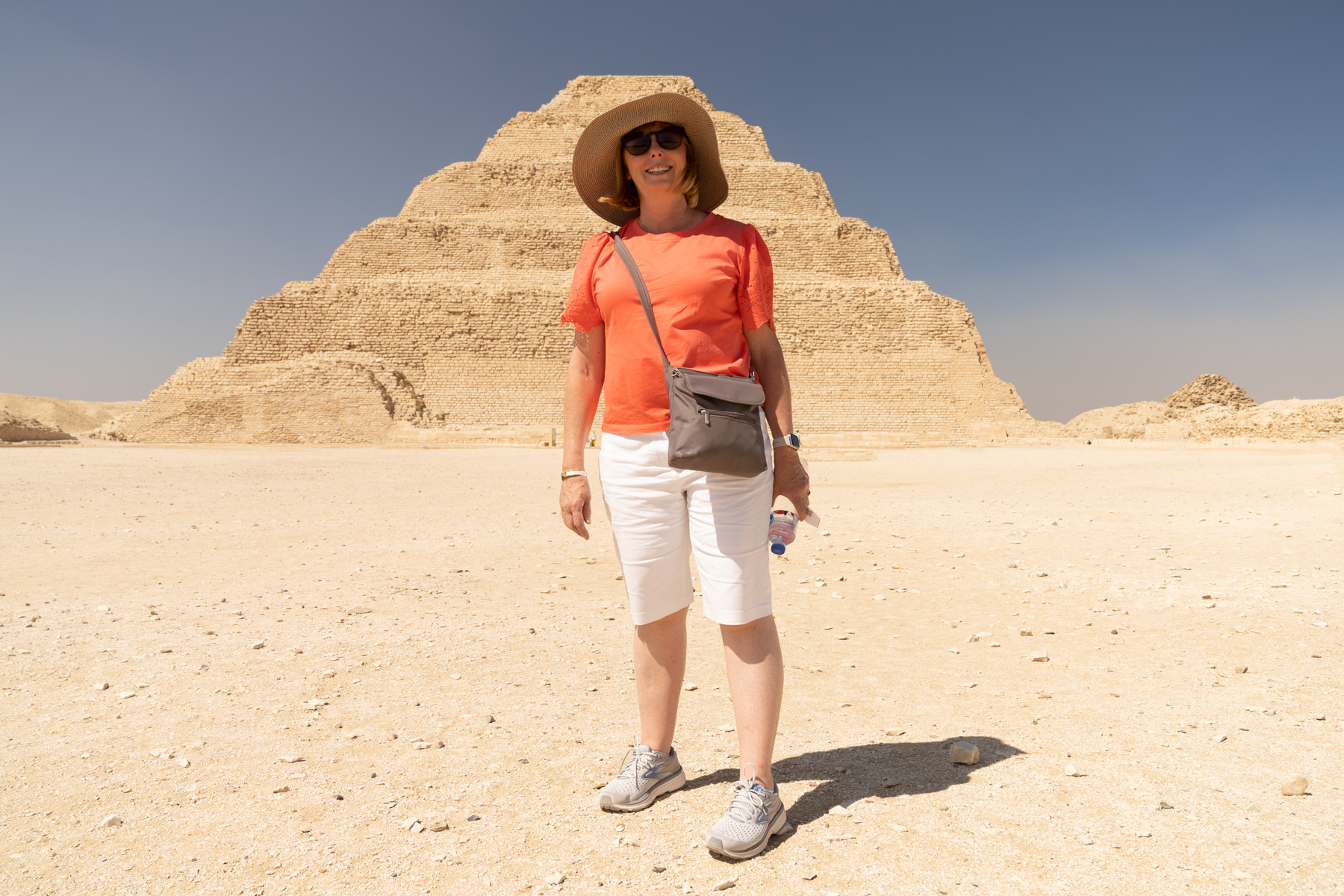
Saqqara contains the oldest complete stone building complex known in history, the Pyramid of Djoser. It was built in the 27th century BC during the Third Dynasty for the burial of Pharaoh Djoser, and is the oldest complete stone building complex ever discovered. Under the step pyramid is a six kilometre labyrinth of tunnelled chambers.
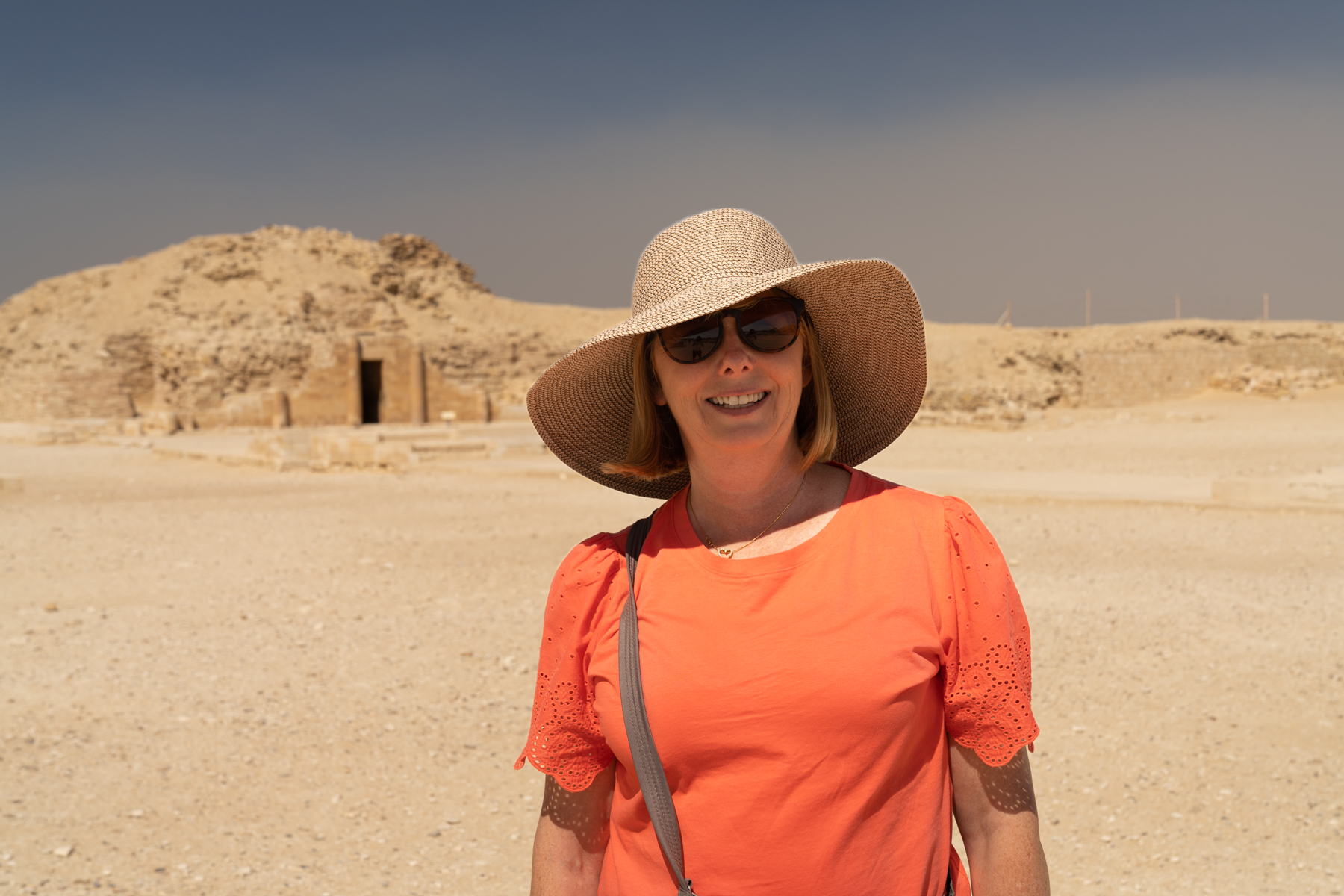
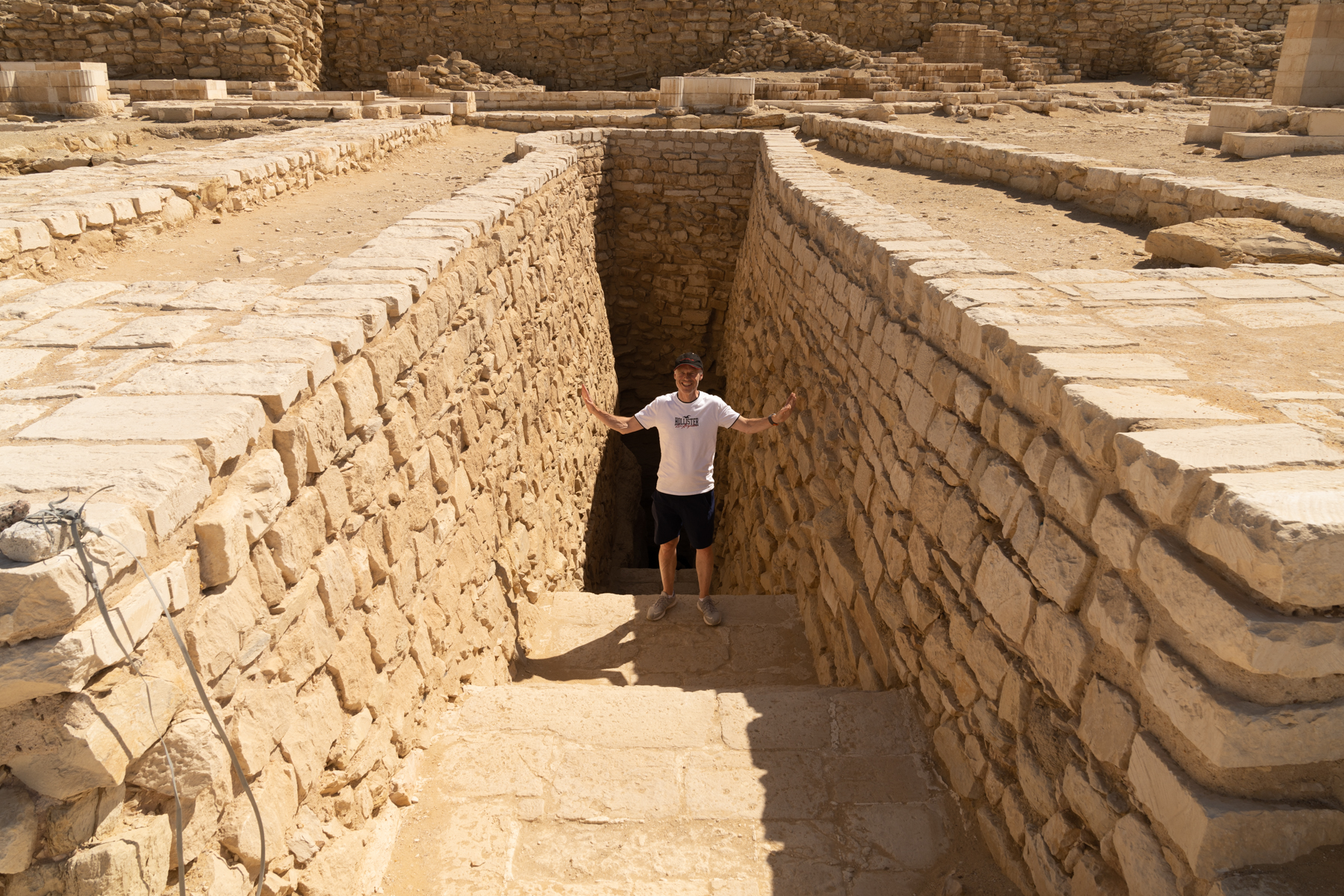
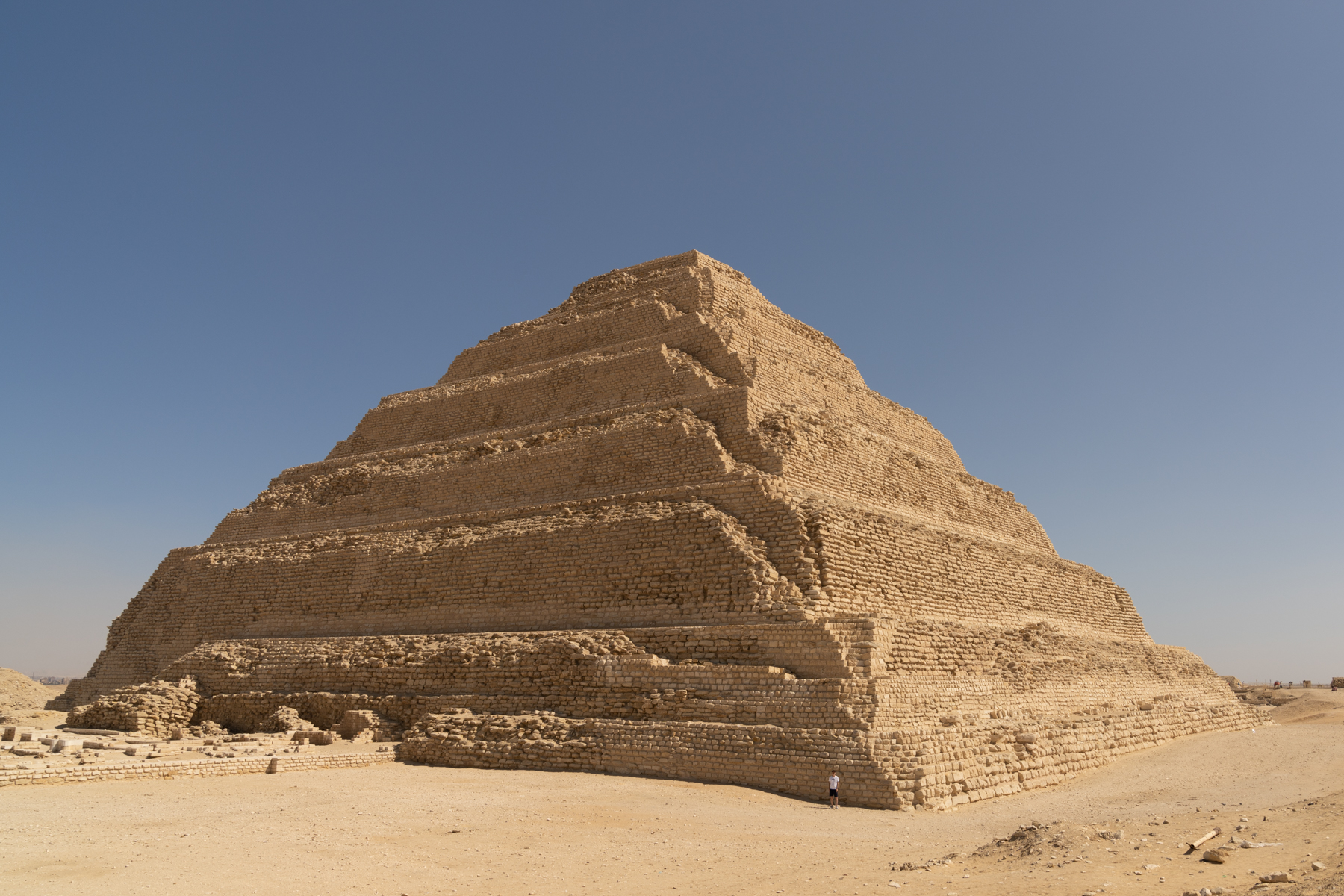
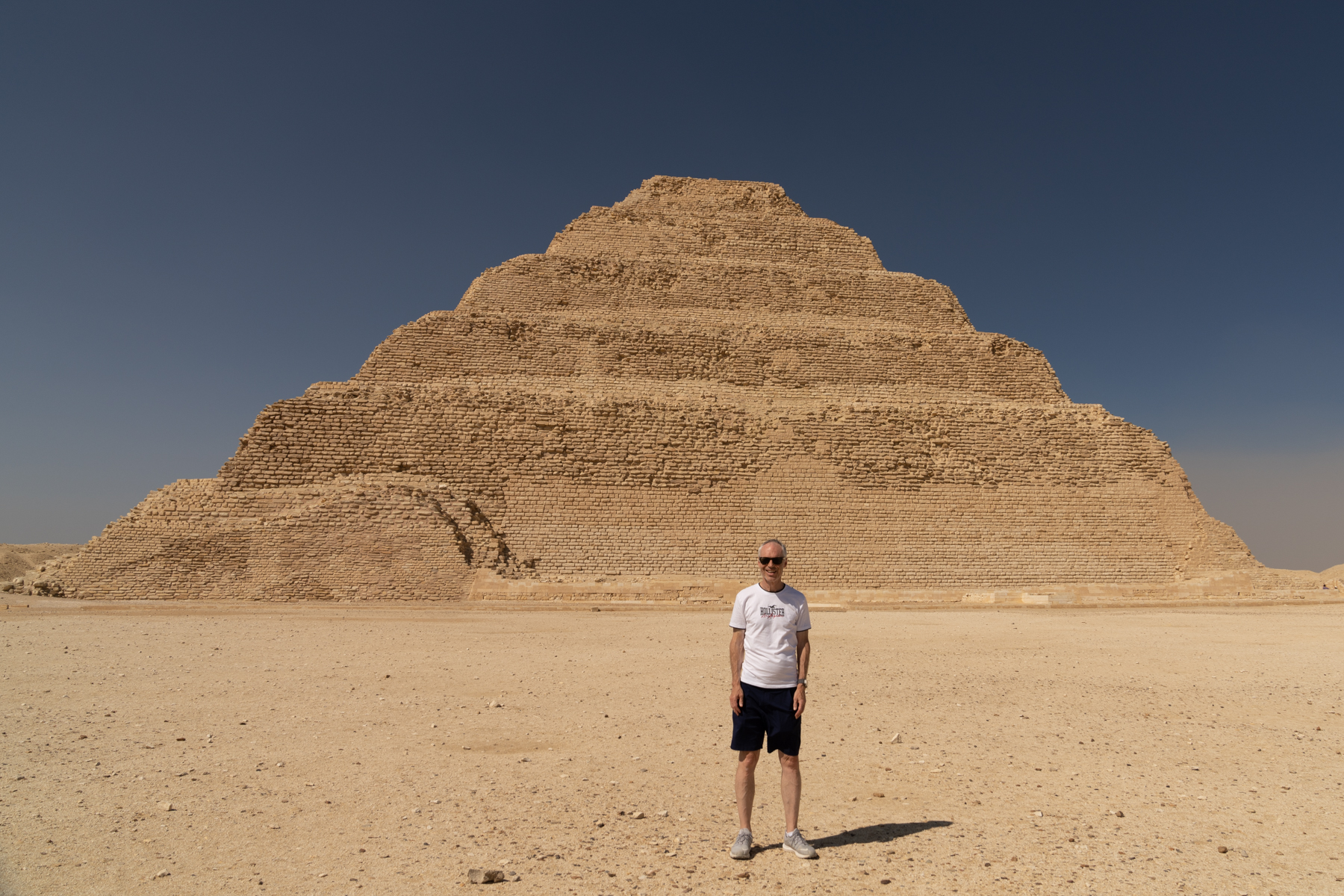
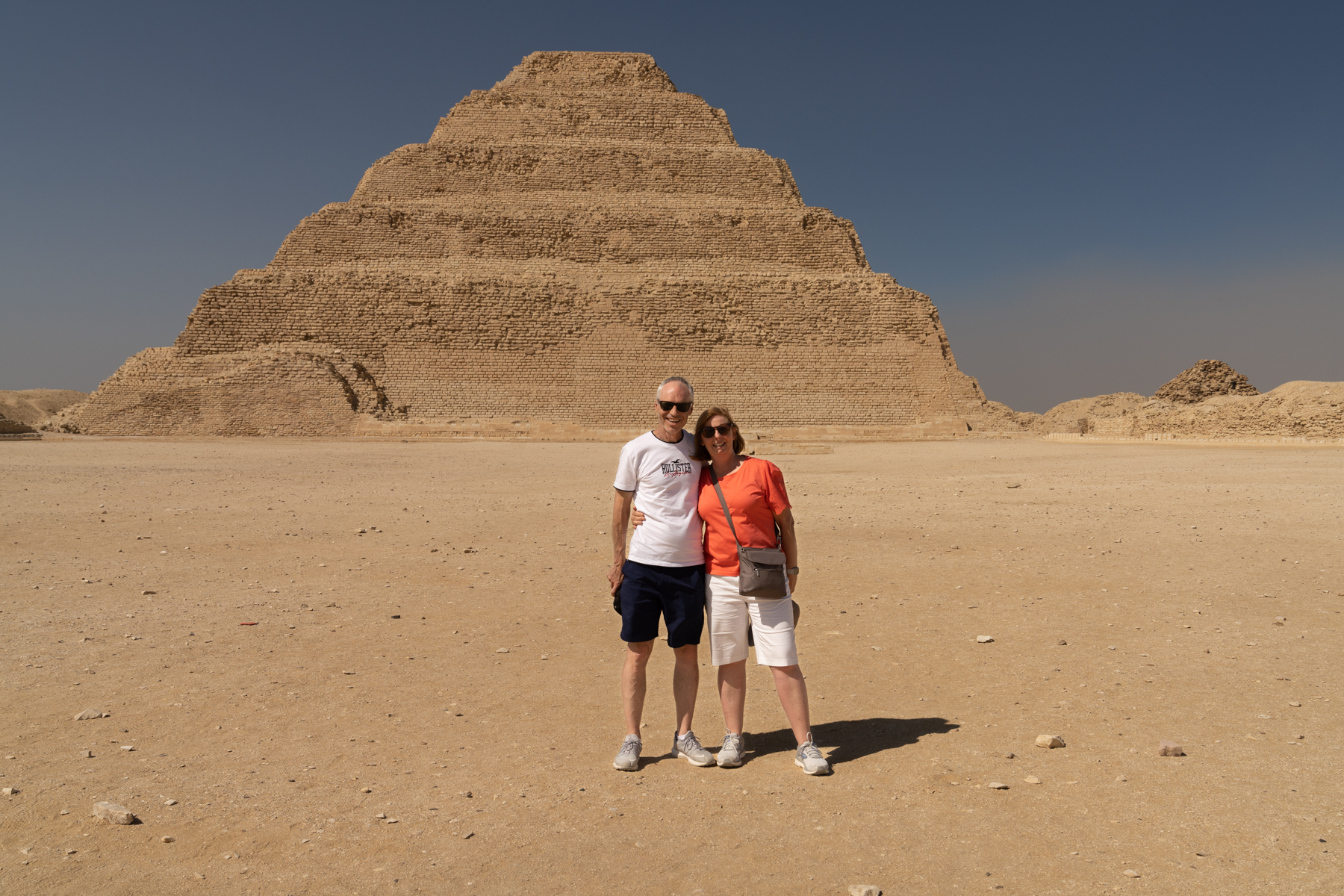
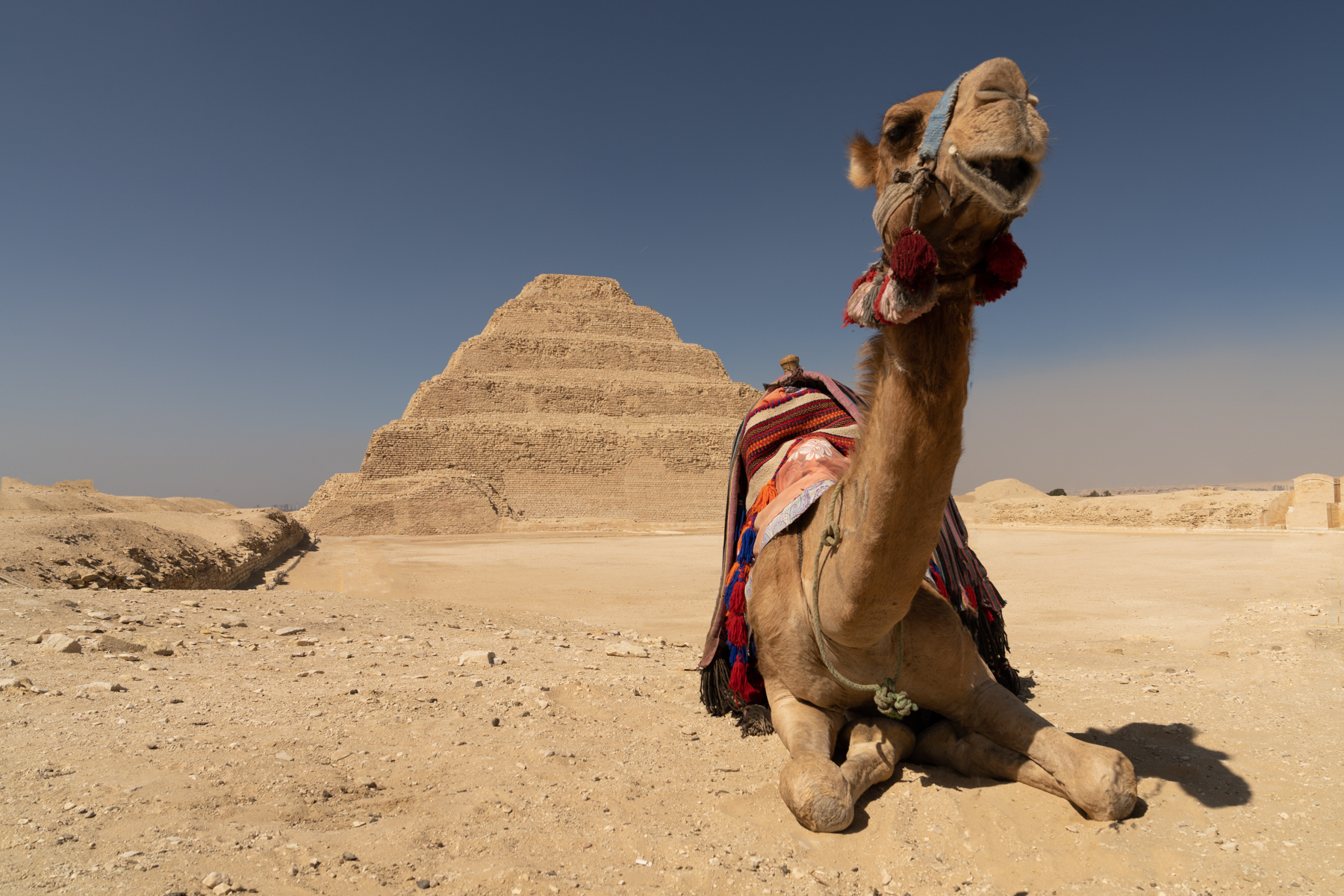
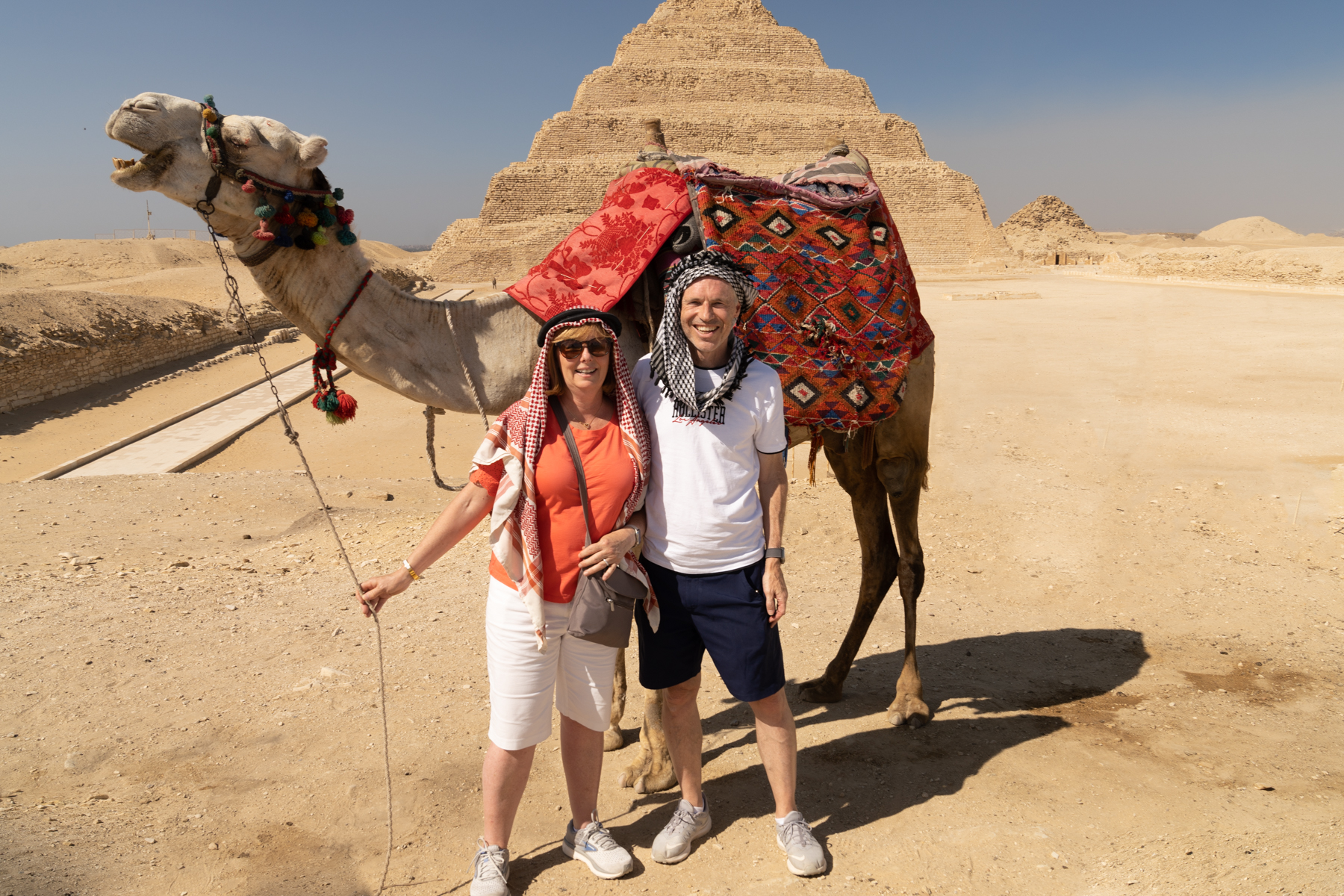
The Saqqara necropolis was used as a burial ground for numerous members of Egyptian royalty. While many of the structures no longer exist, the tomb for the princess Seshseshet Idut is in relatively good condition. We went inside this tomb to examine the beautiful artwork.
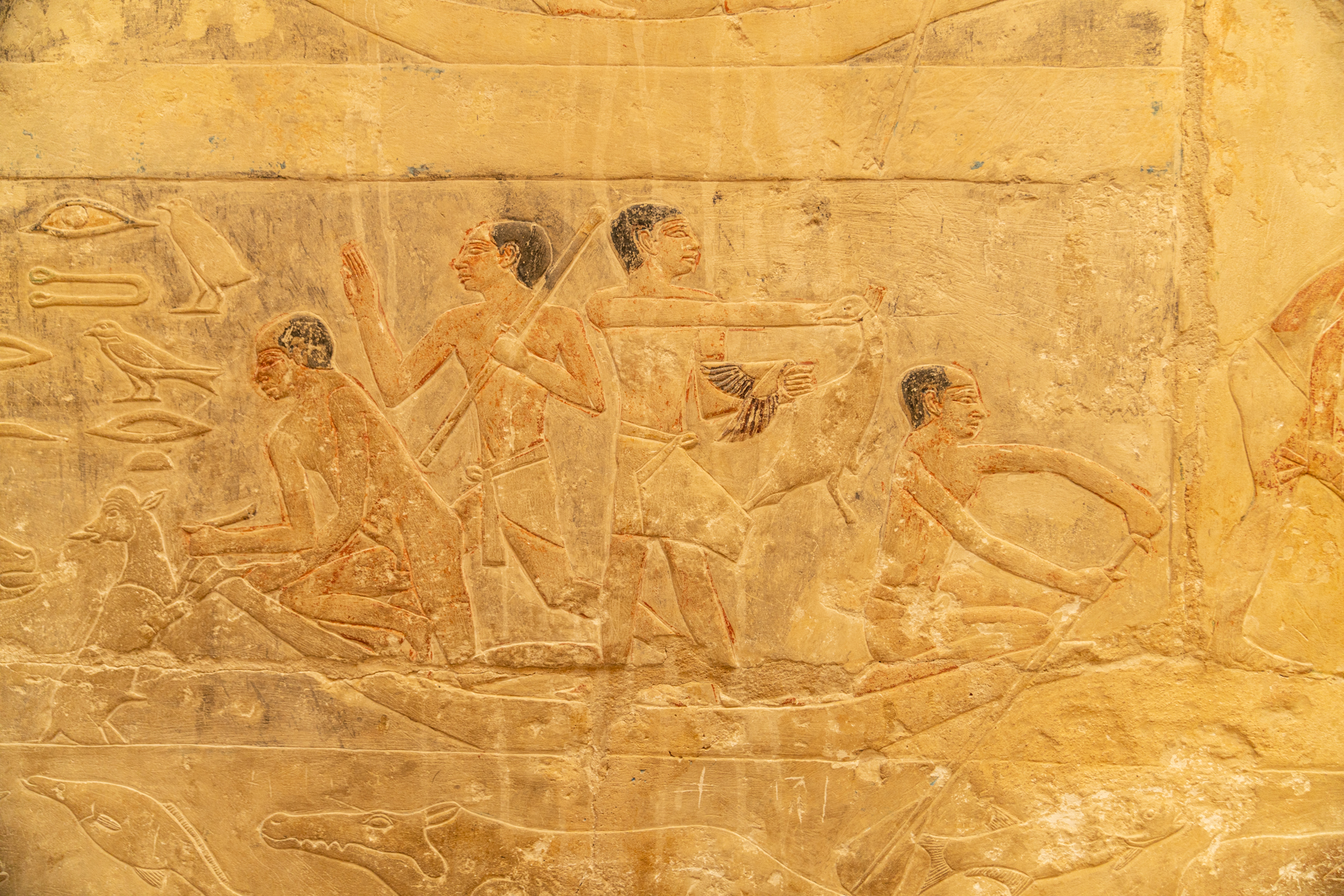
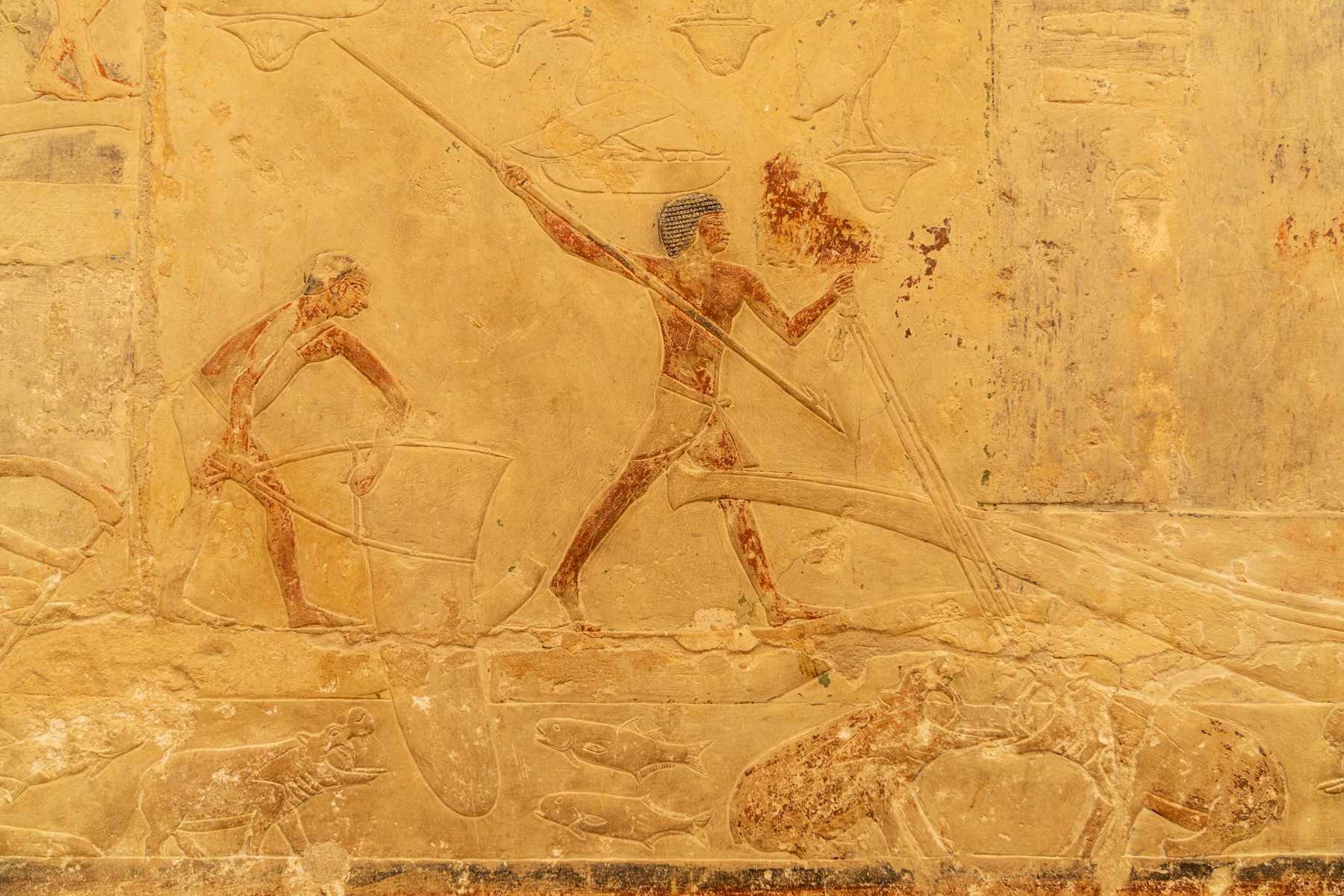
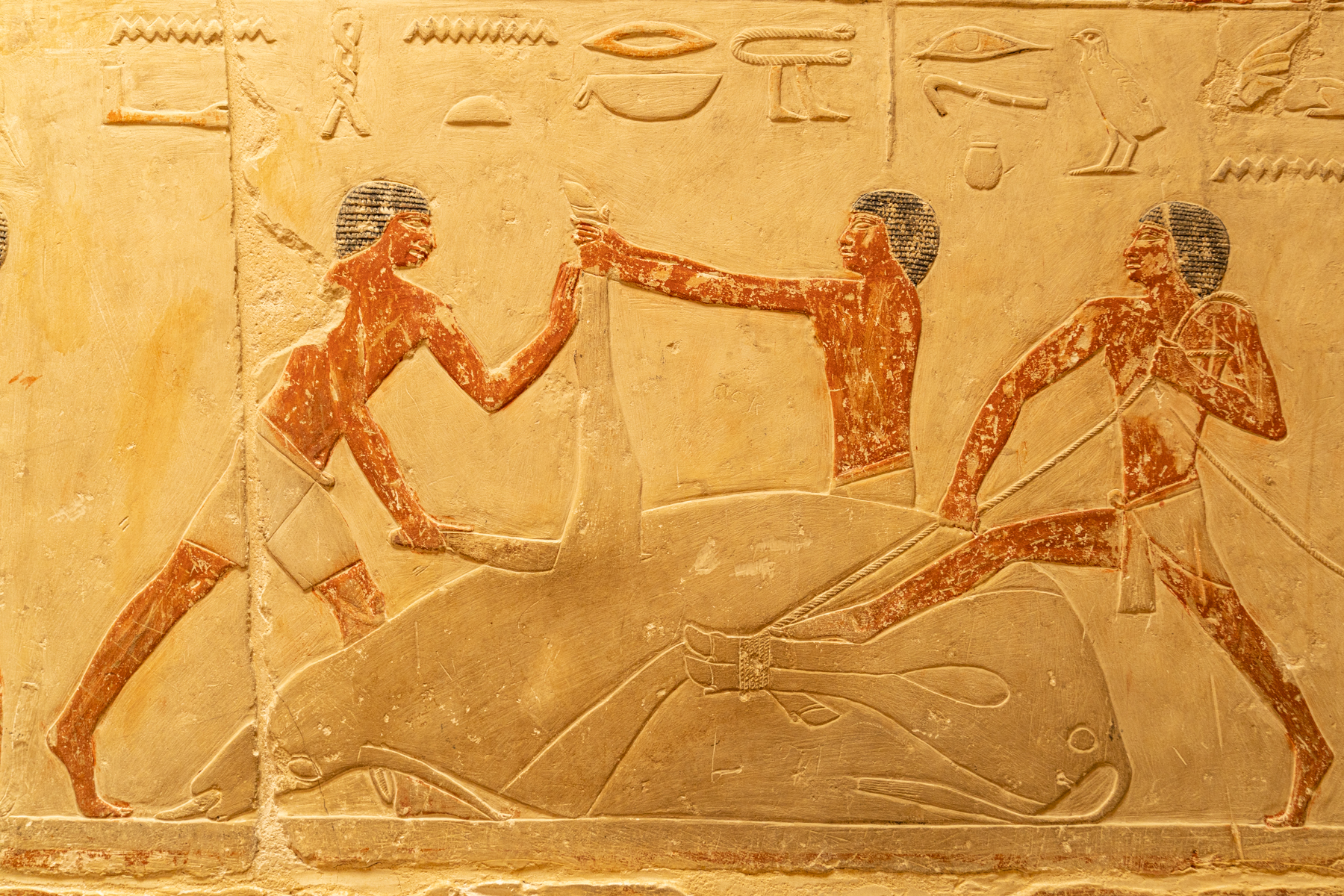
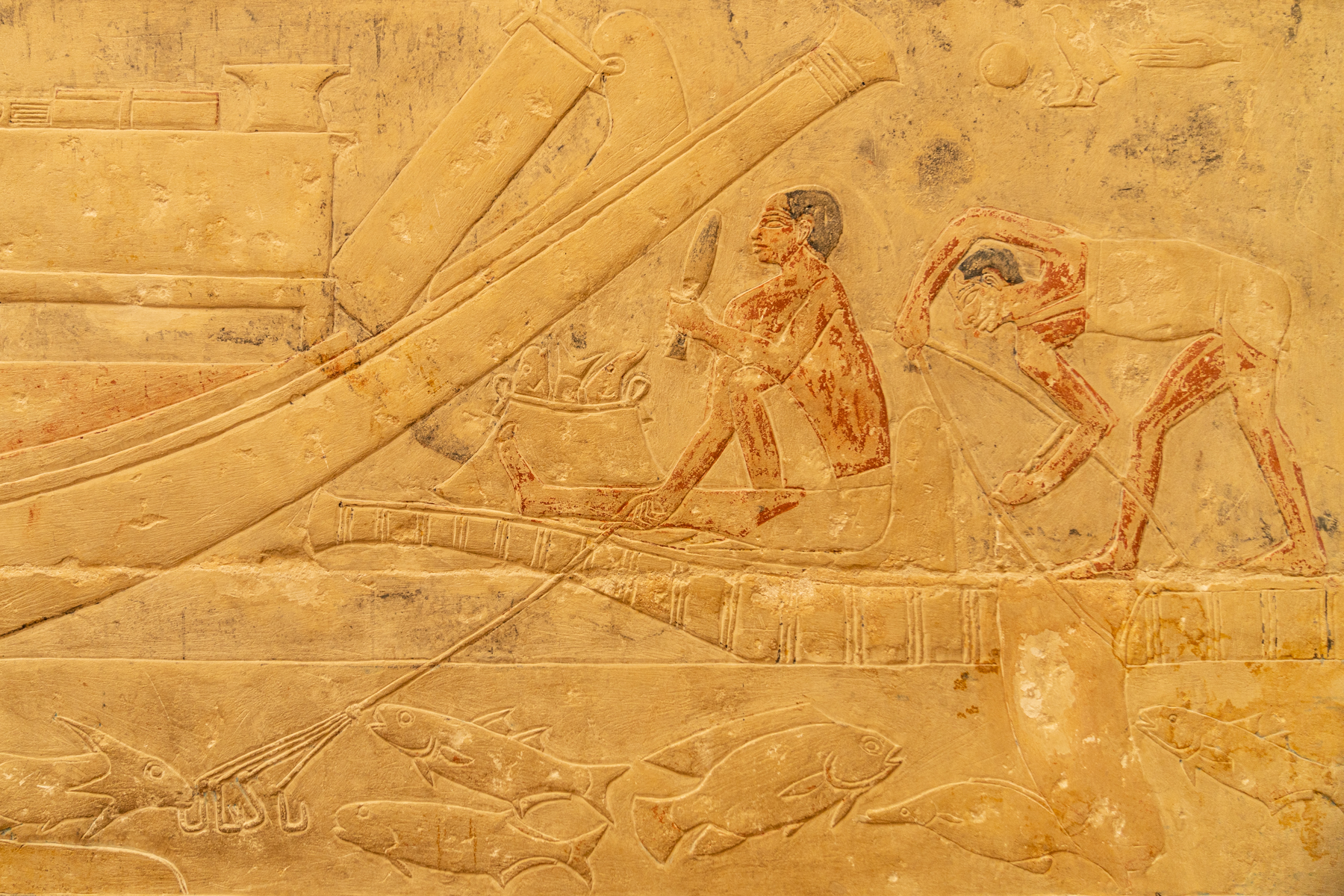
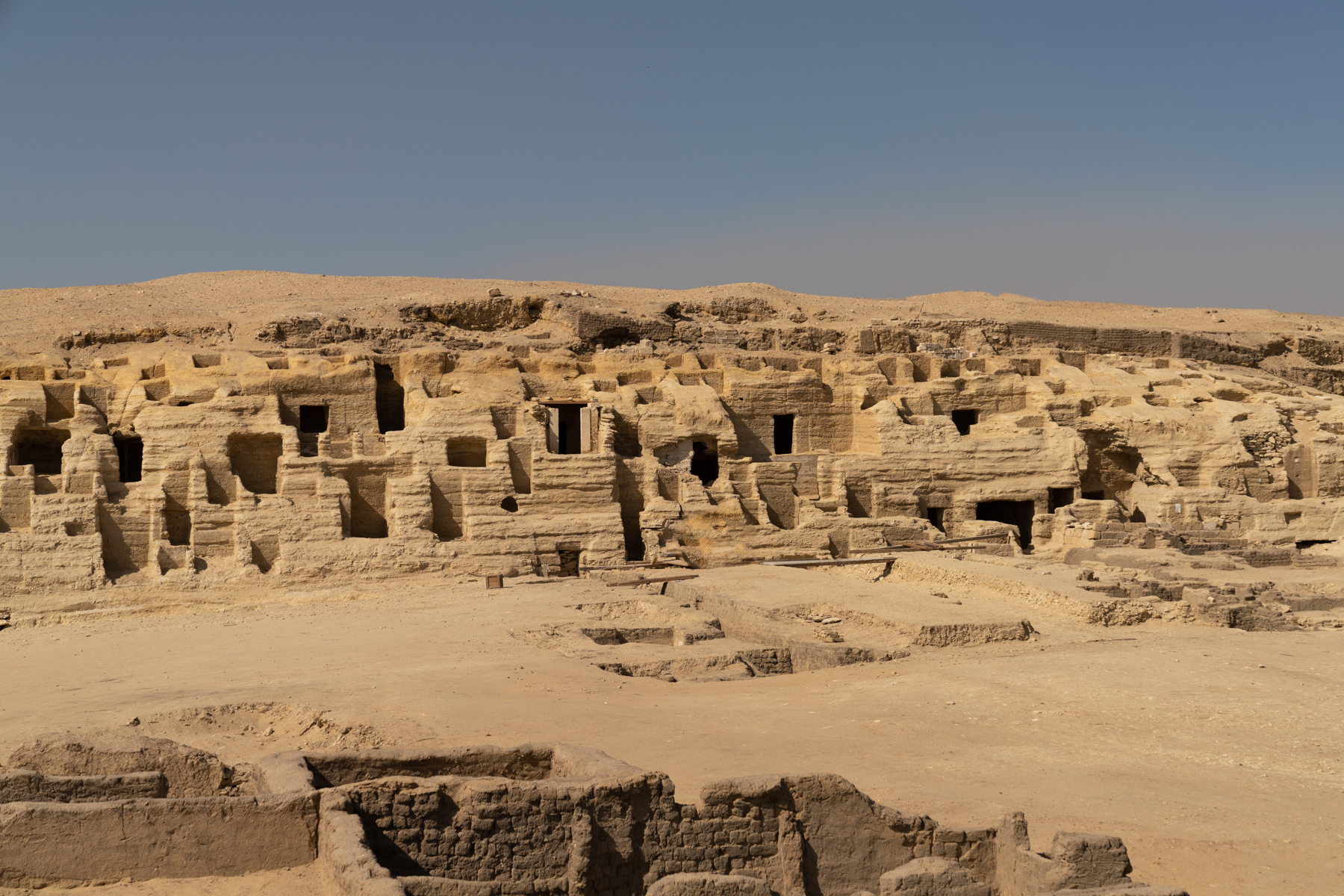
After spending quite a bit of time walking around Saqqara in the heat, we were relieved to return to the air-conditioned car for the drive back to Cairo. On the way out we stopped at an area that is currently being excavated (although no work was going on today).
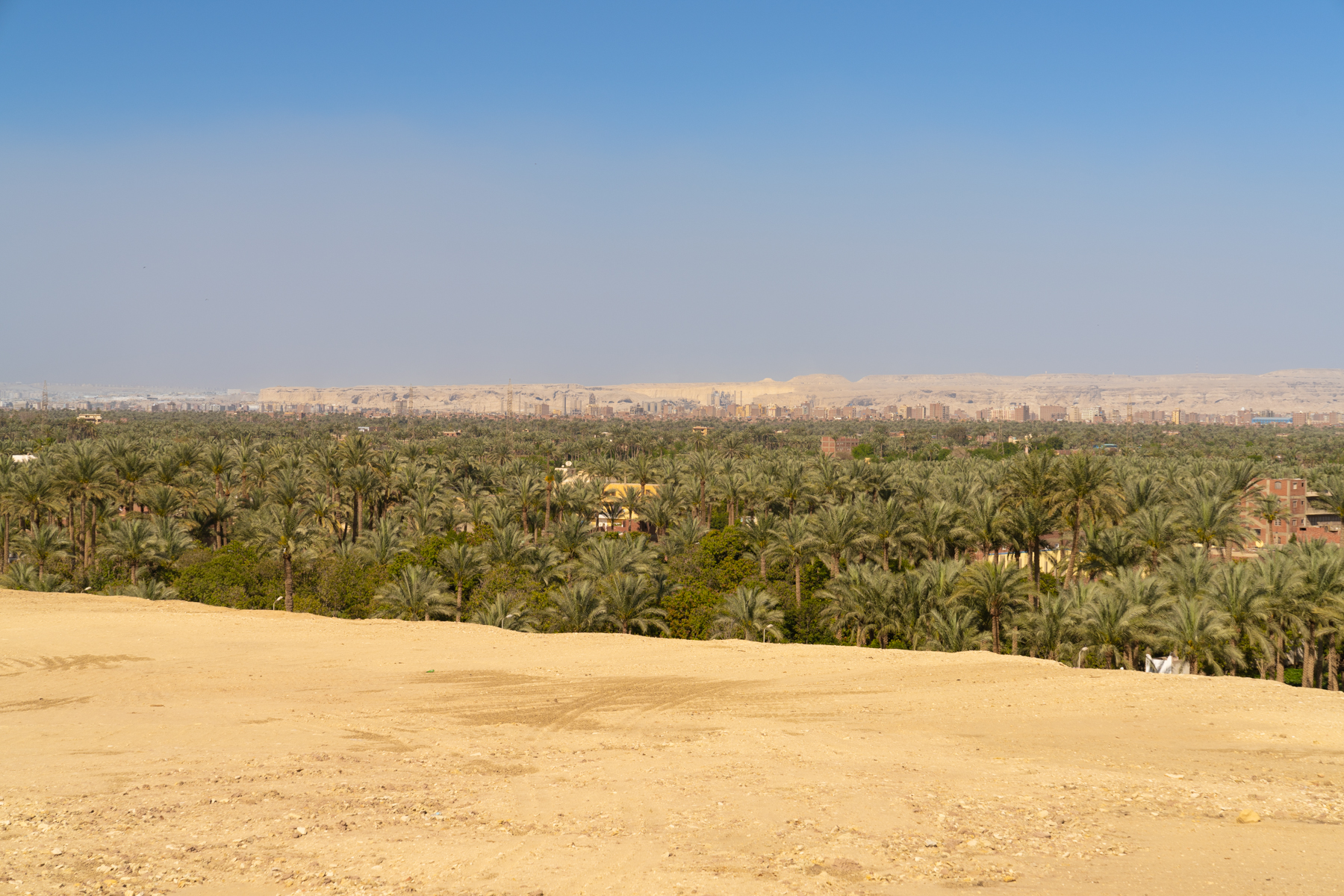
We also stopped a little further down the road to take in an interesting view of the juxtaposition of the fertile land serviced by water from the Nile and edge of the Western Desert.
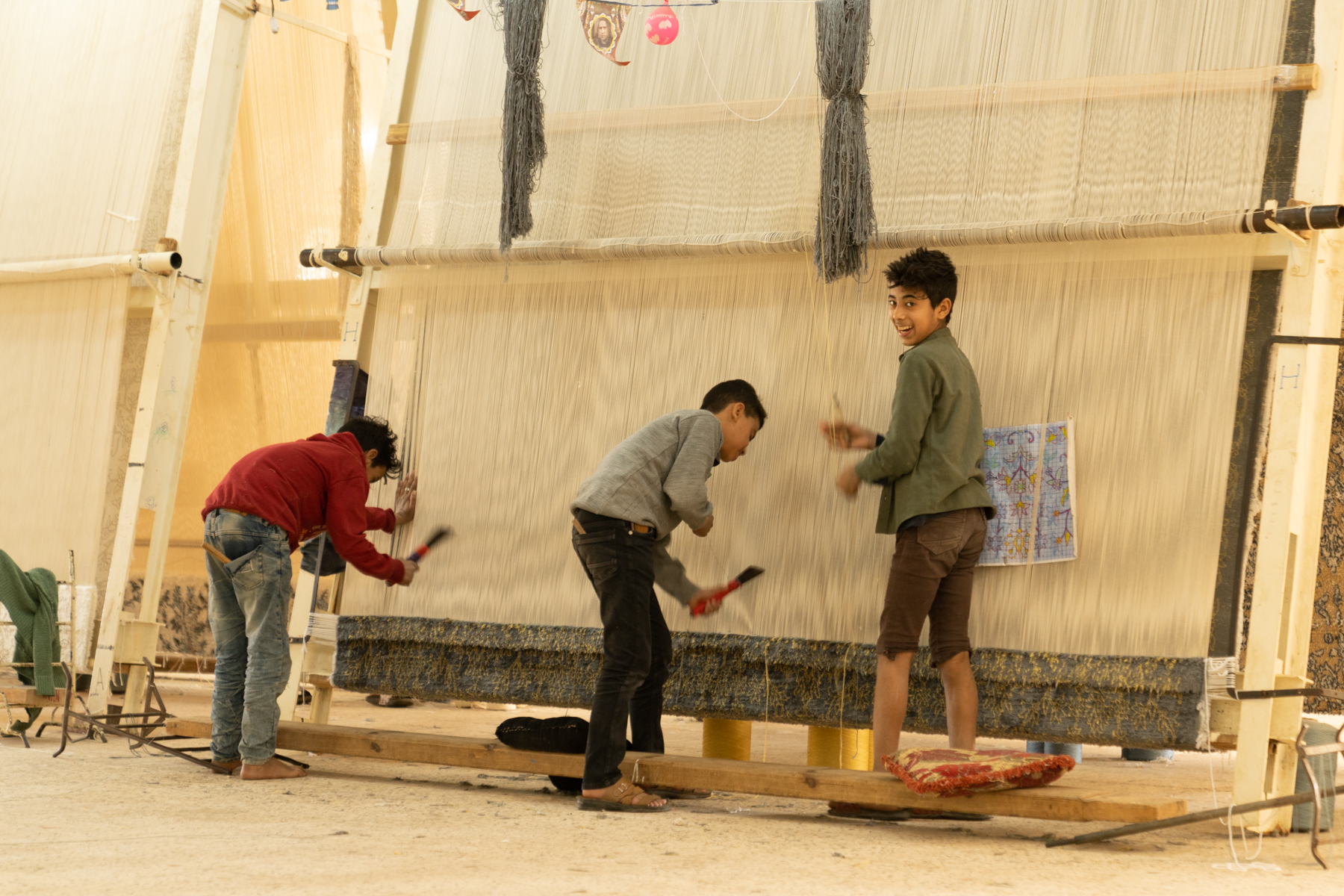
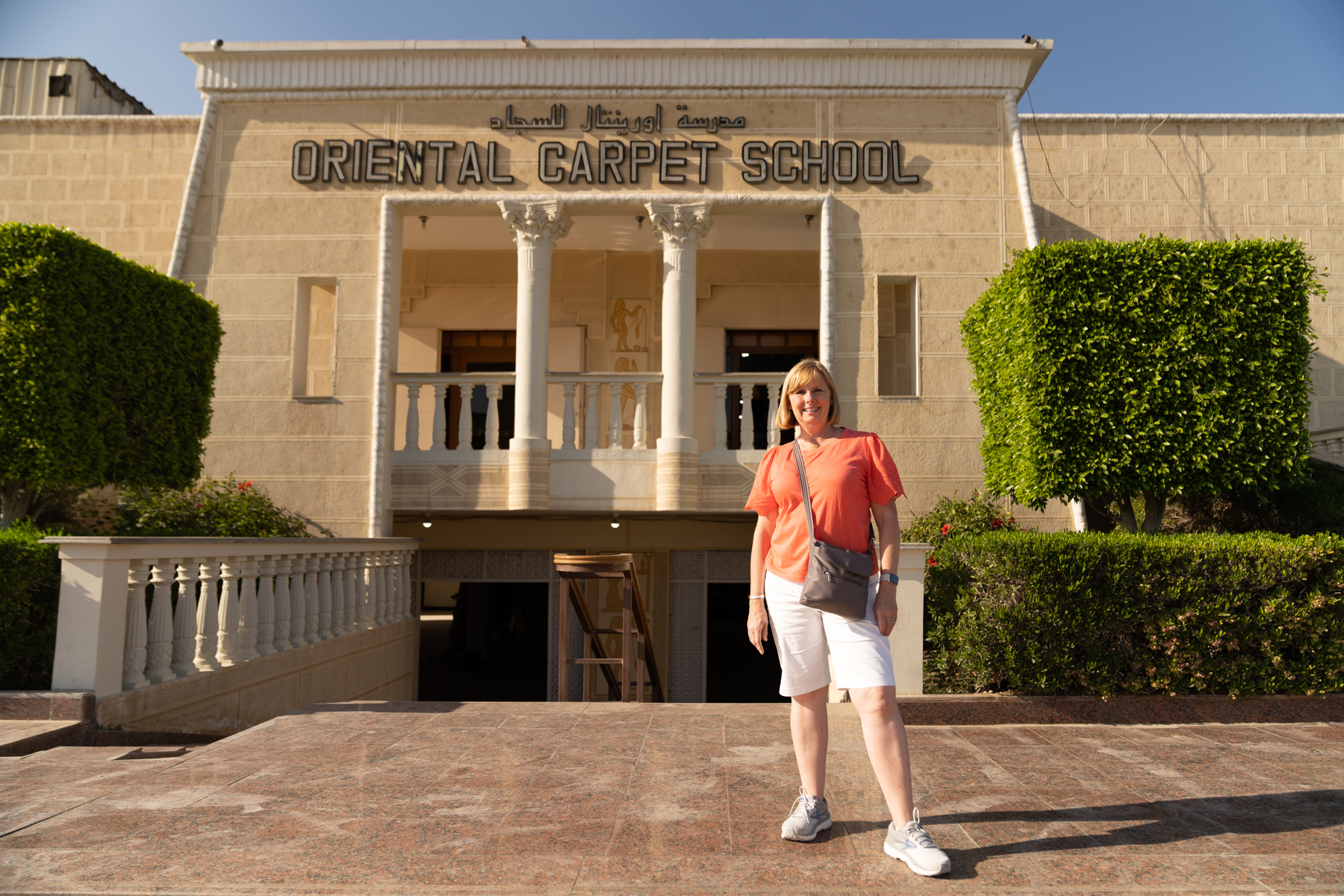
Not only is Saqqara famous for its archaeological treasures, it is also renowned for its incredible hand-made textiles. The carpet stores in Saqqara are referred to as “schools” because they provide training and jobs for children after school and during holidays, as well as for housewives to use their spare time at home to create additional income for the family.
We were fascinated by the process of making the textiles. The children were very happy to chat with us and to demonstrate their skills (which were incredible). Our guide told us that the children were well paid and that the schools were integral to the overall economy of the area. After learning about the process of making the rugs, we went upstairs to the huge gallery to look at the finished products. We had no intention of buying (another!) rug on this trip but seeing how hard the children worked, and understanding that we could make a positive contribution to them and the local economy, we purchased our second rug for the trip!
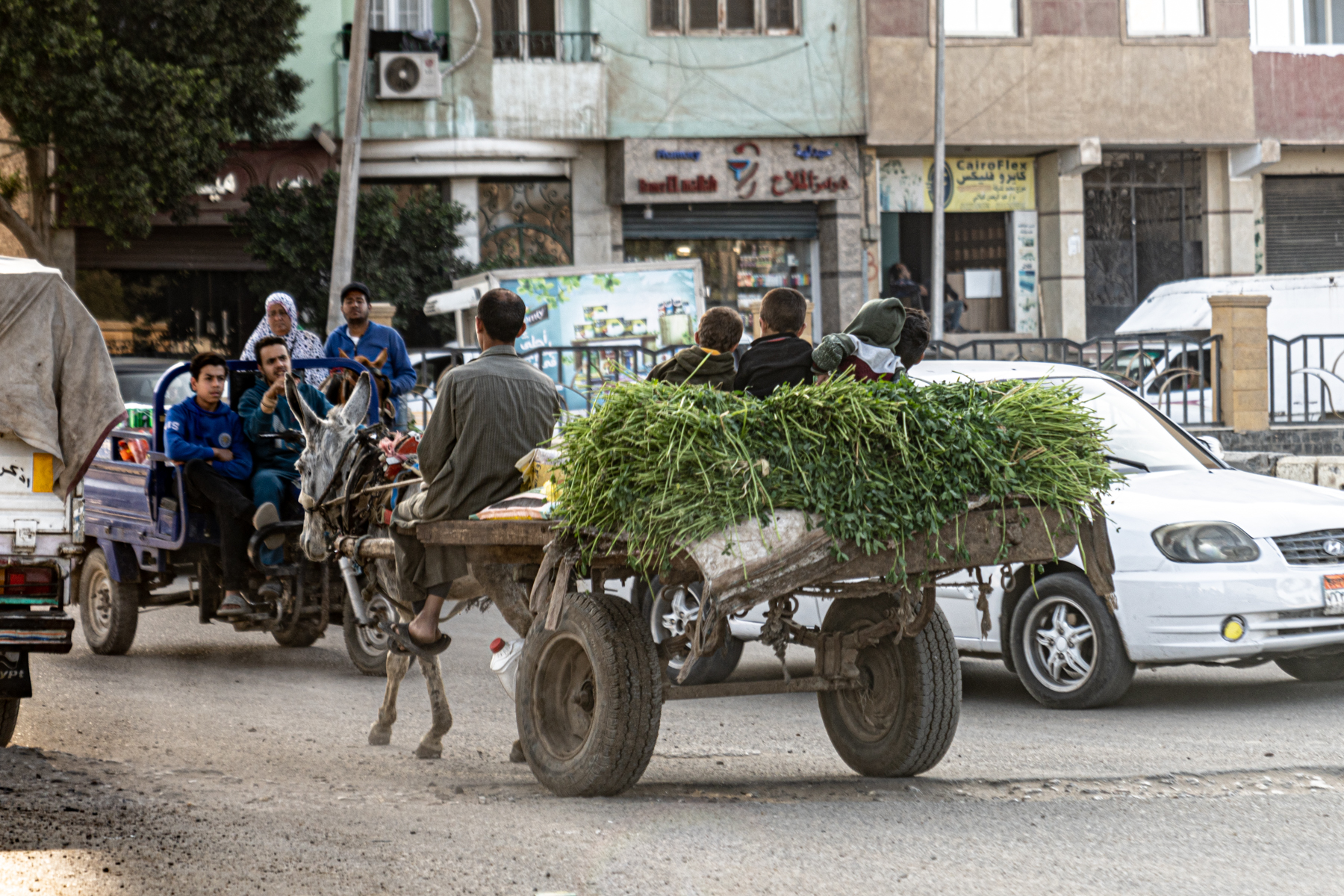
We hopped back into the car and headed out of Saqqara for the drive back into Cairo. We loved looking out the windows on the drive back because there was always something fascinating to see on the roads.
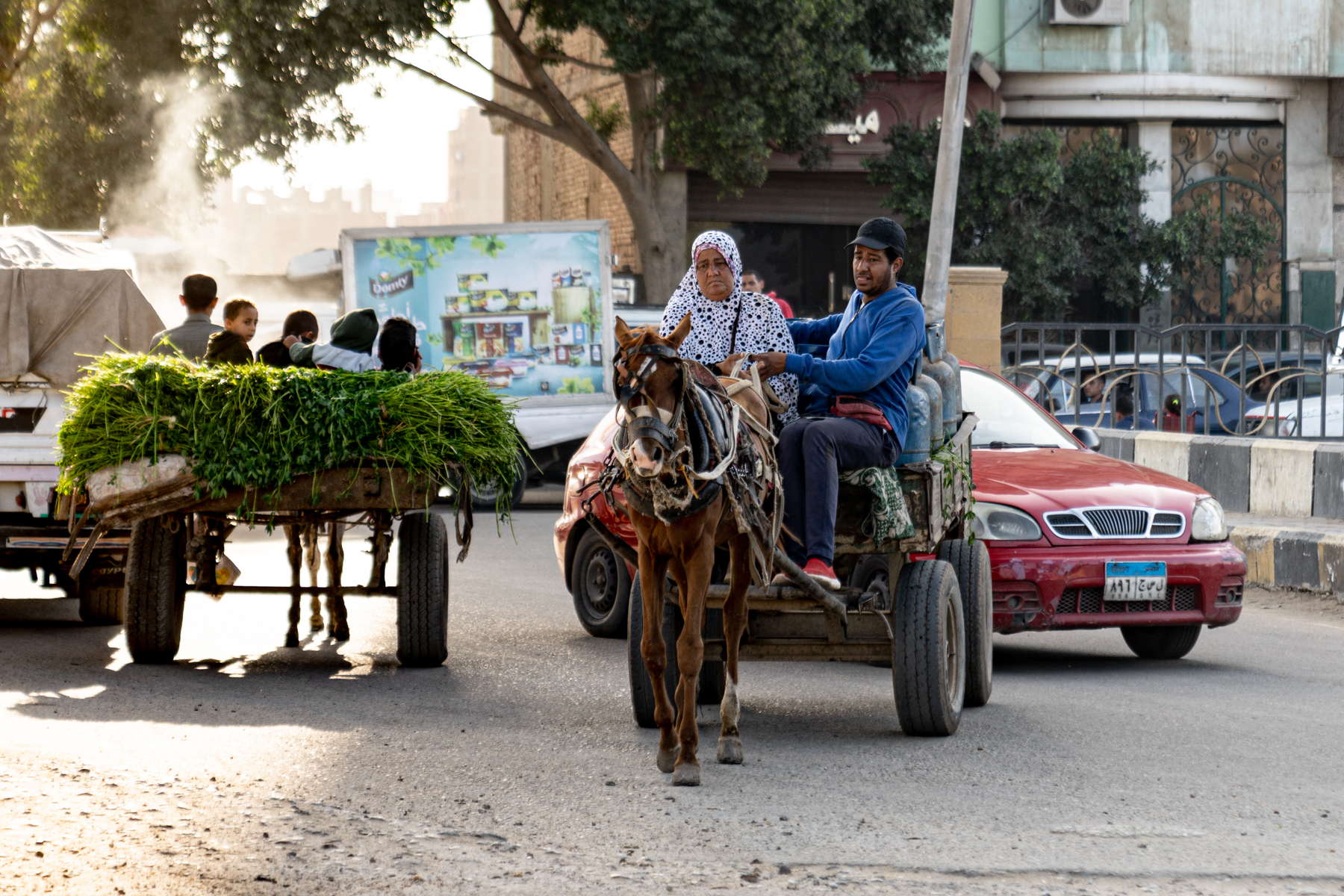
We crawled back through the heavy Cairo traffic to our hotel, arriving at about 6:00 pm. We said goodbye to Sally and Hachem, and quickly headed upstairs to wash off the lingering odour of camel, and change for our 6:30 pm dinner reservation in the hotel’s Italian restaurant.
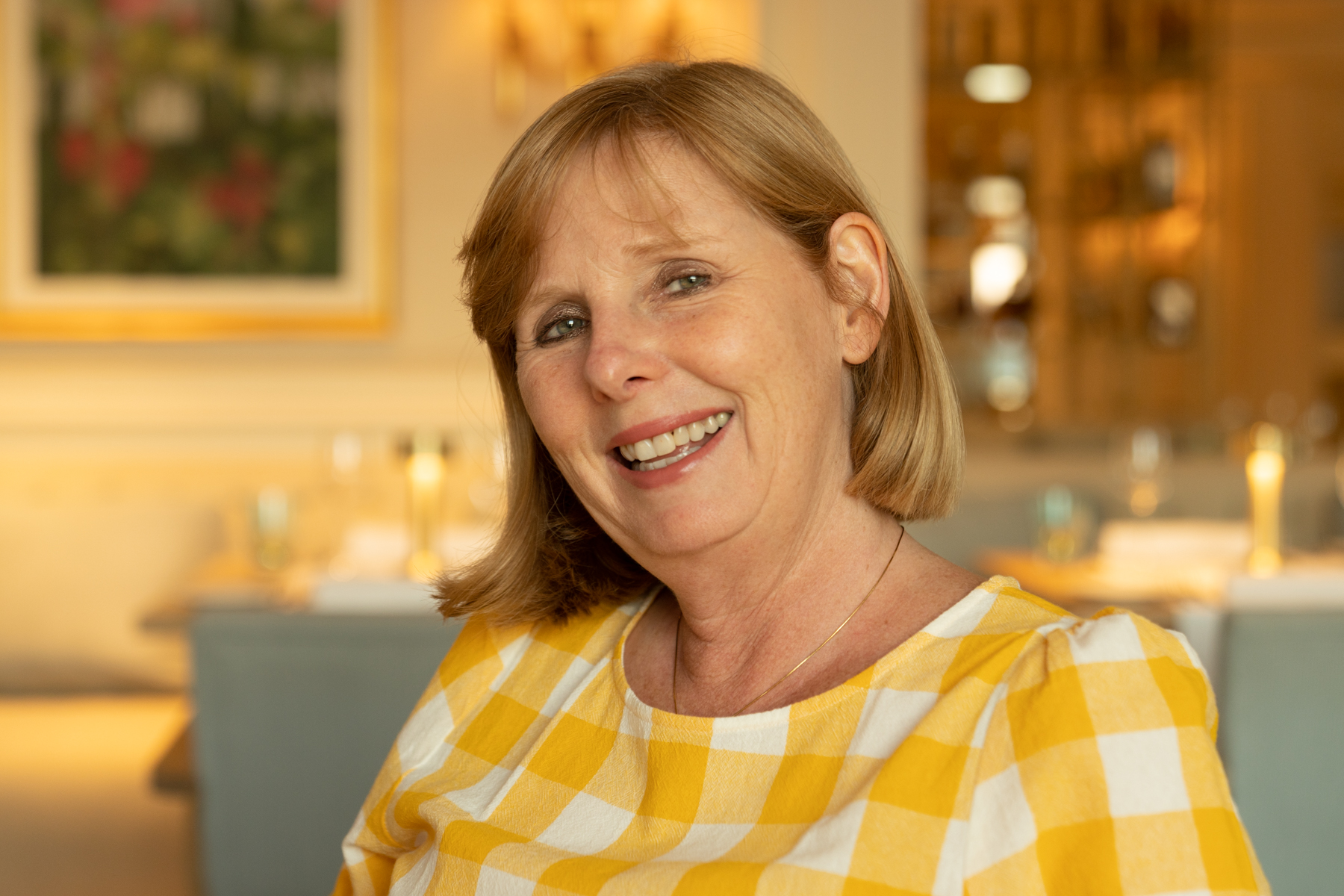
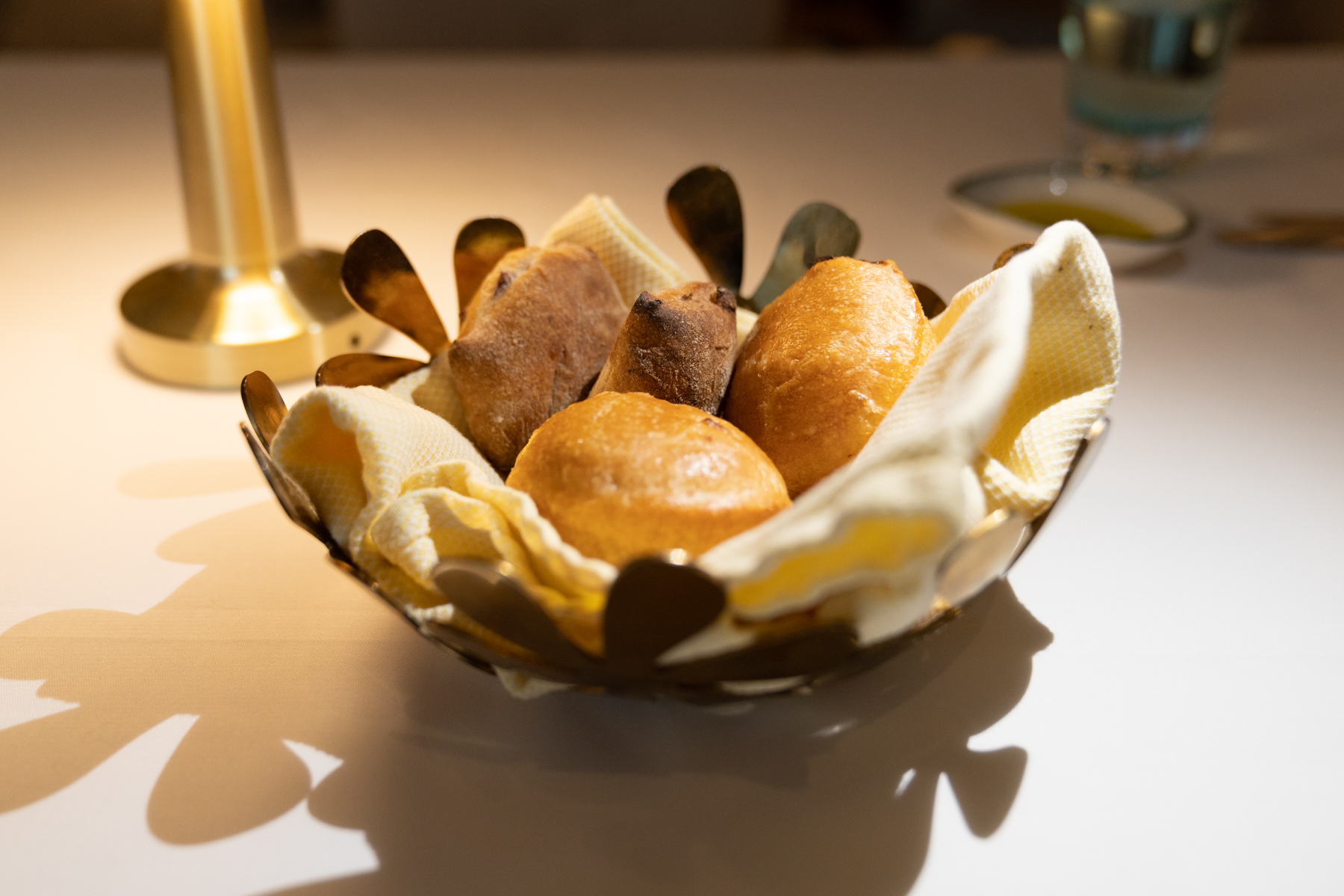
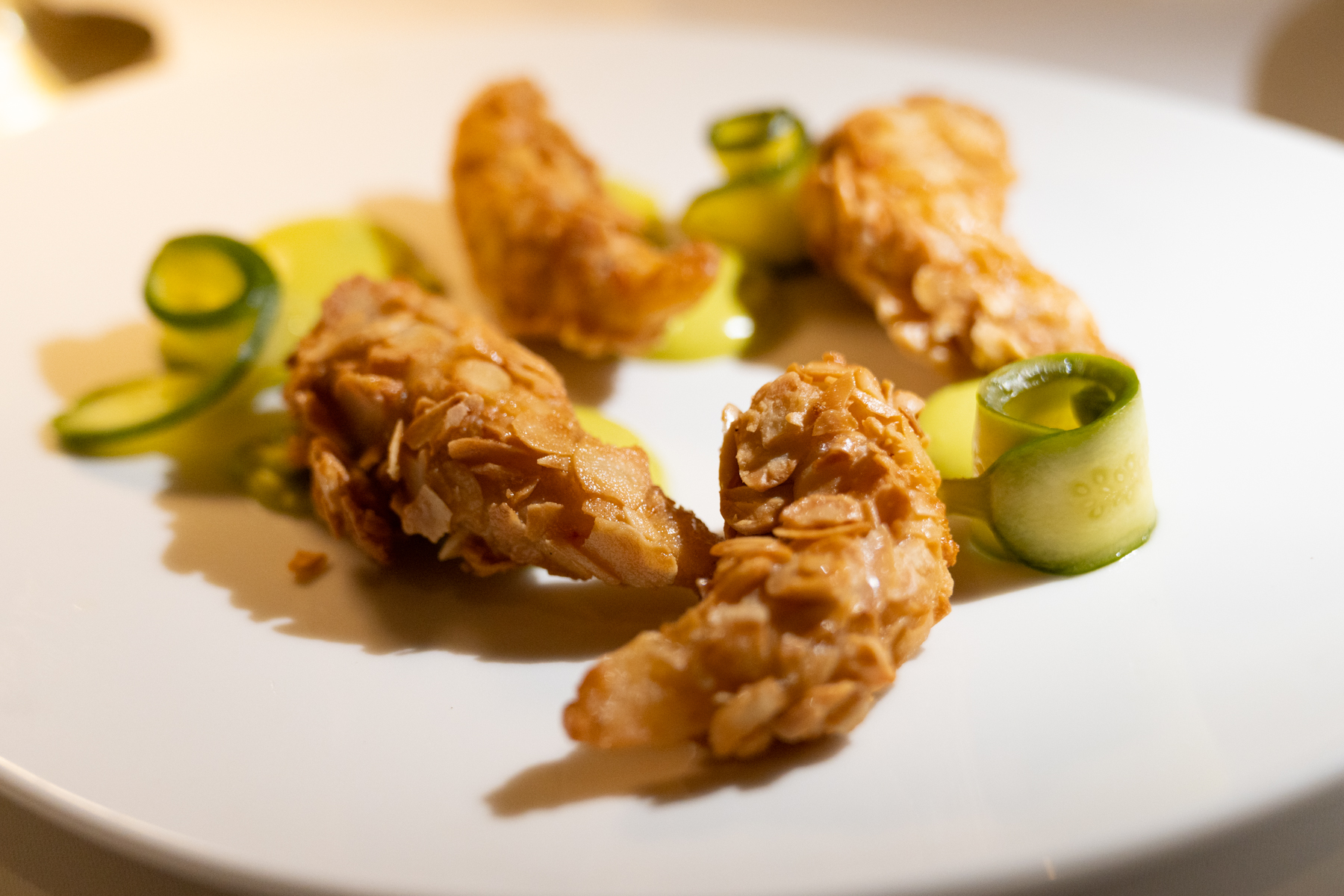
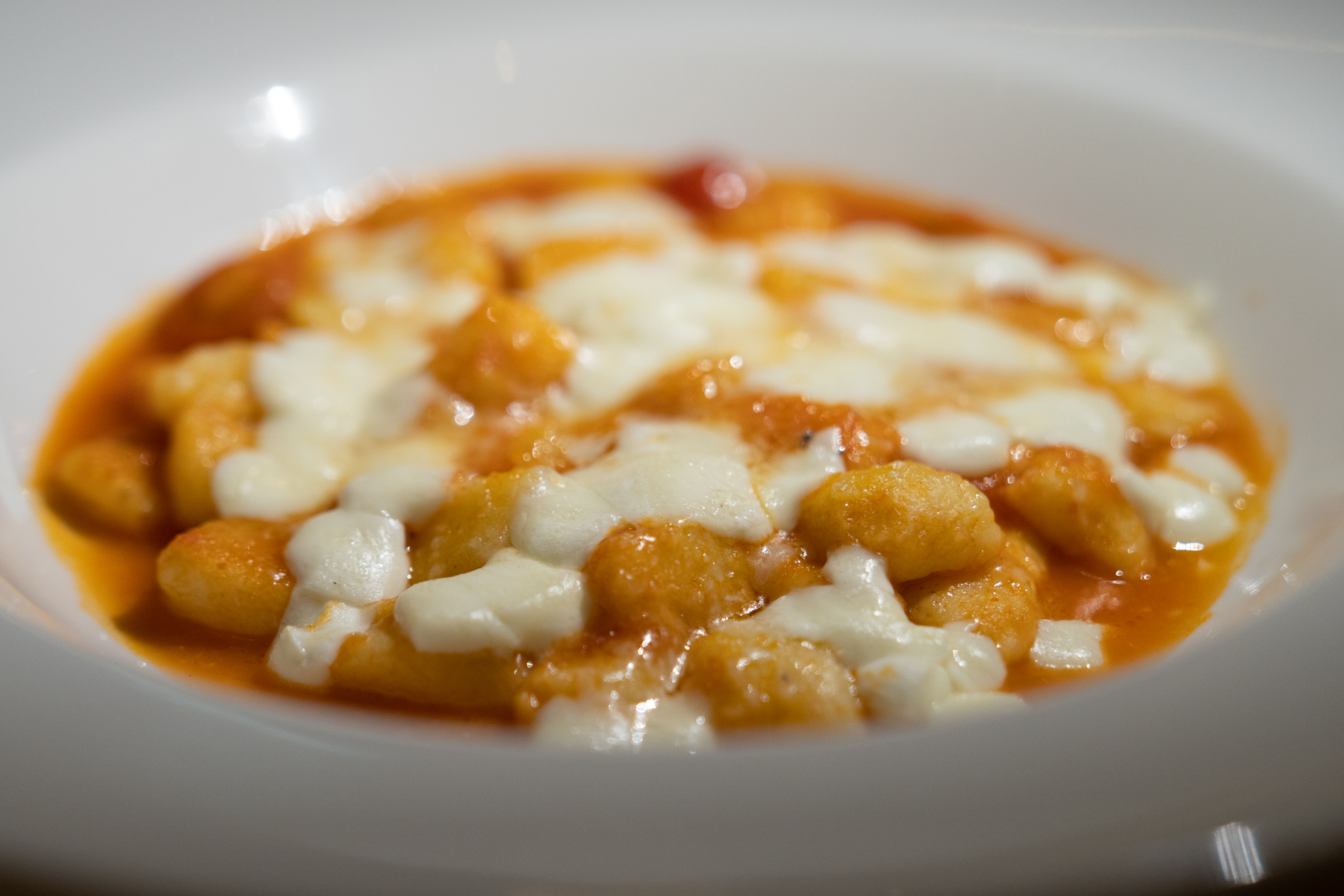
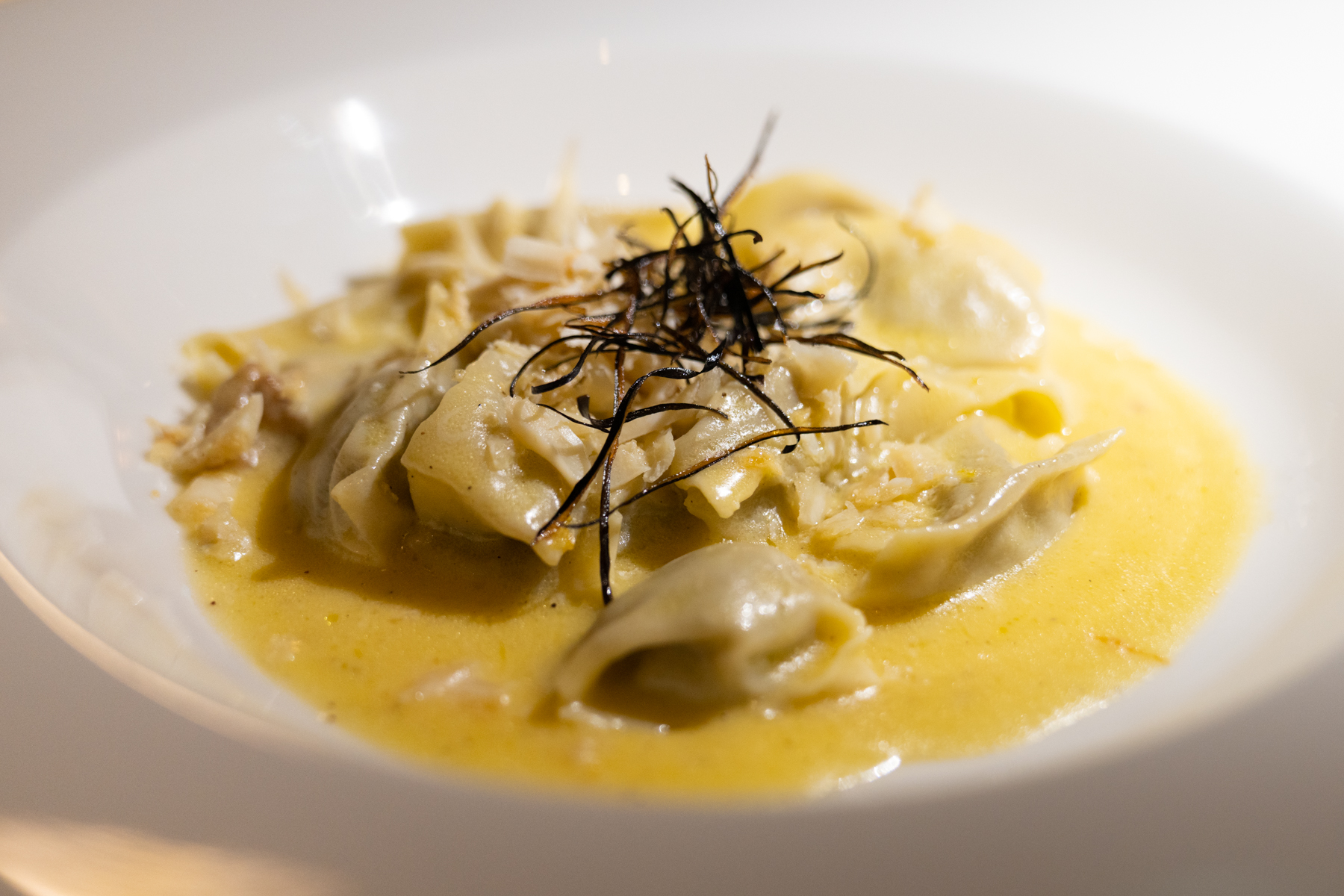
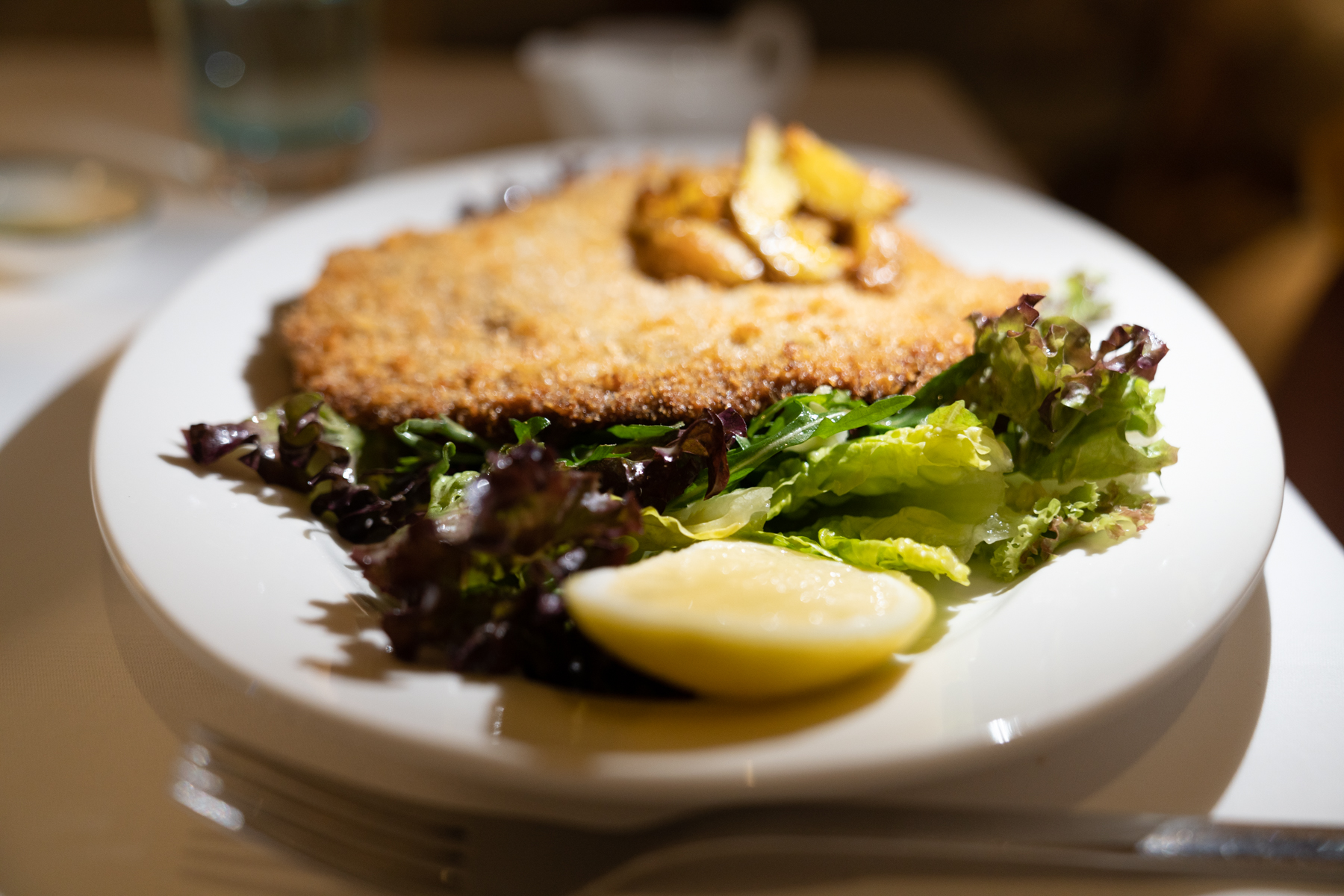
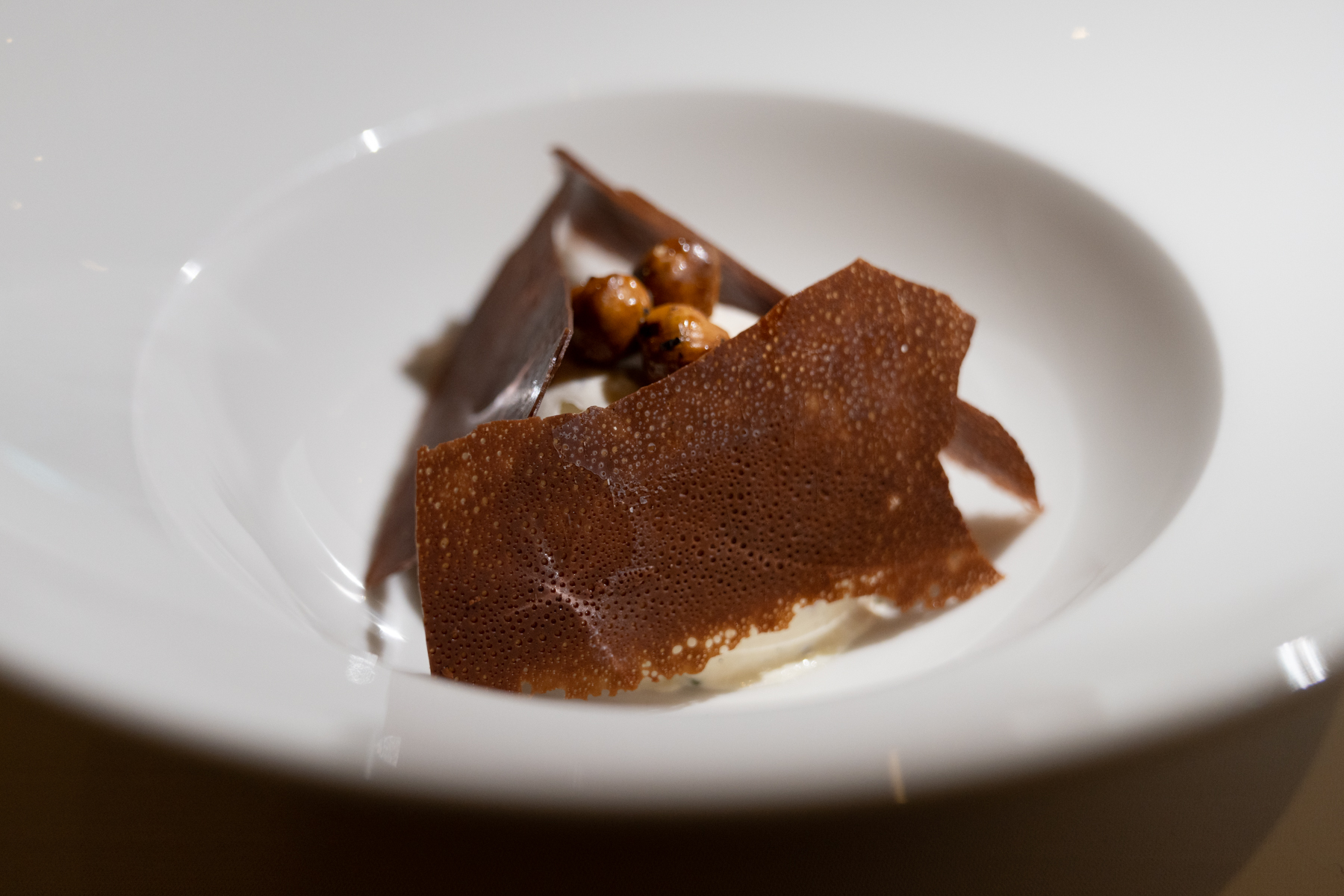
After a beautiful dinner, we headed back upstairs to get to bed in preparation for what is going to be a very big day tomorrow as we journey 600 kilometres south to the city of Luxor.