
Around The World
Petra
We slept reasonably well last night and were up early, so we could have a quick breakfast before heading into the old city of Petra.
Just before 8:00 am we met Daoud in the lobby of our hotel, and we walked across the road to the entrance to the Petra ruins. There were already a lot of people going in to see the ruins. With more than a million visitors per year, this is the most-visited site in Jordan.
The Petra ruins are an archaeological city in the south of Jordan. It is believed that humans have lived in the area for around 9,000 years. Archaeologists have confirmed that the Nabataeans (an ancient nomadic Arab people) have inhabited the area since the 2nd century BC (although they may have been there as early as the 5th century BC), and they made Petra their capital in recognition of its proximity to the incense trade routes. Some of the precious materials that have been traded over thousands of years through Petra are still available today from local vendors in the old city.
As a result of their control of the trade routes, the Nabataeans prospered and Petra grew accordingly. They developed skills in harvesting rainwater, agriculture, and stone carving. They were skilled desert fighters and repelled all attacks until they succumbed to the Romans in the 1st century BC. As a result of major earthquake in the 4th century that destroyed buildings and much of the city’s water systems, and the increasing shift to sea-based trade routes, Petra’s importance dwindled and by the early 8th century AD, only a few people lived in and around Petra. Over time, the city was lost to the outside world, and it wasn’t until 1812 that the 11 square kilometre archaeological treasure of more than 800 carved buildings was rediscovered by the Swiss explorer, Johann Ludwig Burckhardt.
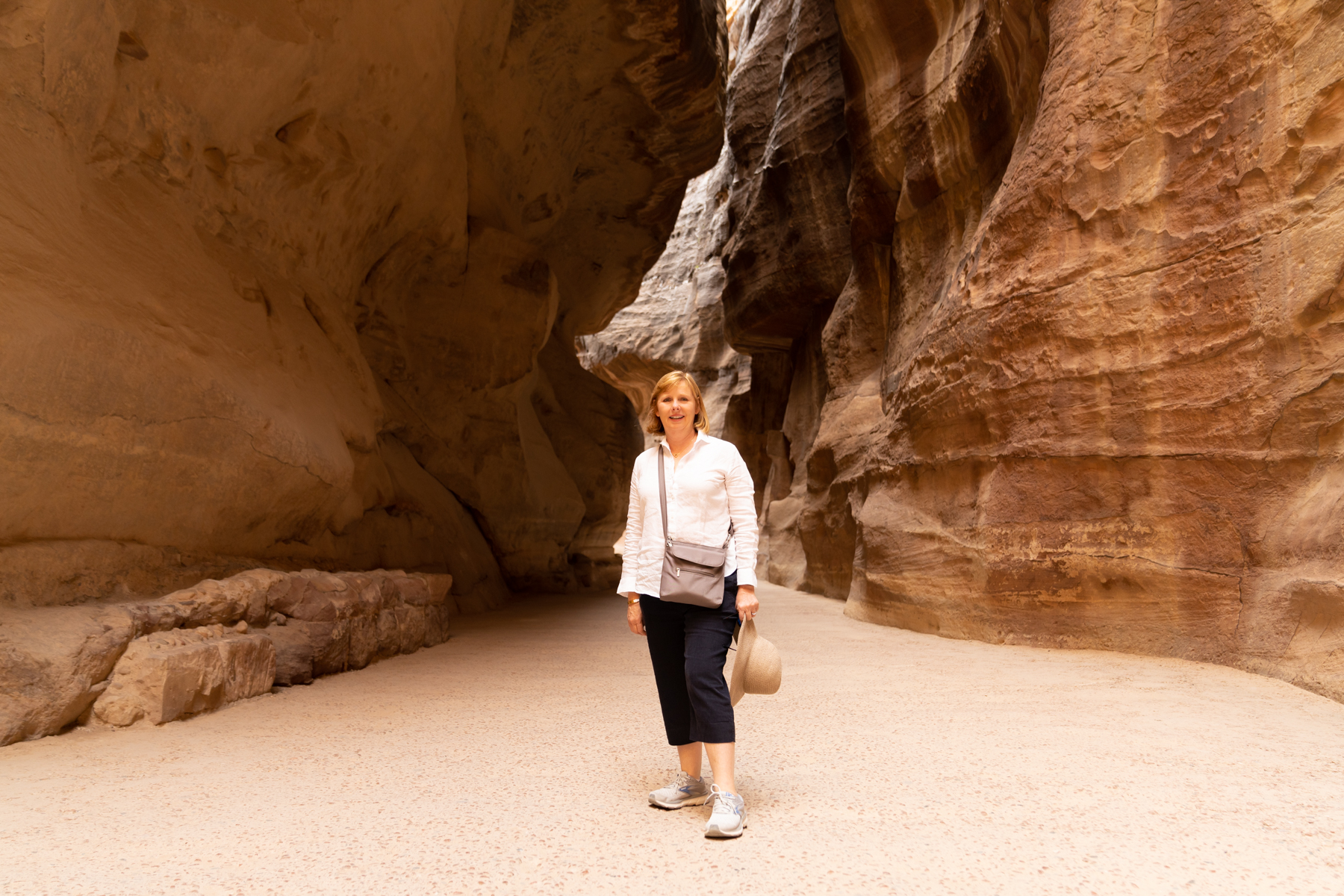
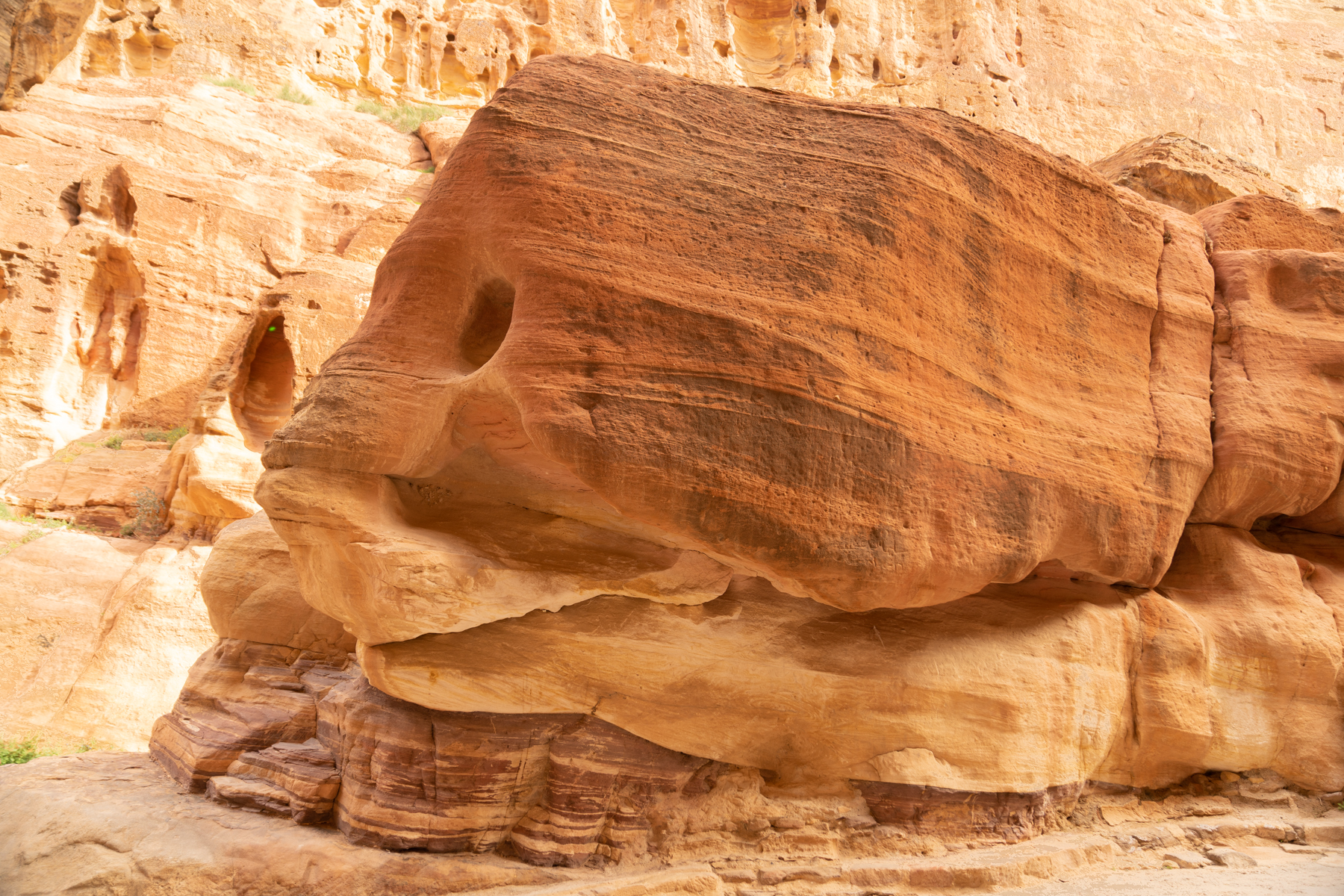
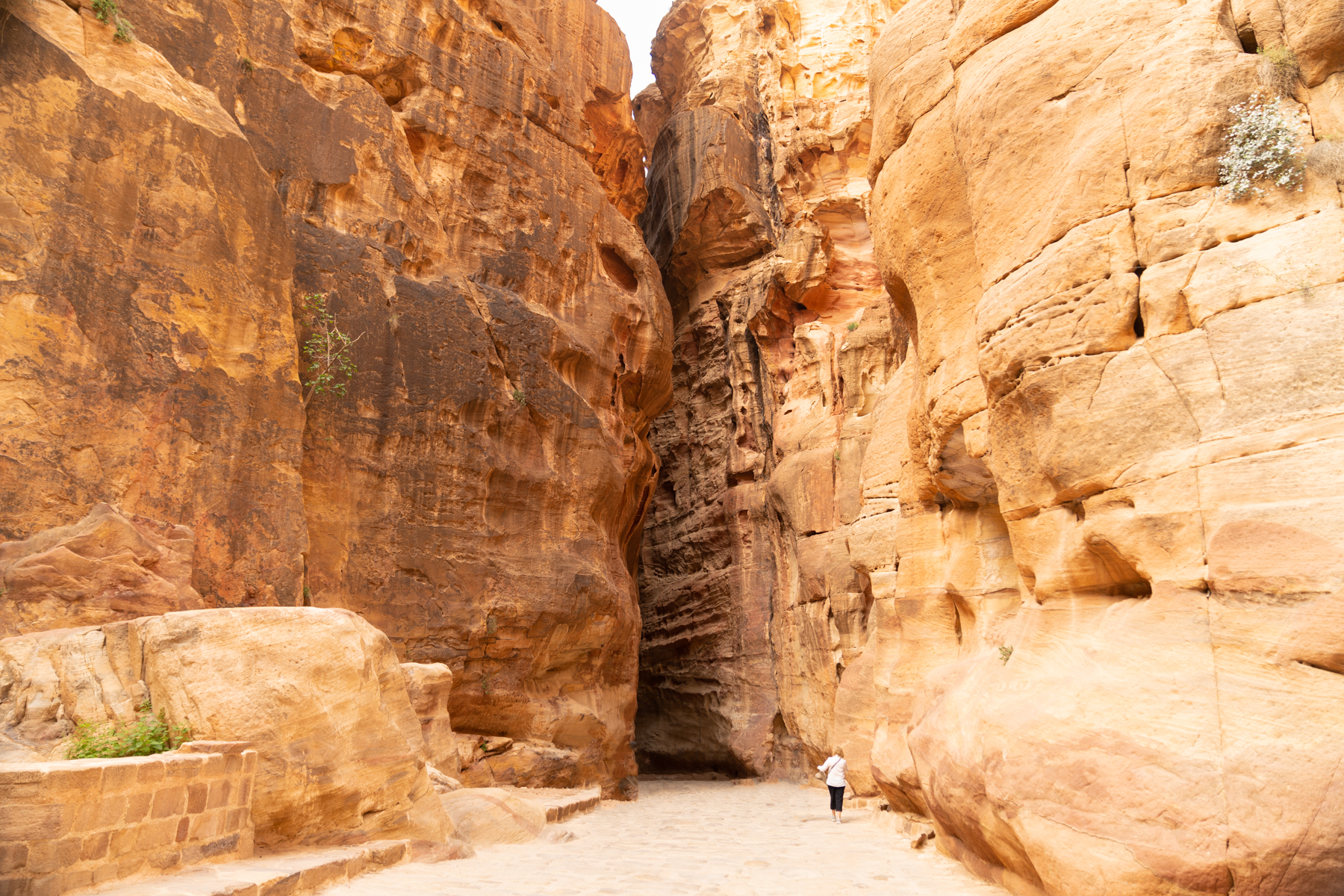
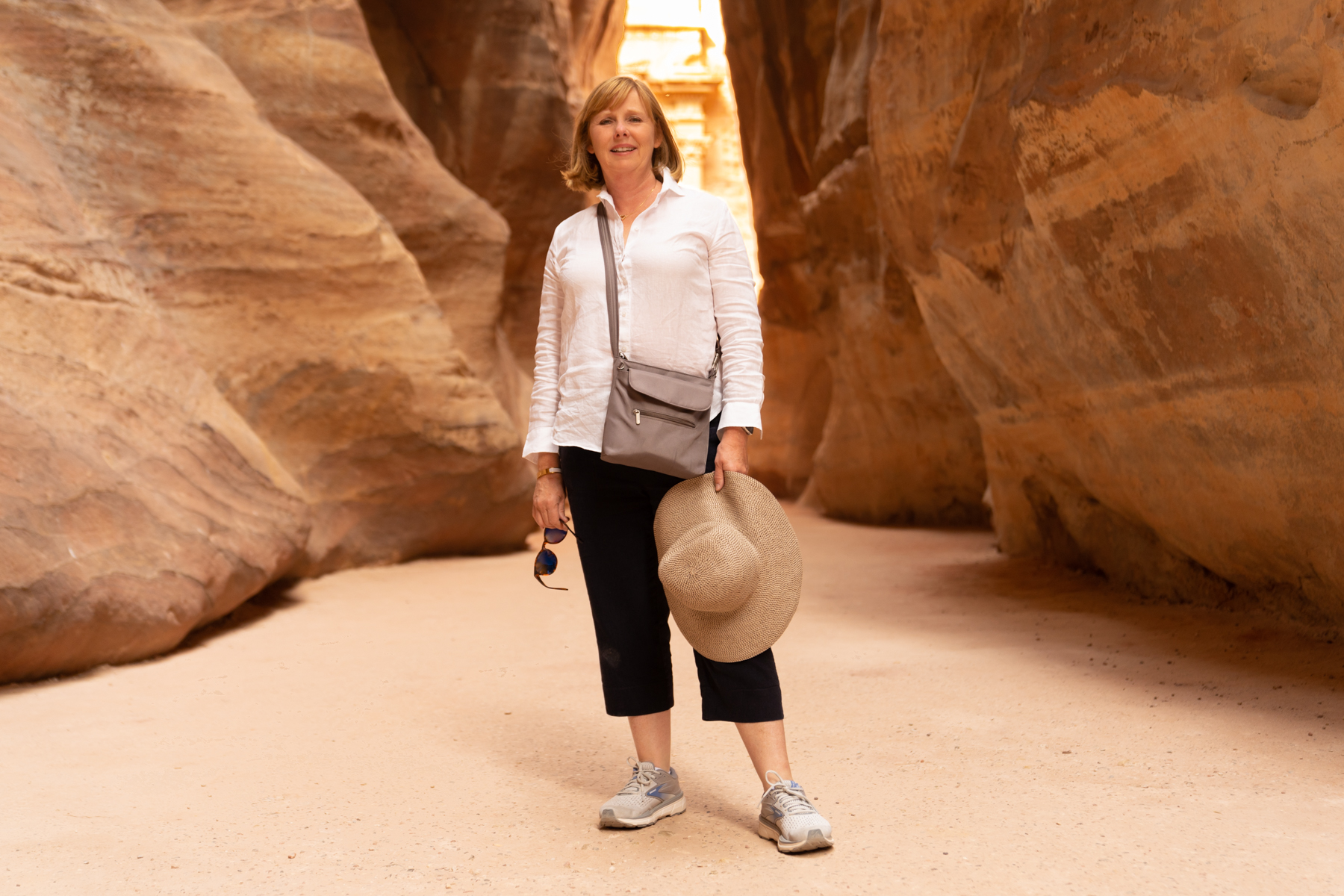
Access to the ancient city is via a descending trail through a gorge called the Siq (which means “shaft” in Arabic). The Siq is a natural geological fault split apart by tectonic forces. The area is prone to flooding and the walls of the Siq have been smoothed by water over millions of years. The walls that enclose the Siq are up to 60 storeys high, creating a very impressive entrance to the city.
The trail through the Siq is part uneven Roman cobblestones and part recent paving. Flooding has accelerated the damage to the cobblestones; hence the addition of new paving. Due to the steepness of the path, and the height of the walls, rain here can be very dangerous. In 1963, 21 French tourists and two guides drowned during a flash flood in the passage and, only a few months ago, 1,700 people had to be evacuated due to severe rain creating a torrent down the Siq. The rangers now close access to the old city if there is likely to be rain. Fortunately for us, today was a clear day.
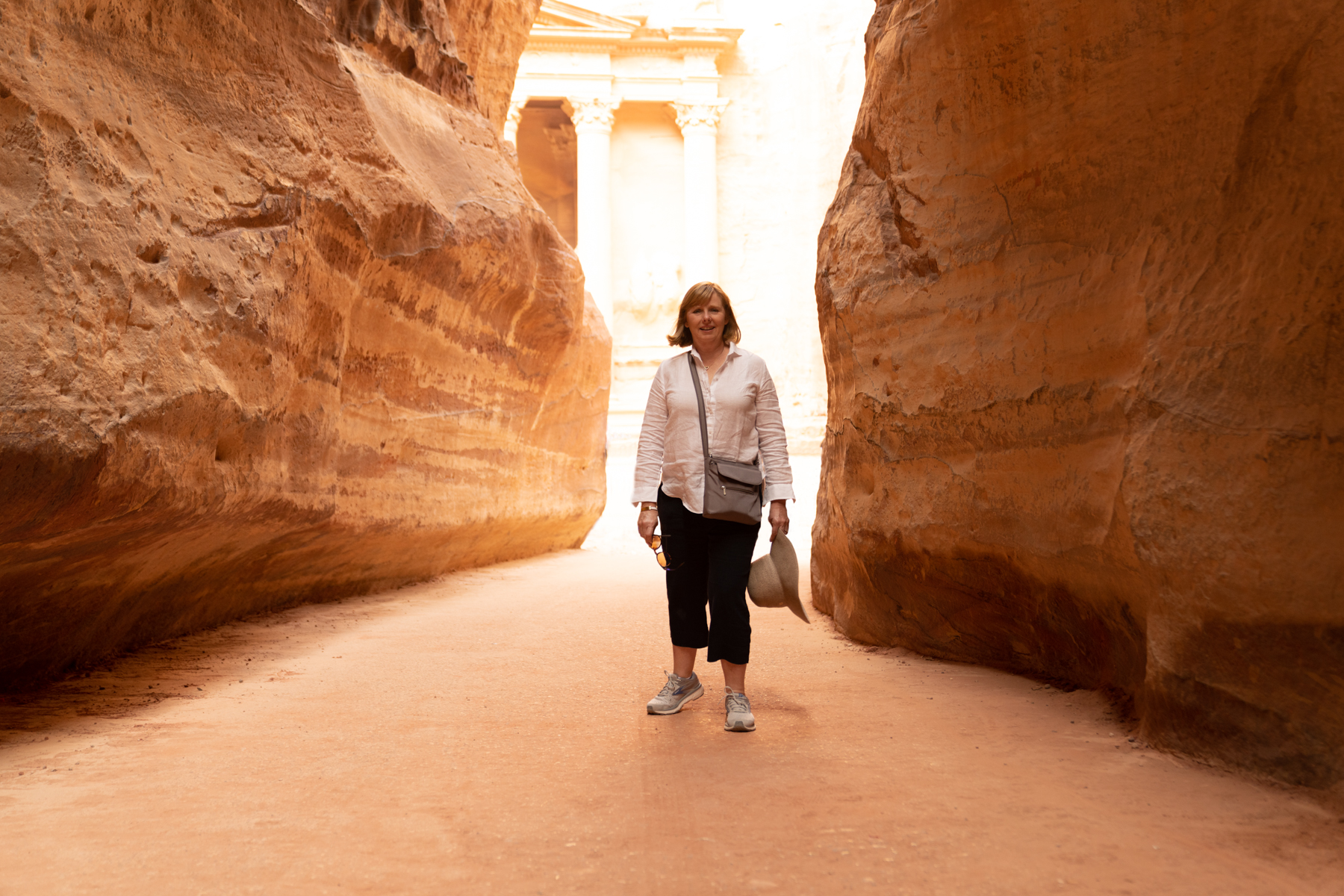
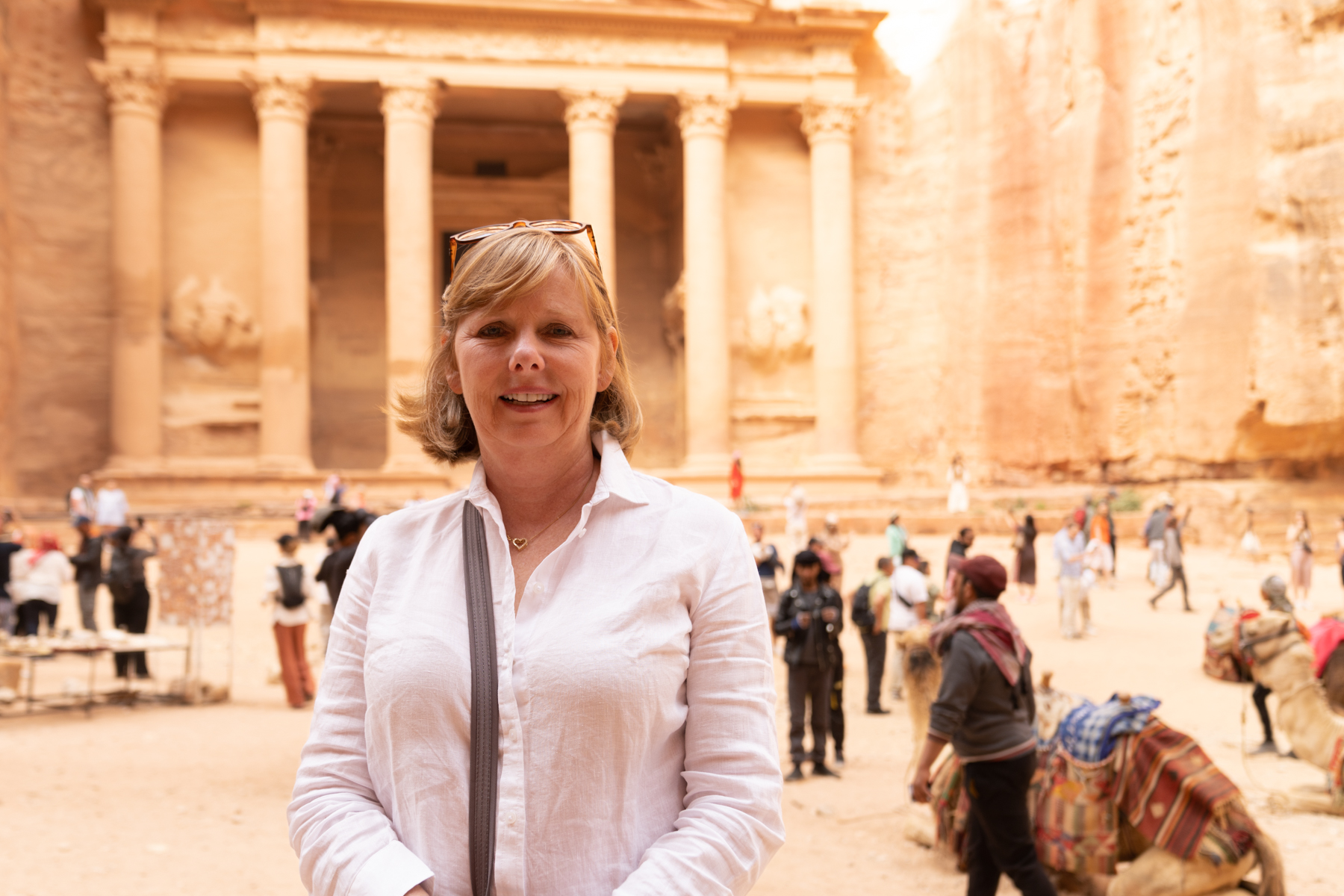
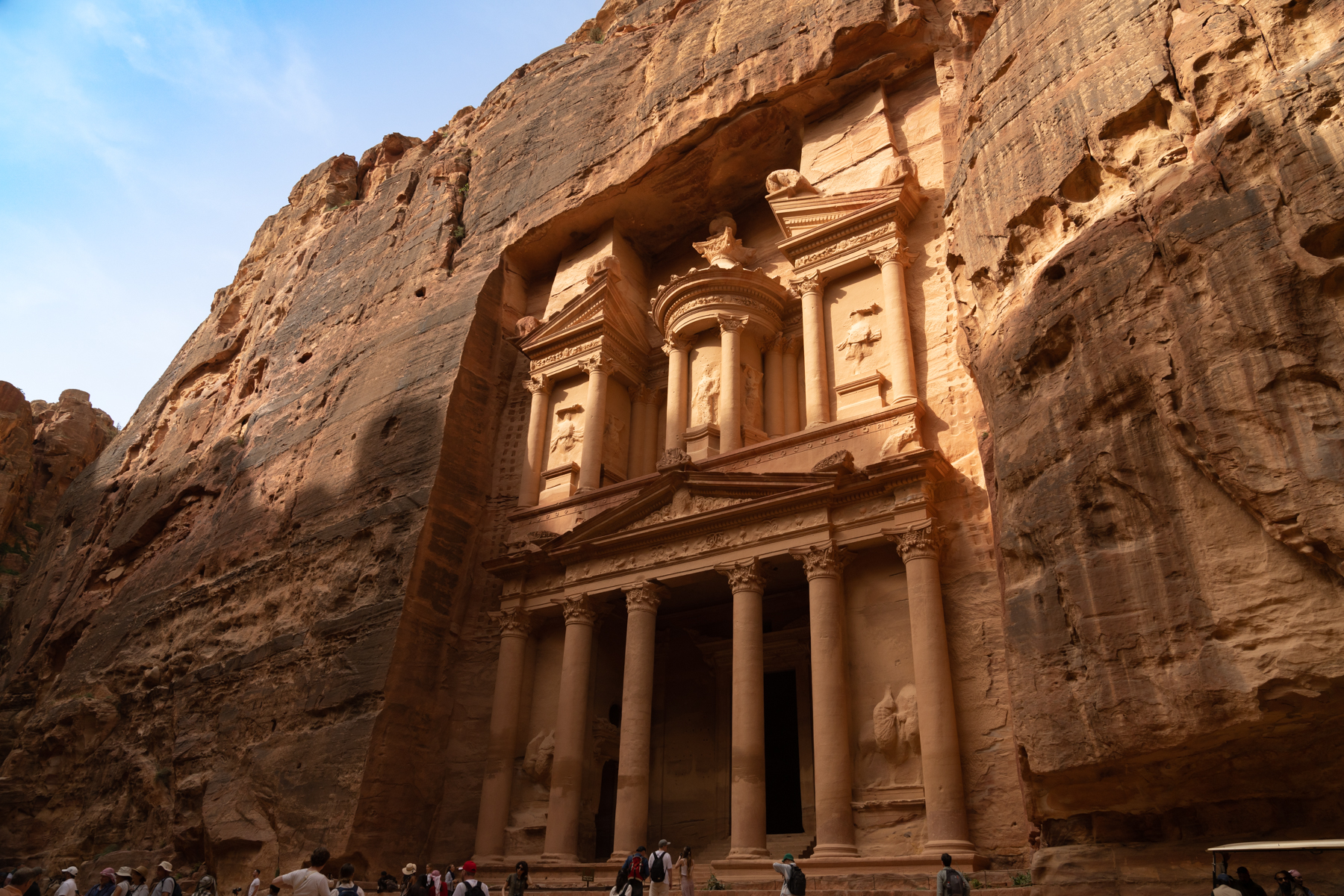
At the end of the 45-minute walk down the Siq, the reward is the awe-inspiring sight of Al-Khazneh (the treasury) which, unsurprisingly, is the most photographed site in Petra. Like most of the other buildings in the ancient city, this structure was carved out of a sandstone rock face. Archaeologists believe that the building was a mausoleum but the Bedouins named it Al-Khazneh (Arabic for “the treasury”) in the belief that it contained treasures. Seeing this 4,000-year-old structure leaves no doubt as to why Petra is both a UNESCO World Heritage site and one of the Seven Wonders of the World.
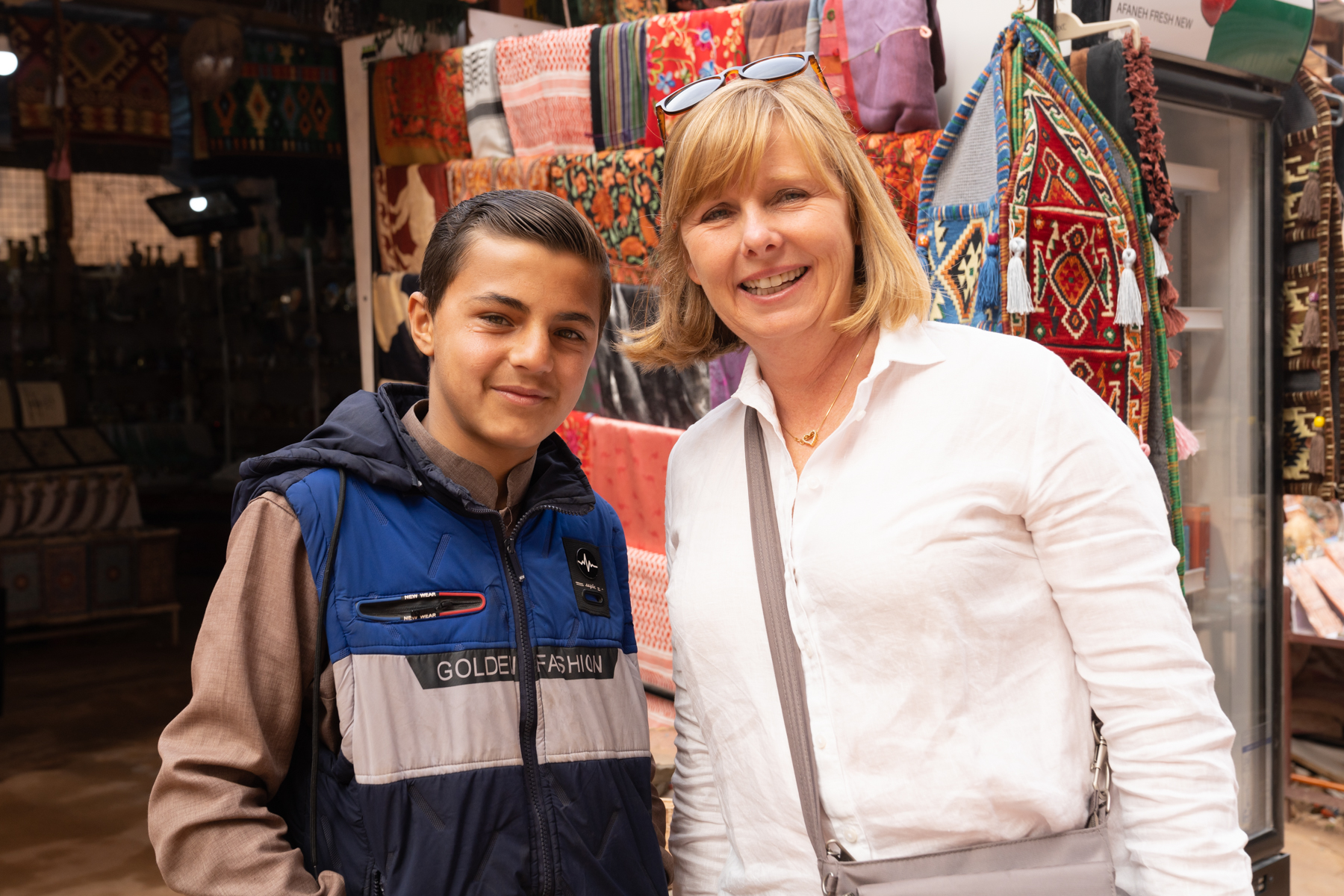
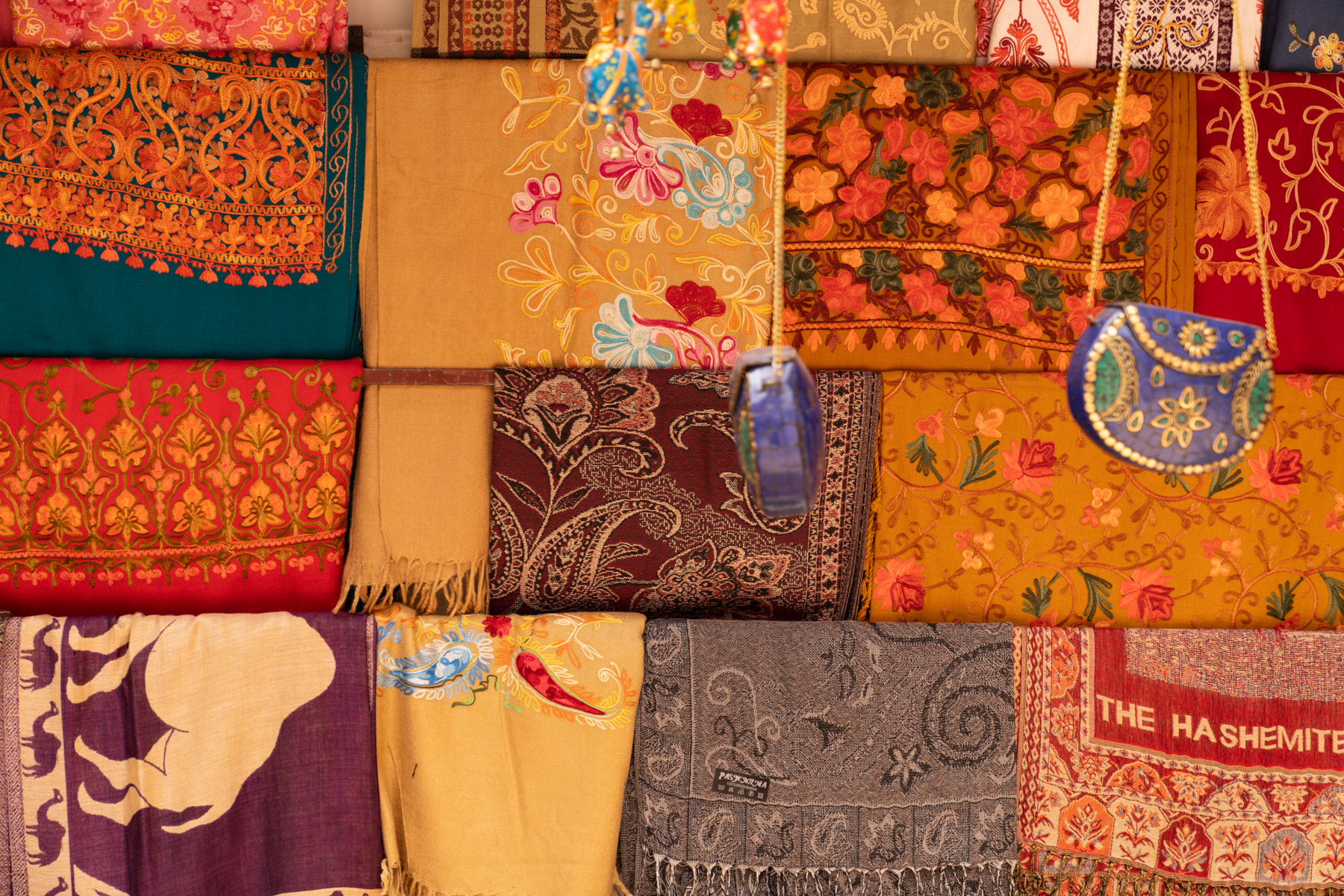
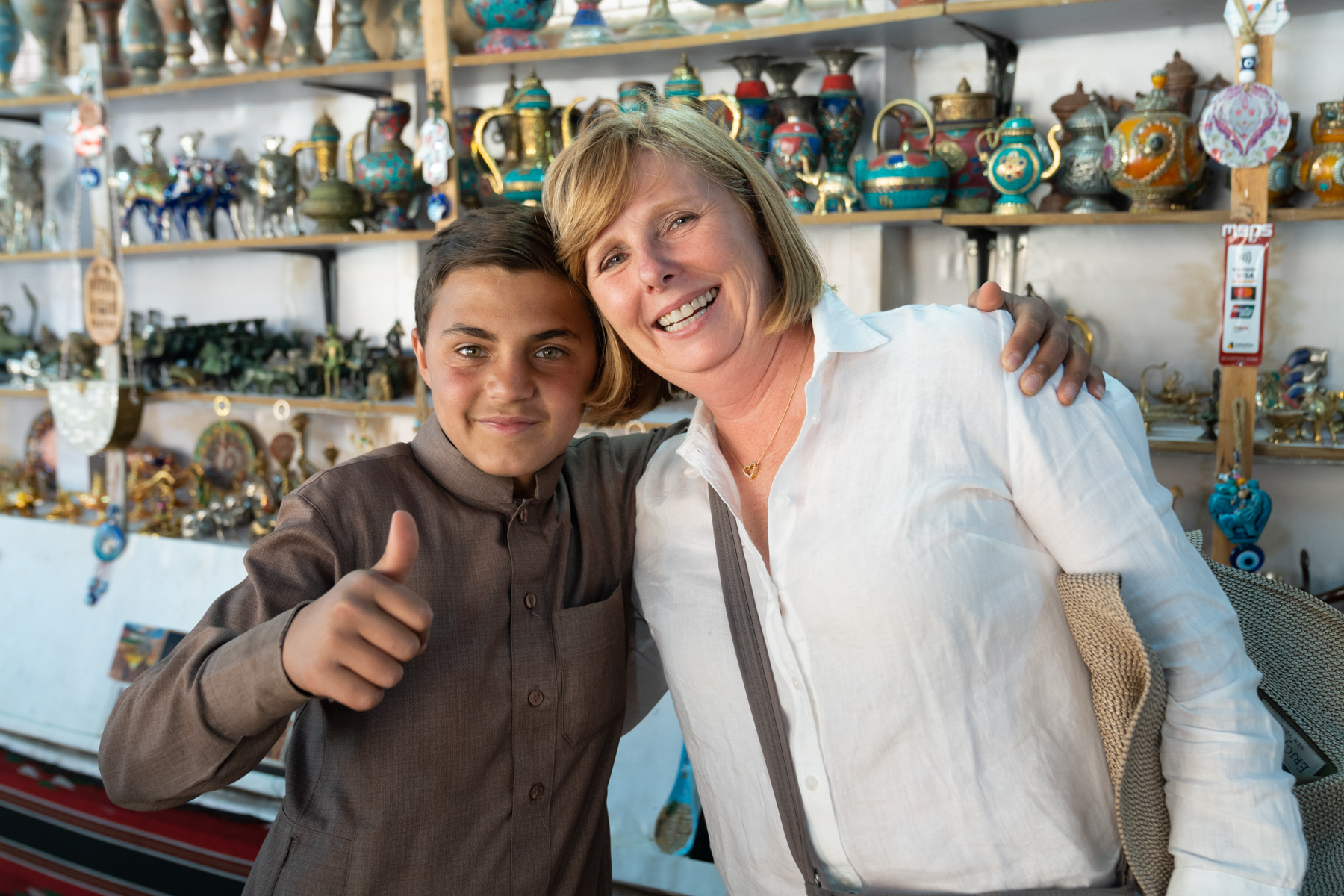
After gazing at Al-Khazneh for a while, just trying to process the magnitude of it, we set off to explore more of the city (which is enormous!). The roads in the city are lined with Bedouin vendors, selling all manner of antiquities (technically not allowed) through to the usual array of souvenirs. We stopped at one stall to make a purchase (in part to support the local community) and were almost certainly out-negotiated by a charming, fast-talking, thirteen-year-old boy named Muhammad.
We walked past most of the vendors but were introduced by Daoud to one who specialises in ancient coins and artefacts. Due to the question of whether acquiring 2,000-year-old antiquities is legal or not, let’s just say that there is no photographic evidence of this interaction!
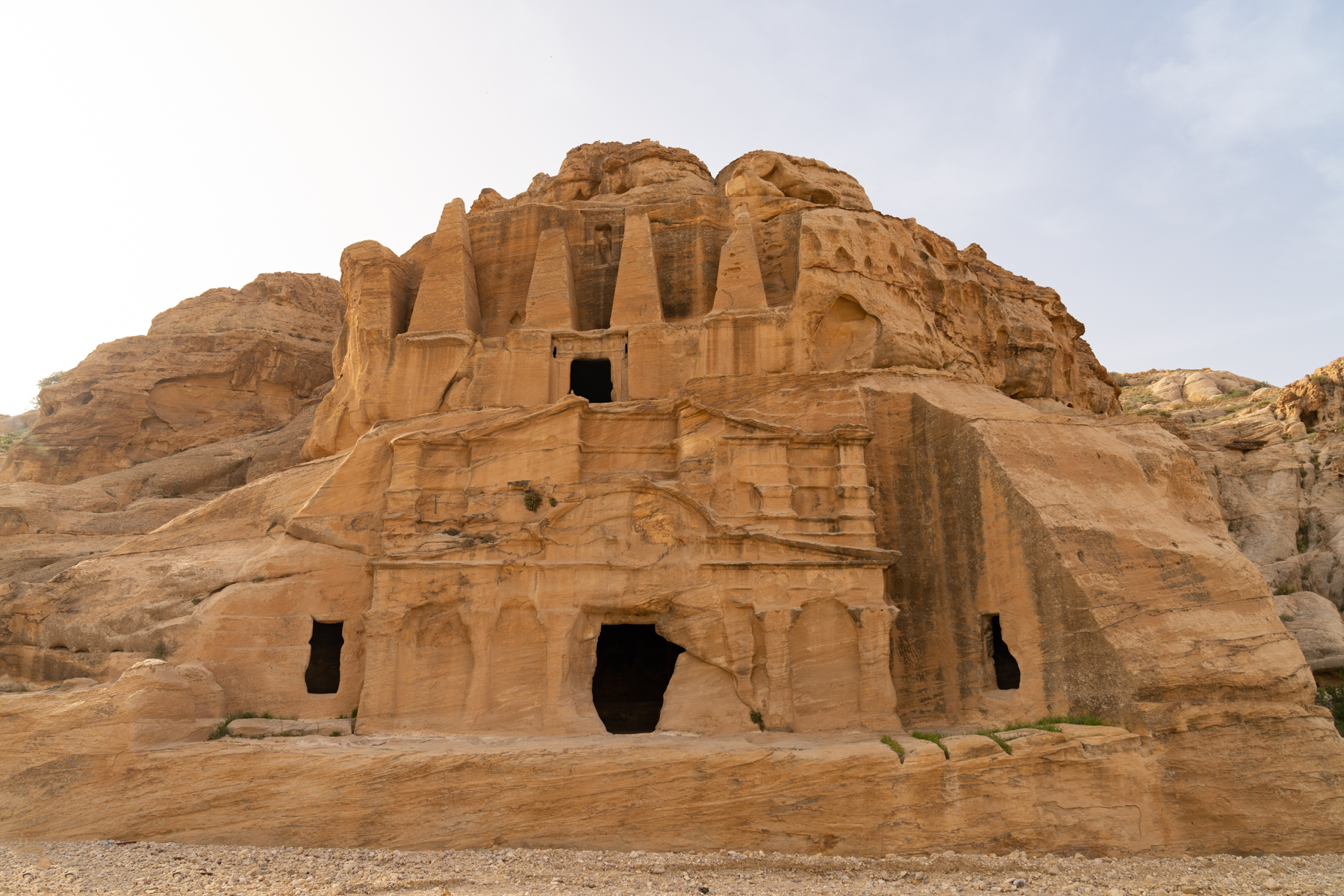
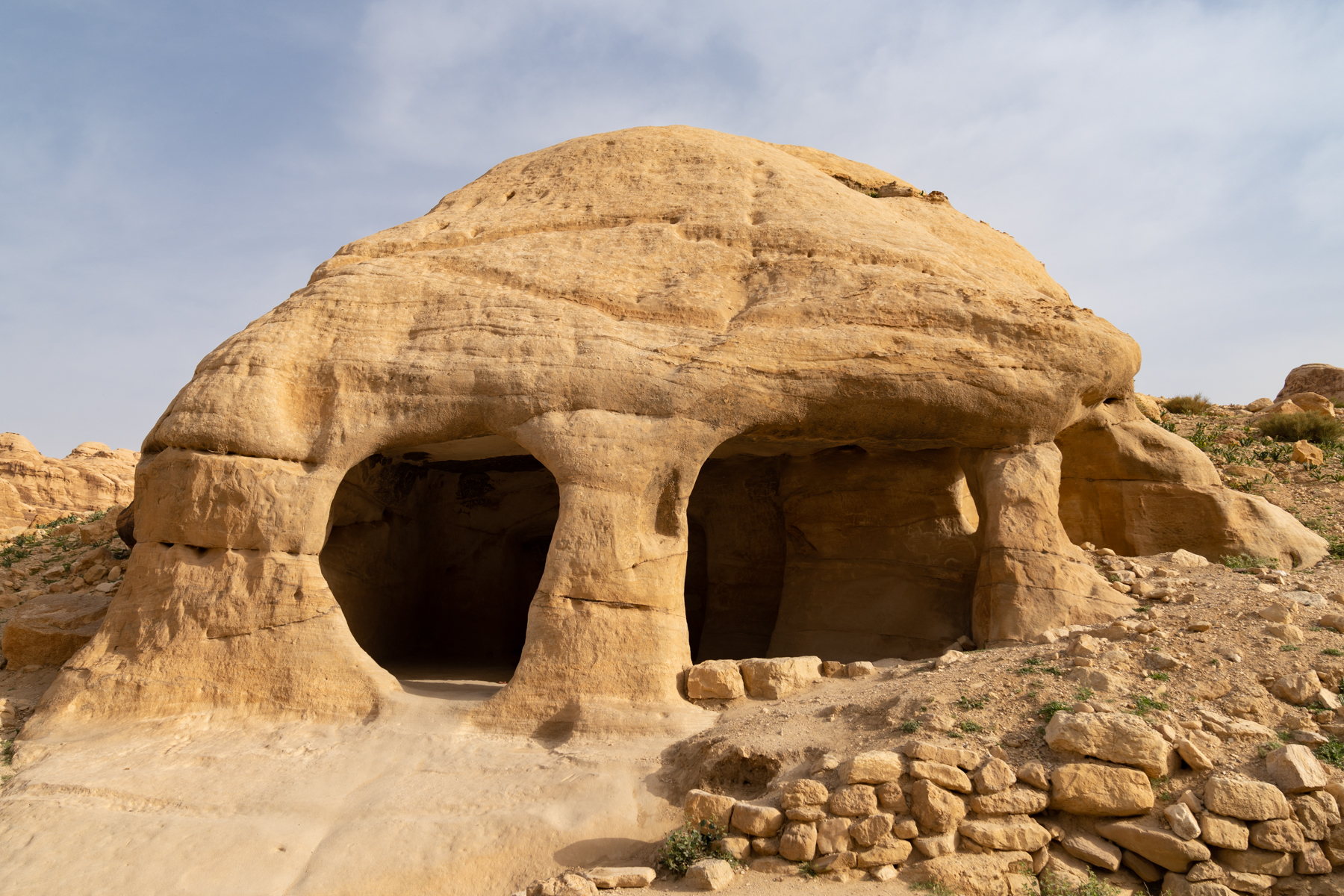
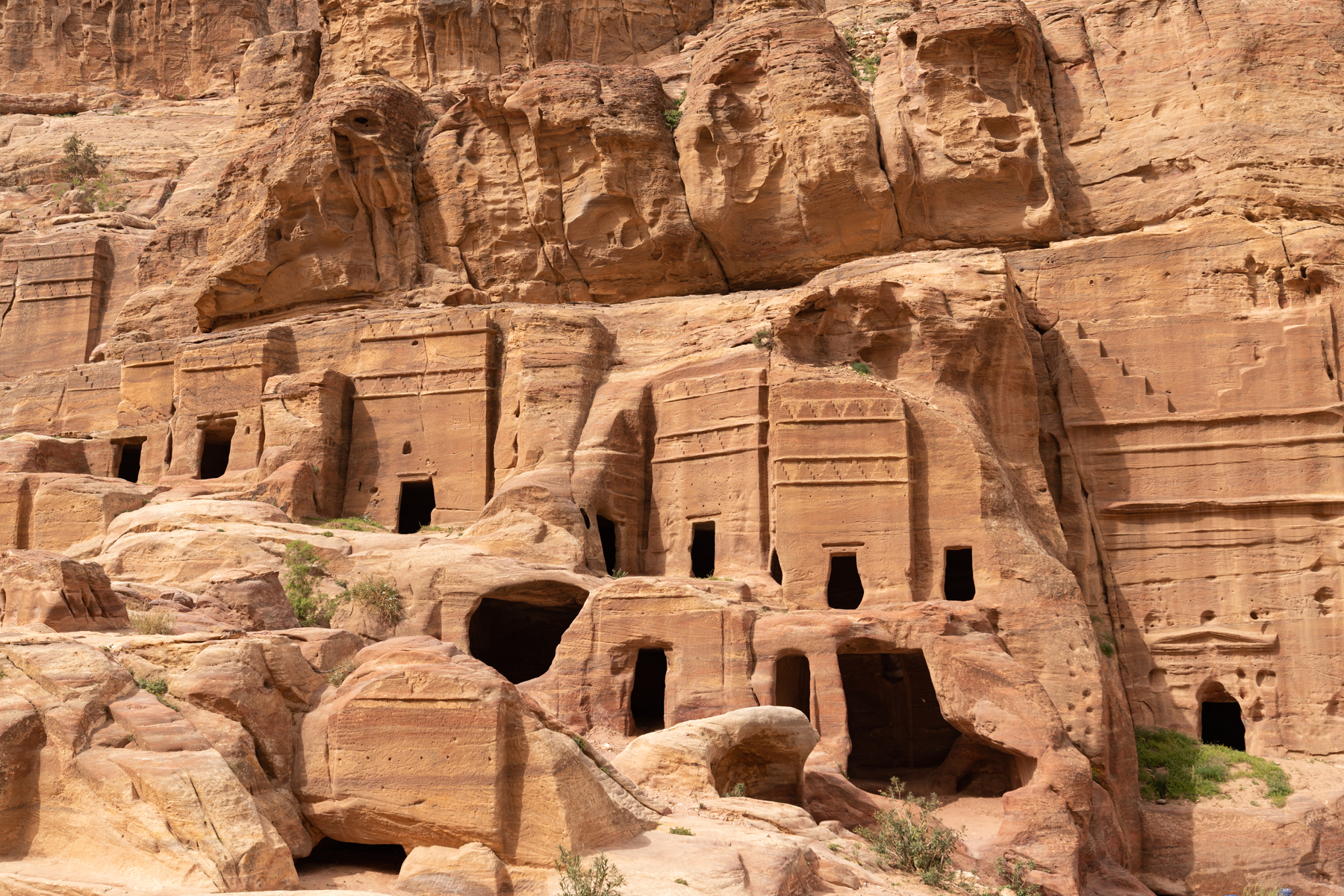
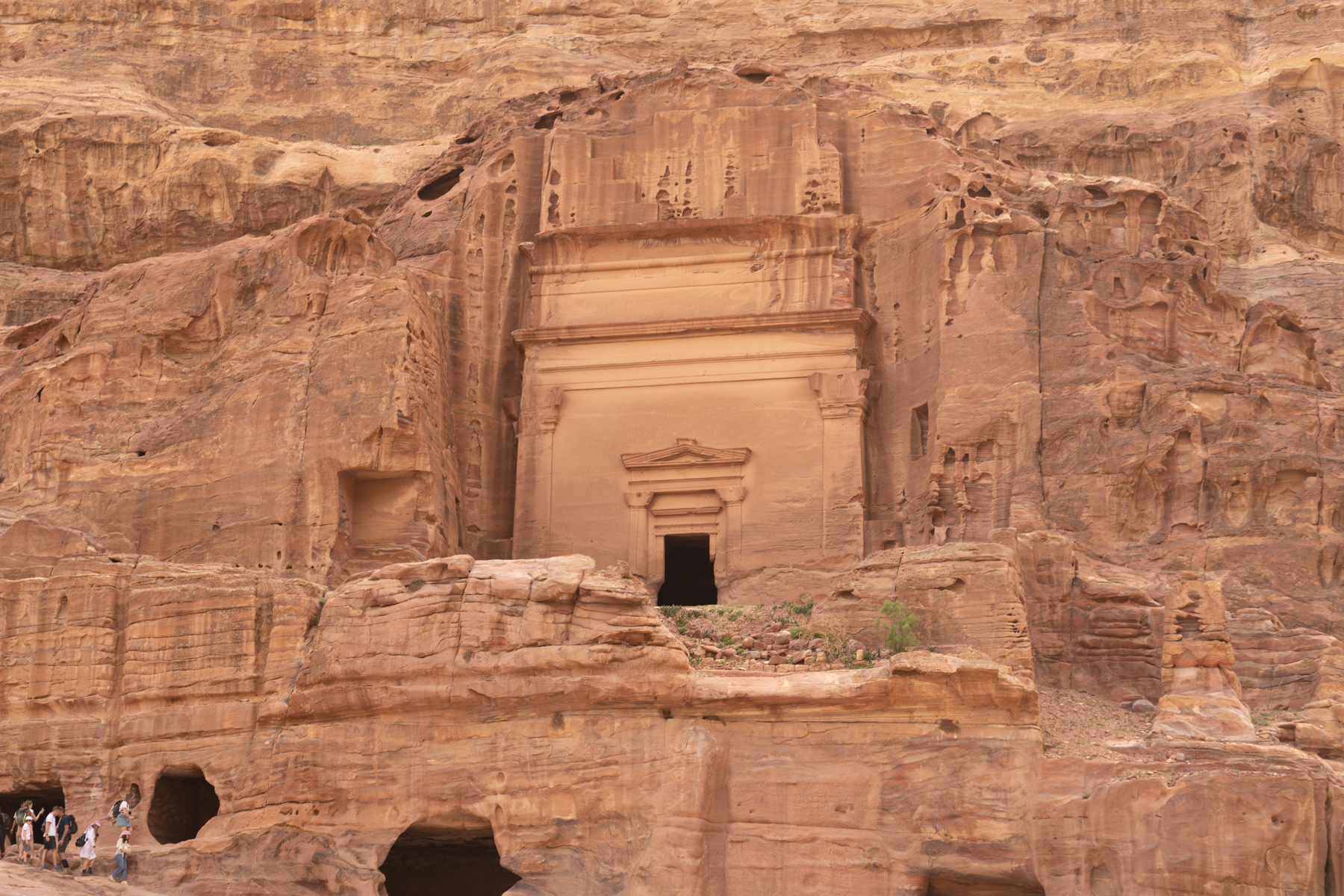
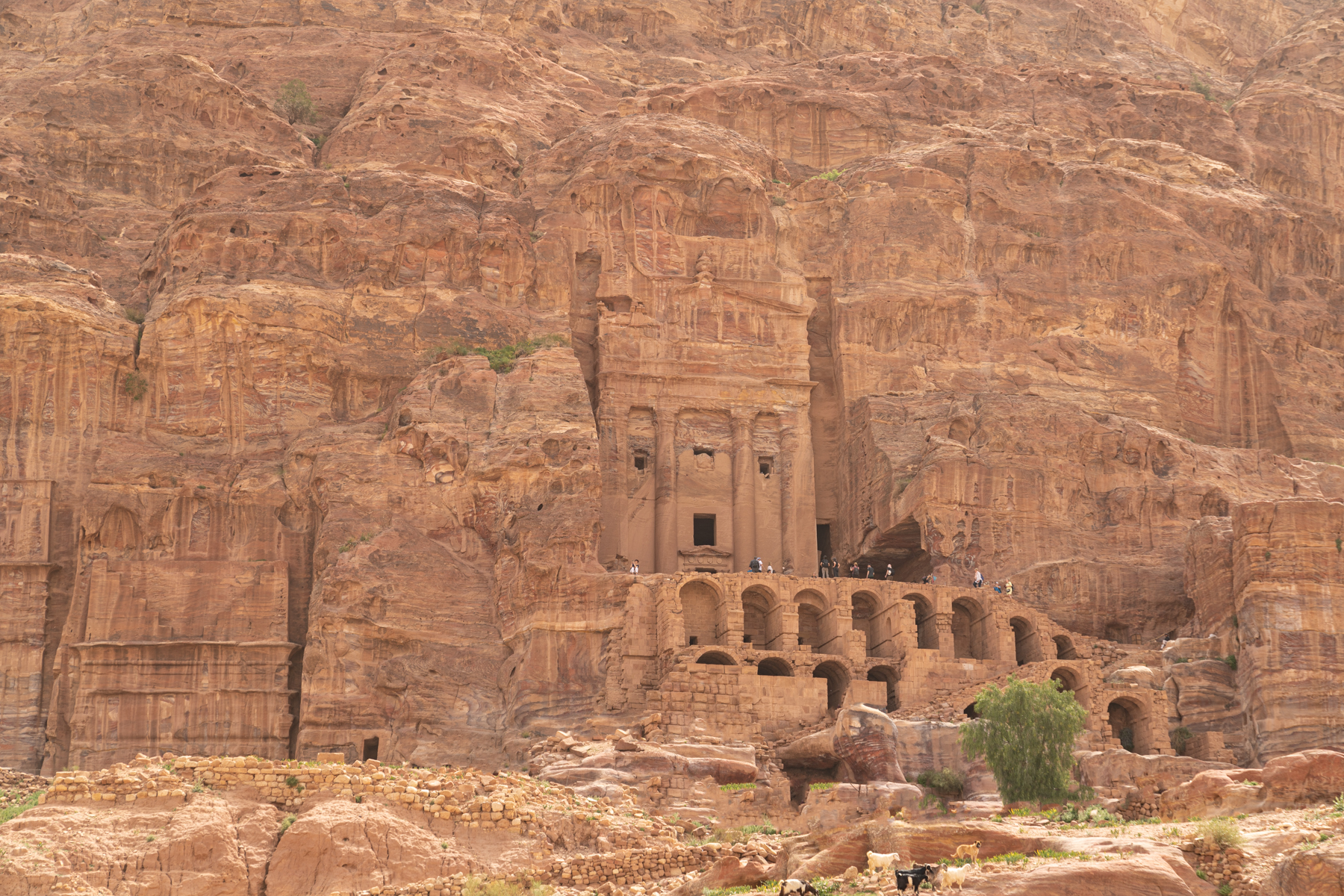
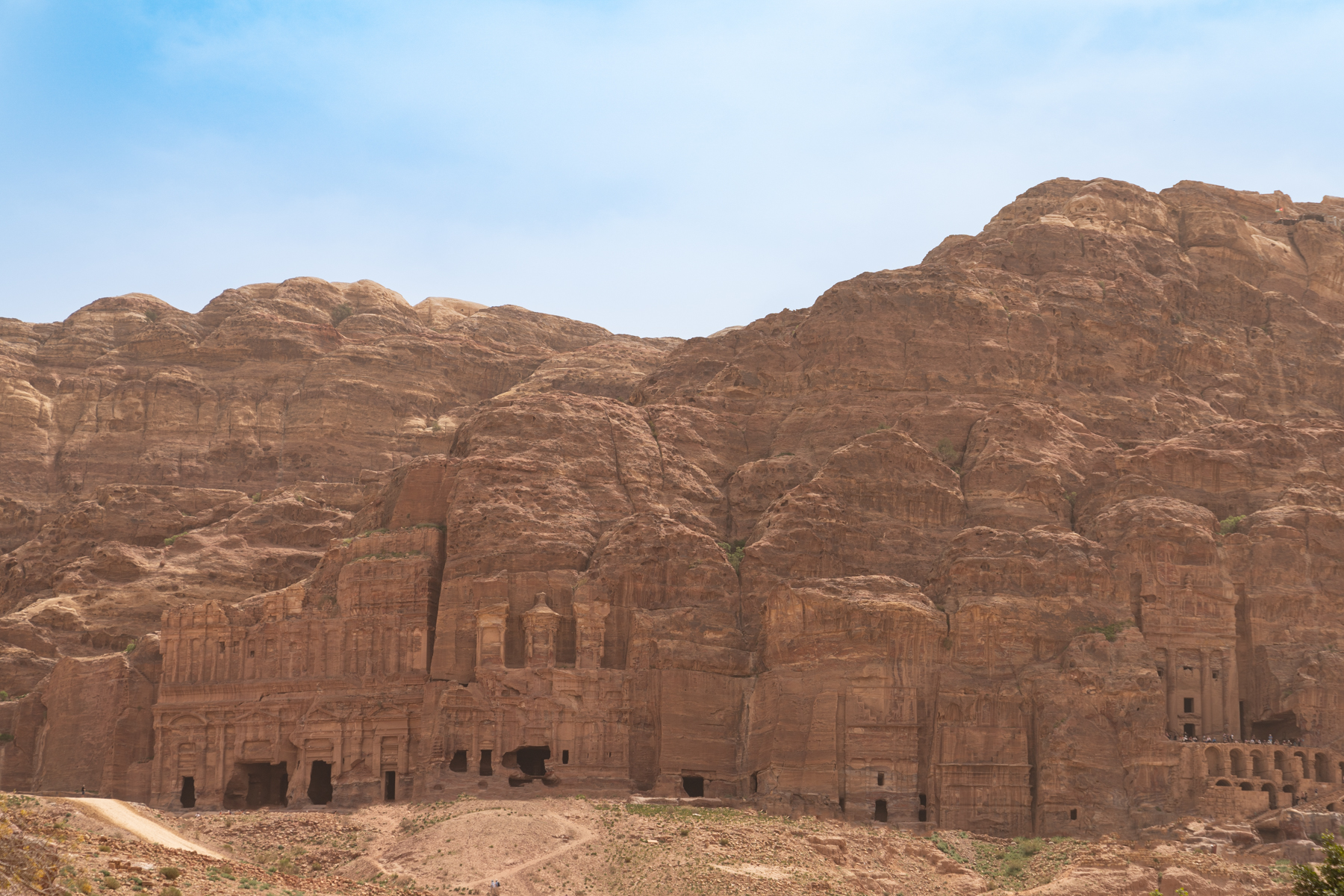
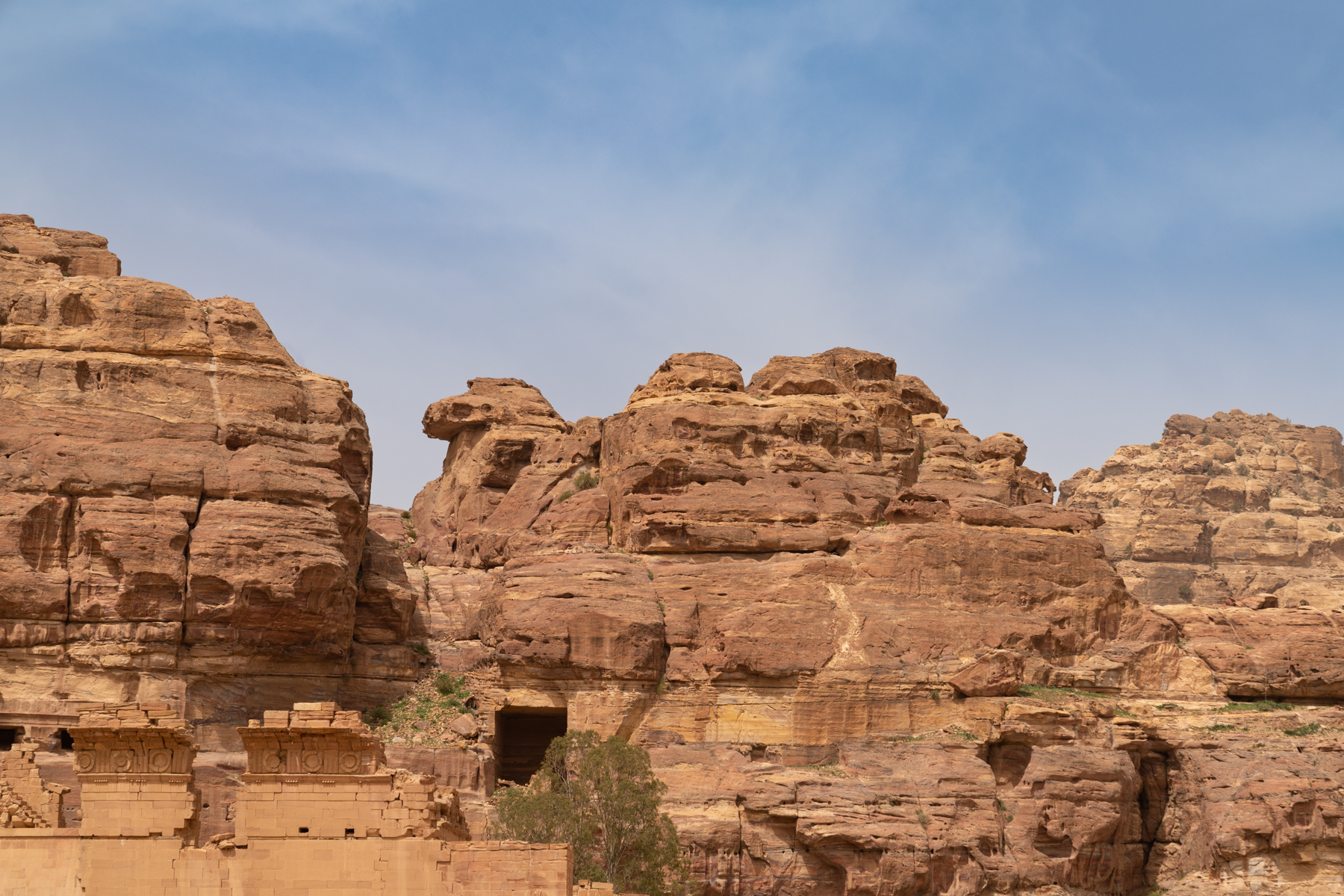
We continued our walk, heading to the steps to climb to Ad-Deir (the monastery). On the way, we marvelled at the amazing buildings cut into the sandstone.
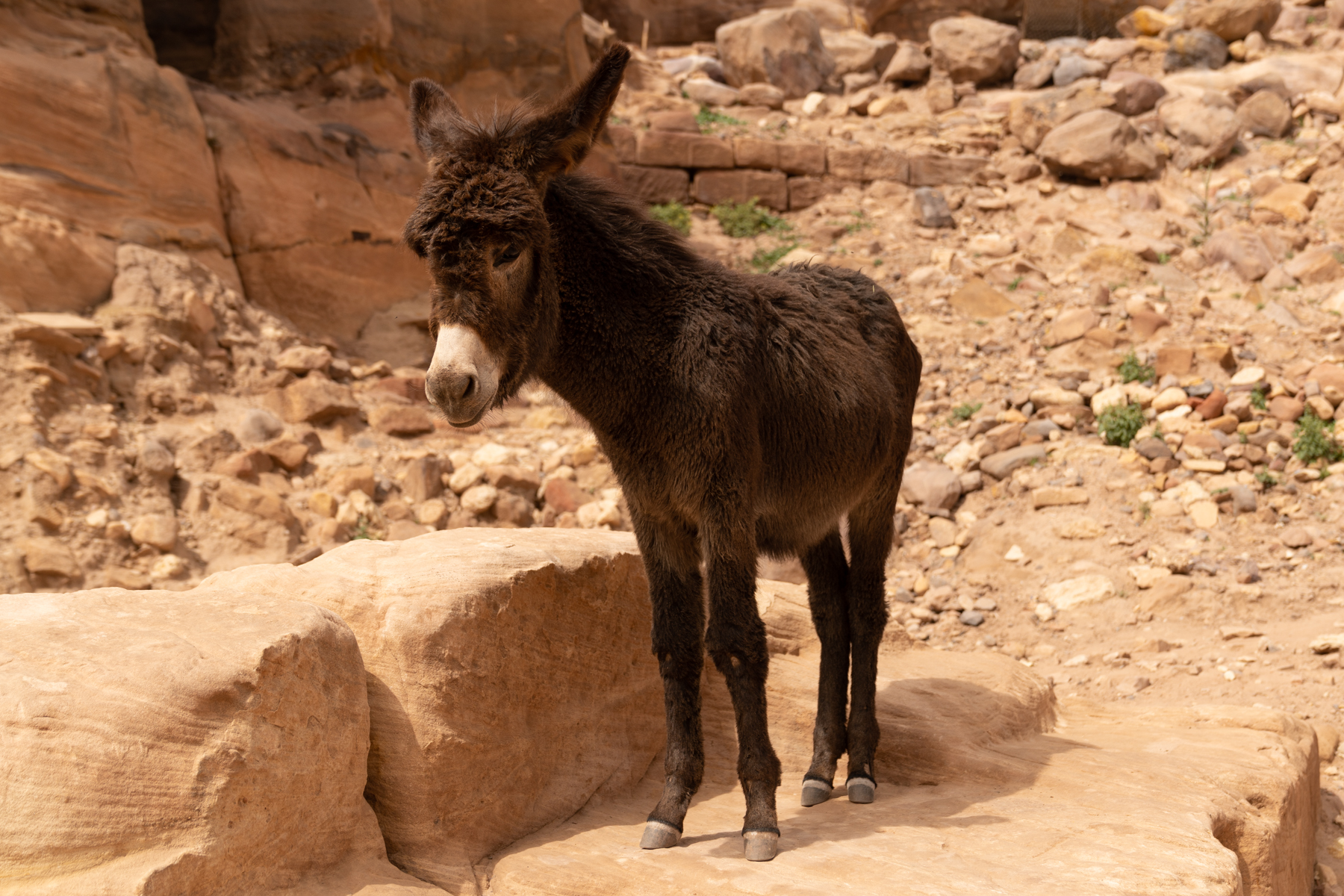
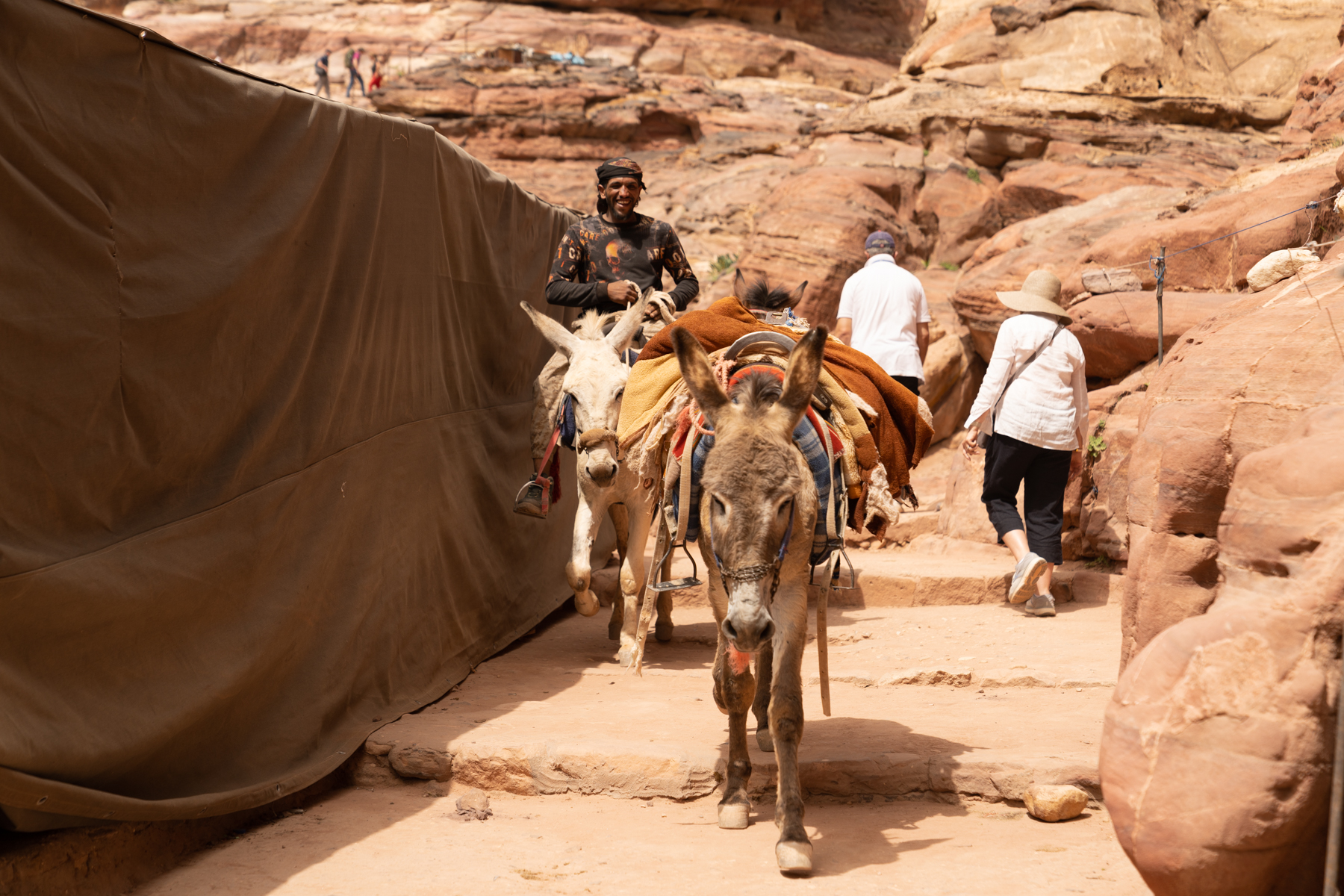
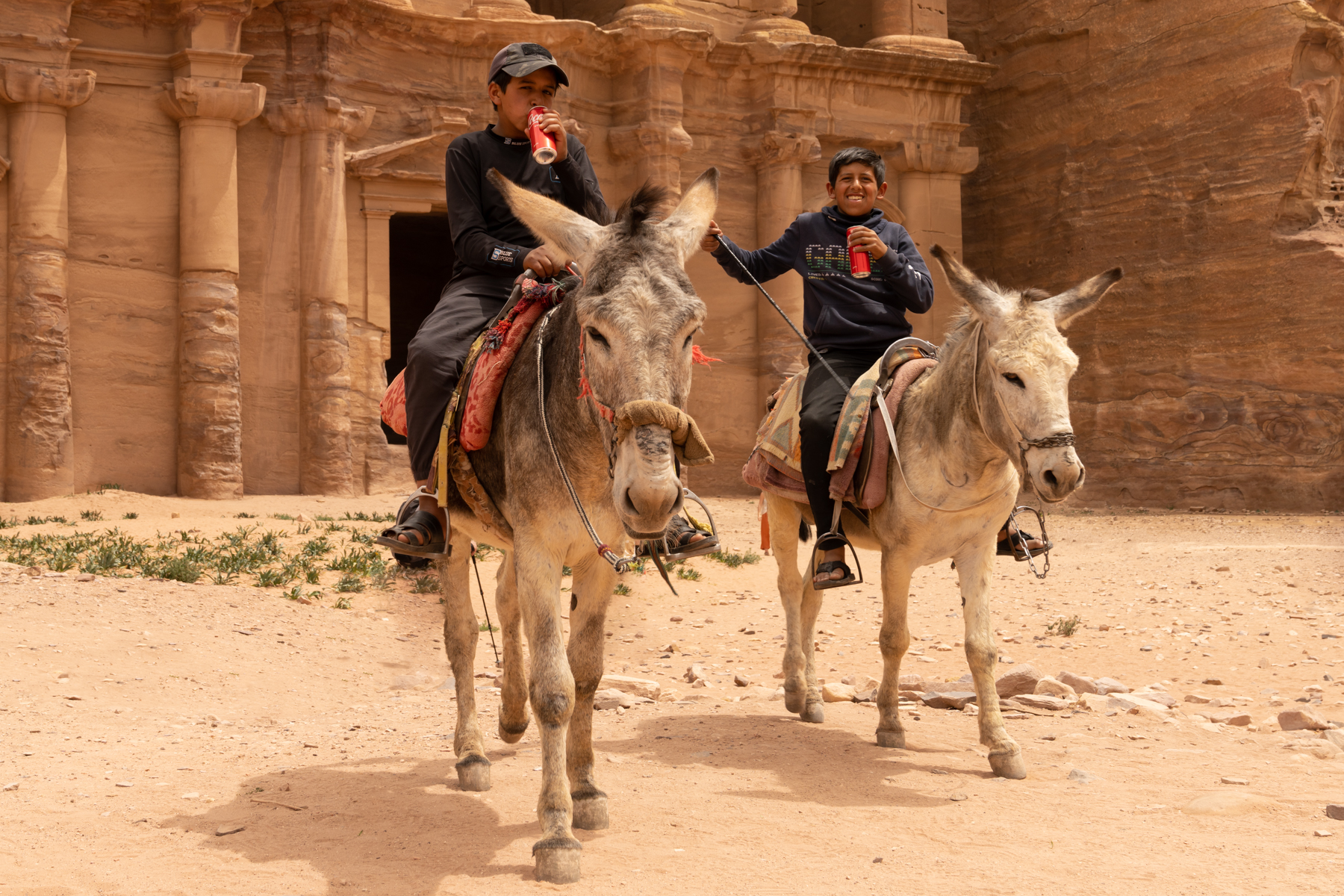
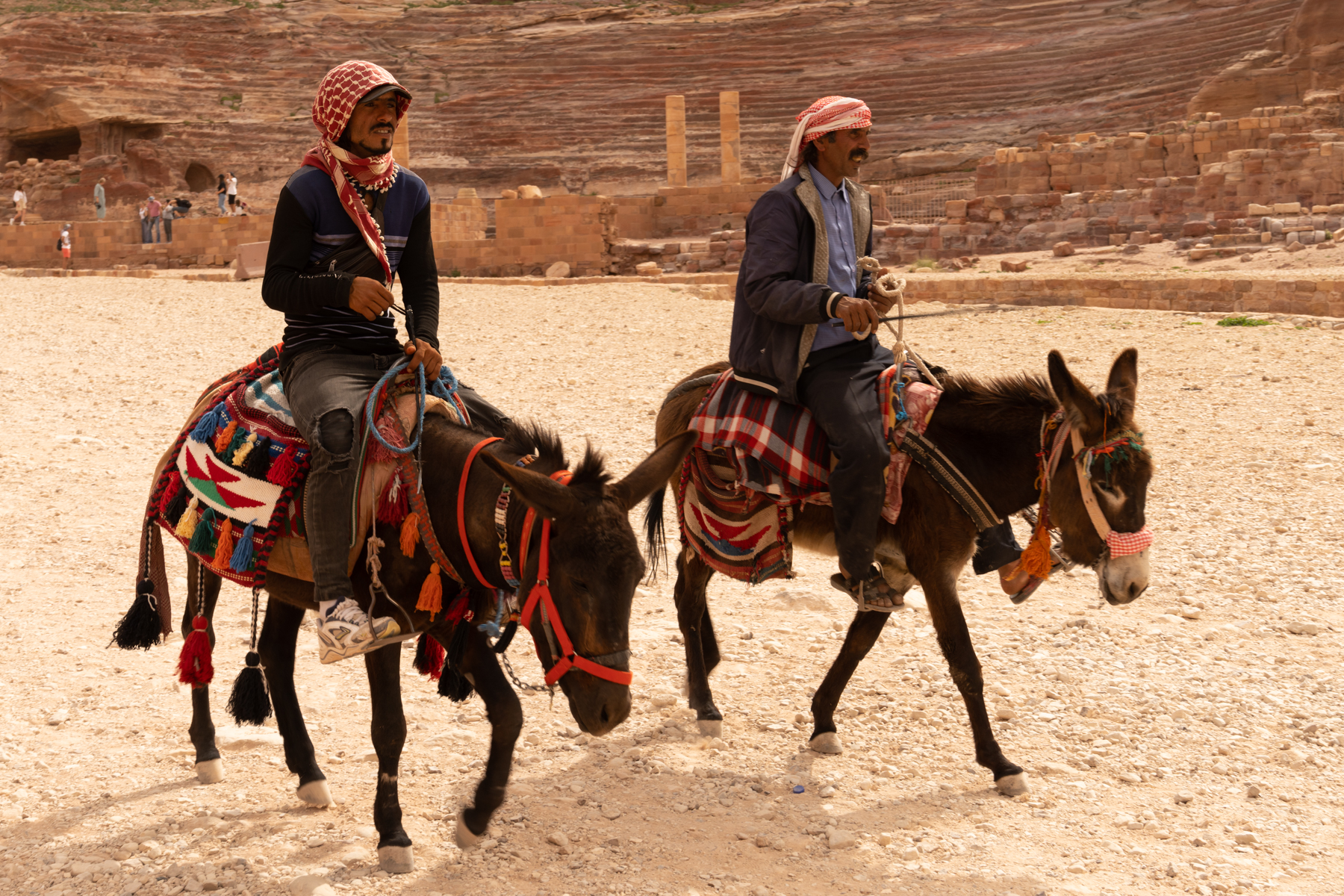
We also saw a lot of donkeys in Petra. They are a common form of transport for the locals and popular with tourists who can ride them around the old city.
Near the base of the steps to ascend to Ad-Deir is the Qasr Al-Bint Temple, constructed around 30 BC - 40 AD. It is the only substantial stone-built structure in Petra that has survived.
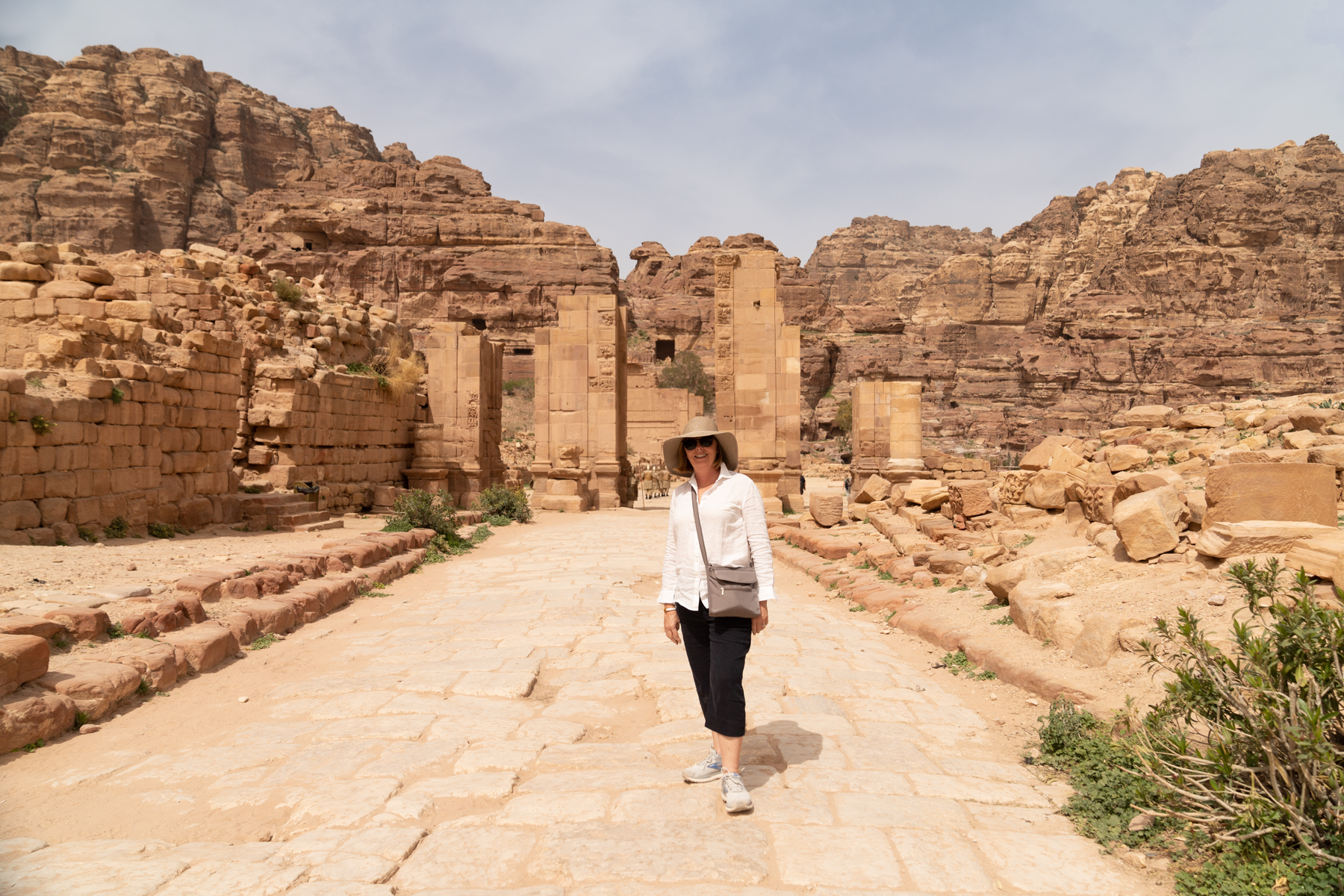
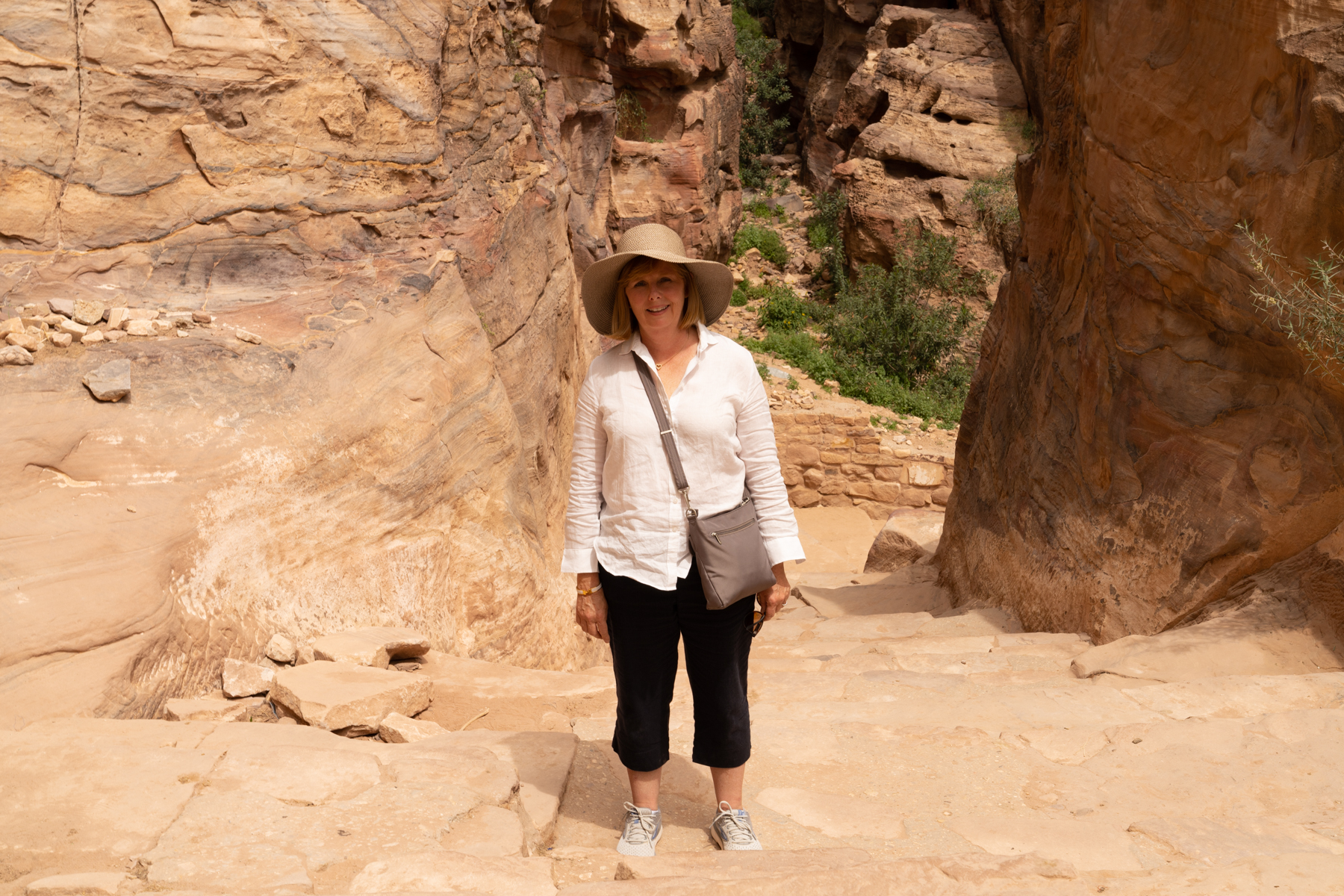
By the time we got to the up-hill path to Ad-Deir, we were already pretty hot. The sun was out and there’s very little shade in the city, so we knew the hour-long climb was likely to be taxing. Our guide, Daoud, told us that he had stopped counting his visits to Petra when he reached 800, but he said that he hadn’t made the climb to Ad-Deir in more than five years because so many people experience health-related issues on the way up, and guides have been asked to not take people up there unless they really want to go. Well, we didn’t come all the way to Petra to just hear about what was at the top! So, off we went.
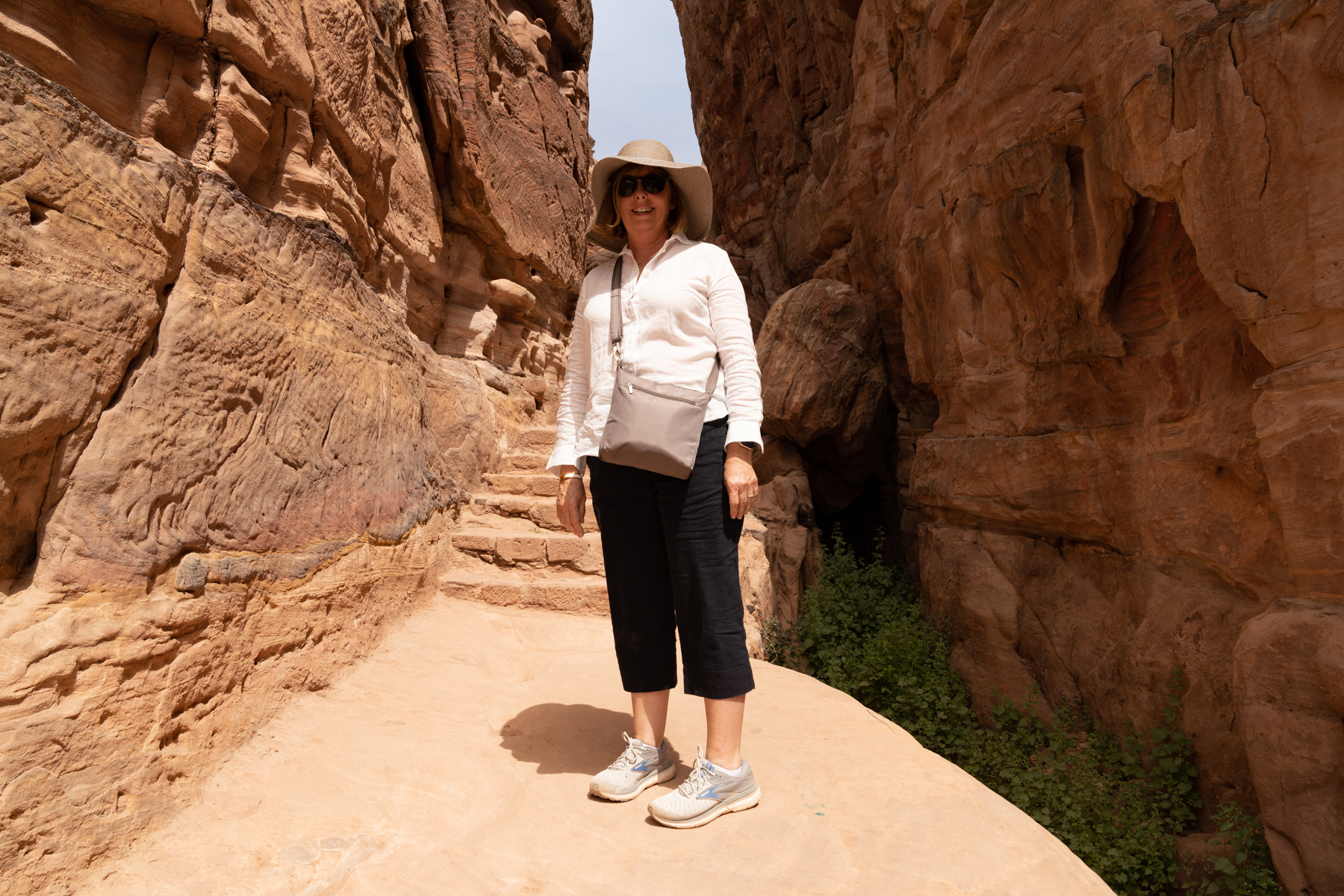
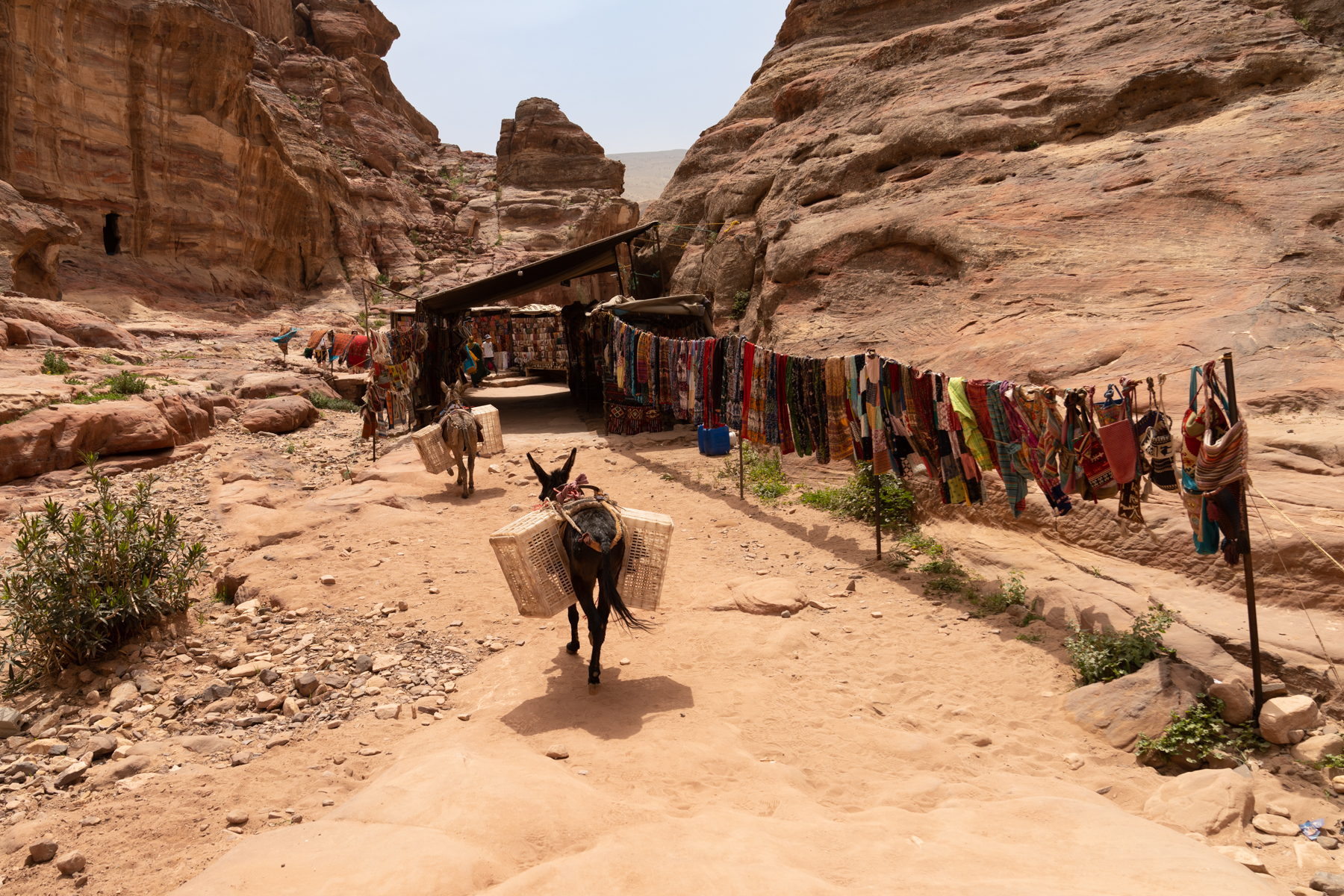
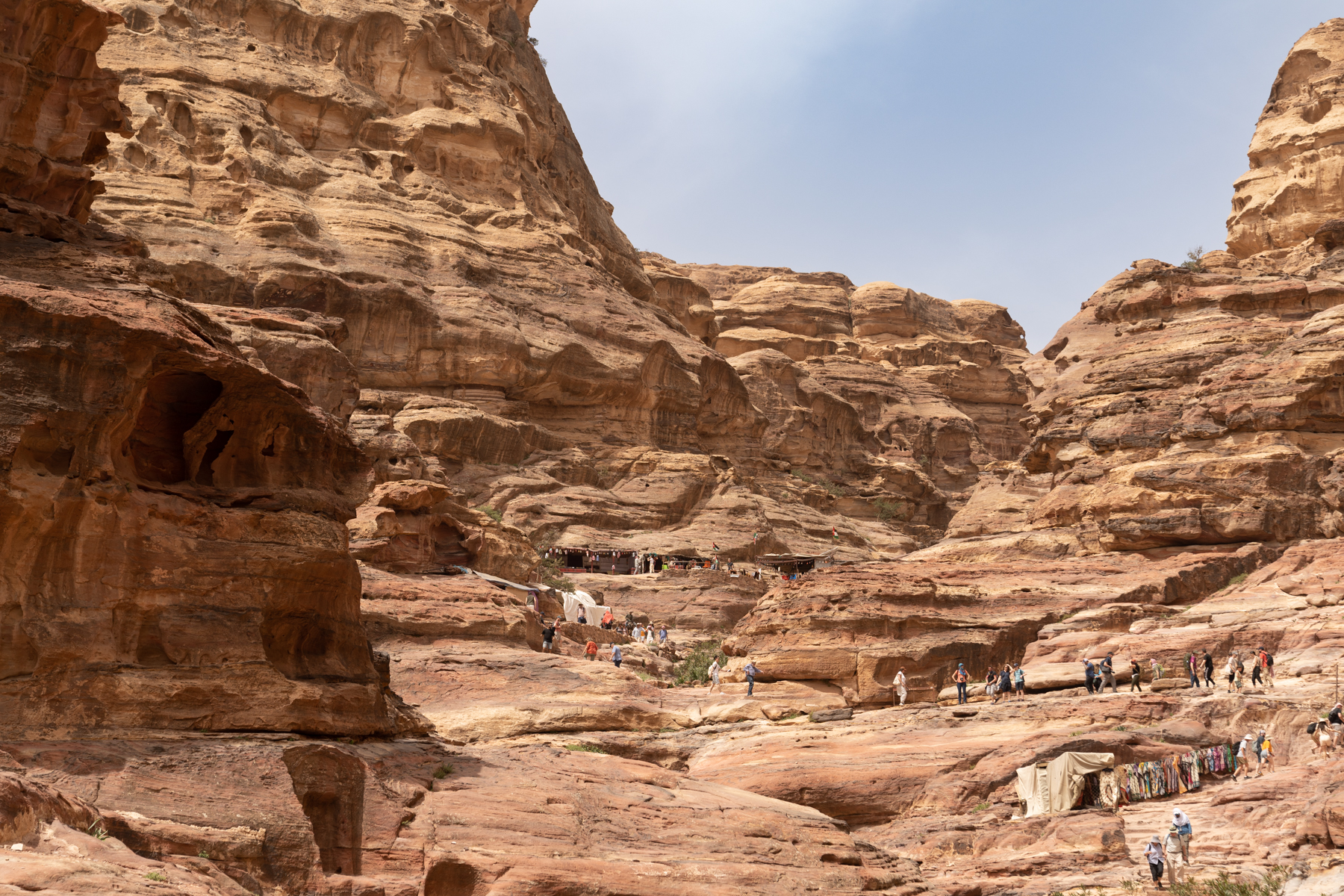
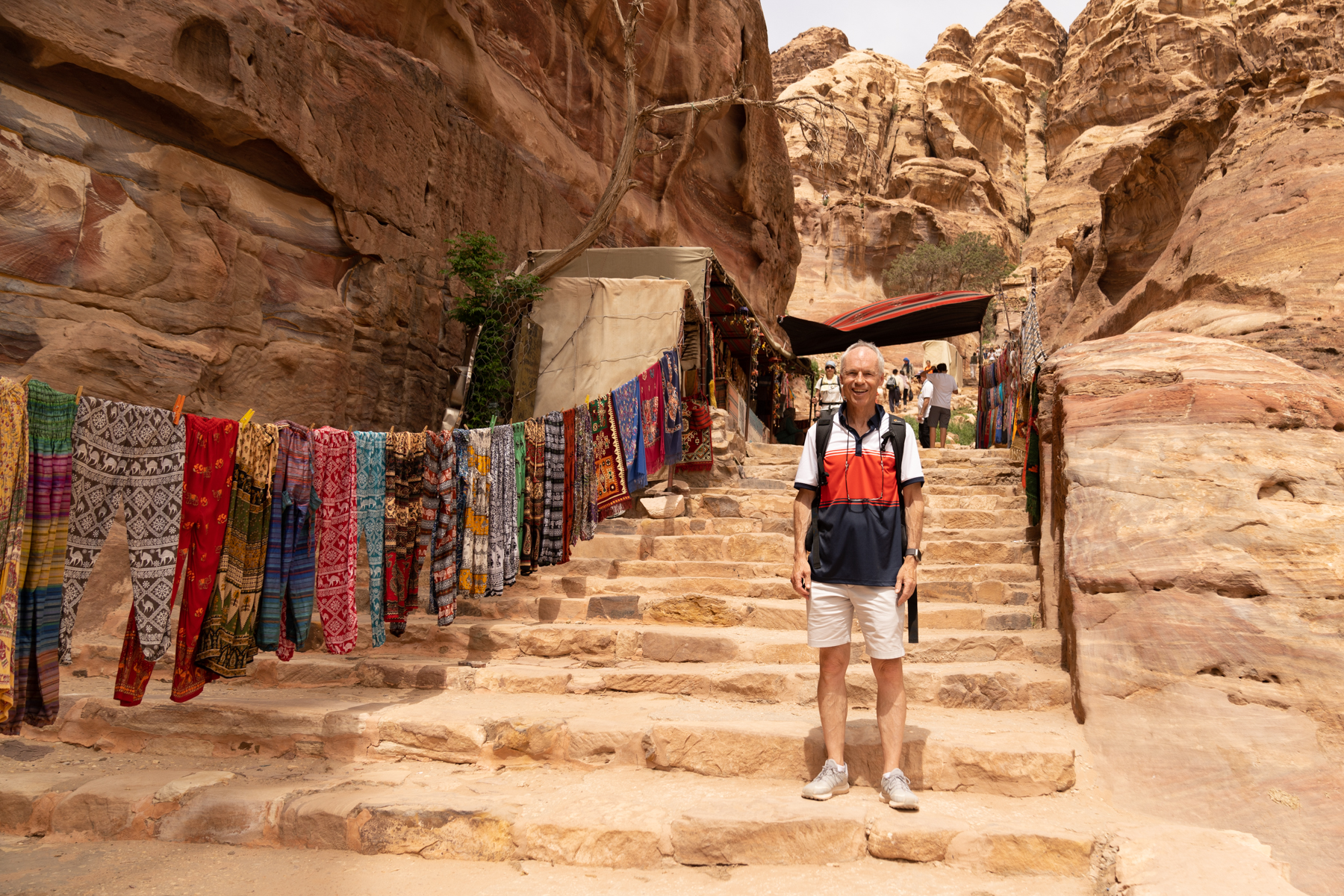
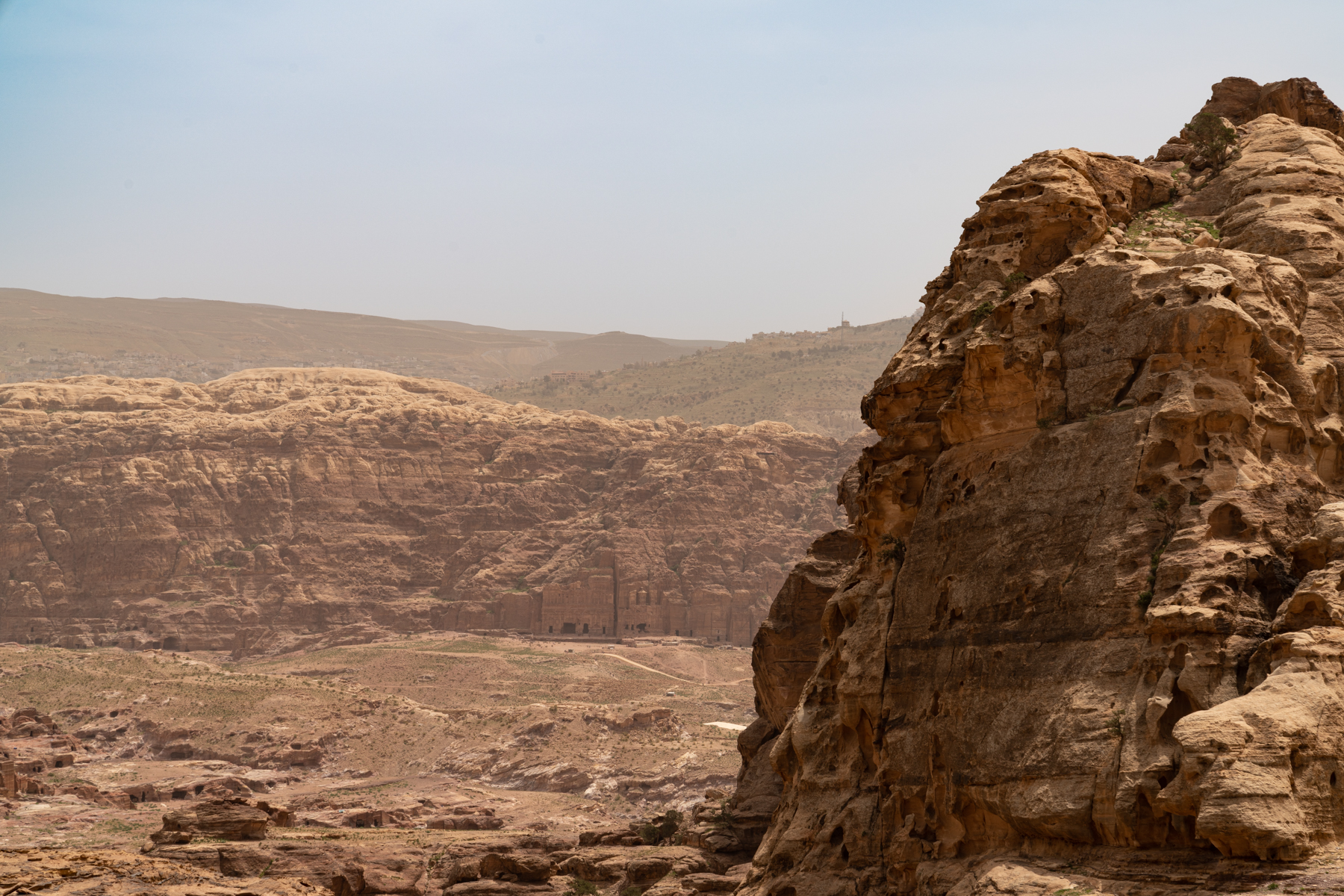
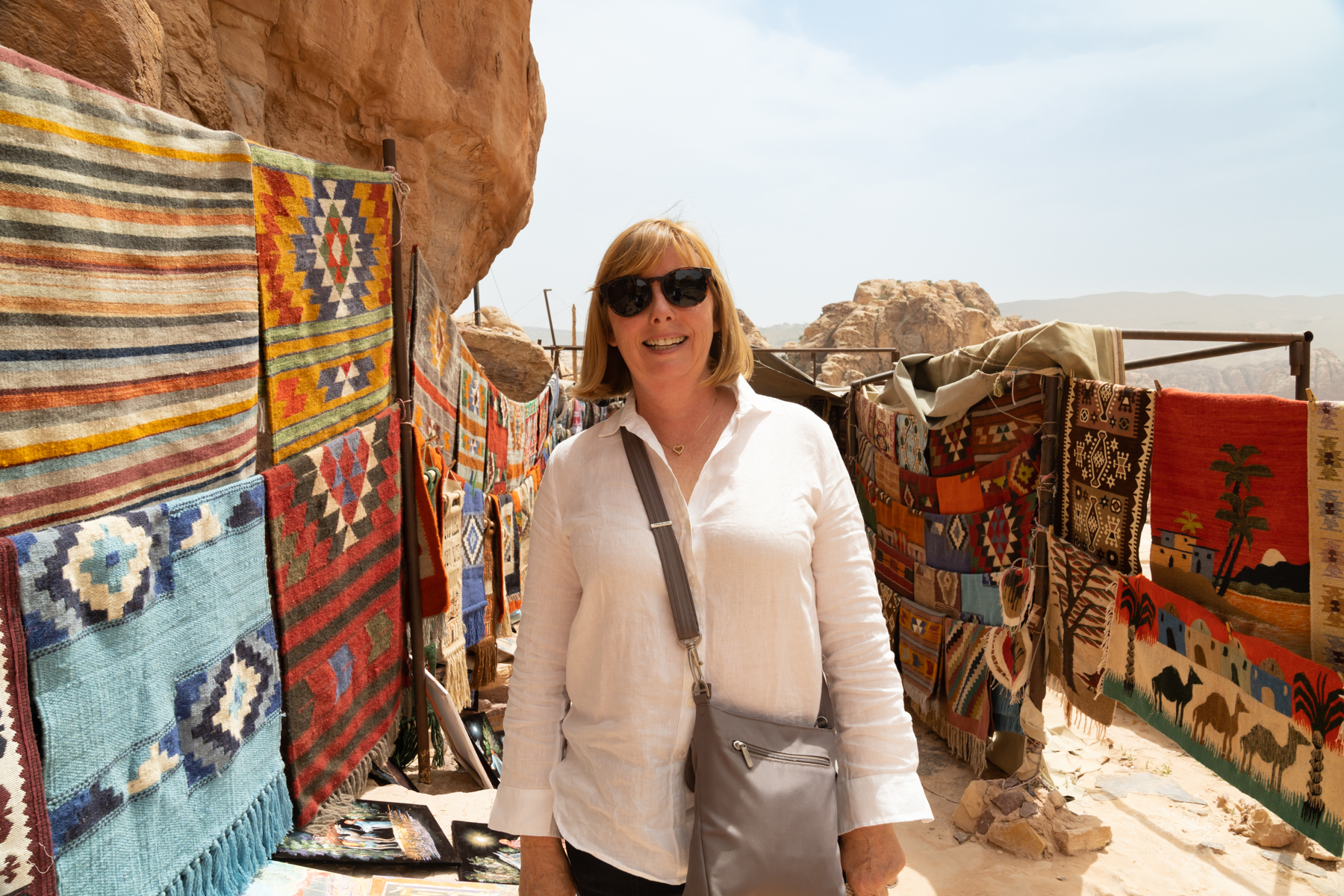
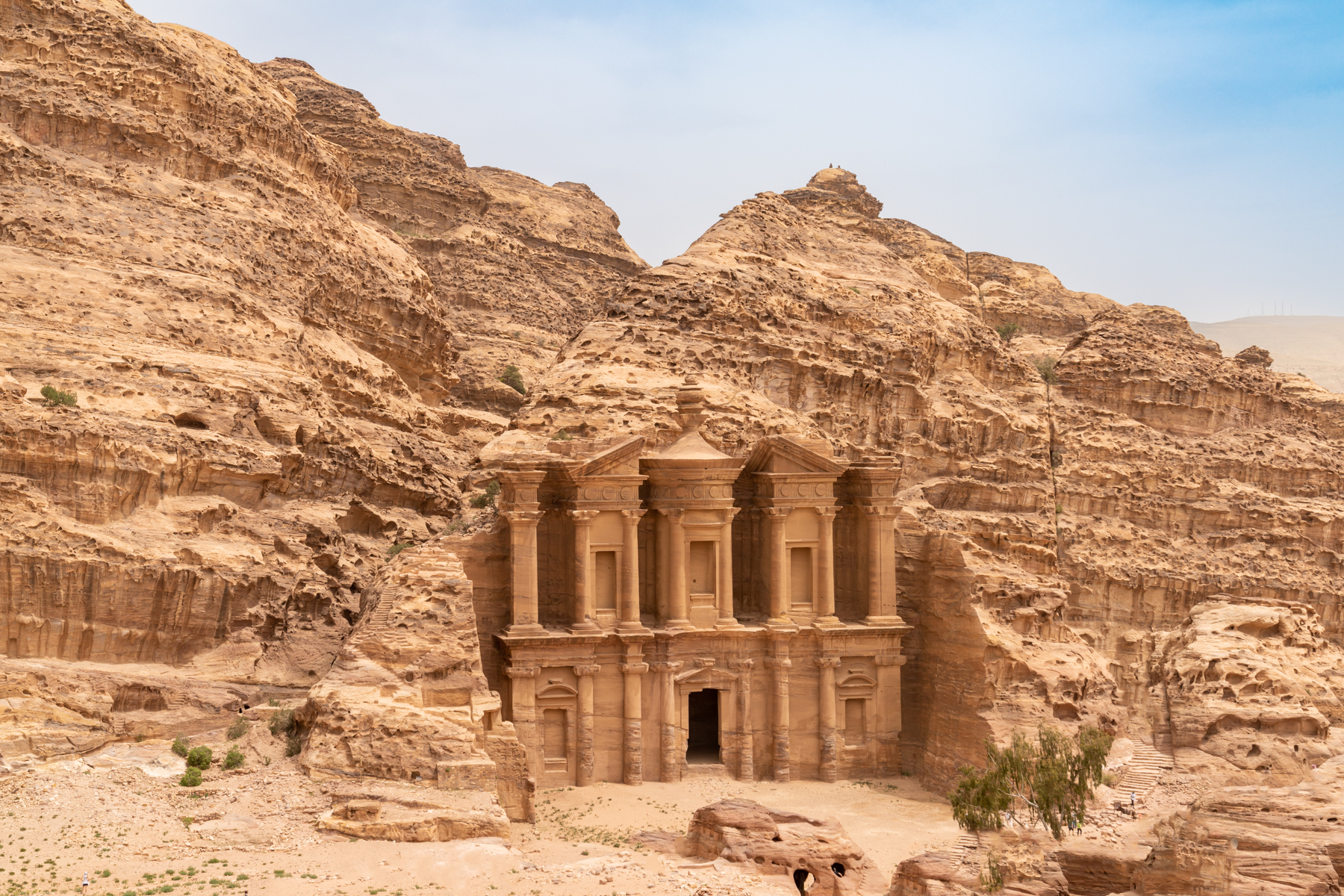
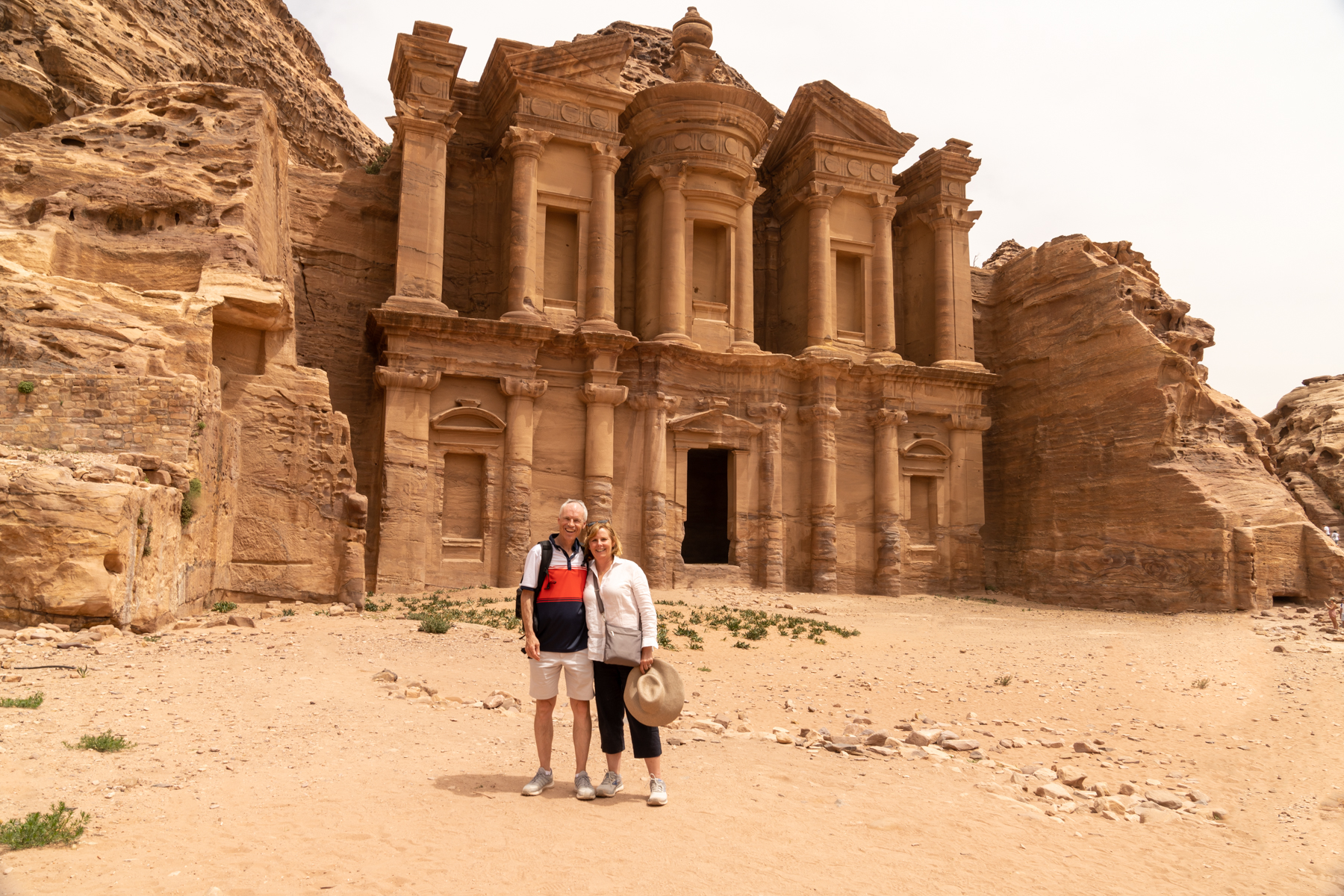
After a pretty arduous climb, we arrived at a very uninspiring open area at the top of the mountain. We were extremely underwhelmed with what we saw, until Daoud advised us to take a few more steps and turn back to look at the recessed rock face. And, then were awe-struck at the sight of the biggest rock-carved building in Petra, the 50-metre tall Ad-Deir (or monastery).
Ad-Dier is known as “the monastery” only because small cross-like symbols were found in it when it was discovered by Western archaeologists. It was probably used as a church during the Byzantine period but there isn’t universal agreement about its original purpose. It may have originally been a royal tomb, a royal residence, a site for large public religious events, or something else entirely. Regardless, it is truly spectacular.
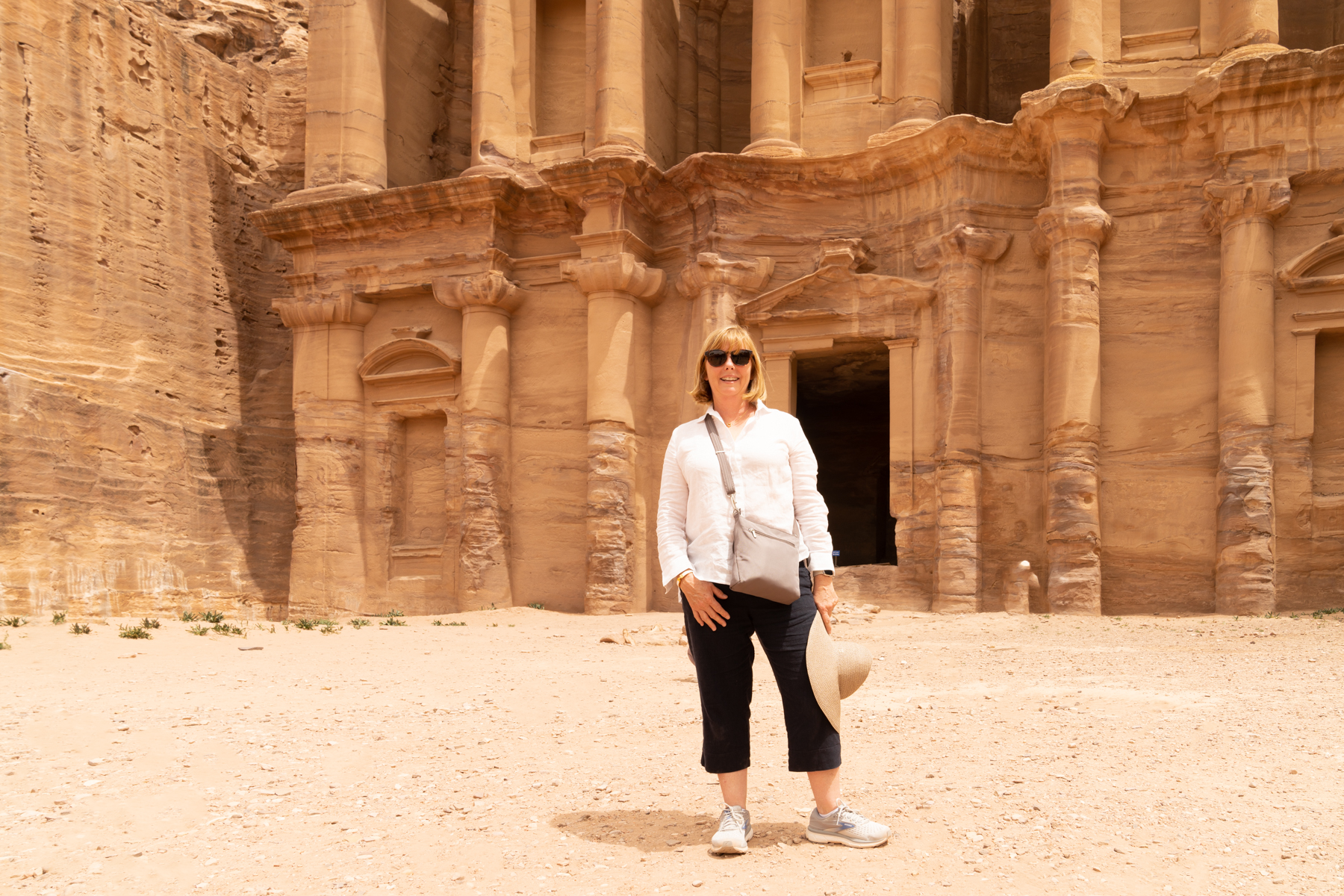
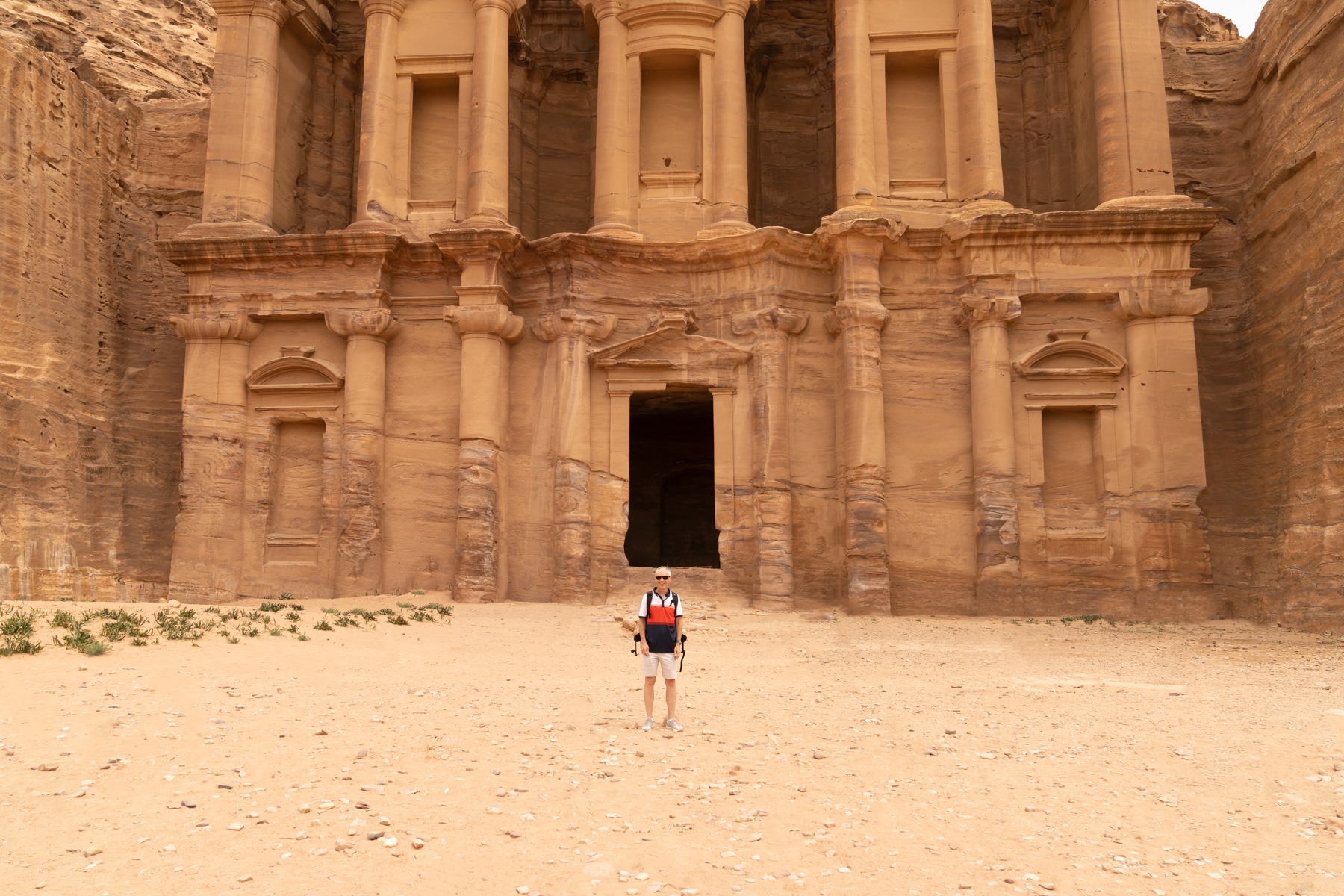
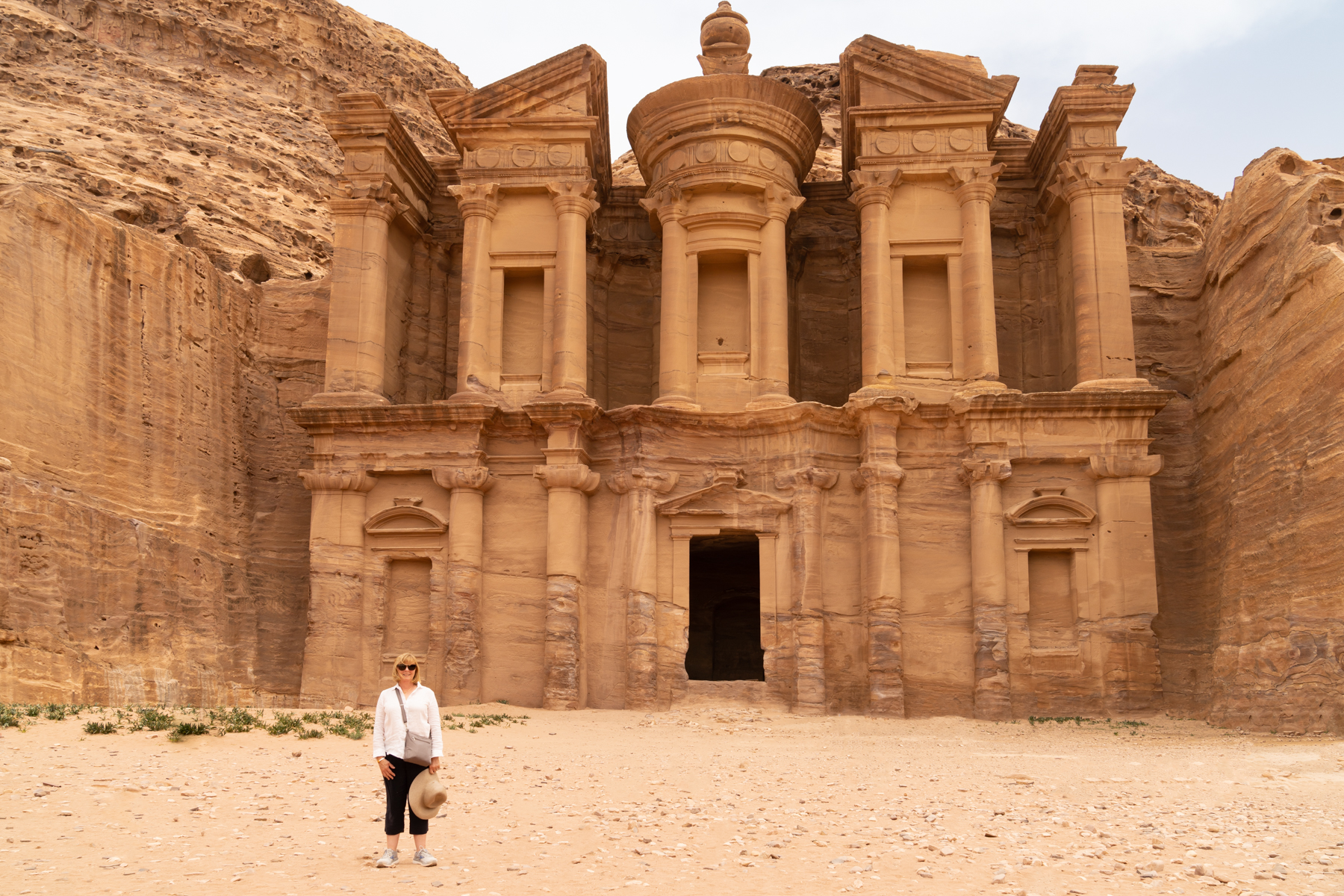
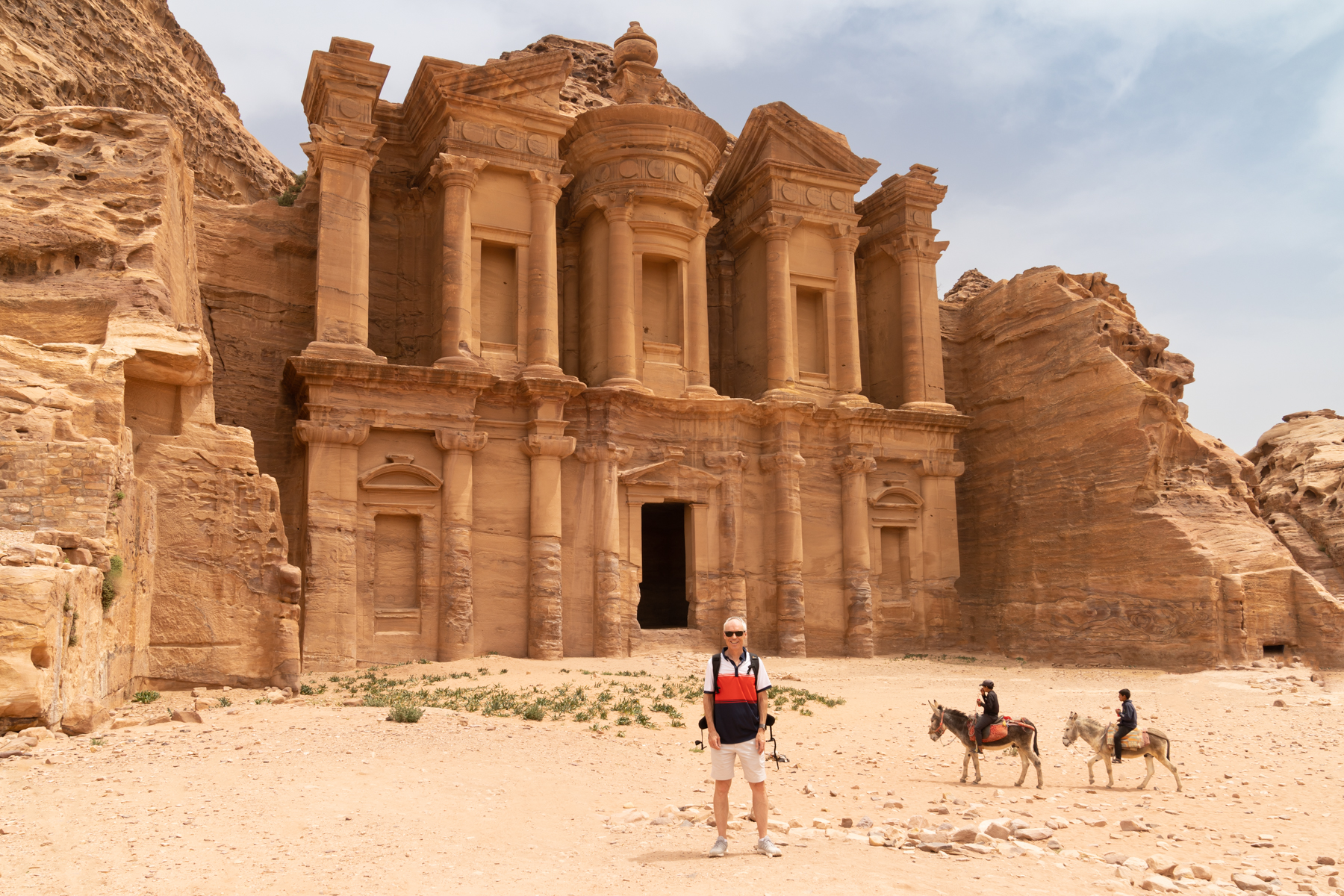
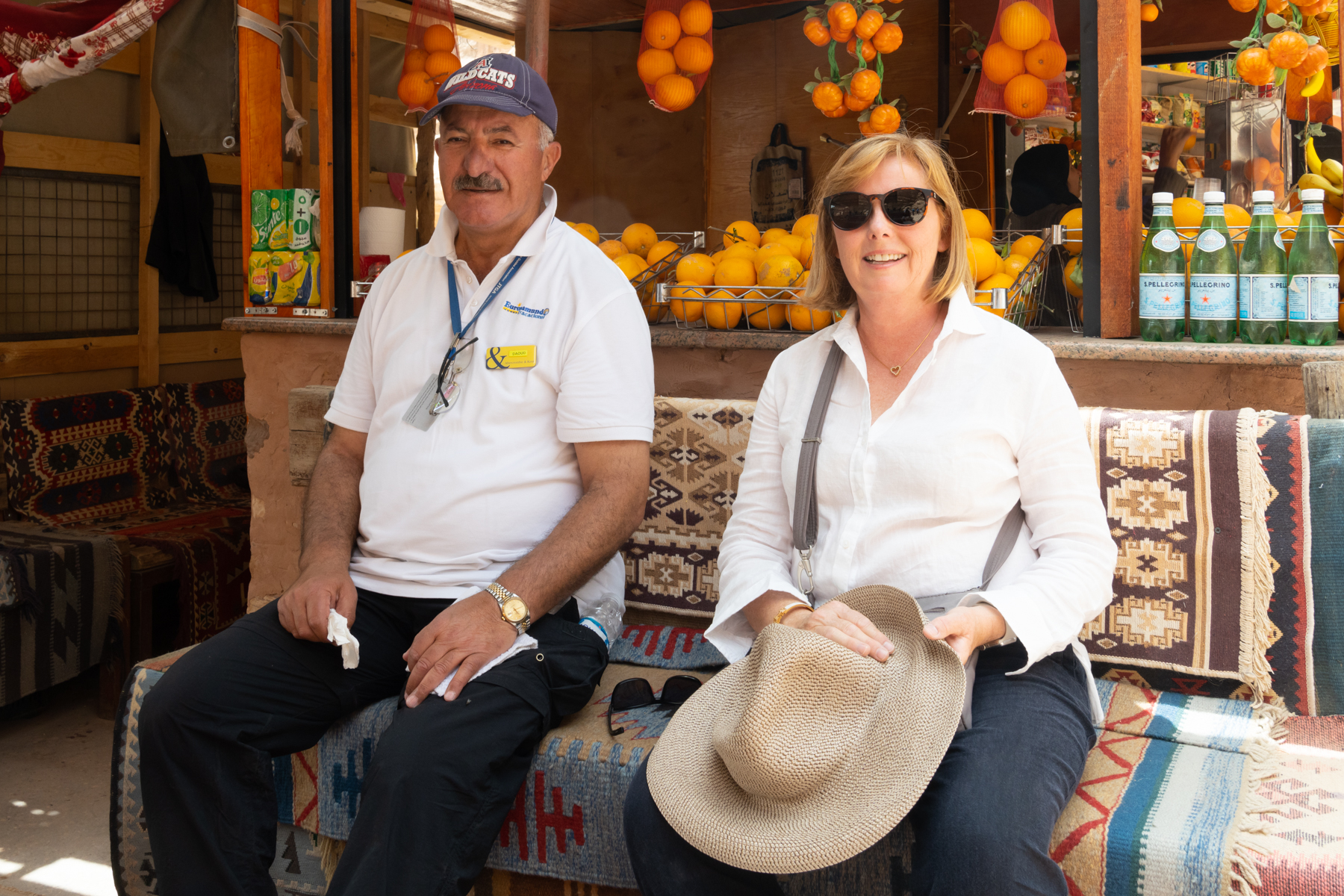
After marvelling at Ad-Deir for a while, we felt re-charged enough to tackle the descent, possibly made easier by the thought of sitting down for some lunch at the restaurant near the bottom of the climb.
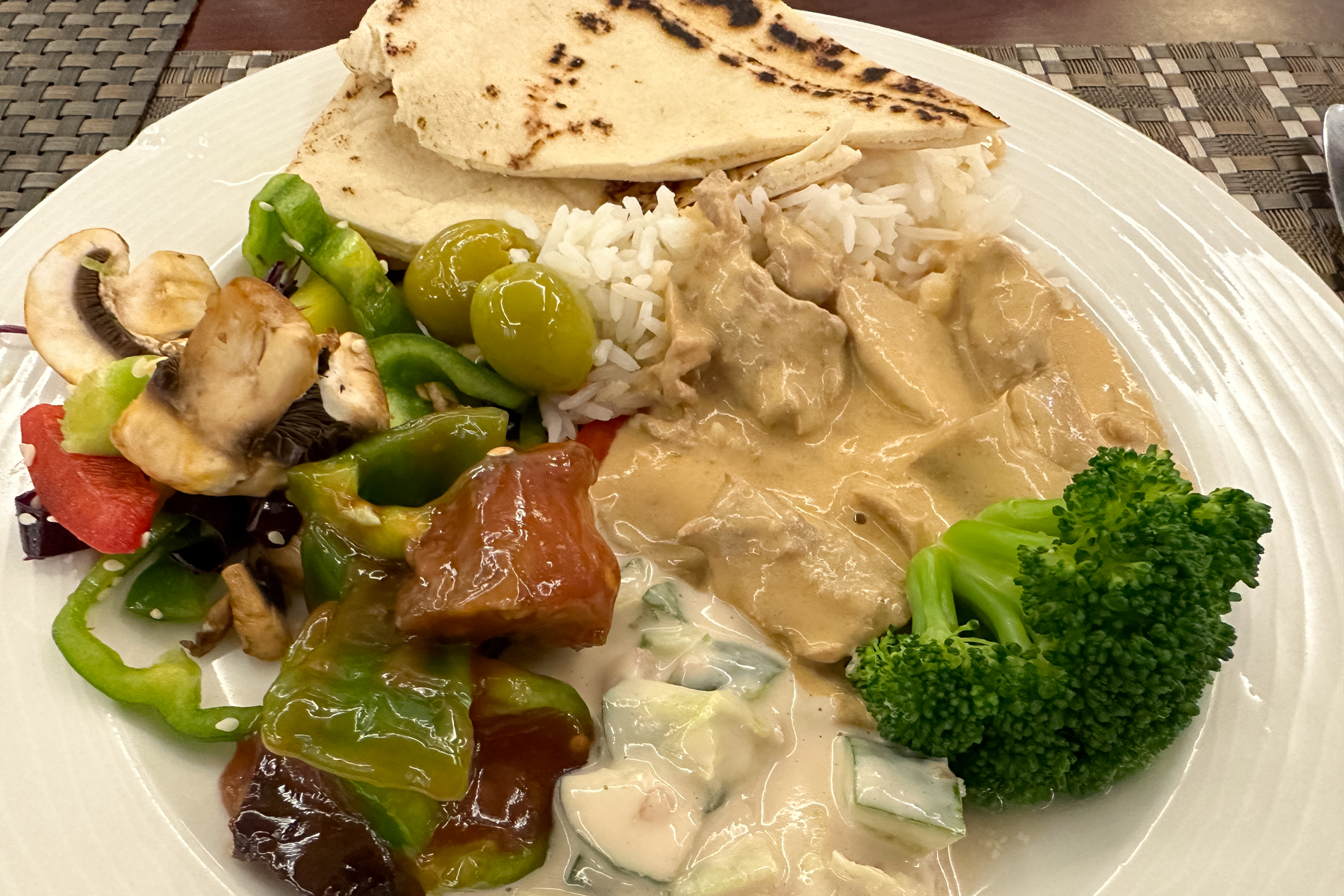
It’s fair to say that lunch was not a Michelin-starred affair, but we were sufficiently exhausted and hungry that we were prepared to overlook this fact!
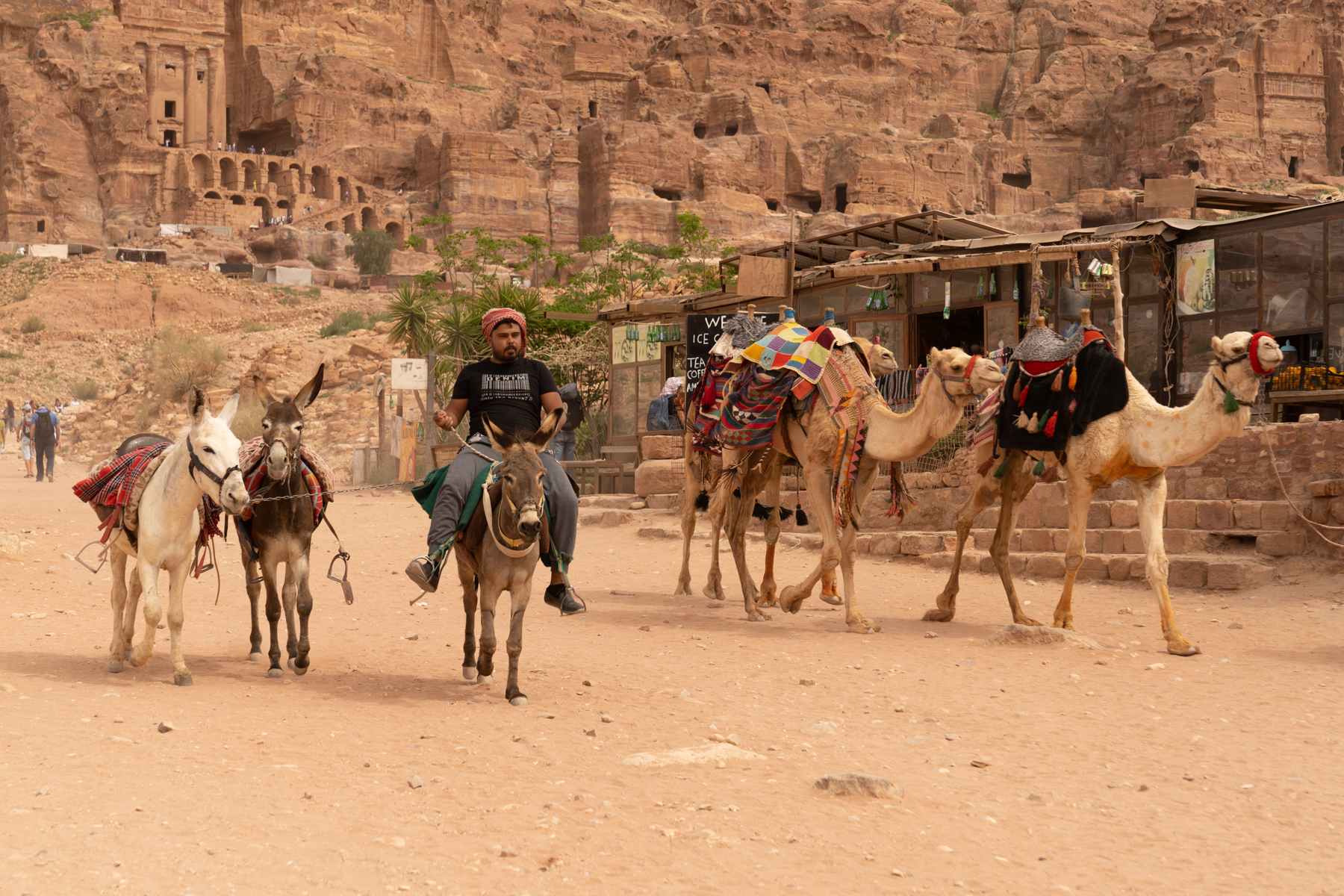
After lunch, we left Daoud and continued exploring on our own. Along the way, there was no shortage of offers from locals to ride their donkeys or camels. Given that we were unsure of when we could next wash our clothes, the thought of returning to the hotel smelling like a donkey or a camel was not very appealing, so we decided we’d be better off walking.
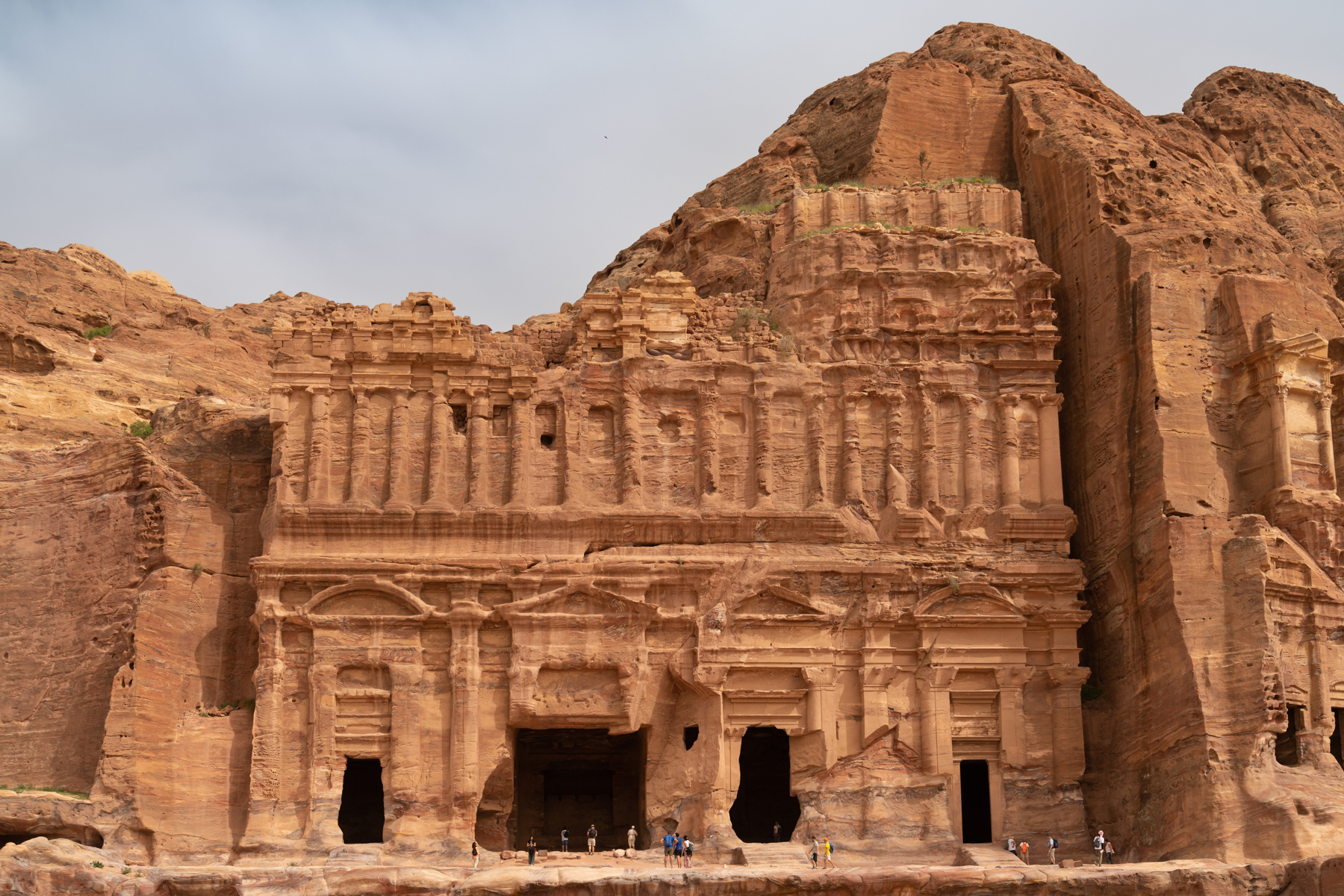
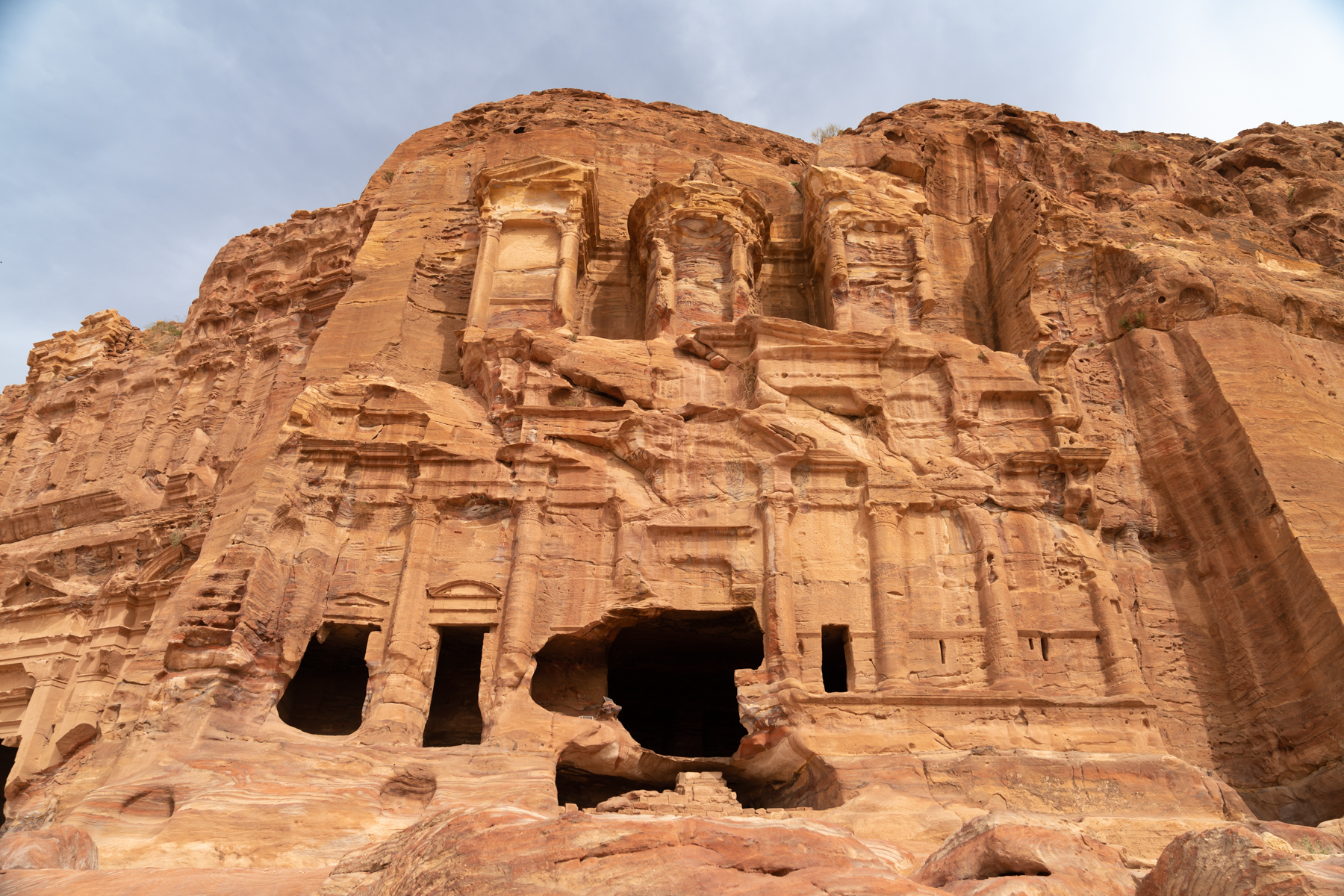
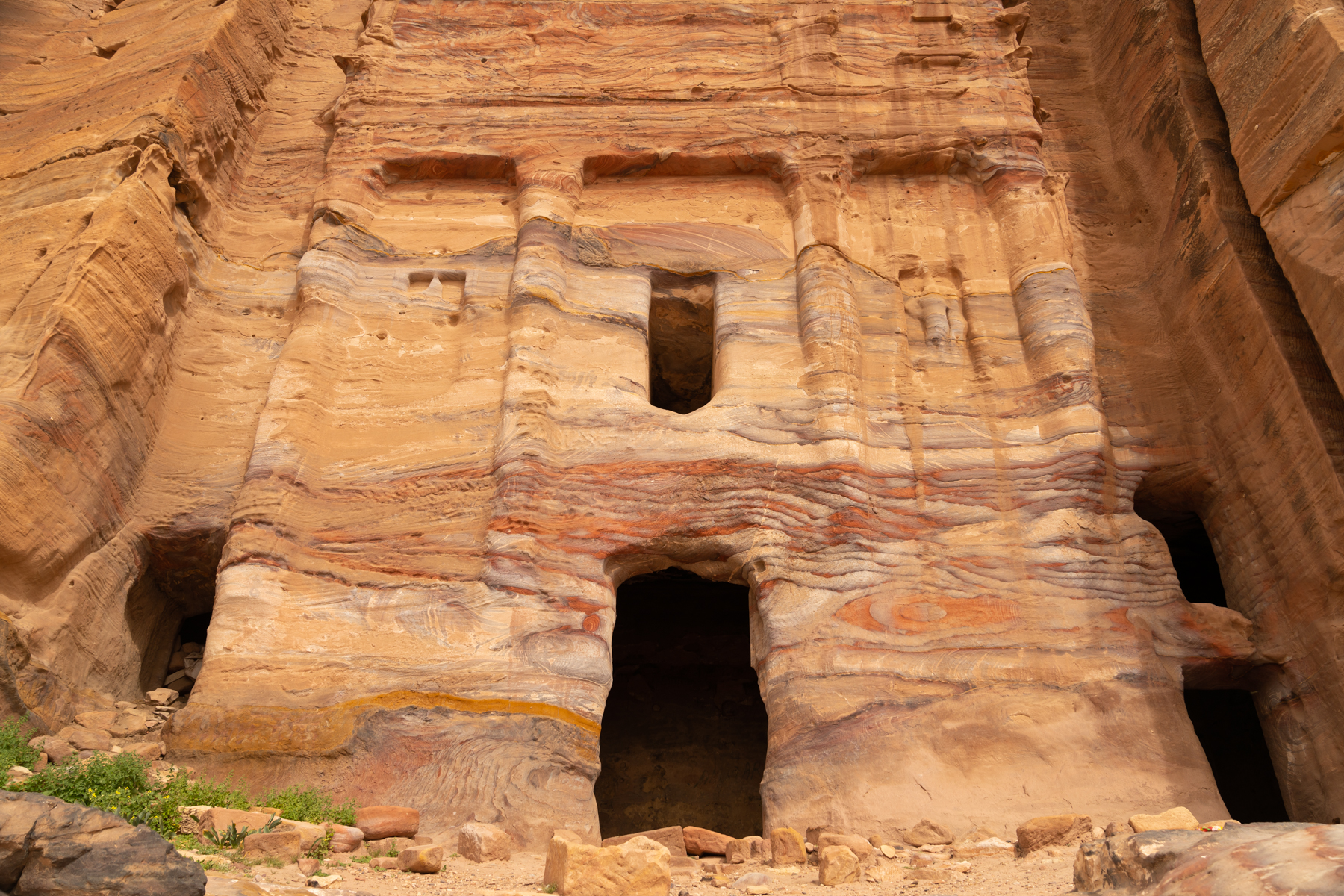
Despite the fact that we had already done a lot of climbing, we opted for one more climb of about two hundred stairs to go into the urn tomb. It’s not possible to enter most of the structures, so we were keen to take advantage of the fact that we could go into this one. It is huge inside and has the most amazing acoustics.
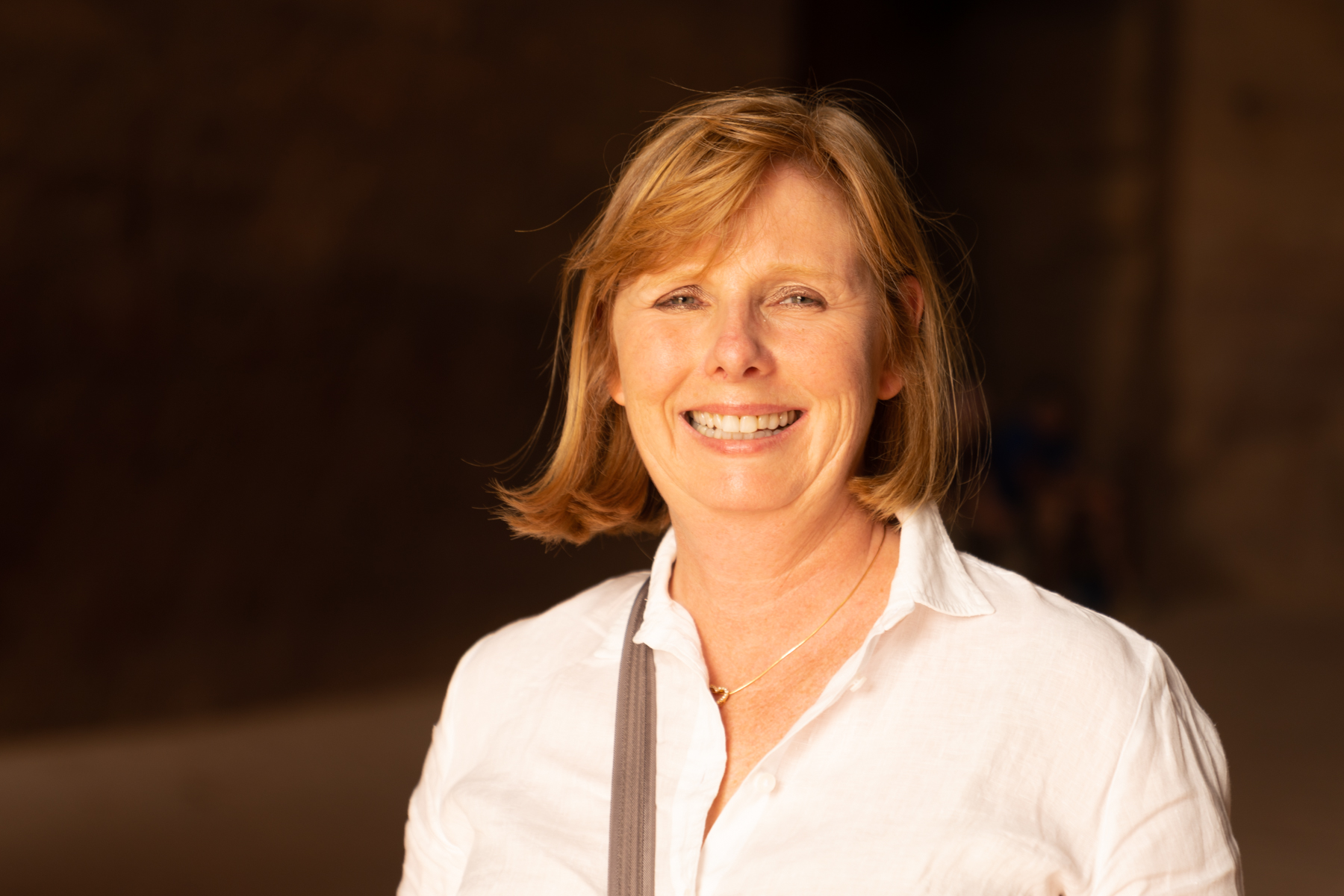
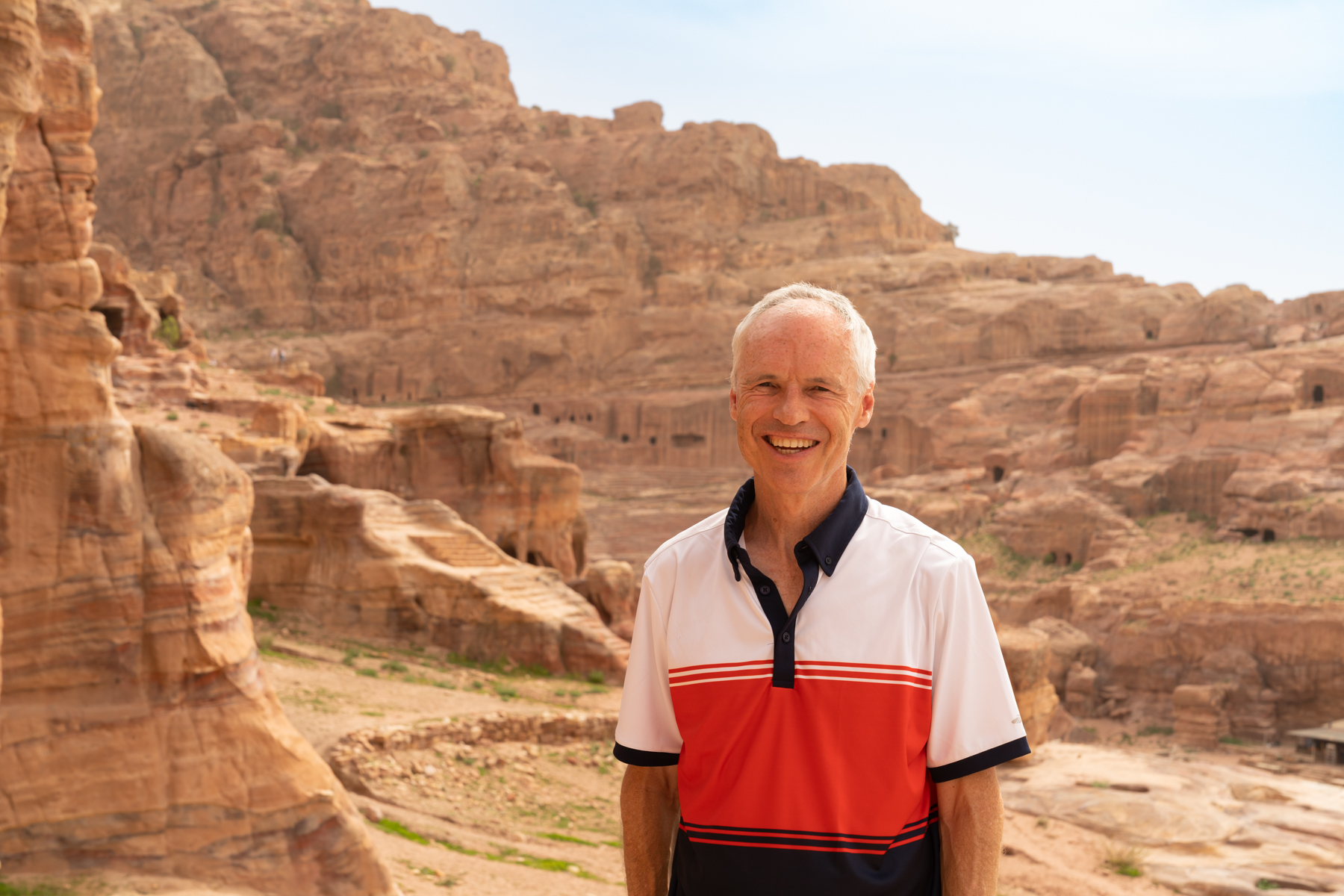
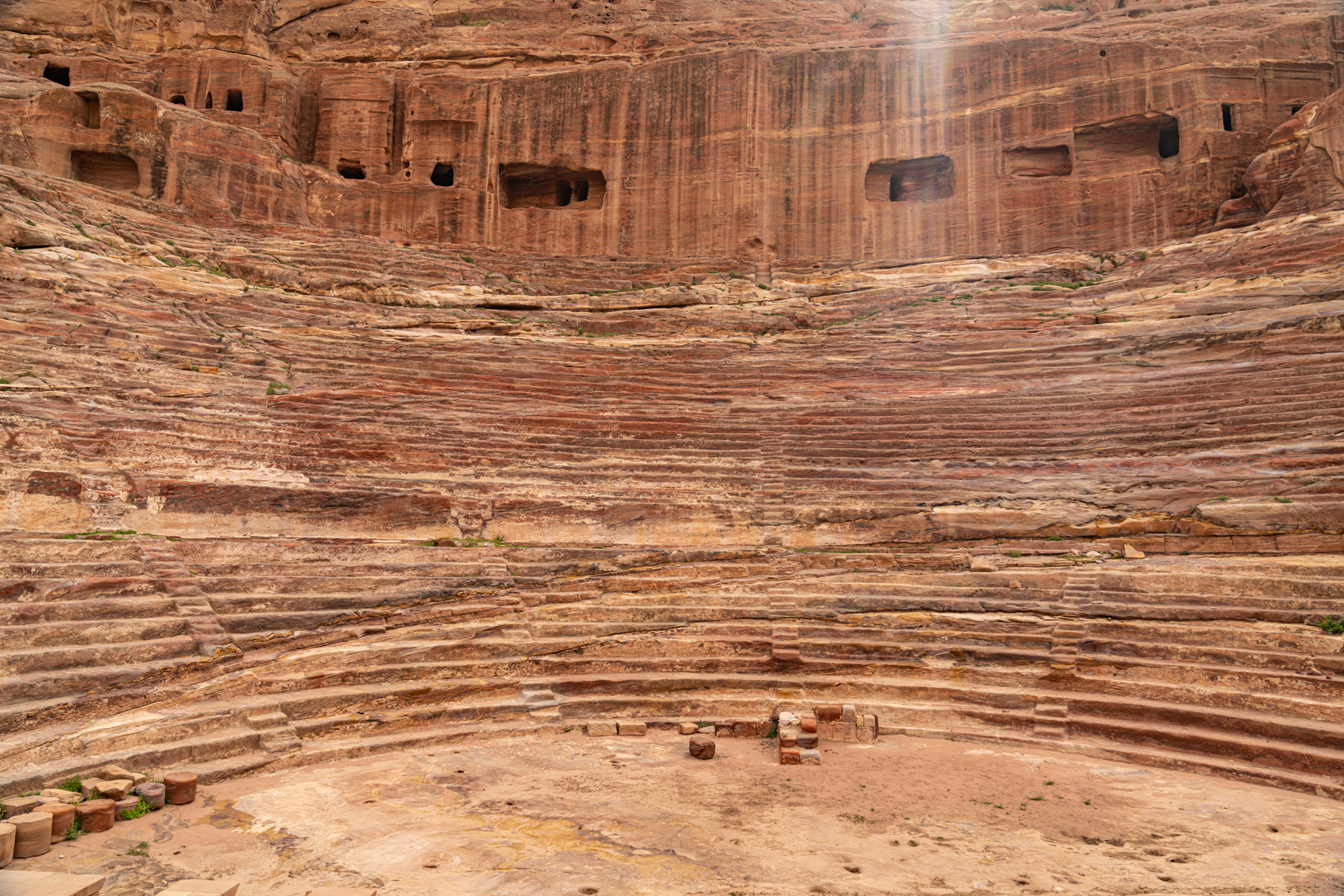
We descended back to the main road level, headed for the Siq to make our way out. On the way, we stopped at the outdoor theatre, unique because it is not built up but rather it is carved into an enormous rock wall. Of course, we passed more donkeys on the way!
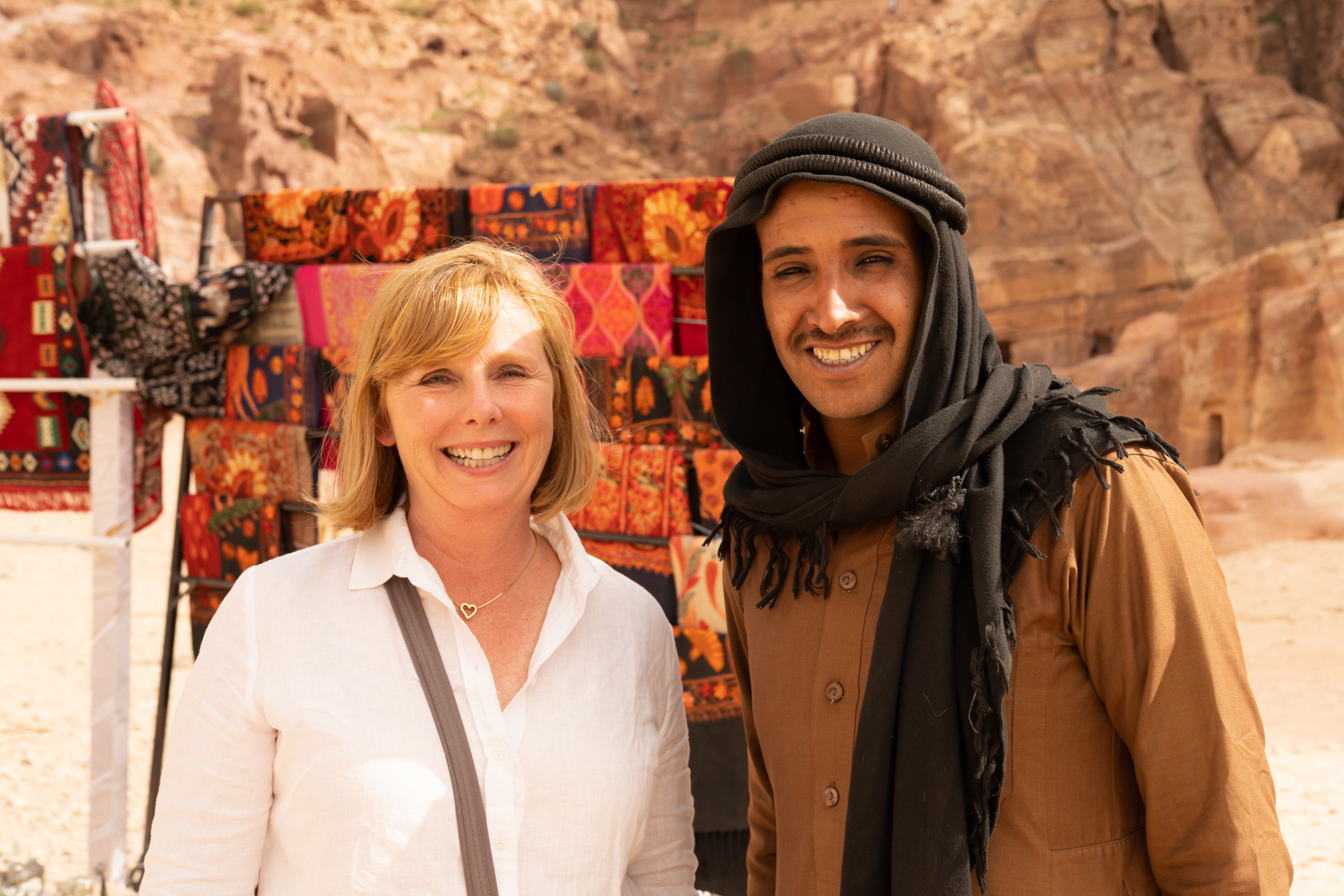
Further up the road, we stopped at the stall of another local vendor and bought a very cute wooden donkey from him. We thought we drove a pretty hard bargain but judging from his smile afterwards, perhaps we didn’t!
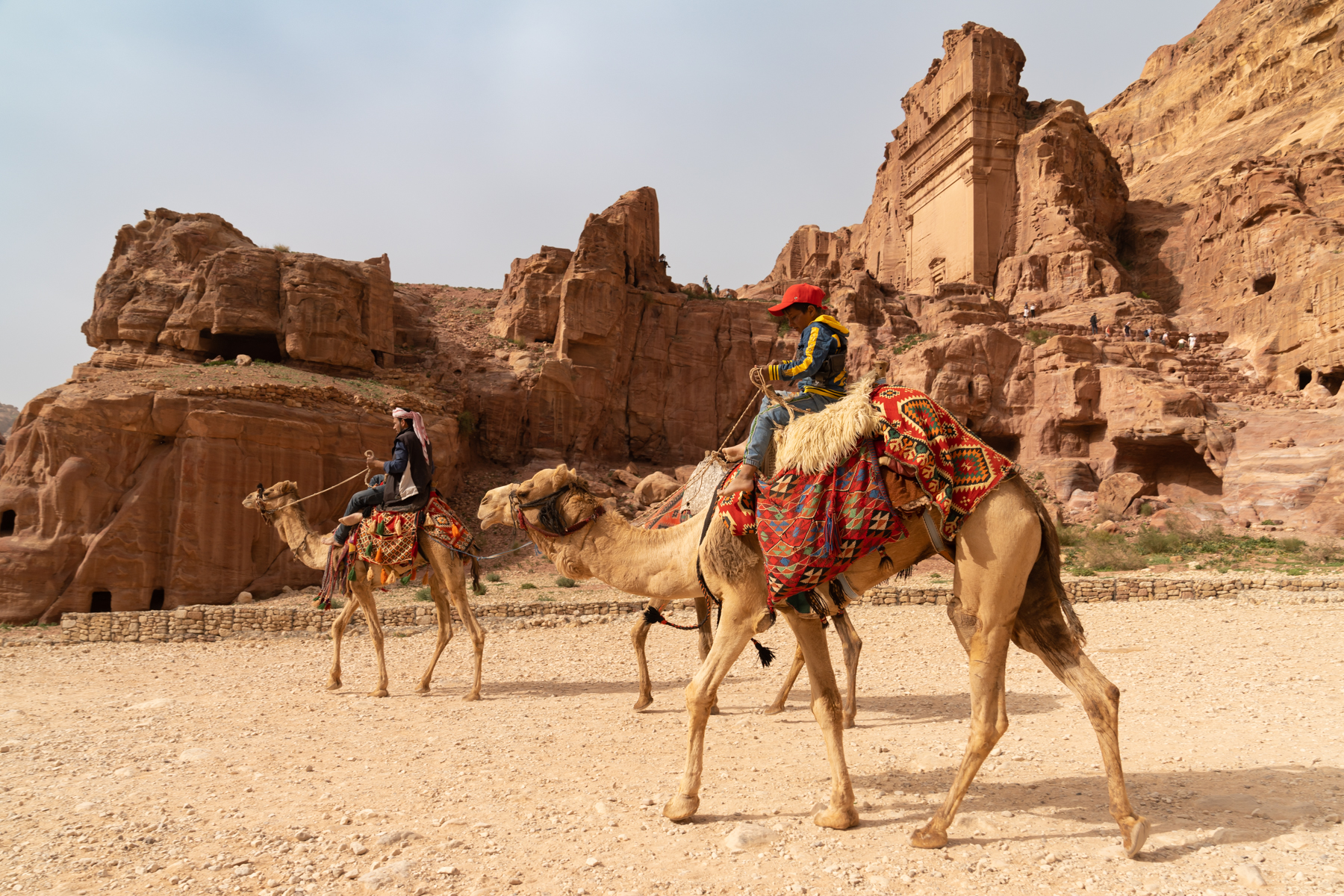
As we meandered our way back along the road, we were amazed by how young some camel riders were.
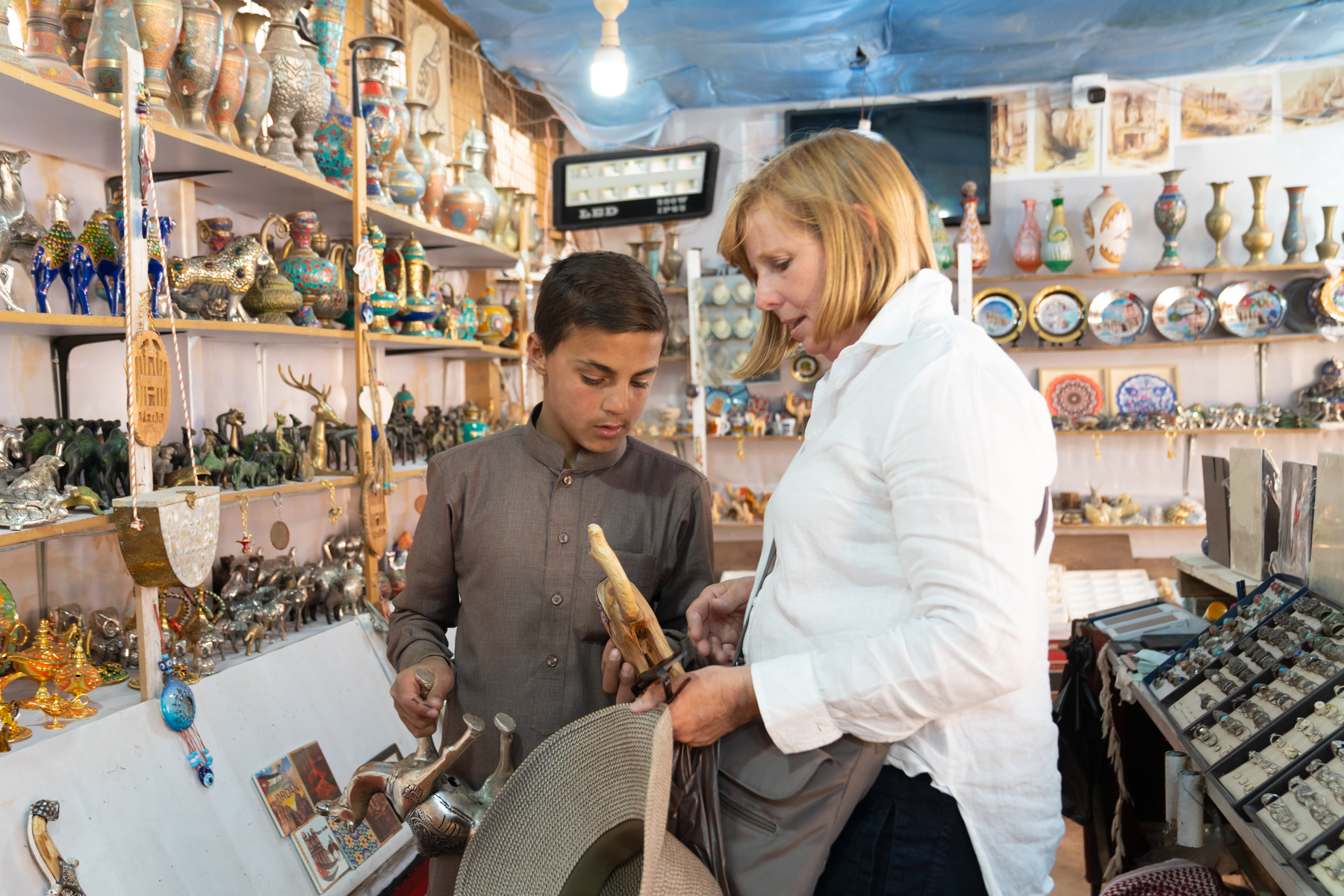
Still smarting somewhat from our earlier negotiation with young Muhammad, we stopped by his stall again to make another purchase. This time we were slightly more prepared for his charm and his negotiating skills, but it’s hard to push too hard when your opponent is only thirteen years old! We did slightly better this time, but we think, overall, Muhammad had a pretty good day!
We kept walking and were soon back at Al-Khazneh (the treasury). It is such an amazing sight, so we decided to stop for a few more pictures.
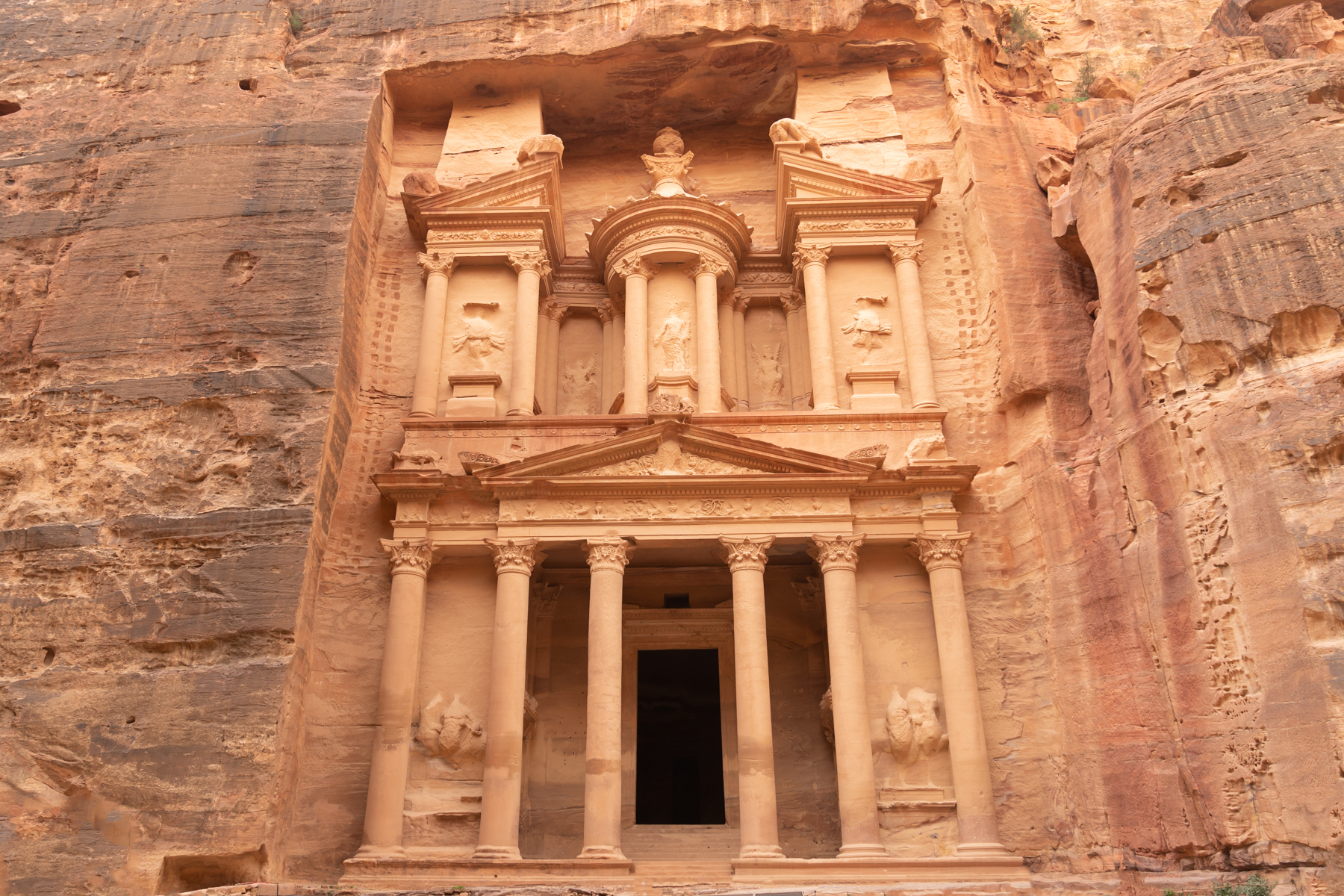
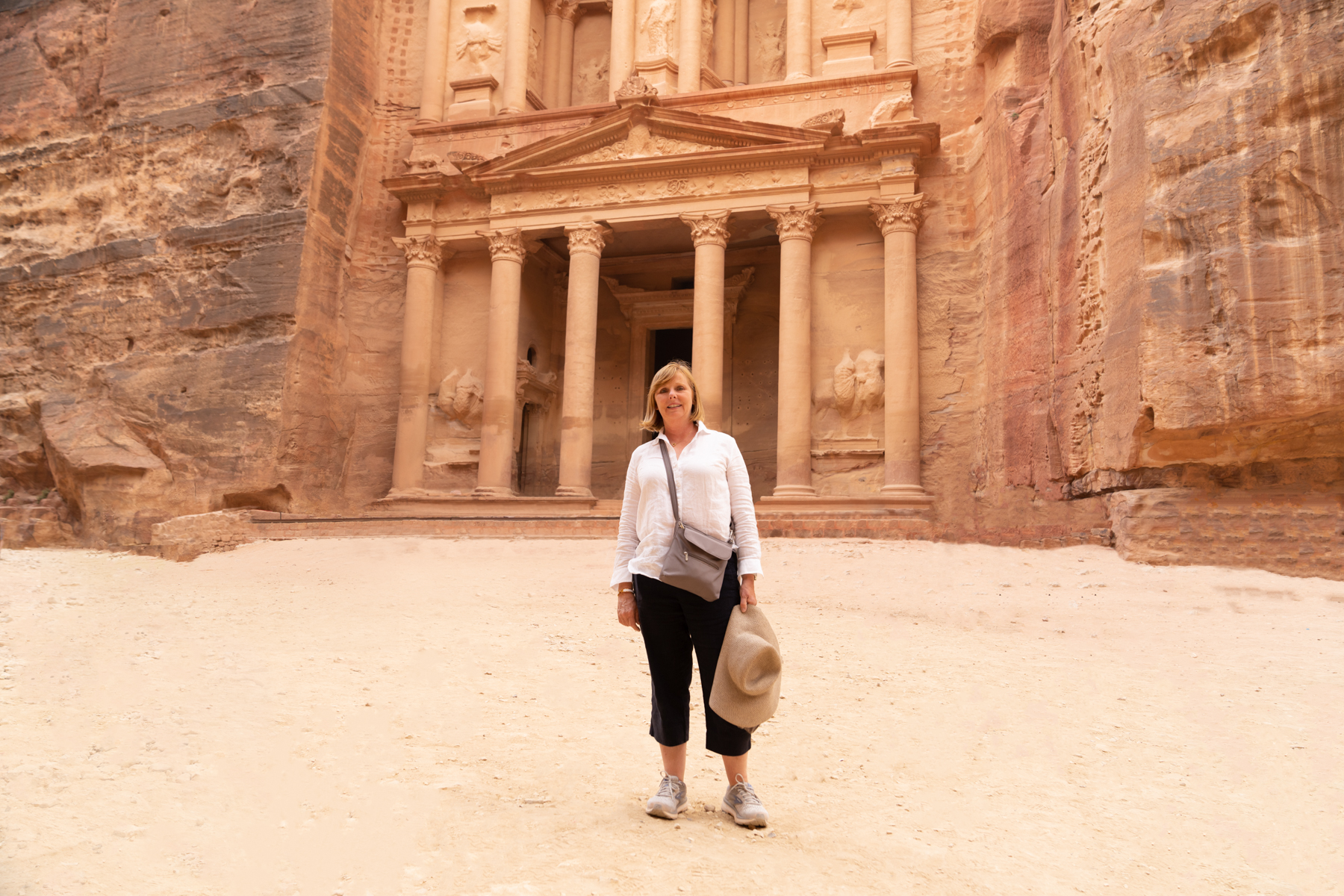
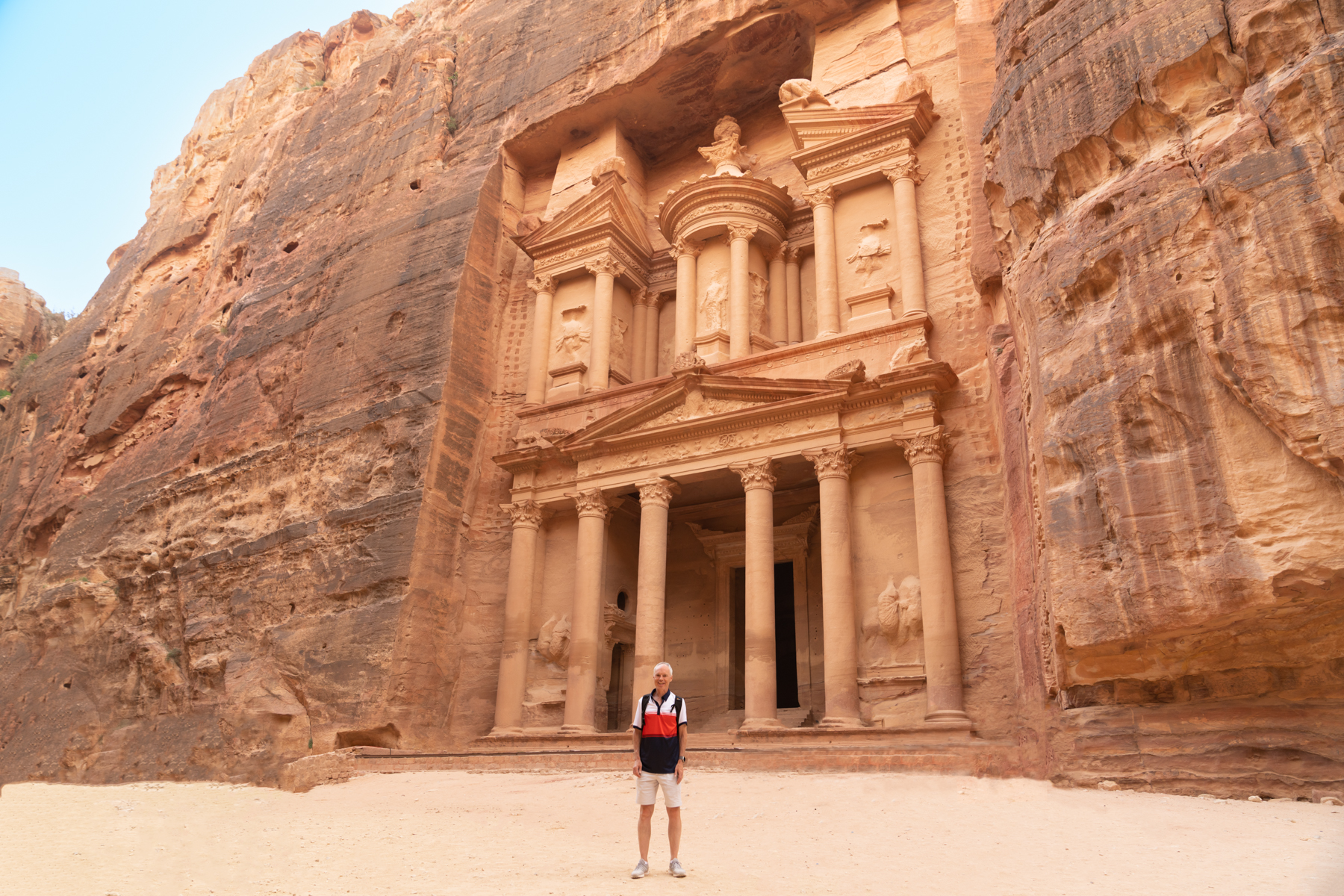
After getting some photos, we entered the Siq for the walk back.
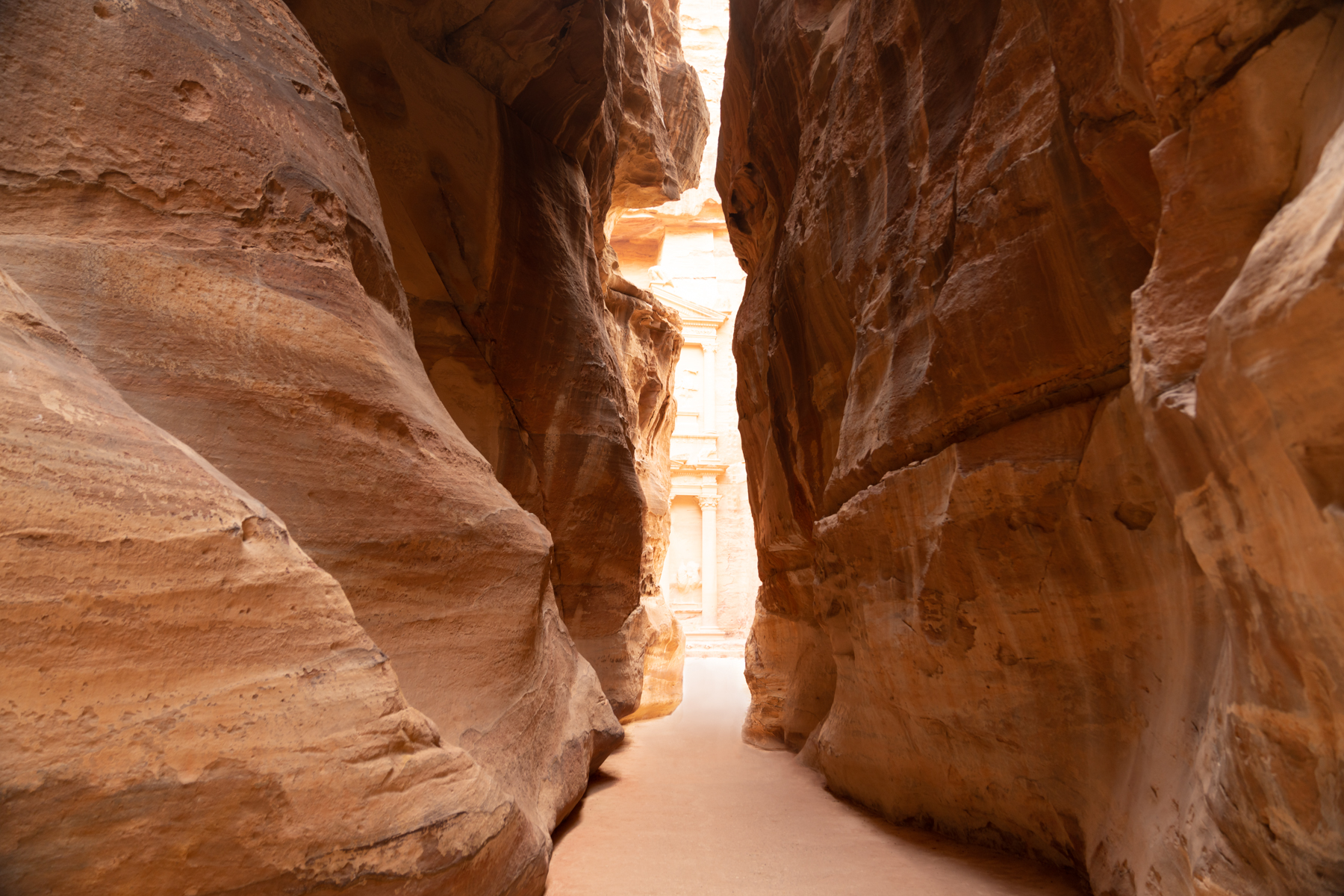
By now, it was late in the day and the sunlight on the gorge walls highlighted the beautiful colours in the sedimentary sandstone rock.
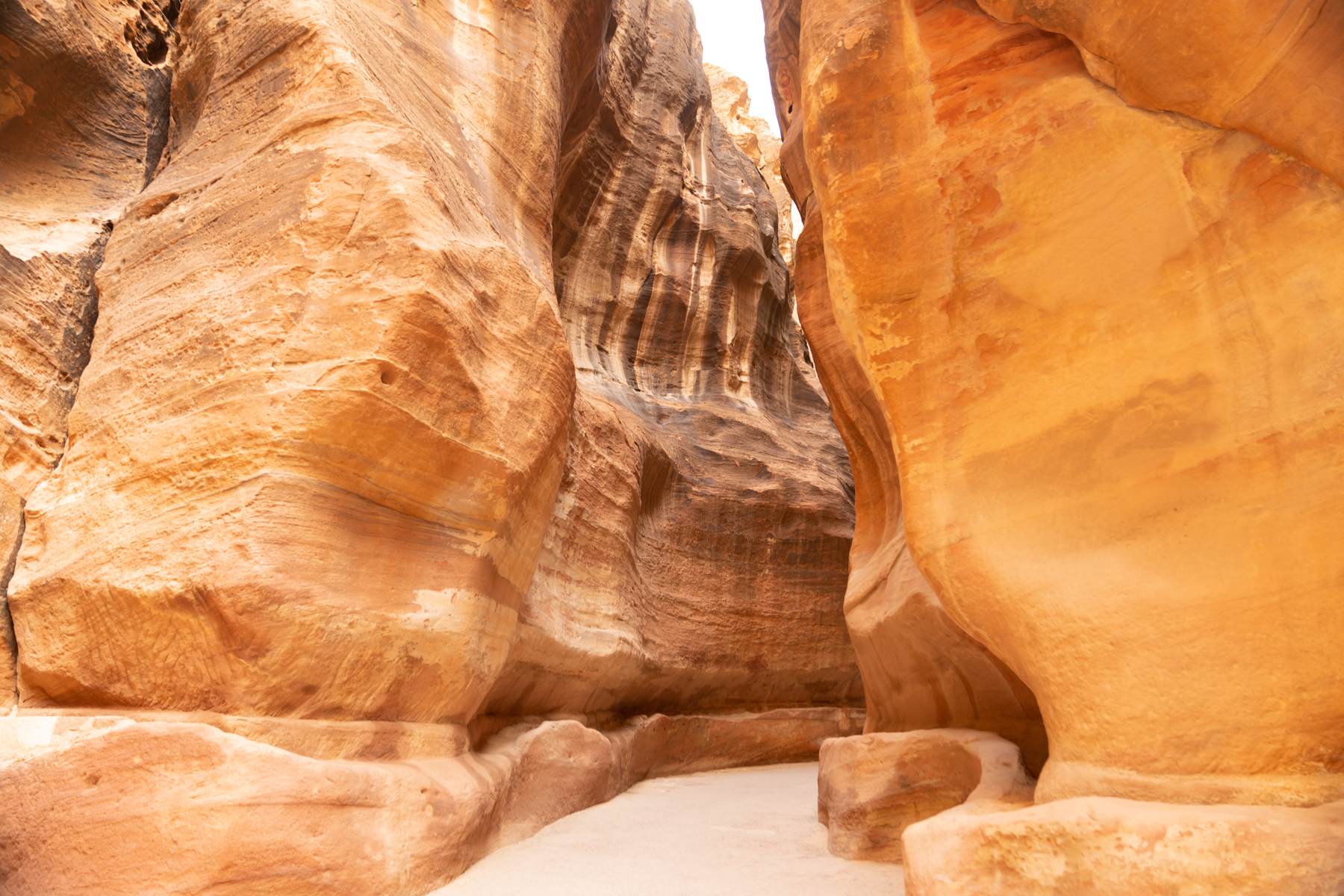
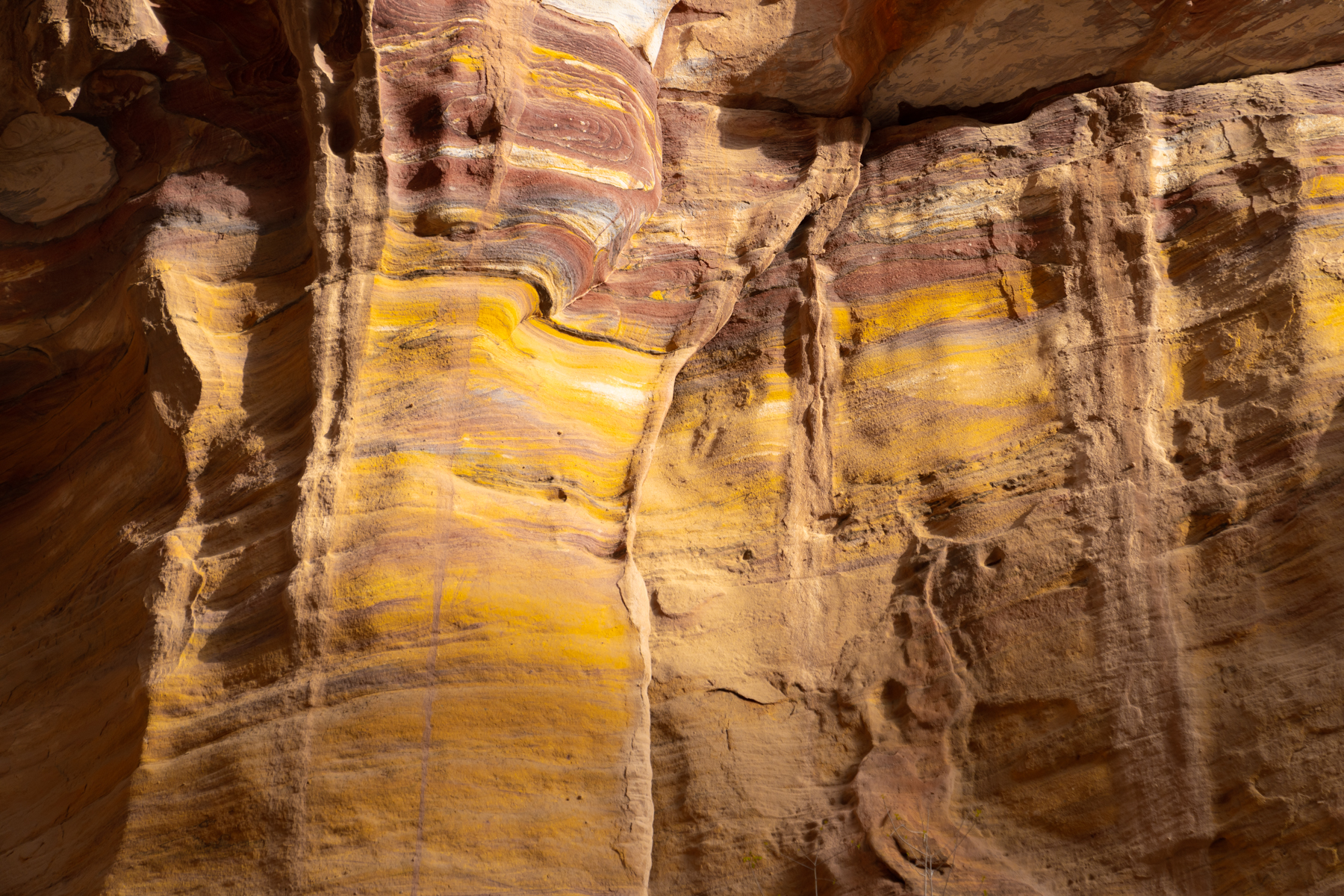
Even though we had been looking at incredible carved buildings all day, we still stopped and admired more on our walk out.
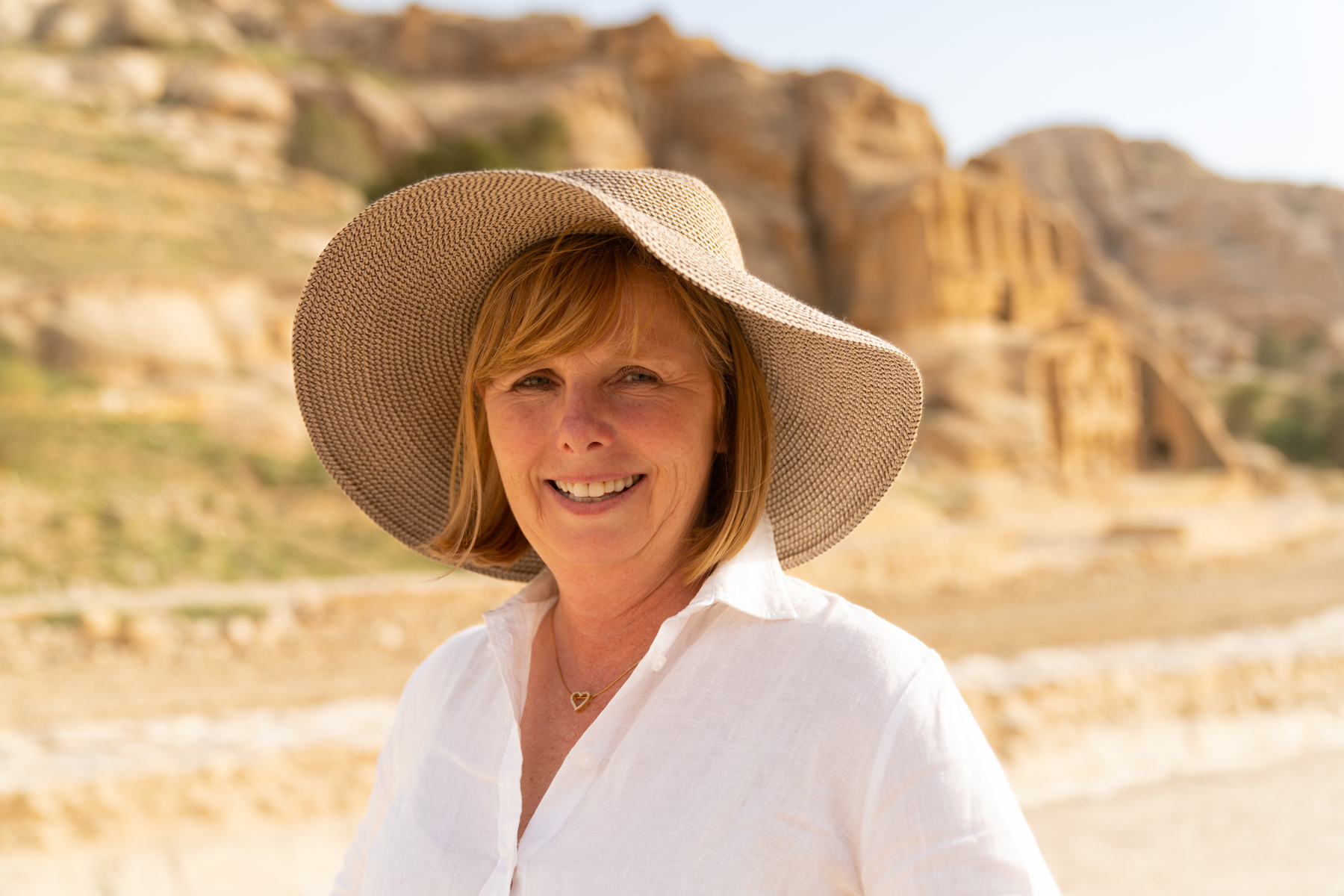
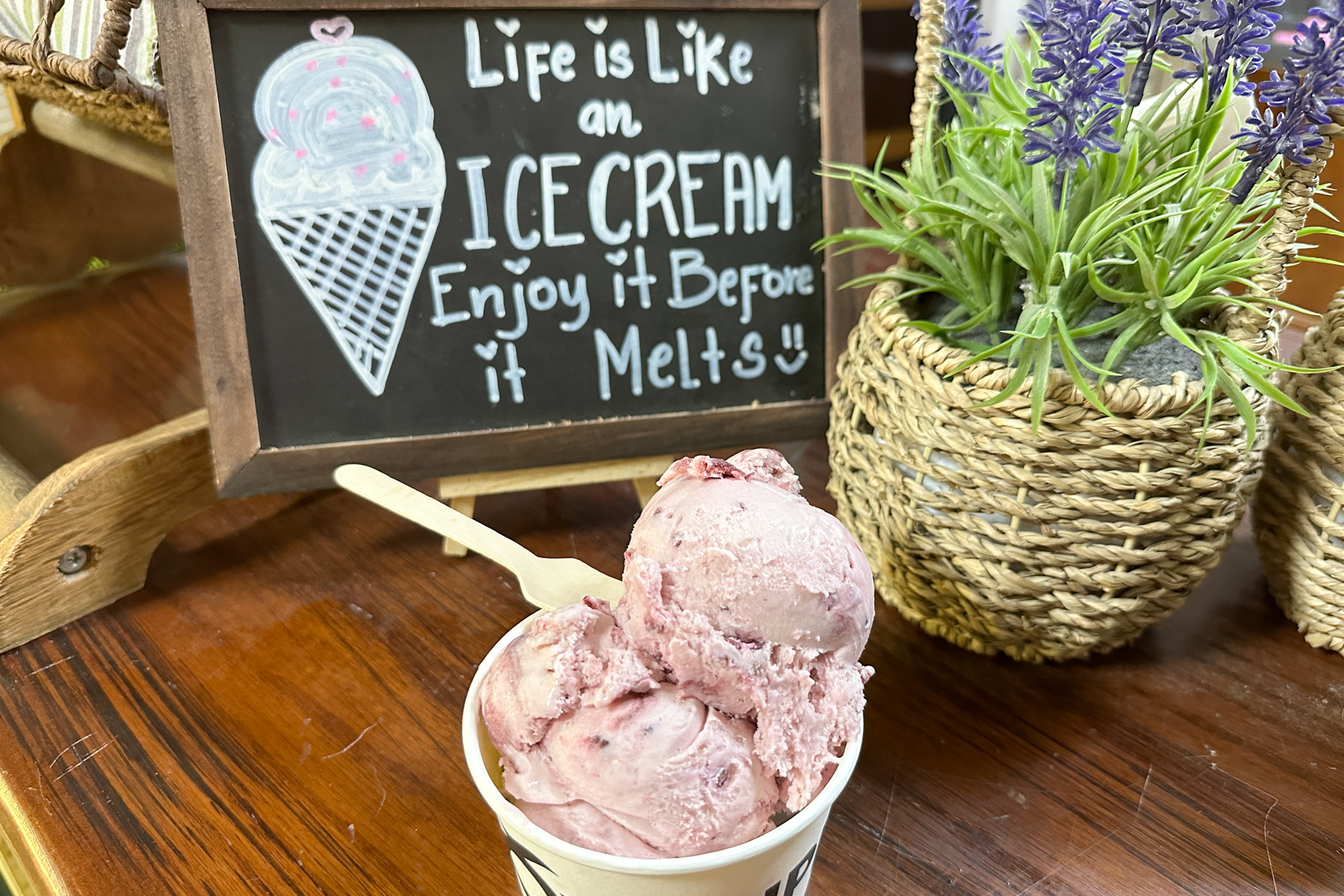
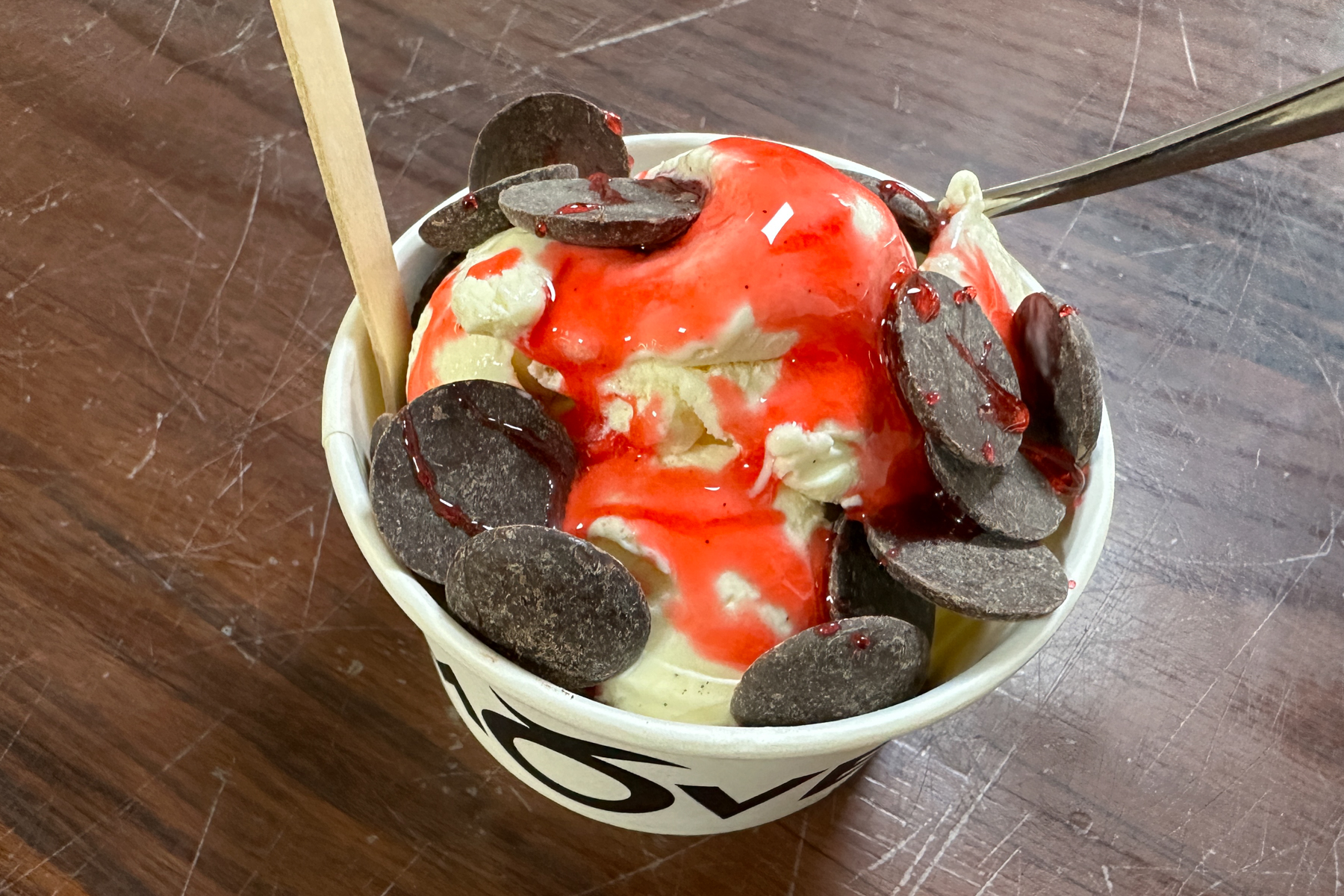
By the time we exited the old city of Petra, we’d done more than 23,000 steps over 10 hours of walking on mostly uneven (and often steep) ground. And we could feel it! We got back into the hotel and decided to skip dinner, opting for a hot shower and an early night instead. But we did stop for ice-cream on the way up to our room!
Tomorrow morning we’re heading further south, to Wadi Rum. But, for now, it’s time for what we expect will be a good night’s sleep after a very big day!