
China
Xi'an
After a too-short sleep, we were up at 5:30 am this morning in preparation for a 6:15 am departure from the hotel to the Beijing railway station to catch the high-speed train to Xi’an, in the Shanxi Province.
Our driver dropped us at the station at around 6:45 am. We went to the lounge to wait for boarding for our train. We had plenty of time to spare before boarding at 7:30 am, but we knew that Beijing station is huge so we wanted a buffer, just in case. We used the time in the lounge to enjoy some of the breakfast that the Peninsula Hotel had prepared for us.

At 7:30 am we were escorted to the train, and we settled in for the journey of just over four hours to Xi’an, about 1,100 kilometres southwest of Beijing.
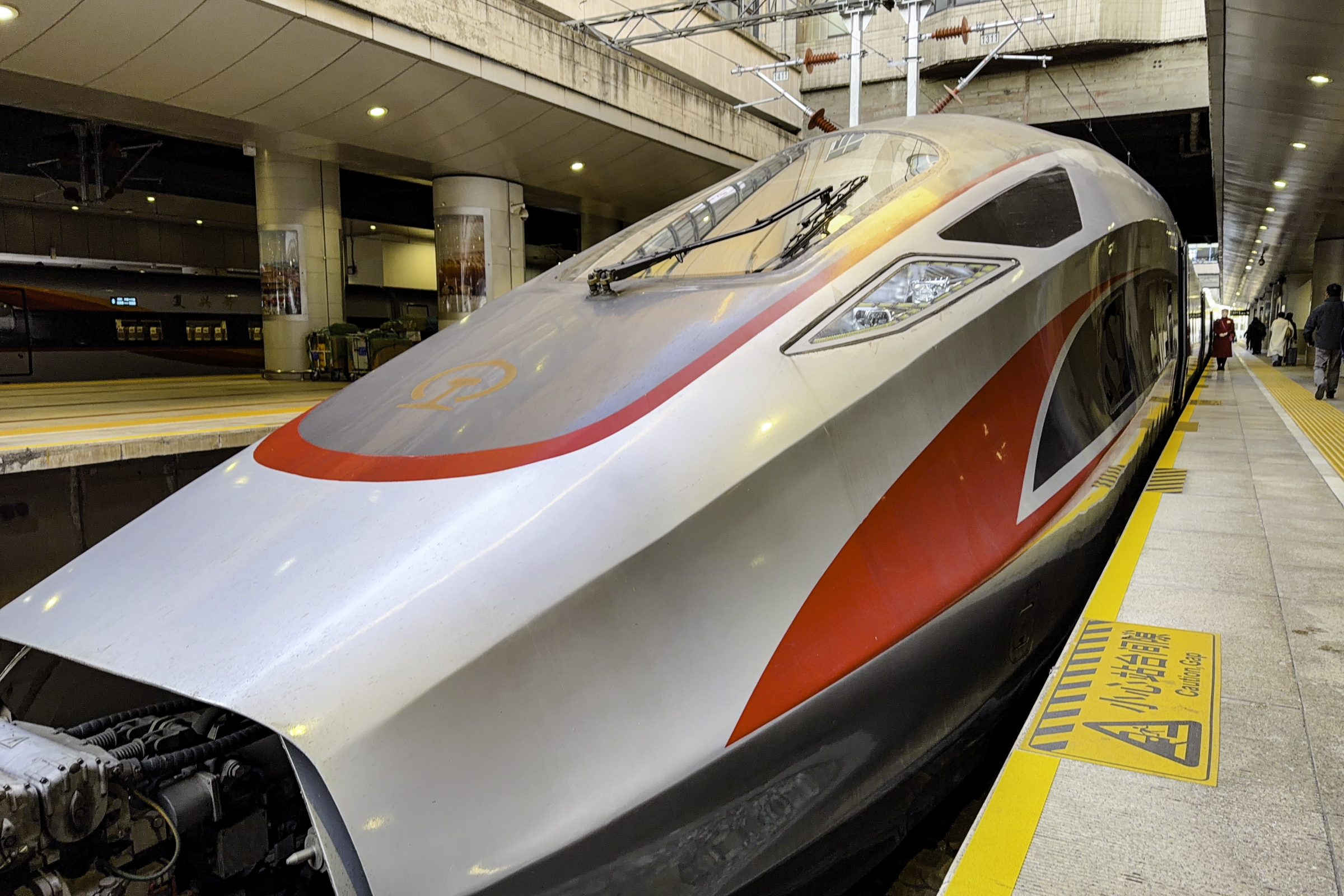

Fortunately, our seats could be reclined into beds, and we managed to get some sleep on the trip. We arrived around midday at Xi’an station, where we were met by our guide, Lilian, and our driver, Wang.
We headed out of the station for the hour-long drive to Lintong District, to see the world-famous Terracotta Army. Along the way, Lilian provided us with some of the history of the site.
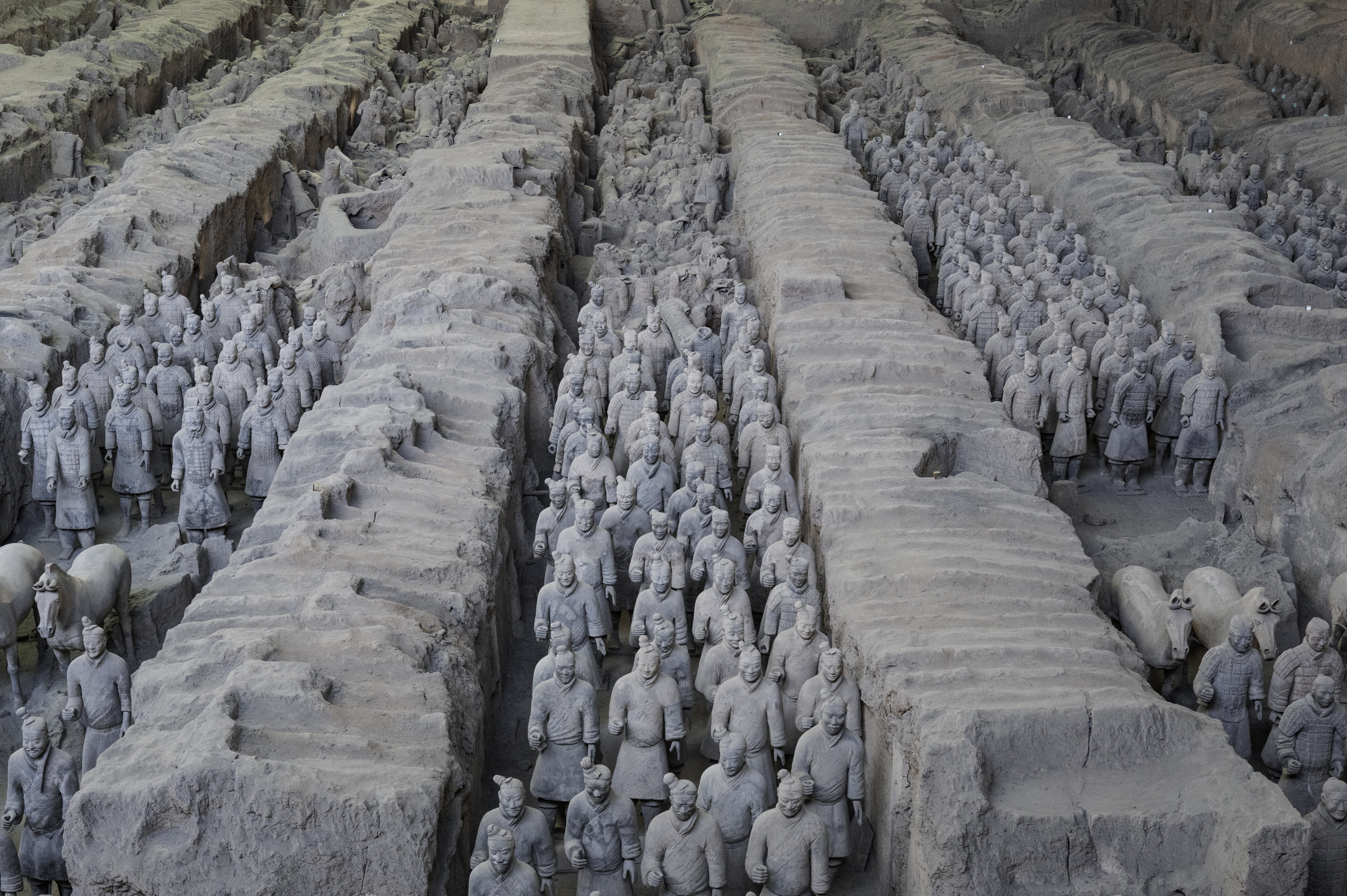
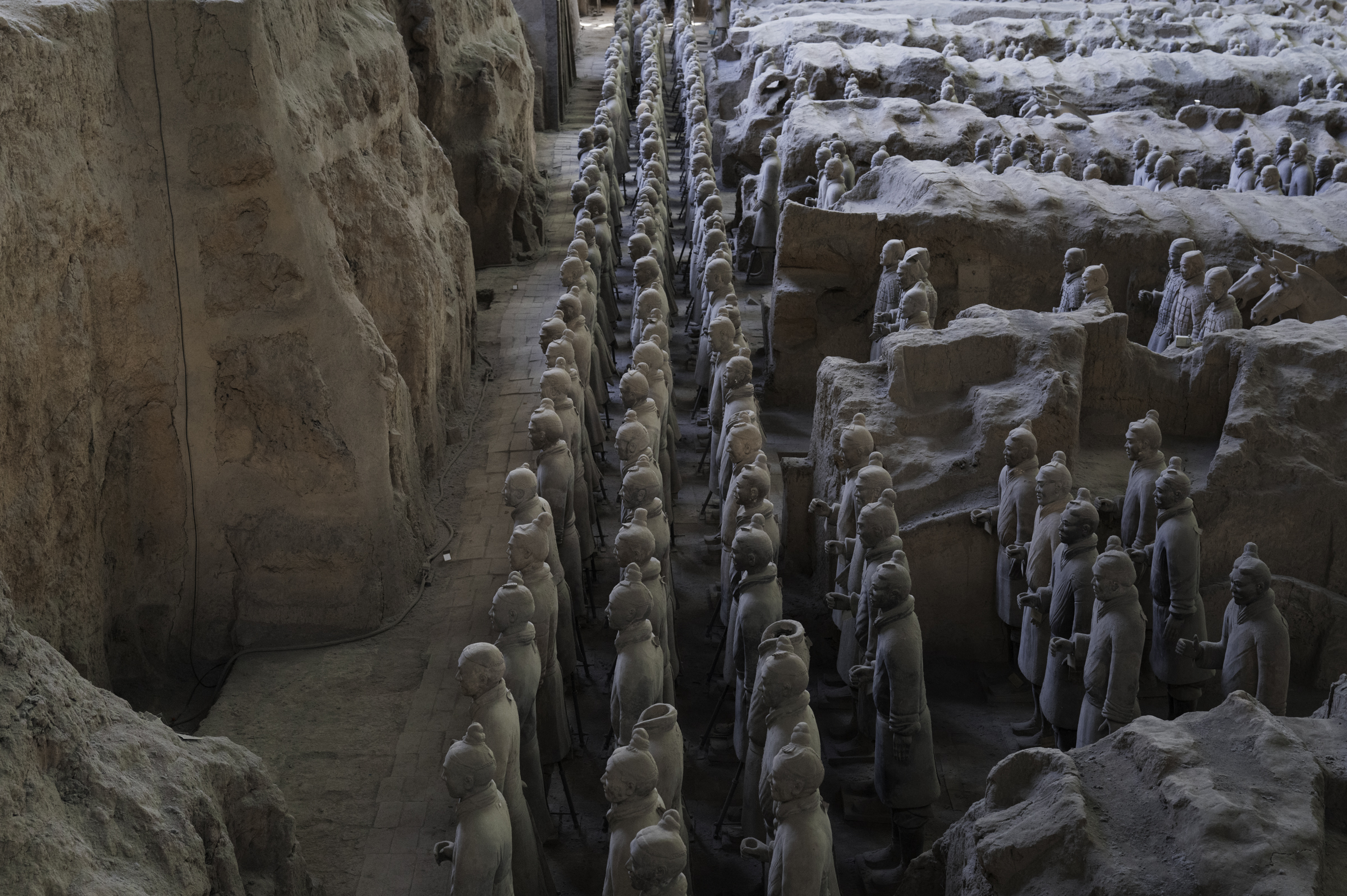
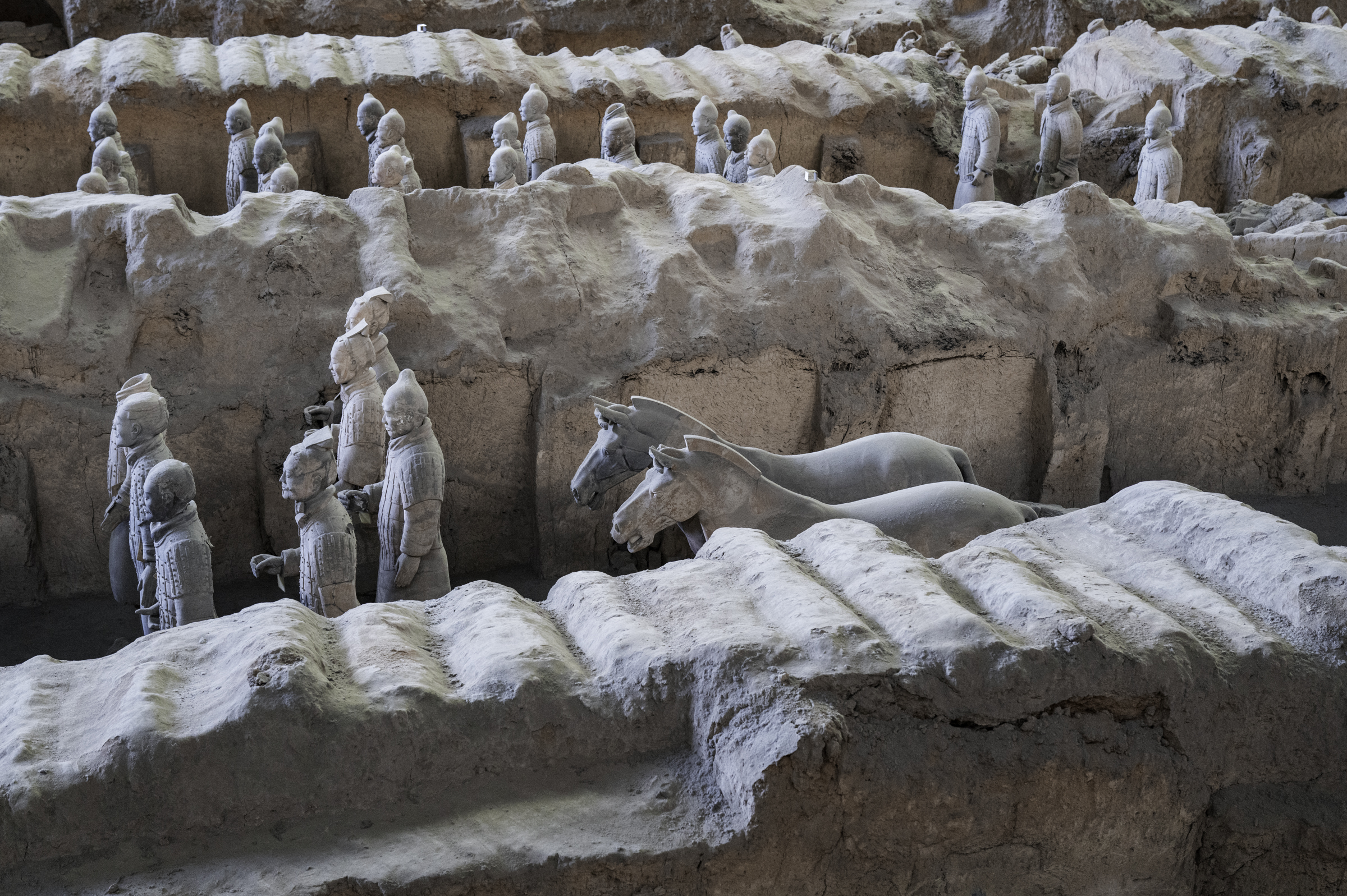
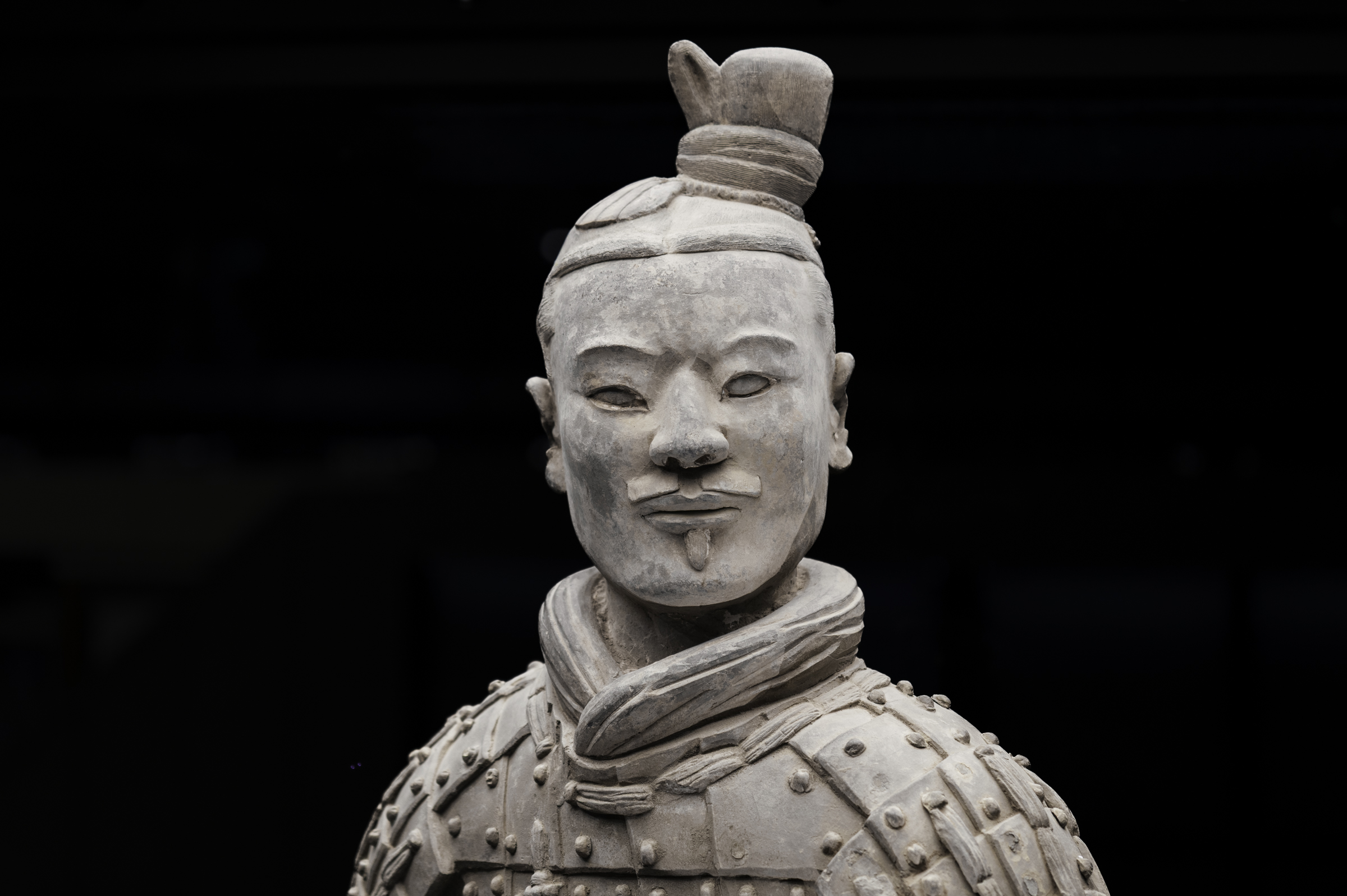
Construction of the Terracotta Army began over 2,200 years ago, around 246 BC, as part of a huge necropolis designed to protect Qin Shi Huang, the first Emperor of China, after his death. Hundreds of thousands of labourers and artisans were forced to work on this enormous project, crafting thousands of individualised statues representing different military roles such as infantry, archers, charioteers, officers, and cavalry. The army is believed to symbolise the emperor’s power and quest for immortality, providing protection for him in the afterlife.
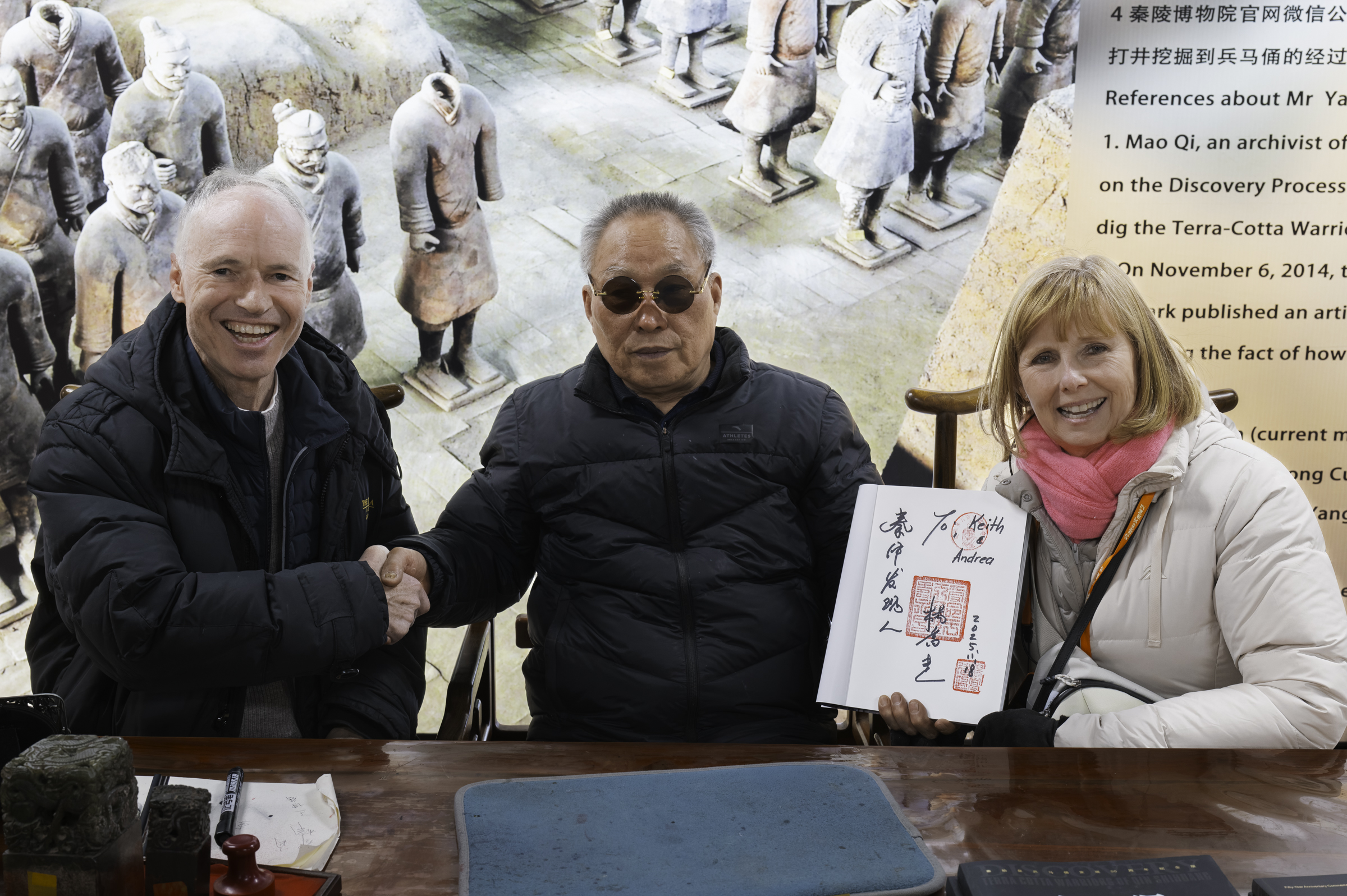
The Terracotta Army lay undiscovered until 1974, when a young farmer named Yang Zhifa began digging a well on his land to help irrigate his persimmon and pomegranate crops. After reporting his find, the government rewarded Yang with 300 yuan (about US$40) and relocated his family. A large-scale excavation was then commenced to carefully unearth the huge collection of what is now believed to be a terracotta army of around 8,000 warriors, 600 horses, and nearly 100 chariots, all arranged in battle formation.
The Terracotta Army is now a UNESCO World Heritage Site, attracting more than ten million visitors each year.

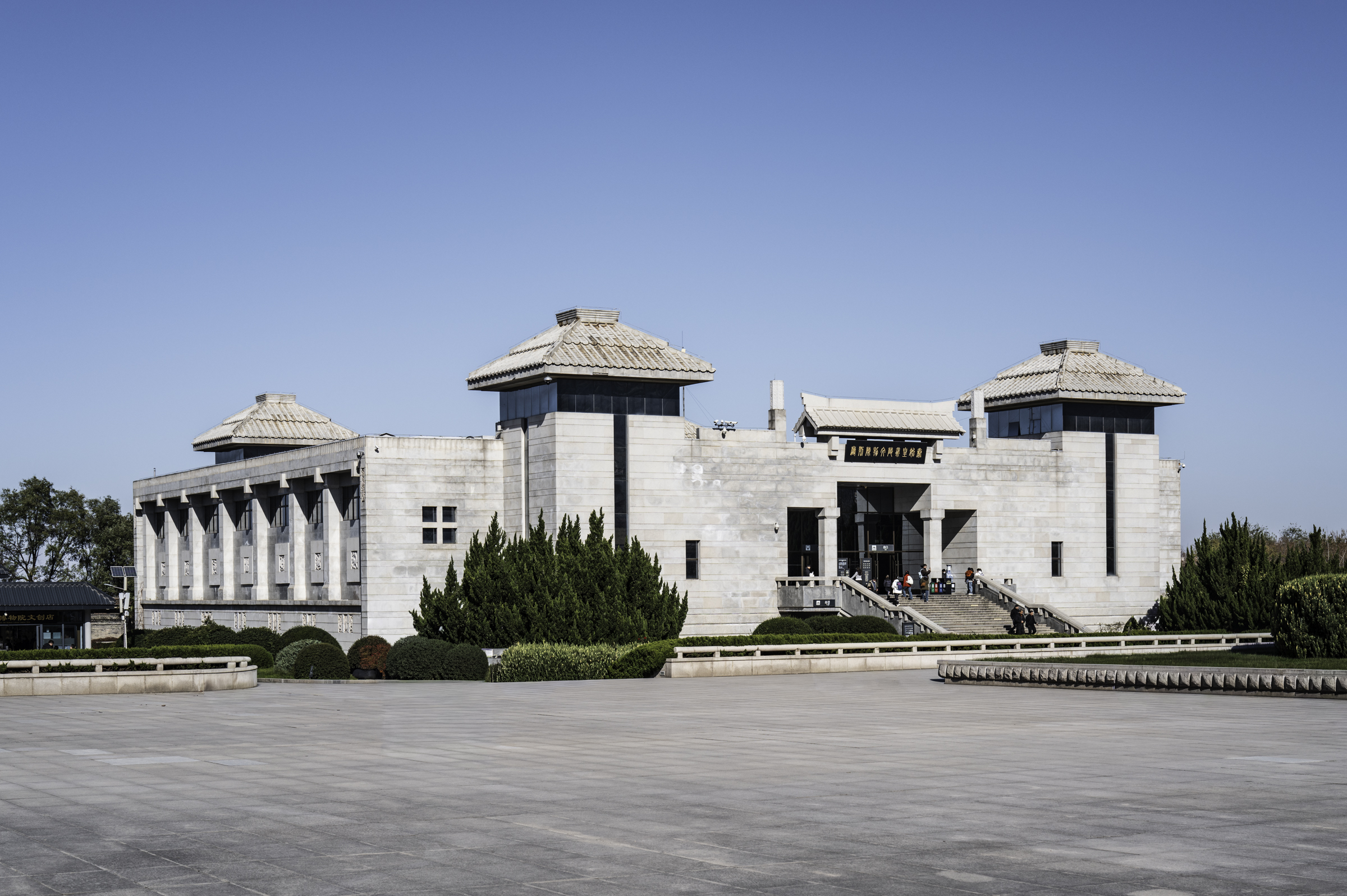
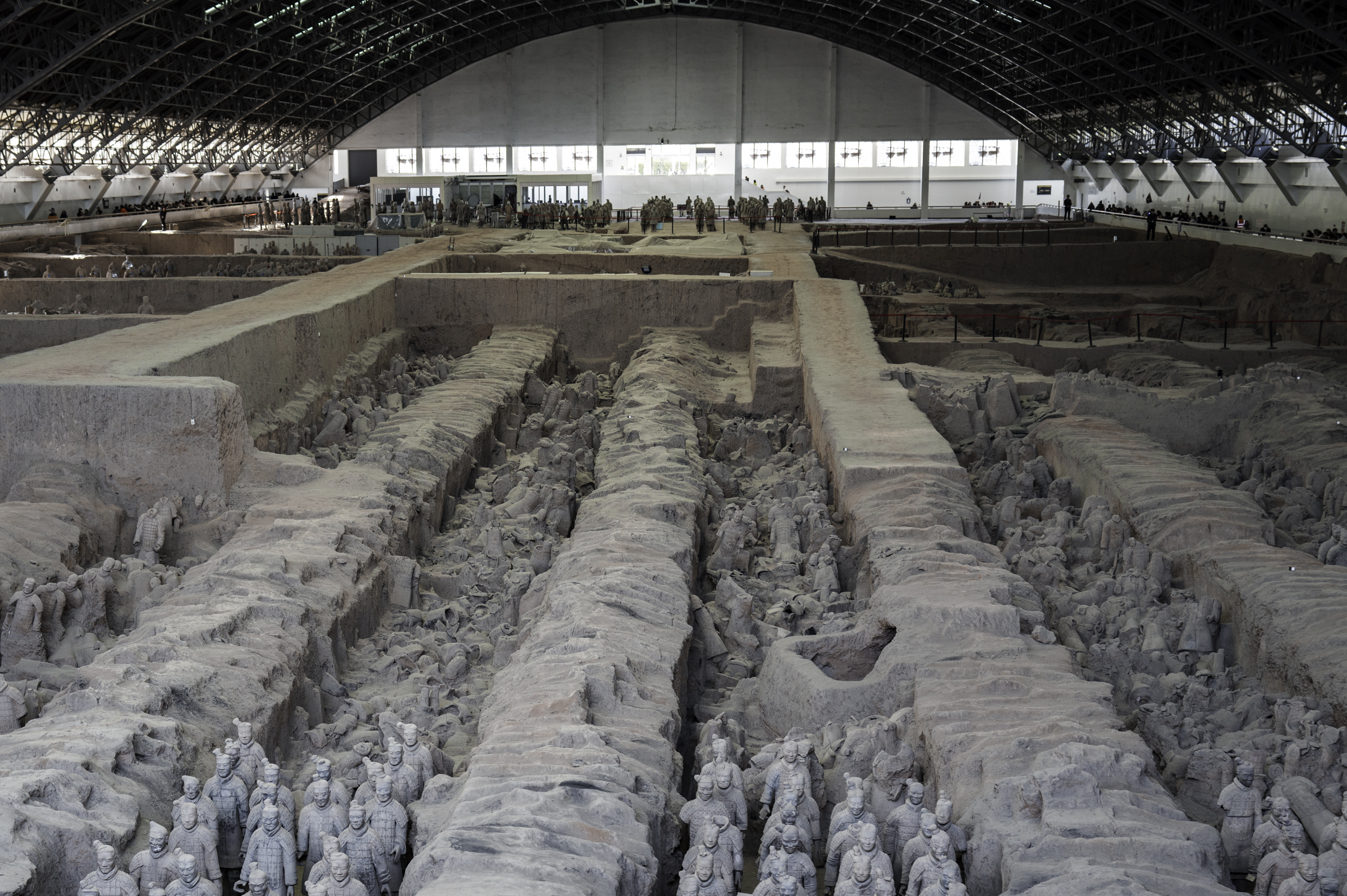
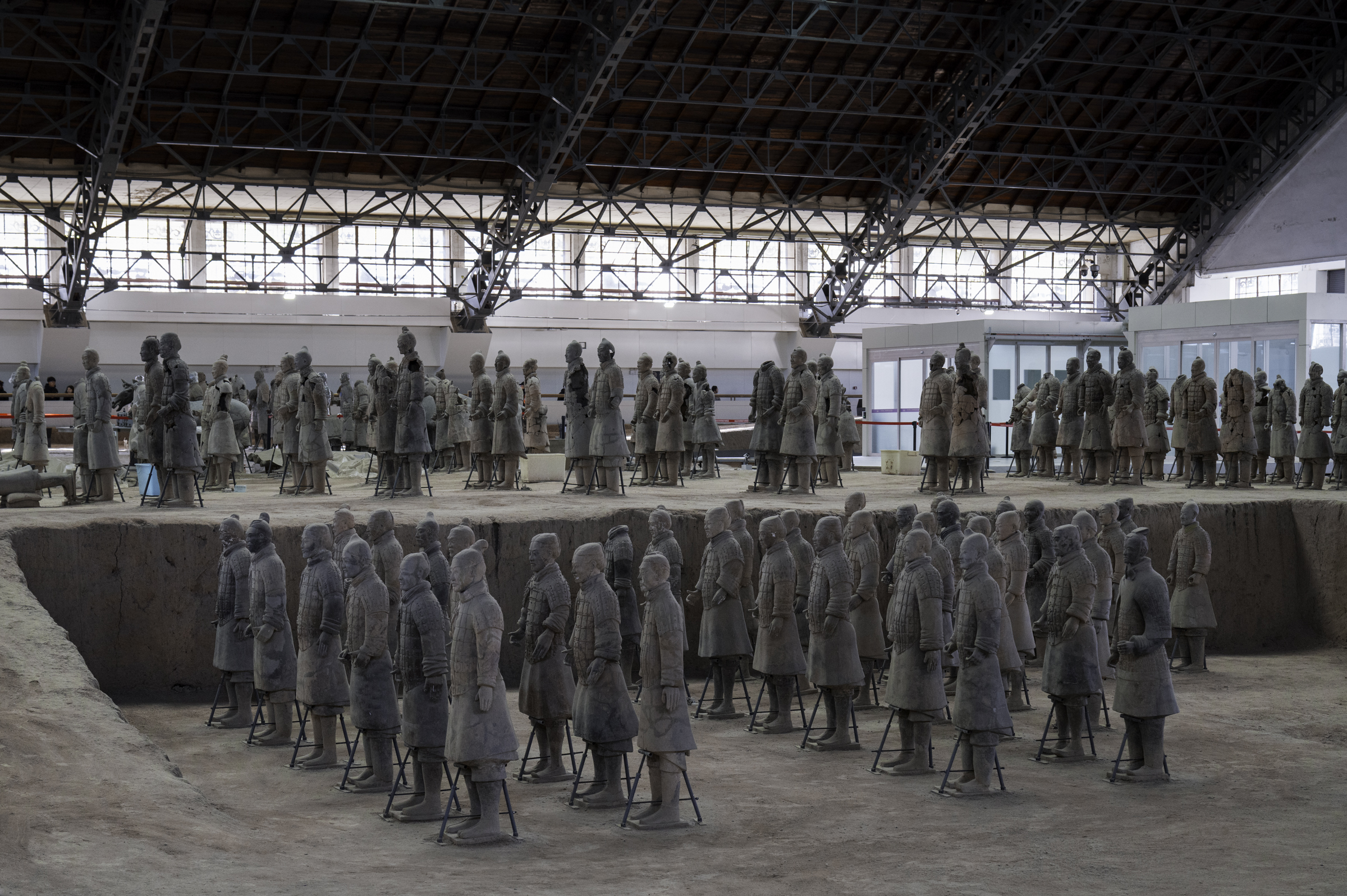
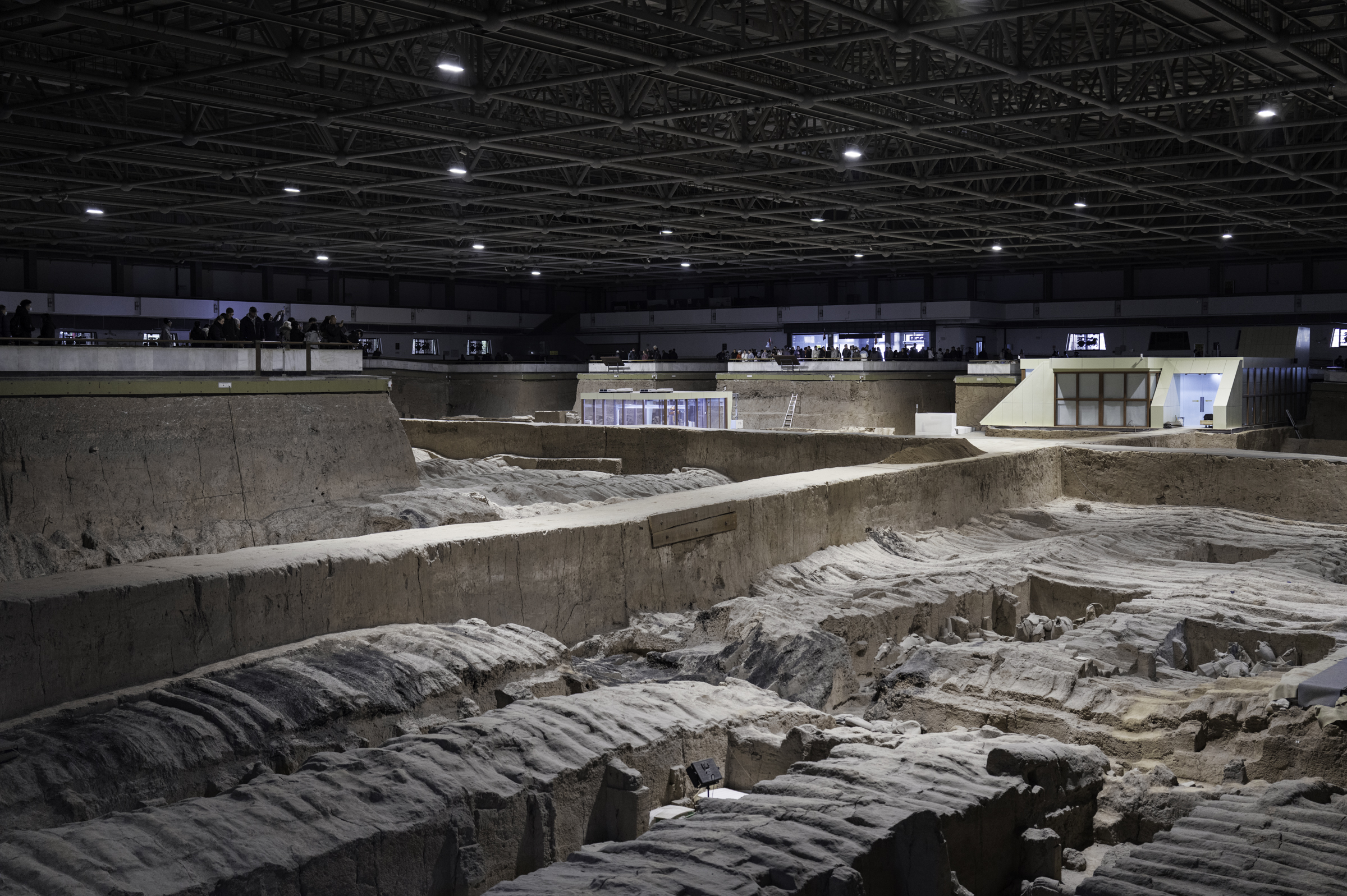
Of the estimated 8,000 warriors, about 2,000 have been unearthed across various burial pits. The main pit is called “Pit 1”, which is where Lilian took us first.
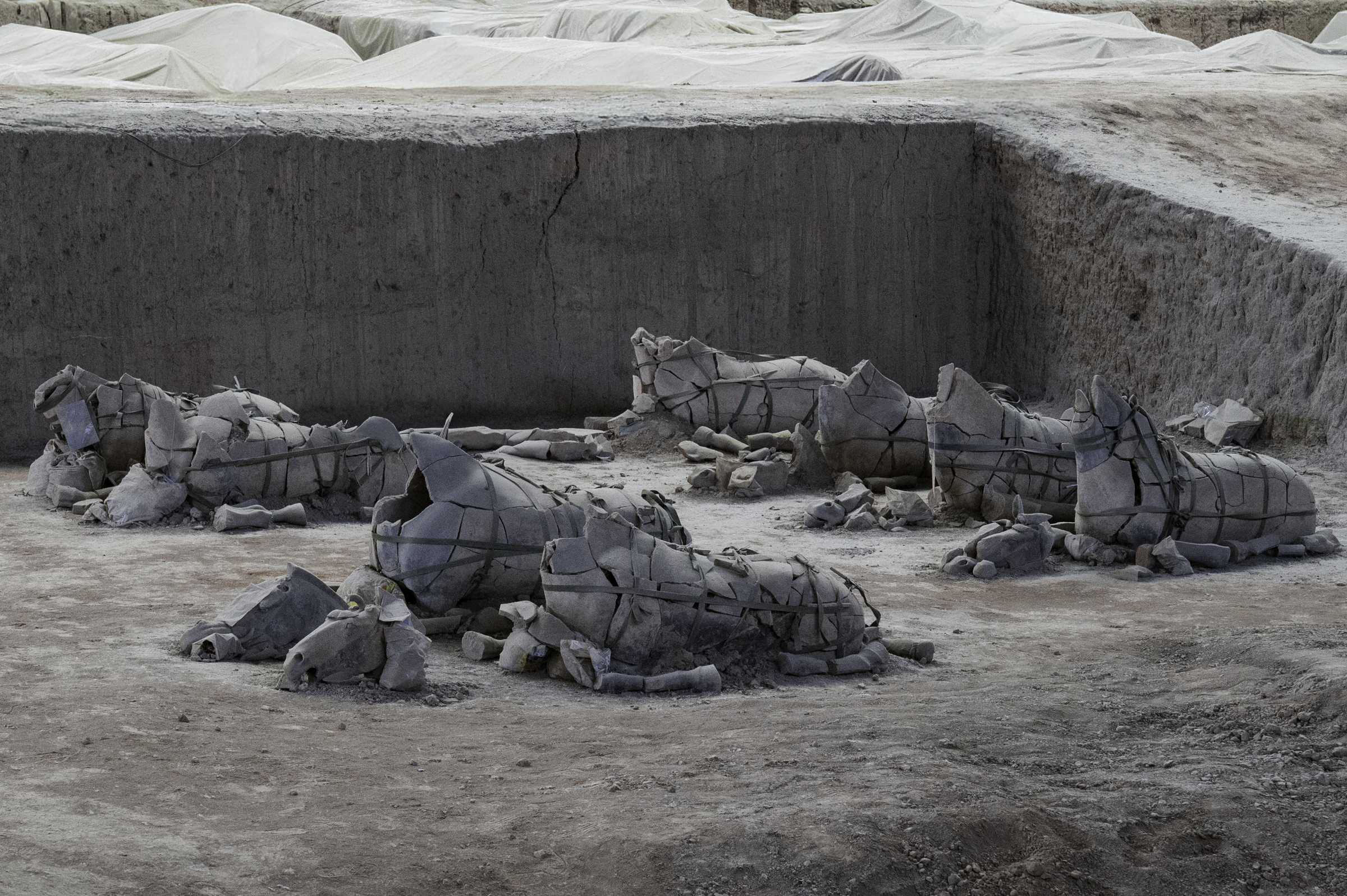
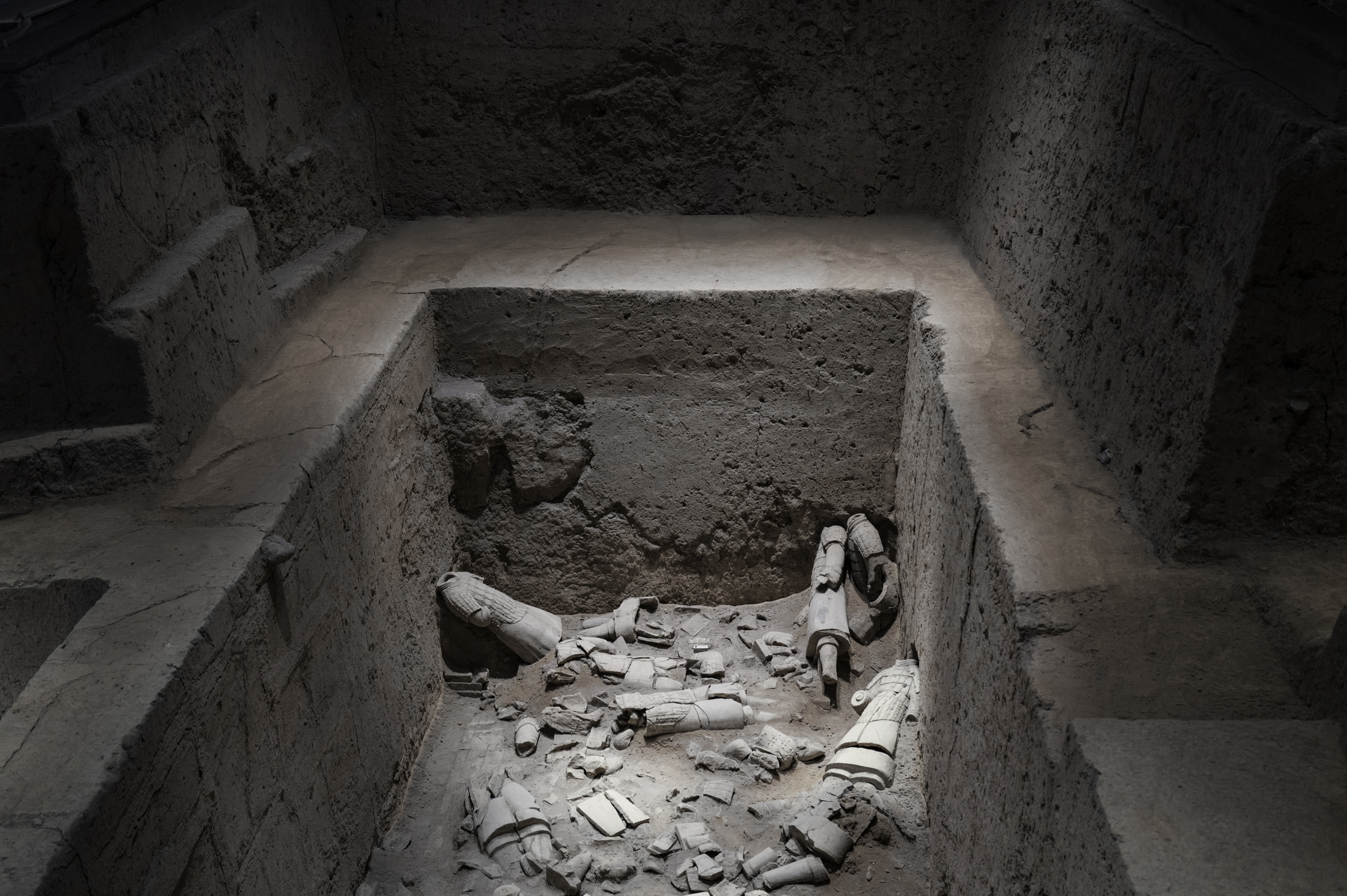
Once inside, we were in awe of the scale of the pit and the amount of work required to restore the Terracotta Army. The Terracotta Army has endured extensive damage over the centuries from human and environmental factors such as earthquakes and other events. Most notably, ancient looting and arson around 206 BC caused widespread destruction: fires collapsed the wooden overhead structure, crushing many figures and leaving fire marks and broken pieces throughout the pits. Many of the army’s original weapons were also stolen at this time. Additionally, the vivid coloured lacquers used to paint the army have faded from their exposure to the air after excavation. Ongoing temperature and humidity fluctuations continue to cause cracking and erosion, making the restoration efforts even more difficult. Restoration of each individual warrior can take years of labour and, for the more intricately detailed figures, it can take up to a decade to restore a single piece.
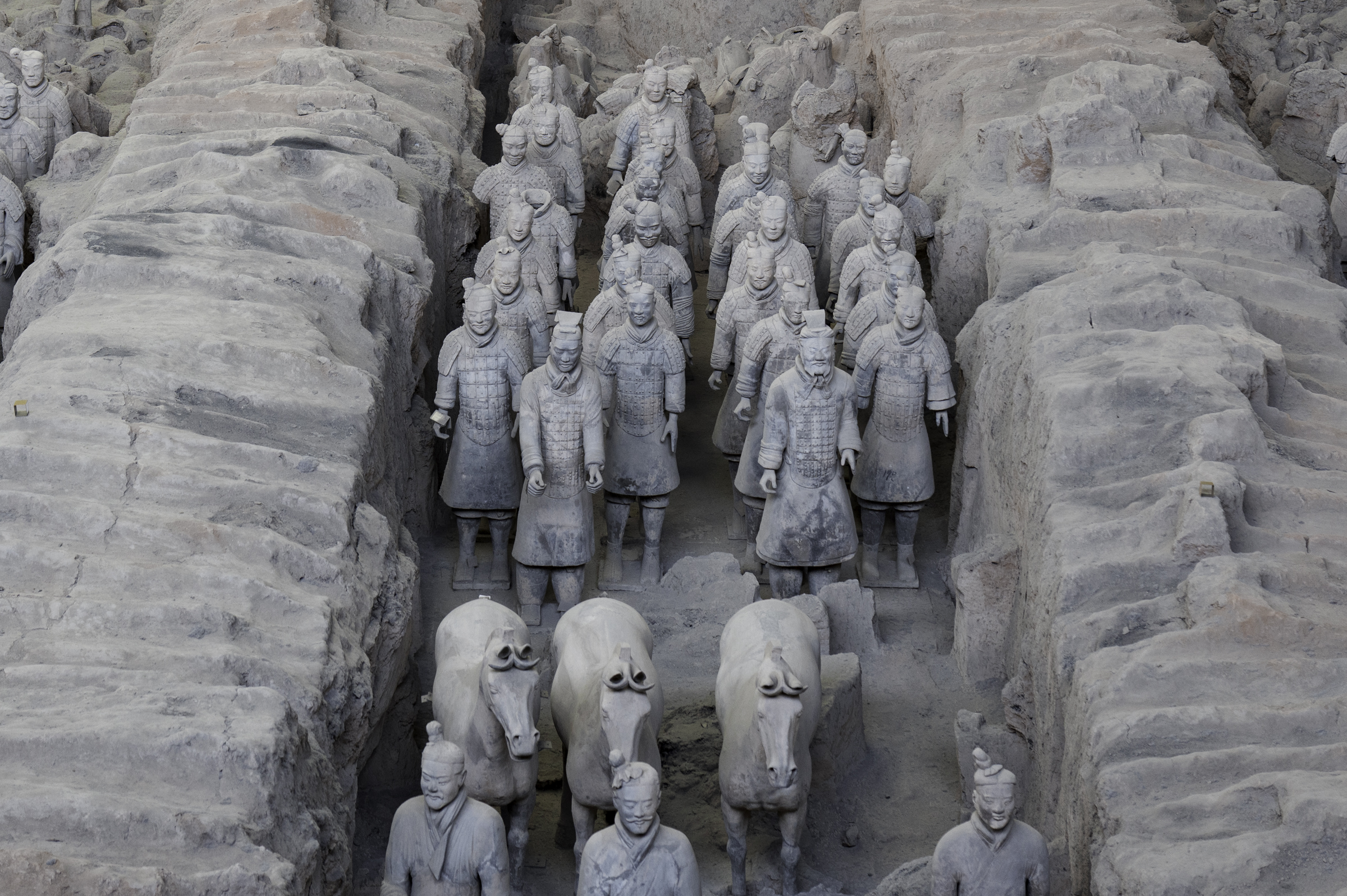
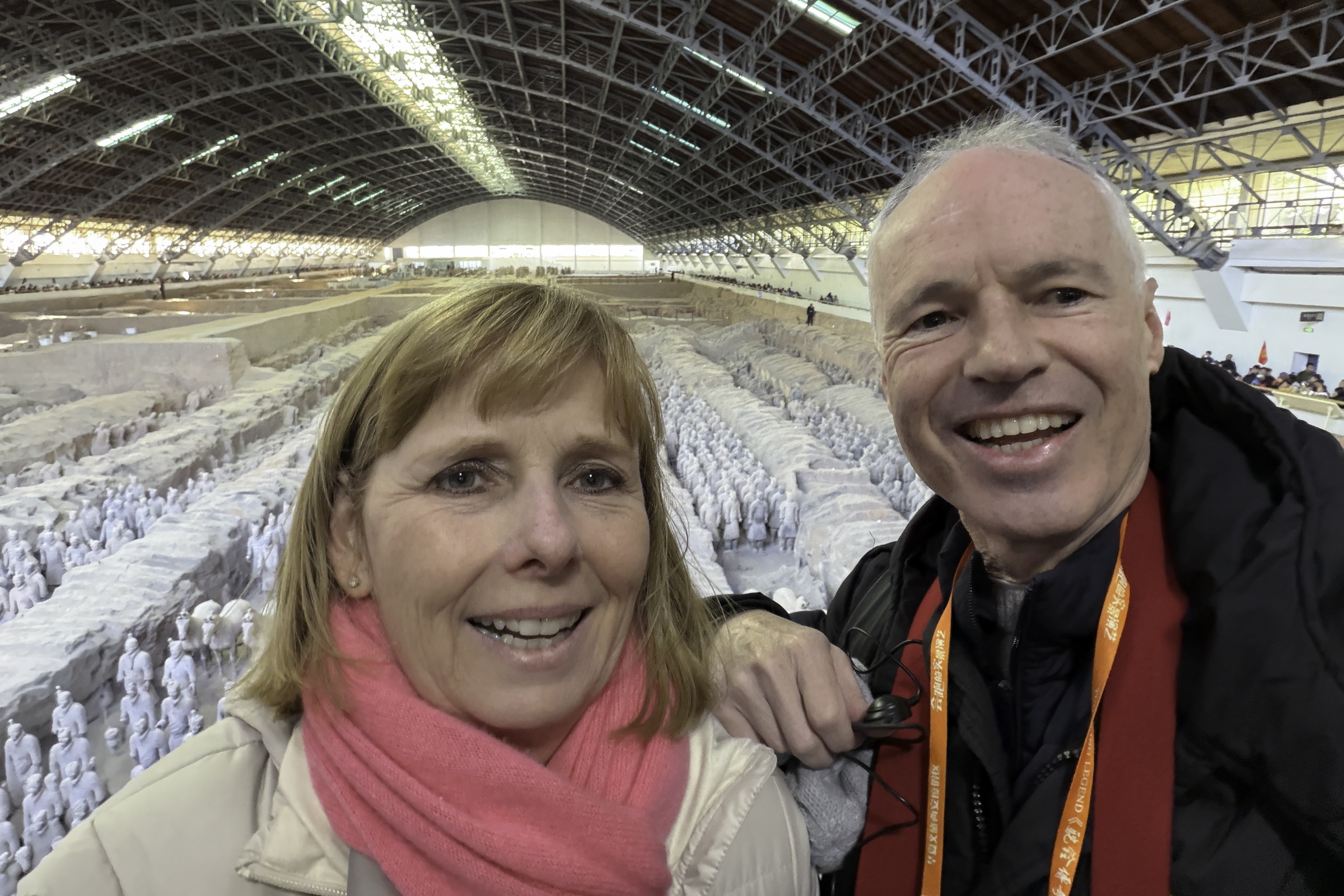
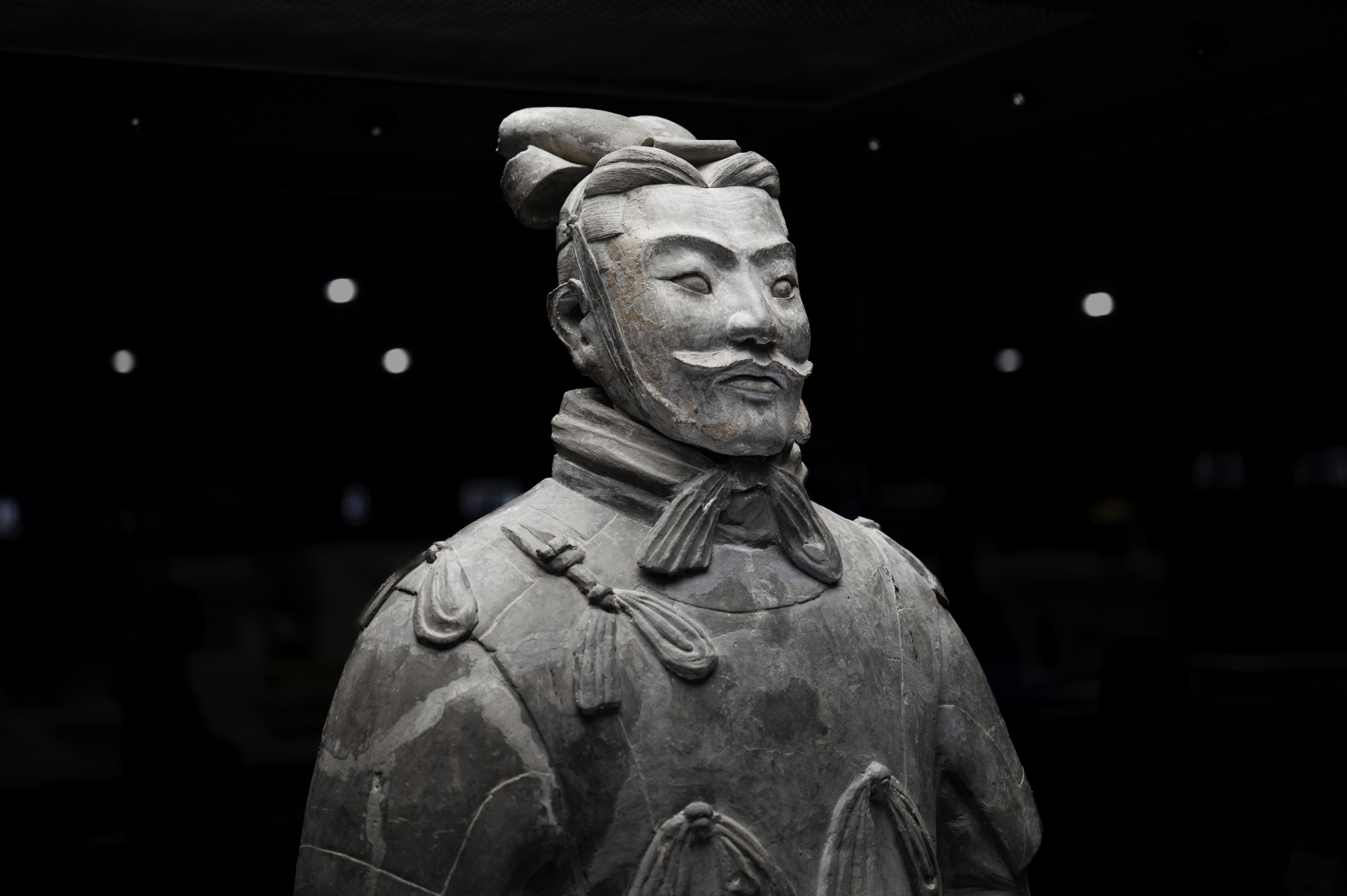
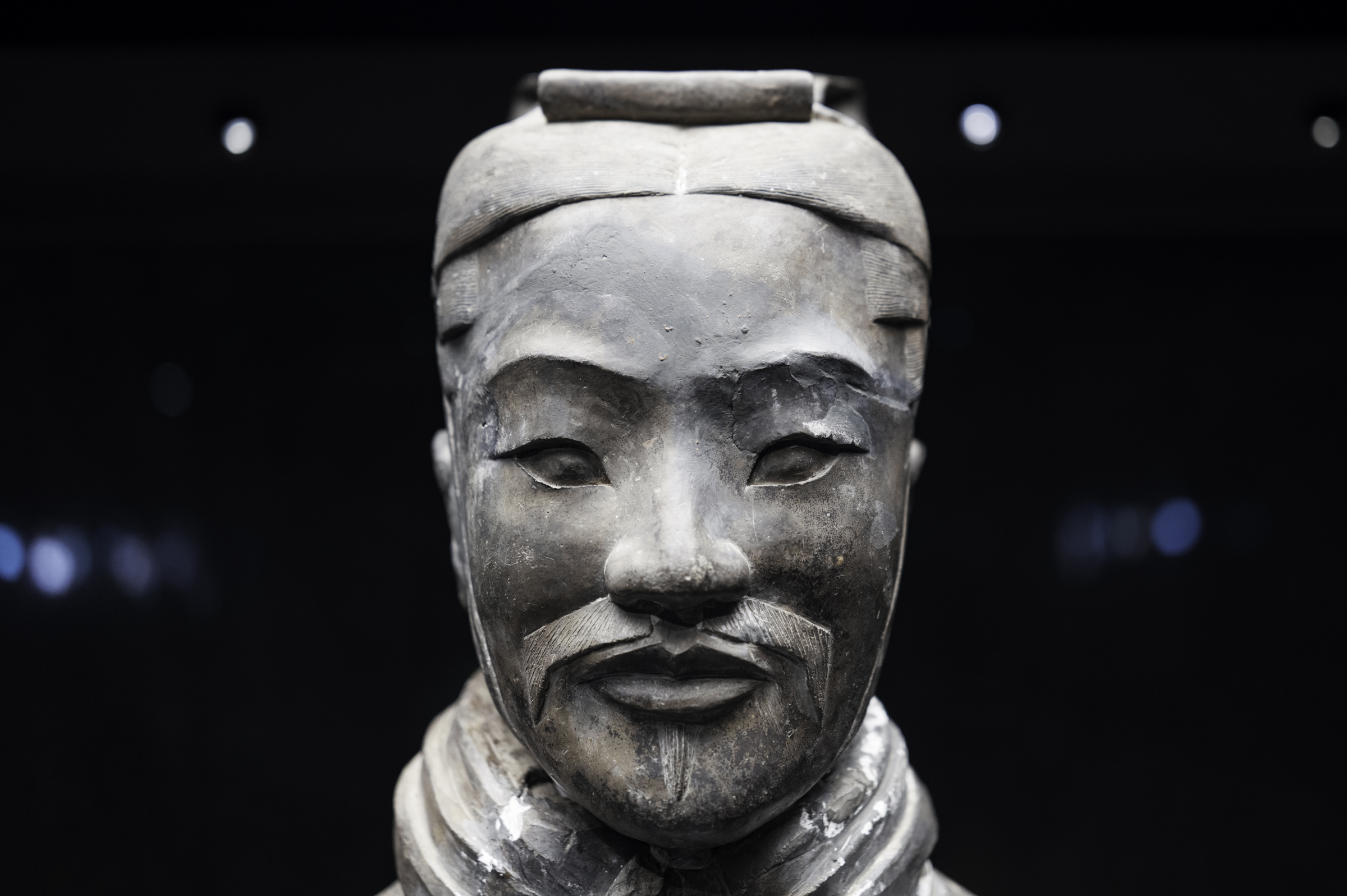
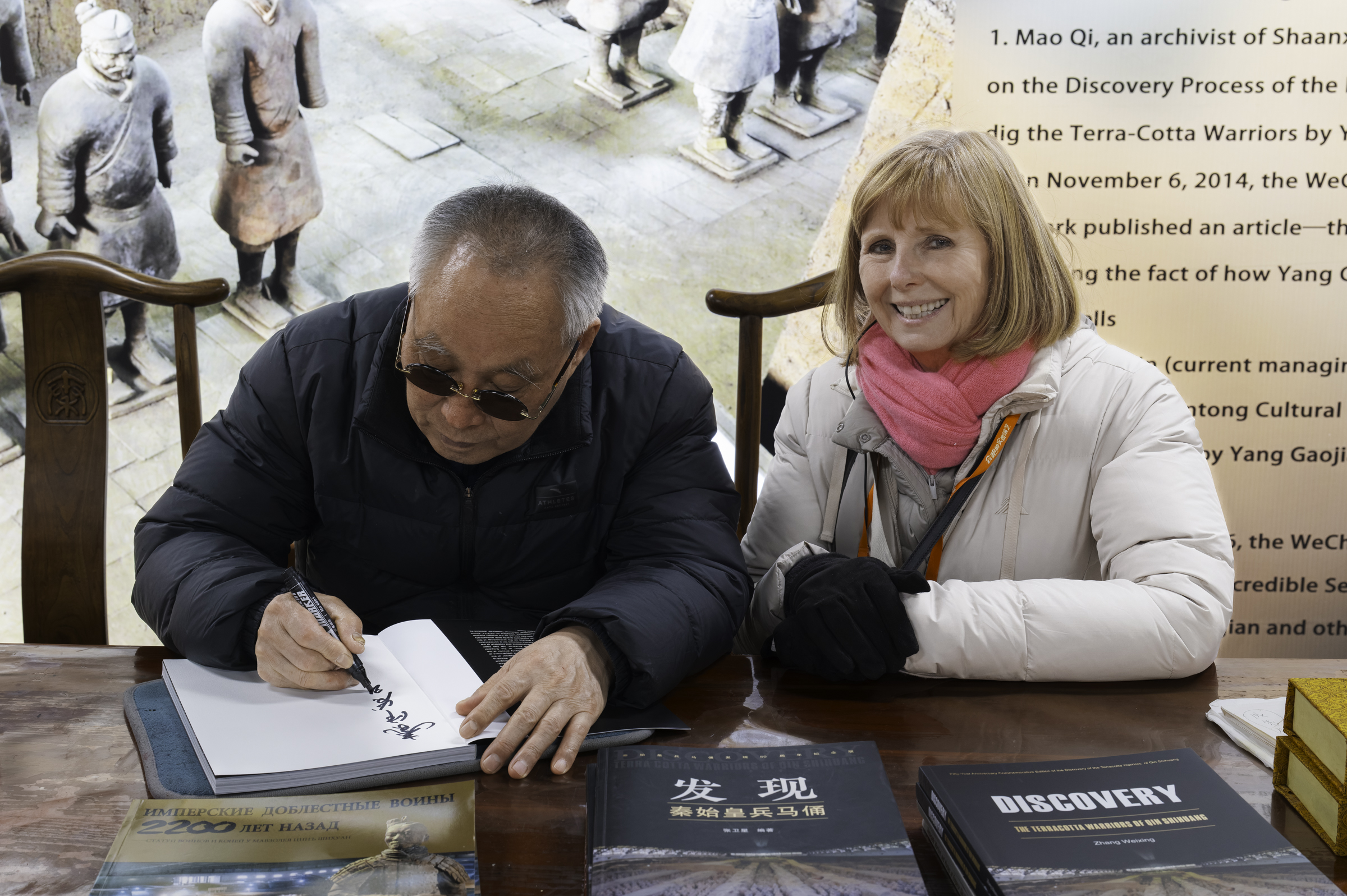
After spending a few hours viewing the incredible Terracotta Army, Lilian took us to meet Yang Zhifa, the man who discovered the site in 1974. He was kind enough to write an inscription for us in a book that details the history of the Terracotta Army.
Next, we headed to the lively area near the Terracotta Army museum, where Lilian located a restaurant for us to enjoy some local cuisine.
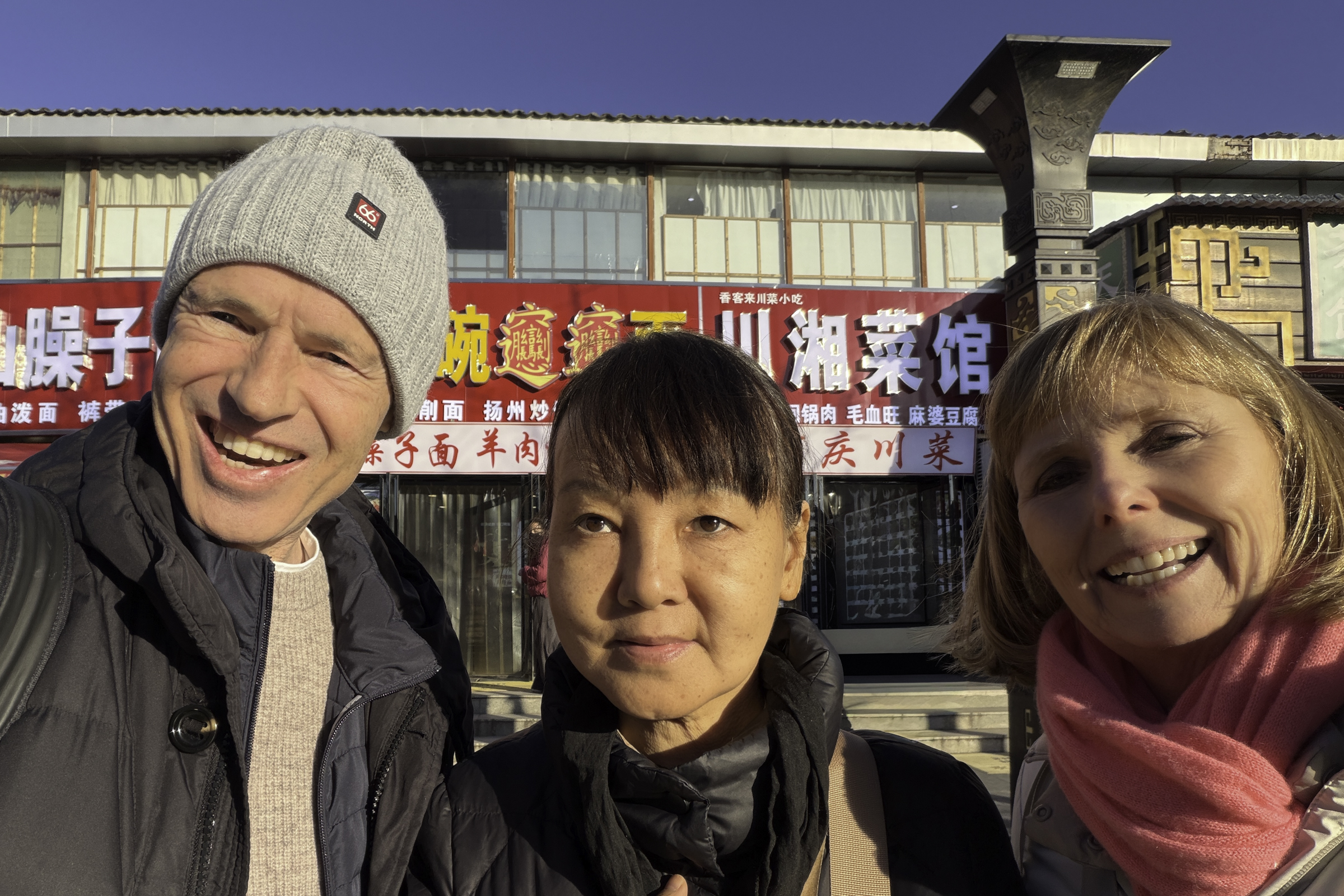
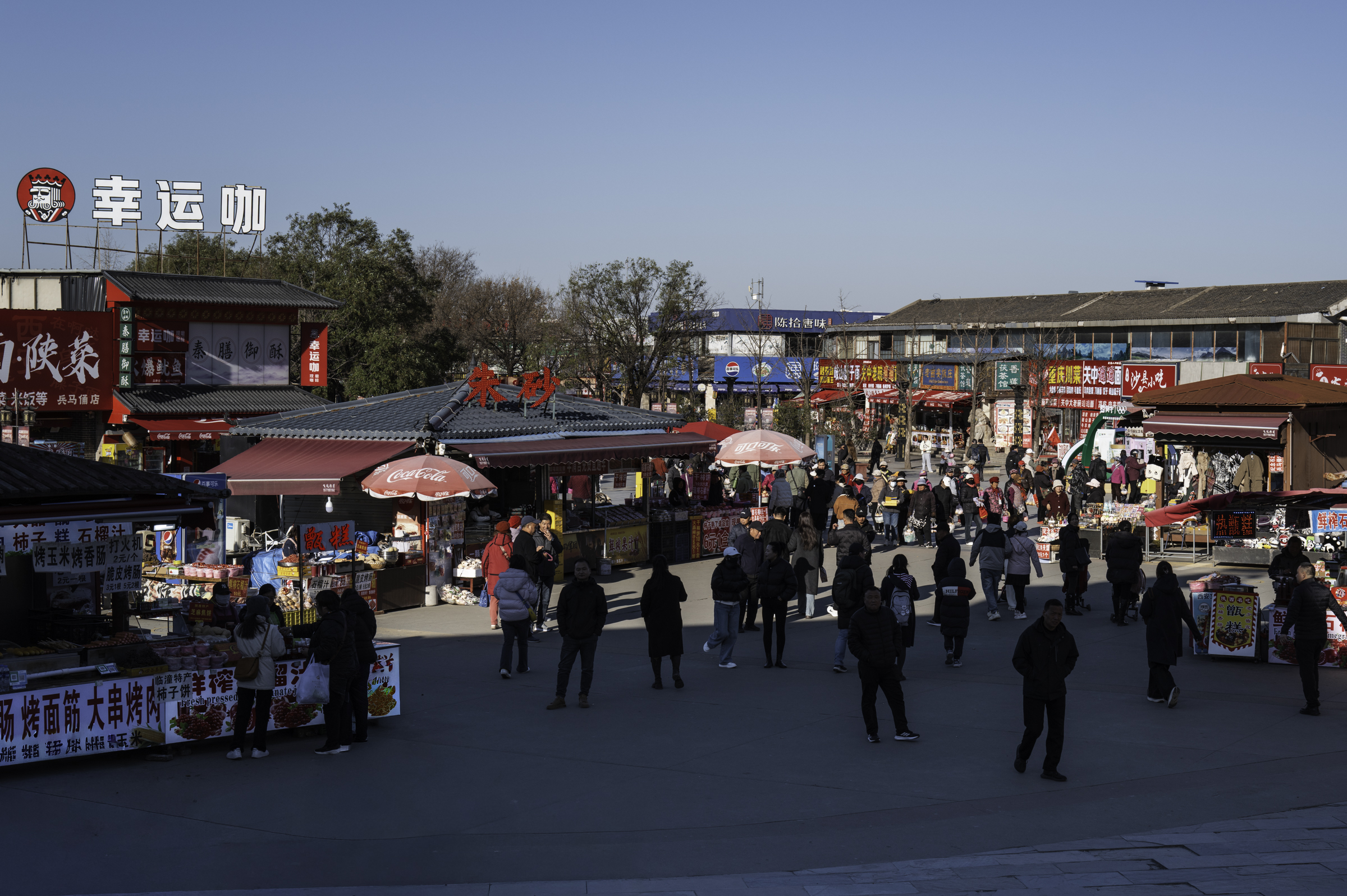
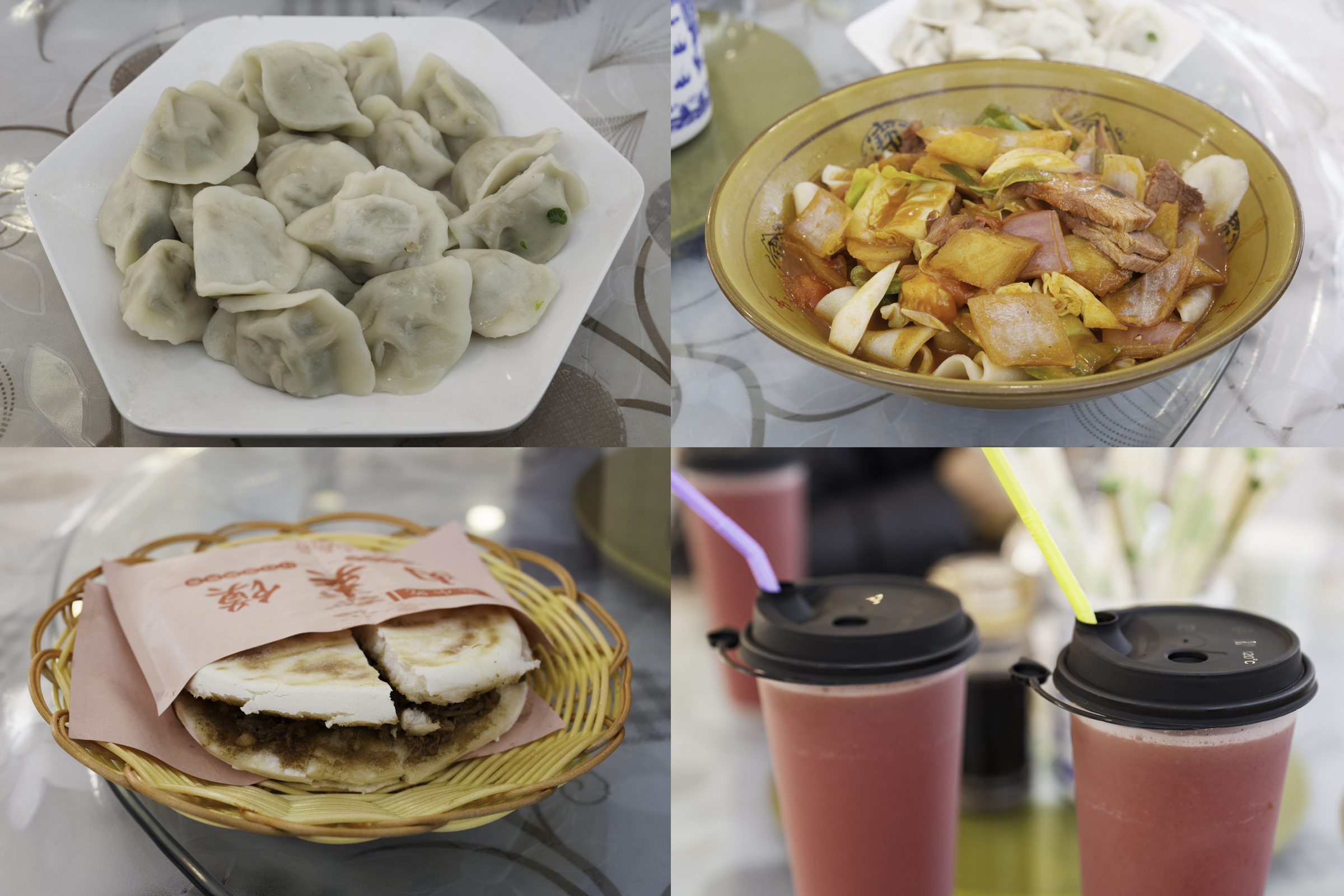
After enjoying our meal, we went for a stroll around the local area.
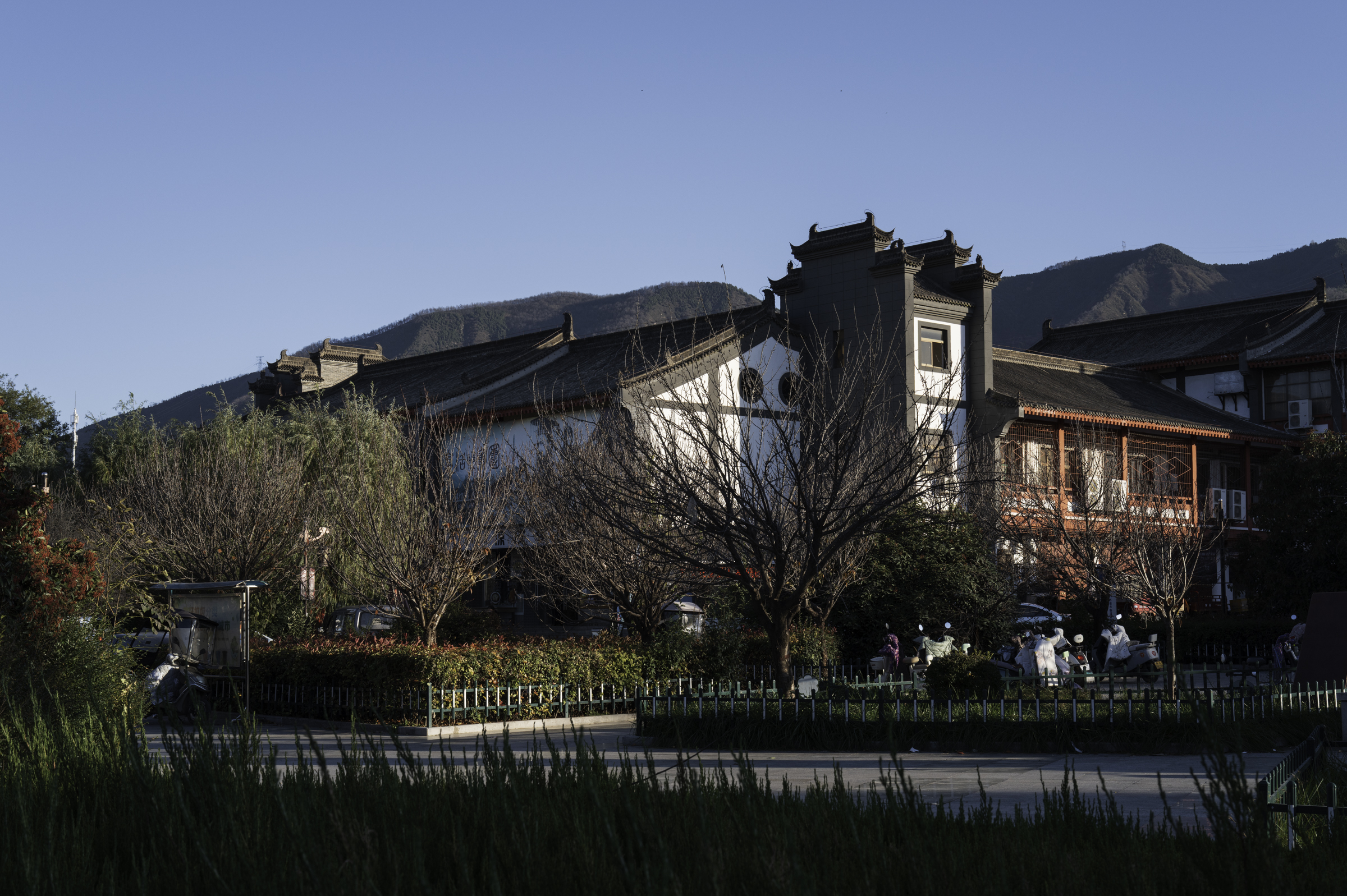
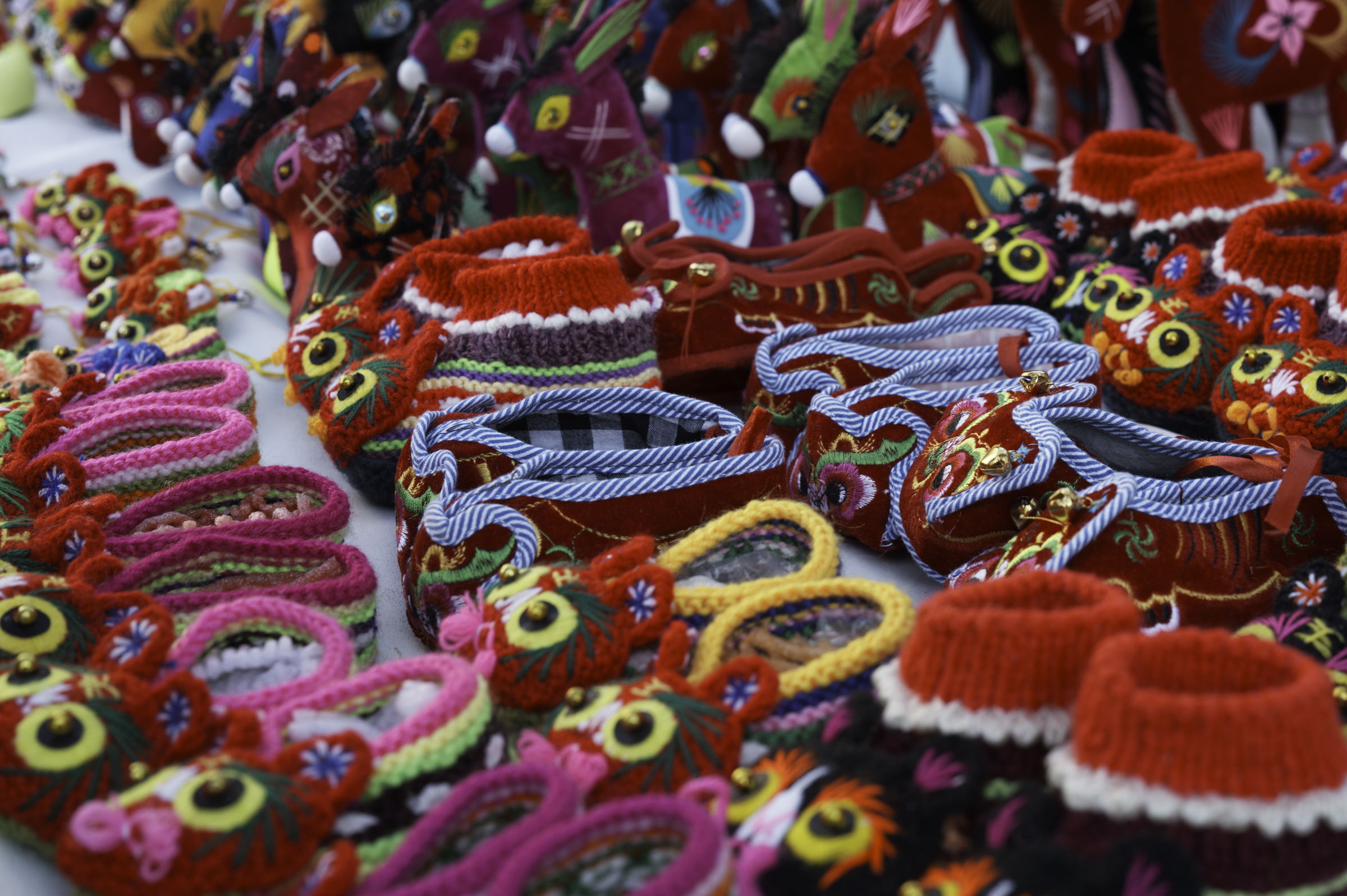
We then walked back to the main road to meet our driver for the trip back to the station.

Lilian kindly escorted us through the station to make sure we didn’t get lost and, after saying goodbye to her, we settled into the lounge while waiting to board our train back to Beijing.
At about 7:40 pm, we were taken to the train. We collapsed into our seats after a big day for the trip back.

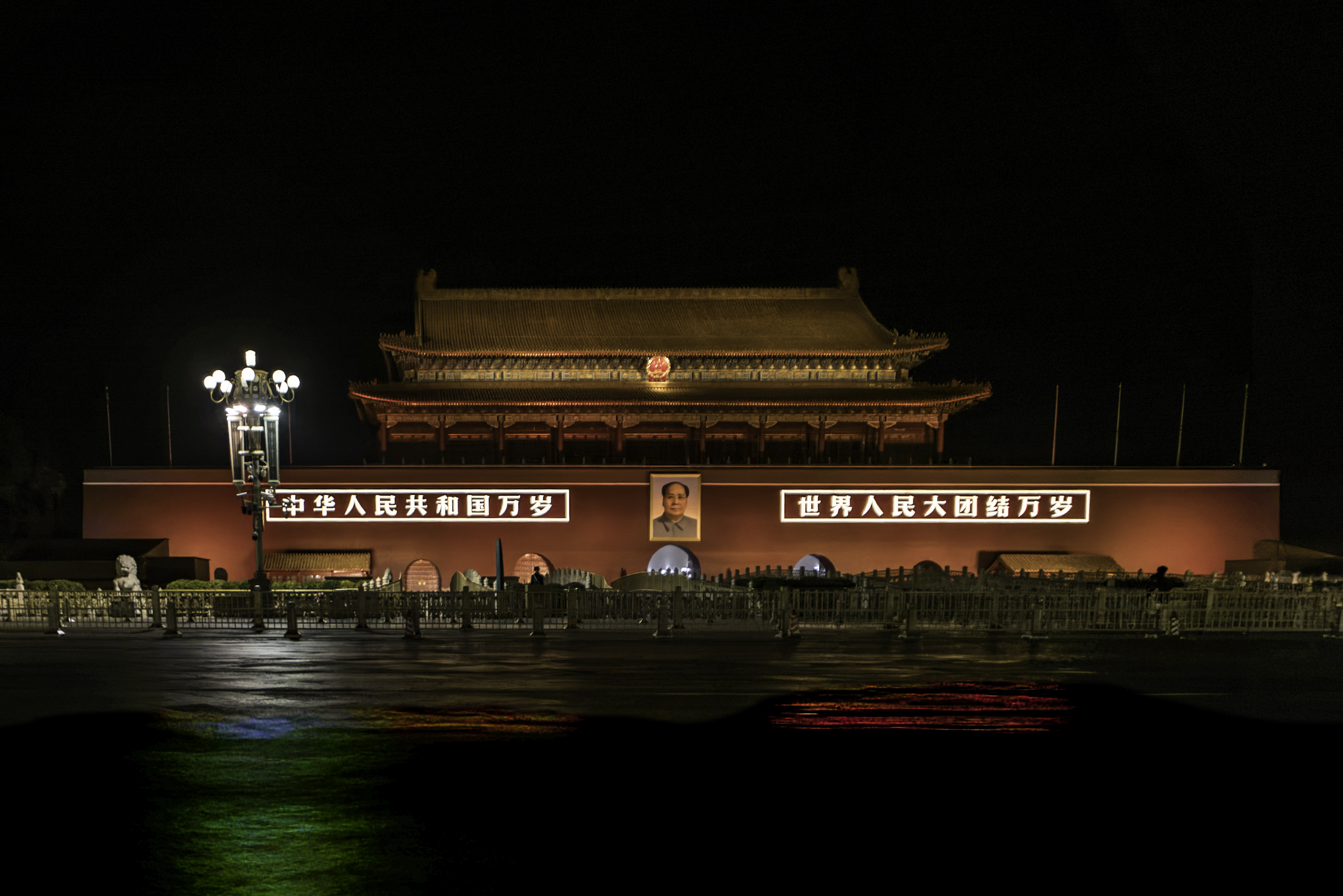
We arrived back in Beijing at about 11:15 pm, where we were met by our driver for the trip back to the hotel. On the way, we passed by the Tiananmen Gate. This gate is located at the northern edge of Tiananmen Square and serves as the main entrance to the Forbidden City.
We got back to the Peninsula Hotel just before midnight. We walked past the hotel’s very pretty Christmas tree, and headed upstairs to bed.

After three big days with early starts, our plan for tomorrow is to sleep in, relax, and generally just have an easy day.